
Meghana Binraj
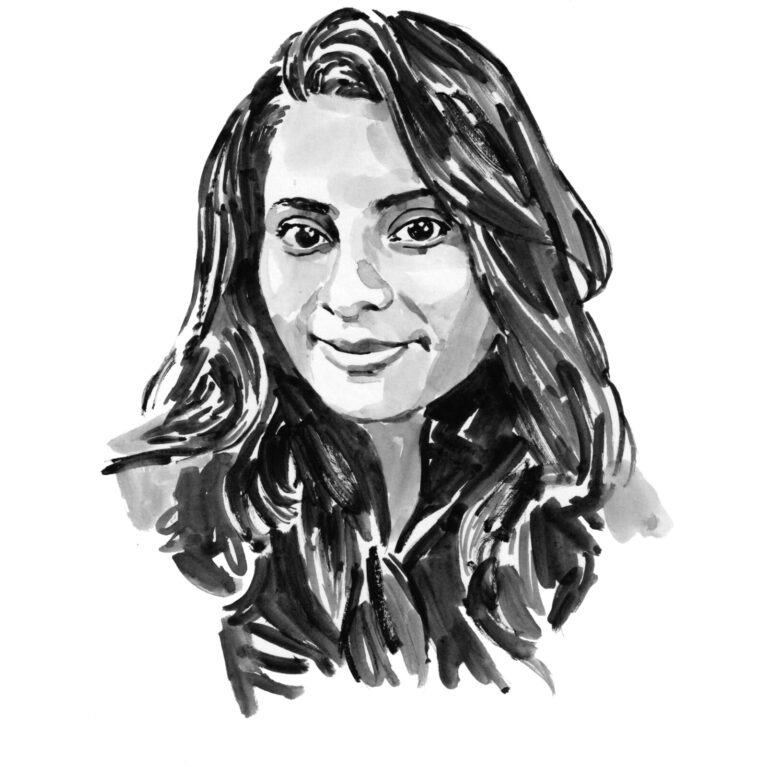
Who I am
I’m a conservation practitioner, explorer, systems thinker and educator who has been shaped as much by people and places as by theory. My work spans disciplines and borders, and is drawn to where science and ecology meet culture, decision-making and lived reality. At the core of it lies a simple curiosity: how do values, world views and access to knowledge shape the ways we relate to the natural world and to one another?
A decade ago, my path into marine science began when I volunteered at the first Moving Waters Film Festival in Bengaluru, an initiative that introduced marine and freshwater ecosystems to me. Determination and curiosity took me to India’s east coast via WWF-India’s Shark Programme, where I first interacted with fisheries landscapes that were unfamiliar and intense and taught me so much. The marine biology course fellowship at the Andaman Nicobar Environment Team helped me appreciate the physical and biological aspects of the ocean better.
An ability to conduct independent field research helped me win a small grant from the Wildlife Conservation Trust to initiate the India Mobulid Project at Kakinada, Andhra Pradesh, in 2019. The fish landing sites there became my go-to classroom. Fishing harbours revealed worlds – of labour, dependency, resilience and extraordinary biodiversity – that I would otherwise never have known. Covid-19 lockdown in the field exposed me to the lived realities of fishers, the ocean and the challenges of being a scientist.
My international field-based experiences include a MISS (Minorities in Shark Sciences) fellowship to intern with Bimini Shark Lab and a Field School Fellowship aboard R/V Garvin. During this time, I assisted in shark work-ups that were part of fisheries-independent surveys in the Atlantic. Then came chimaera research and biological oceanography surveys for marine mammals, birds and pelagic fish aboard R/V Kittiwake and R/V Rachel Carson at Friday Harbor Laboratories, in the Pacific North-West.
What I learned from these hands-on research experiences has allowed me to focus on several small-scale projects in Indian waters, on training the next generation of female researchers from coastal communities and blue-collar backgrounds, and on engaging with people with disabilities to make marine science more accessible to them. These efforts advance inclusive, locally grounded science that allows diverse voices in conservation to be heard. I continue to upgrade my learning in varying disciplines while collaborating with researchers and colleagues around the globe.
Where I work
The interdisciplinary nature of my work is shaped as much by long hours at sea and at fish landing sites as by the laboratories, grant-writing desk, imaging rooms and knowledge-exchange spaces. I have been fortunate to work around the globe, especially in the Indian, Atlantic and Pacific oceans. Currently, I am stationed in India, shuttling between the country’s islands and coast. I am the founding director and CEO of the Species and Spaces Foundation, and serve as a regional co-ordinator in Asia for Minorities in Shark Sciences and Field Research Lead (India) for the ICONIC Oceans programme. Being constantly on the move helps me to collect specimens from different landscapes and fisheries (pelagic, nearshore, island and beach surveys and fishing boats), connect with diverse audiences and support the WAVES programme.
What I do
Fishers and fish traders may well think I’m a tailor who designs shark suits, as I’m always taking the measurements of sharks and turn up at fish landing sites with a tape, ruler and camera. and in fact, this has helped me connect with people and have a laugh; only later do they learn this is actually my work as a shark scientist who monitors landing sites. Not only has it made me better as a science communicator in an unconventional set-up, but it has also helped fishers to feel that I am approachable and we can go on to talk about fishing and socio-economic dependency.
As an independent researcher transitioning into founding director of a non-profit initiative, I am usually working on multiple projects simultaneously. During fishing surveys the boat’s wake-up call is usually at 2 am; for landing-site surveys my day begins at 4 am. Unless I am doing a multi-day fisheries survey, field work is usually completed by midday and then I’m back at my desk, collating data, analysing, drafting a report or manuscript, writing up the next grant proposal or visiting the local forestry department to get permits. When training a new generation of researchers, I make sure each day is filled with many and varied options, as field surveys can become monotonous and constantly handling dead sharks can get depressing. I enjoy engaging with young researchers in creative ways to explore imaging and stimulate interesting questions.
WAVES is a project that I’m very excited about, and I appreciate the opportunity to work on it creatively while engaging with people from all walks of life. Over time I have learnt that ecosystems and communities are inseparable and that conservation requires listening before leading.