
Lindsay L. Graff
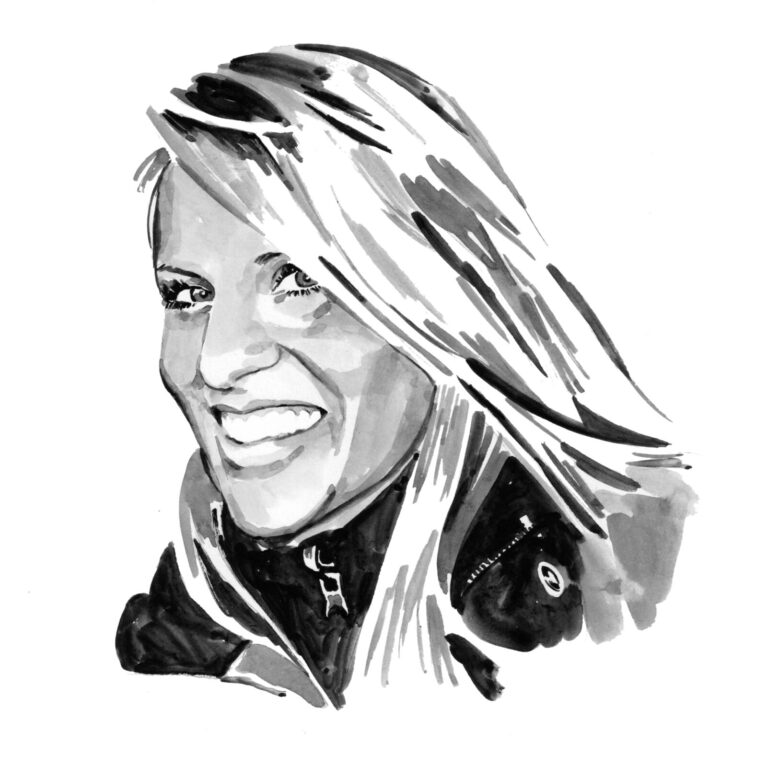
Who I am
I was born and raised in the landlocked state of Vermont, but I never believed proximity to the ocean determines whether someone falls in love with the sea. As a child, I explored every pond, lake, stream, river, tidal pool and coastline I could reach, endlessly fascinated by the diversity of marine life I encountered. During my undergraduate studies in zoology at Connecticut College, I studied abroad in the Turks and Caicos Islands, where I was mentored by a female shark biologist. That experience was transformative – at 19, I realised that studying sharks could be more than a passion; it could be my career in marine science. This realisation propelled me to the Bimini Biological Field Station to gain hands-on field experience, and later back again while pursuing my MSc in marine biology at Northeastern University.
My passion for sharks has since guided me around the world – to South Africa, French Polynesia, Florida, Fiji and Cape Cod – to study shark behaviour, ecology and conservation. All these experiences, from spending six years in Fiji studying bull sharks and teaching shark biology programmes to assisting with ground-breaking white shark research in New England waters, have contributed to who I am as a scientist and continue to fuel my lifelong commitment to shark research and conservation.
Where I work
My work is based in the New York Bight, a highly dynamic region off the US Atlantic coast where recreational and commercial fisheries overlap with critical habitats for endangered shark species. Despite federal protection, dusky, sand tiger and white sharks are still frequently captured here, raising concerns about their ability to recover. The New York Bight is one of only three known global nurseries for white sharks, where young-of-the-year spend the summer and fall before migrating south. It also supports aggregations of sand tiger sharks and regular occurrences of juvenile dusky sharks, placing vulnerable life stages in direct overlap with fishing activity. This overlap makes the New York Bight an ideal place to study the impacts of both incidental capture and post-release survival. By combining fishery observer data, blood-based measures of capture stress and satellite tracking of post-release behaviour, my research examines how different fishing gears and practices affect shark survival. Understanding these interactions is critical because even small numbers of deaths can have outsized effects on populations that grow slowly and reproduce at very low rates. The lessons learnt here are locally urgent but globally relevant. Studying shark bycatch and survival in one of the busiest fisheries regions in the USA provides insights into how we can reduce mortality, improve handling practices and design management strategies that support the long-term conservation of endangered sharks worldwide.
What I do
My PhD focuses on the conservation challenges faced by three endangered shark species in the north-western Atlantic: dusky, sand tiger and white. Despite being legally protected for more than two decades, these species are still frequently captured in commercial gill-net and trawl fisheries, as well as recreational rod-and-reel fisheries. Because sharks grow slowly, mature late and produce few offspring, even low levels of incidental capture and post-release mortality can hinder their recovery. To address this, I use fisheries observer data to evaluate the scale of shark bycatch and the biological and environmental factors that influence at-vessel mortality. This analysis highlights when and where sharks are most vulnerable and how different gear types pose unique risks to already depleted populations. I also measure the physiological stress responses of sand tiger, dusky and young-of-the-year white sharks caught in recreational fisheries by analysing blood-based bio-indicators such as lactate, glucose and pH. Linking these physiological measures to post-release outcomes using satellite tagging provides insight into swimming behaviour, recovery periods and mortality events. By connecting population-level bycatch patterns with individual stress and survival outcomes, my research reduces uncertainty in mortality estimates and identifies key biomarkers that predict risk. This integrated approach produces actionable science to improve handling guidelines, strengthen fisheries management and advance shark conservation both locally, within the north-western Atlantic, and globally.