
Kenn Papadopoulo
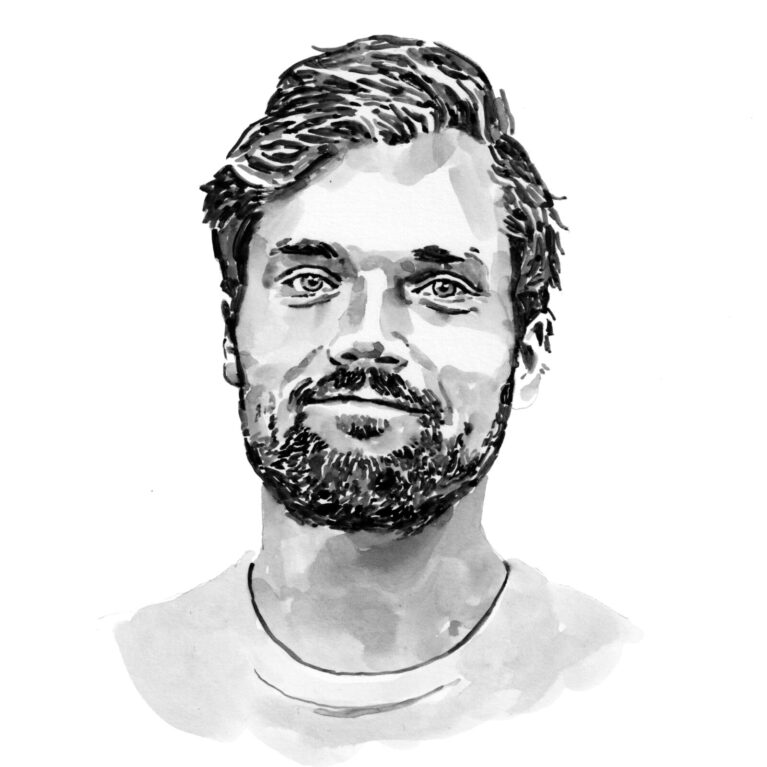
Who I am
I grew up in a small village outside Paris, but it was my summers exploring the coast of Normandy that first sparked my fascination with the sea. During an exchange programme in biology and ecology at the University of Sydney, a transformative experience swimming with wild sharks cemented my passion for marine life and steered me towards shark research.
I went on to pursue an international Master’s degree in marine biology, which involved training in Belgium, Portugal, Spain and Ireland. My thesis at the Institute of Marine Science (IIM-CSIC) in Vigo focused on the behaviour and ecology of small-spotted catsharks and thornback skates in the Cíes Islands Marine Protected Area. Building on this work, I am now a PhD candidate at Campus do Mar, University of Vigo, where I study the diversity, distribution and movements of sharks, skates and rays in Galicia.
As a qualified professional scientific diver and PADI divemaster, I spend much of my time underwater, where direct encounters with marine wildlife inspire both my research and my conservation efforts. Beyond science, I stay connected to the ocean through sailing and windsurfing, in the same waters that continue to fuel my work.
Where I work
My research takes place in Galicia, north-western Spain, a region of remarkable marine biodiversity. The Ría de Vigo, with its sheltered bays and productive waters, offers an ideal natural laboratory for studying sharks and rays. These coastal habitats sit alongside the Cíes Islands, part of the Atlantic Islands of Galicia National Park, which host thriving marine ecosystems and attract researchers from around the world.
Based at the Institute of Marine Science (IIM-CSIC) in Vigo, I work within the wider Campus do Mar community, where collaboration across disciplines strengthens conservation science and supports efforts to protect the unique ecosystems of this coastline.
What I do
My work focuses on understanding how sharks, skates and rays use the coastal waters of Galicia. Much of this involves field work: deploying underwater cameras, using acoustic telemetry and diving to observe animals in their natural habitats. These tools allow me to collect data on where species are found, how they move and how they interact with their environment.
Back in the lab, I analyse these patterns to build a clearer picture of elasmobranch ecology. I also work closely with local communities, fishers and divers, sharing knowledge and raising awareness about the importance of protecting these animals. By combining science with outreach, I aim to ensure that conservation measures are grounded in both strong evidence and public support.