
Irene Casanova
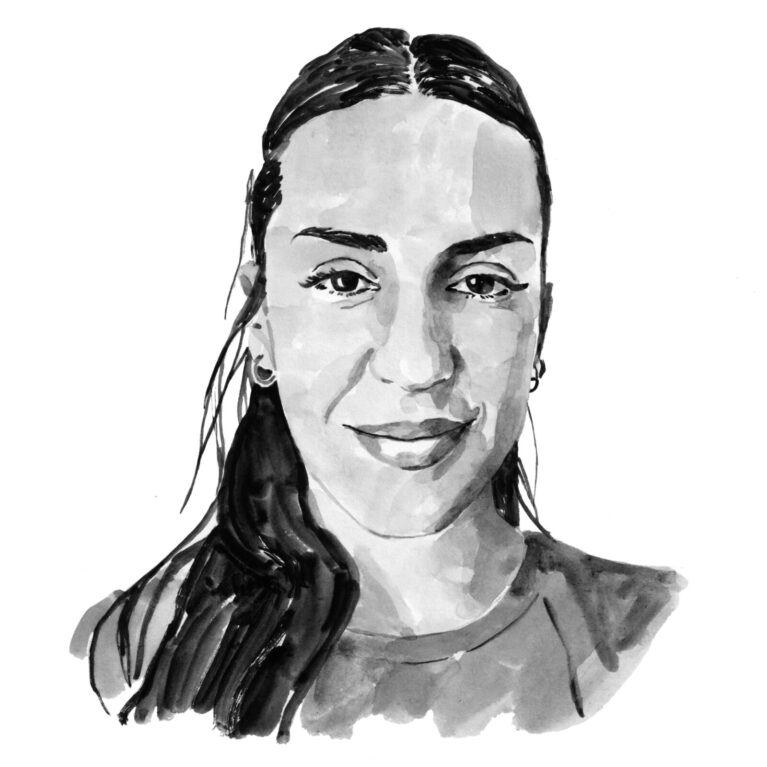
Who I am
I was born in Alicante, a city in Spain on the Mediterranean coast, and the ocean has always been a presence in my life. My grandfather and father taught my brothers and me to love the sea at an early age and we would dive from a small boat called Javiral, a fusion of our names. But I was the only one who decided to dedicate my life to the marine environment.
Ten years ago, I moved to Mexico to work as a dive master on the country’s Caribbean coast. That is where I first encountered bull sharks and became so obsessed with them that I decided to give up everything and study marine biology, focusing on shark research. I moved to La Paz, Baja California Sur in Mexico, where I completed my Bachelor’s degree at UABCS (Autonomous University of Baja California Sur) and later my Master’s at CICIMAR-IPN (Interdisciplinary Centre for Marine Sciences). During my studies I developed pioneering ultrasound work on pregnant bull sharks, and conducted research for my thesis on nursery areas of the Galápagos shark around the Revillagigedo Archipelago and Clipperton Island, integrating genetic analysis, acoustic telemetry and innovative non-lethal techniques.
Where I work
I have participated in projects across the Gulf of California, Isla Cedros, the Mexican Caribbean, and the Revillagigedo Archipelago and Clipperton Island in the Eastern Pacific. I have collaborated with organisations such as Pelagios Kakunjá (where I am currently on the staff as a data analyst and field researcher), Fins Attached, Ocean Blue Tree, the Saving Our Sharks Foundation, the Vermilion Sea Institute, Lokahi Science, and the Big Fish Lab at Oregon State University.
What I do
I have gained experience in acoustic and satellite telemetry, Baited Remote Underwater Video Systems (BRUVS), DNA and hormonal analyses, and ultrasound imaging. I also work closely with fishing communities, as I believe that collaboration between scientists, NGOs and local stakeholders is essential for effective and long-lasting marine conservation.