
Emma Jackson
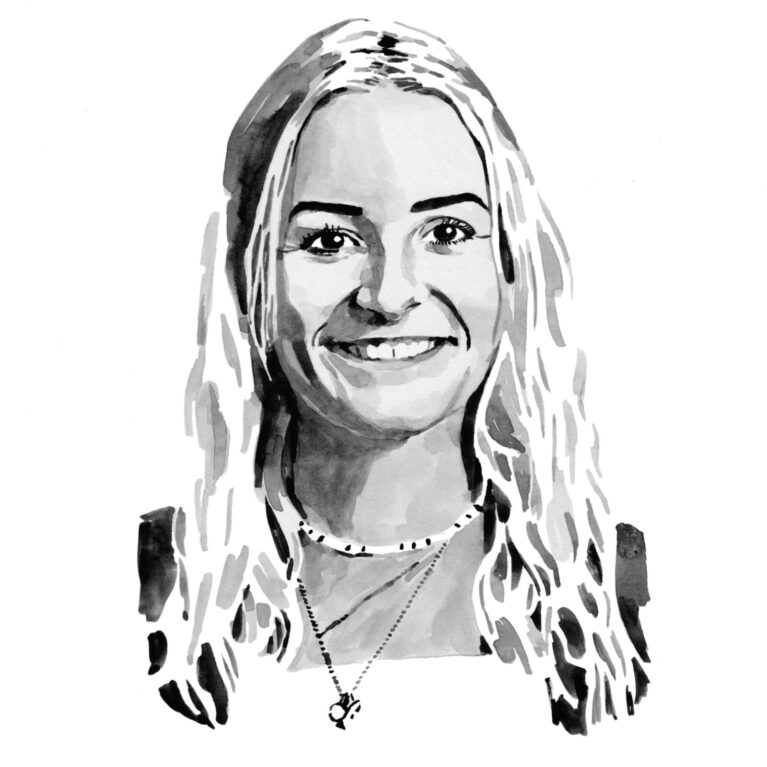
Who I am
I grew up in a suburb outside St Louis, Missouri. Although the area is landlocked, with no ocean in sight, I was fascinated by marine fossils found on rocks in our yard and would constantly beg my parents to let me watch documentaries and check out books from the library if they were even remotely associated with the ocean. An early trip to the Shedd Aquarium in Chicago and interactions with stingrays at the St Louis Zoo solidified my love for sea life as I declared I would grow up to be a marine biologist.
Following high school, I attended the University of South Carolina in pursuit of a marine science degree. During my undergraduate career my love for novelty was highlighted in my breadth of laboratory settings, which ranged from palaeoclimatology to seal and sea turtle rehabilitation to biogeochemistry. In 2021, I was awarded a NOAA Hollings Scholarship that allowed me to intern at the National Marine Fisheries Laboratory in Panama City Beach, Florida. There I created my own project to study the diet of sandbar sharks, solidifying my pursuit of a career in research.
I was accepted as a PhD graduate student into Dr Dean Grubbs’s lab at Florida State University as a part of the ecology and evolutionary biology programme, where my research interests encompass how the dynamics of elasmobranch communities change over time, with changing environmental parameters, and how humans may be influencing fish assemblages and populations. I enjoy problem-solving and strive to fill knowledge gaps related to fish communities to better inform policy-makers and the general public.
Where I work
Although my research is based at the Florida State Coastal and Marine Laboratory in St Teresa, much of our work is conducted all around Florida’s coasts. One of our longest-running coastal shark surveys spans Florida’s Big Bend, a largely understudied region of the state. Within this region is Crystal River, which is known as a refuge for manatees and for its many freshwater springs and its prominent coastal fishing seasons, such as scalloping.
What I do
The field component of my work begins with an early morning, as I’m out on the water as early as 7 am. For larger sharks, field work will take place off the coast of Crystal River and primarily consists of longline fishing and gill-netting. Bull sharks are often caught on the longline and are brought to the back of the boat to be worked up. The data recorded include standard measurements, a dart tag number, genetic and muscle biopsies and, for my work, the new addition of a stomach swab. For smaller sharks, I join the Crystal River bull shark project once a month, assisting in fishing efforts that use hand longline and rod and reel. When a bull shark is on one of the lines, the others are quickly reeled in and the shark is brought on board. Standard measurements are recorded and photographs and muscle and genetic samples are taken, as well as cloacal and stomach swabs that help us to better understand the shark’s diet.
My specific sampling uses the Dietary Detection and Assessment Technology (DODAT). I record the sampling effort on the scope fitted to the DODAT and swab the inside of the shark’s stomach in just under 30 seconds. When ready for genetic analysis, the samples will be sent to an outside laboratory for DNA sequencing to identify what the shark has been eating, and the results will highlight the range of the shark’s diet. This data will showcase the shark’s ecological niches within this unique system.