
Eloise Richardson
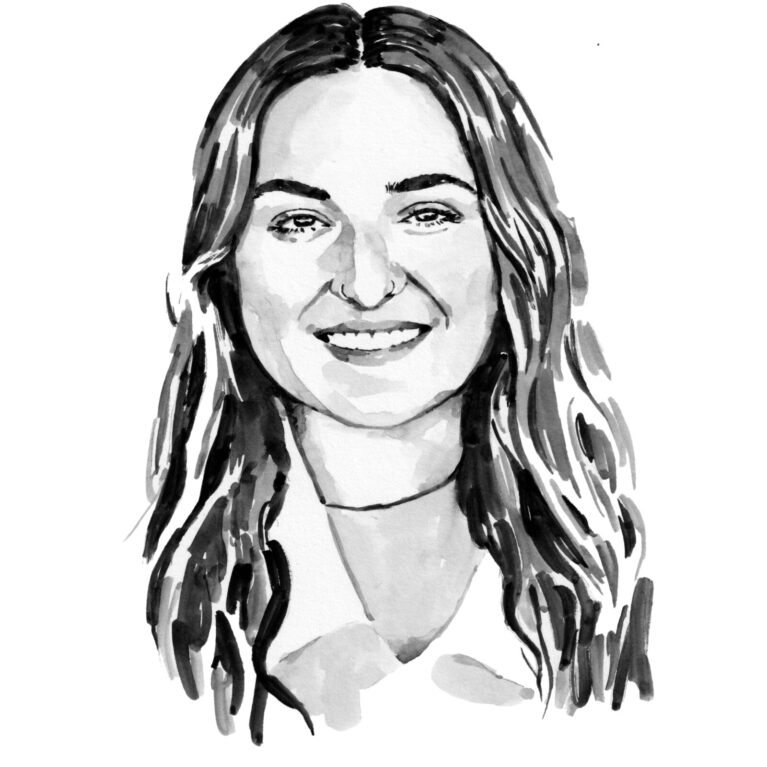
Who I am
I began my scientific career studying the ecological impacts of the Eurasian beaver in Scotland, as part of my Bachelor’s (Hons) thesis in animal science. After graduating I travelled the Americas, a trip that ultimately steered me towards marine science. An internship in the Bahamas catapulted me into the world of shark science, where I spent more than three years managing and working in a remote field station. Living on a small island, I loved the hands-on nature of the field work and developed a deep interest in the movements and physiology of elasmobranchs.
This experience shaped the next stage of my career, leading me to the King Abdullah University of Science and Technology (KAUST) in Saudi Arabia, where I joined the Reef Ecology Lab. Here I expanded my skills beyond field work, developing expertise in laboratory techniques, data analysis and interdisciplinary research. My Master’s dissertation compared biodiversity data collected through baited remote underwater video stations (BRUVS), unoccupied aerial vehicles (UAVs) and environmental DNA (eDNA) surveys in the southern Red Sea. Now a PhD candidate, I am focusing on the Critically Endangered Halavi guitarfish and investigating the movement, genetic connectivity and ecology of a population in the northern Red Sea, while also incorporating the local ecological knowledge of fishers to better understand historical trends. I have been fortunate to contribute to research projects in diverse locations, including the Red Sea, Tanzania and Brazil, all of which have deepened my commitment to protecting vulnerable elasmobranchs and the ecosystems they inhabit.
Where I work
The Red Sea is a unique marine ecosystem, home to some of the highest levels of biodiversity and endemism in the world. While much research has focused on bony fishes, sharks and rays remain comparatively understudied, and even fewer studies have focused specifically on rhino rays (Rhinopristiformes), which are among the most threatened marine vertebrates. Many elasmobranch populations are thought to have declined due to illegal, unregulated and unmanaged fisheries, yet baseline ecological and biological data remain scarce.
My work is based on the Al Wajh Lagoon, a shallow, semi-enclosed bay in the northern Red Sea that covers more than 2,000 square kilometres (772 square miles). It’s bordered to the east by the Saudi Arabian mainland and to the west by an archipelago of 92 islands. The lagoon functions as a micro-ocean, with more extreme temperatures and higher chlorophyll concentrations than those of the surrounding waters. This can lead to differences in the species composition of communities compared to similar habitats elsewhere.
Research over recent years by the Reef Ecology Lab has identified this lagoon as a critical nursery and refuge for threatened elasmobranchs, including the Halavi guitarfish. High numbers of juveniles have been observed here since 2020, but there is still much to learn about the spatial distribution and connectivity of animals in this area. This region is also undergoing rapid transformation, as several of the islands are currently being developed as part of the Public Investment Fund giga-project Red Sea Global (RSG), which aims to build luxury tourism facilities in the area with minimal environmental impact. By deepening our understanding of how Halavi guitarfish use this lagoon, we hope to secure its role as a refuge and support population recovery across the wider region.
What I do
As a PhD researcher in the Reef Ecology Lab, my work focuses on understanding the ecology of the Halavi guitarfish, a shark-like ray regionally endemic to the north-western Indian Ocean. Despite its conservation status, significant gaps persist in our understanding of its life history and population dynamics. My research aims to fill these gaps to inform effective conservation strategies. I use a combination of complementary approaches to study a refuge population in the northern Red Sea. These include population genetics to investigate connectivity and gene flow, movement ecology studies to track how individuals use a lagoon area, and the analysis of tissue samples for heavy metal contamination to assess the impact of coastal development and other environmental changes.
Much of my work takes place in the field, where I lead and coordinate research expeditions, tag and sample animals and collect environmental data. In the lab, I process and analyse samples, manage large datasets and collaborate with other researchers to interpret results. My research is designed to build a clearer picture of how Halavi guitarfish thrive and may adapt in their environment. By combining physiological and genetic data, I hope to support science-based conservation decisions that will safeguard this species and the ecosystems of the Red Sea for future generations. Beyond my own project, I contribute to a range of lab initiatives from shark surveys and tagging programmes to student outreach and organising seminars.