
Antika Milata Rizka
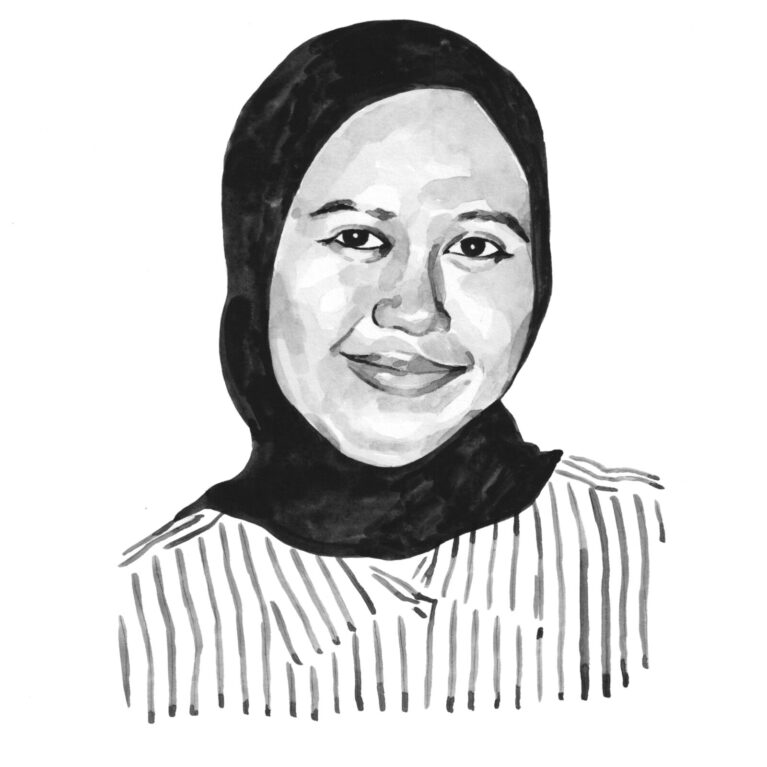
Who I am
My passion for conservation began while I was studying for a Bachelor’s degree in aquatic resources management at IPB University, Indonesia, when I was frequently involved in projects on coastal ecosystems and community engagement. These early experiences convinced me that effective conservation must strike a balance between ecological protection and the realities of people’s livelihoods.
I grew up in Banyuwangi, a coastal district often referred to as the ‘Sunrise of Java’ and renowned for its rich marine resources and strong fishing traditions. In my family, smoked fish, especially ray, was a household favourite and part of our cultural identity. For years I thought of it only as food with a unique taste and meaning. But during my academic years I learned that many shark and ray species are globally threatened, with several listed as Critically Endangered. That realisation changed my perspective: what I had always regarded as a simple meal was in fact connected to species’ decline and the health of marine ecosystems. This turning point set me on the path to shark and ray conservation.
In recent years I have been monitoring shark and ray landings in Muncar, East Java, tracking catch trends and engaging fishers in dialogue about conservation. Spending time at landing sites has shown me that the fishing pressures in Muncar are mirrored across many other regions. These experiences have strengthened my resolve to apply my knowledge more widely and create greater impact for populations of endangered species and for coastal communities.
Where I work
When I first started monitoring in Tuban, East Java, I was struck by how little was known about its shark and ray fisheries. Although it is a busy coastal district with intense fishing activity, scientific studies here have been limited and few have examined sharks and rays specifically. Research efforts in this region have historically prioritised high-value commercial species such as shrimp and demersal finfish, which dominate the local economy. As a result, elasmobranchs have remained largely under-reported. This lack of data has left critical gaps in our knowledge about their population status, habitat use and vulnerability to local fisheries.
Over the past year, our team has begun filling these gaps by collecting preliminary data. What we found was alarming. Wedgefish, one of the most critically endangered ray families globally, make up nearly 50% of the shark and ray bycatch. Their wide size range, from juveniles to adults, strongly suggests that Tuban may serve as an important nursery and spawning ground. These findings highlight both the ecological importance of Tuban and the urgent need for protection.
At the same time, I still work as a fisheries specialist with Mobula Project Indonesia in Muncar, Banyuwangi, where I study the biology, ecology and social aspects of shark and ray fisheries. The lessons from Muncar guide my approach in Tuban, combining science, fisher engagement and conservation action to protect critically endangered species while supporting local livelihoods.
What I do
My work combines daily field monitoring, gleaning fishers’ knowledge and community engagement to advance shark and ray conservation in Indonesia. In Tuban, East Java, I focus on mapping wedgefish habitats and tracking catch trends in one of the least studied yet heavily exploited regions. This daily monitoring, combined with onboard observations and GPS reports, helps me track catch trends and identify critical habitats for wedgefish in a region where data have long been scarce.
Beyond collecting numbers, I work directly with fishers, both vessel owners and crews, discussing conservation challenges and promoting measures to safely release bycatch, especially juvenile wedgefish. Through community engagement and education outreach, I aim to build trust and raise awareness so that conservation feels relevant and achievable for local people. At the policy level, I share findings with government agencies and fisher associations to develop practical management recommendations.
By linking science, fishers’ knowledge and community action, my work seeks to reduce bycatch mortality while supporting both wedgefish recovery and the resilience of the whole community.