
Plankton du jour: D’Arros Island keeps reef manta rays well fed all year
The remote island of D’Arros is home to the largest known aggregation of reef manta rays in Seychelles. New research, led by the Save Our Seas Foundation D’Arros Research Centre (SOSF-DRC), has shed light on the feeding habits of these gentle giants, contributing to our understanding of when, where and why mantas use the island – information that can be used to tailor conservation strategies for this vulnerable species.
Marine scientist Dillys Pouponeau has perhaps one of the best offices in the world. From the window of her ocean-front lab at the D’Arros Research Centre, she can see reef manta rays – her study subjects – dancing just beneath the surface of the azure tropical waters that lap the island’s shores. Here, on the fringes of Seychelles’ Outer Islands, is the largest known aggregation of reef manta rays in Seychelles, which gather almost daily to feed beneath wheeling frigatebirds on the centre’s doorstep.
The fact that reef mantas can be seen feeding consistently throughout the year sets D’Arros apart from other locations in the world, where manta feeding aggregations appear to be more seasonal. One of the questions that the team at the SOSF-DRC has been focusing on is why. ‘It means that there is something special about this place,’ smiles Dillys.
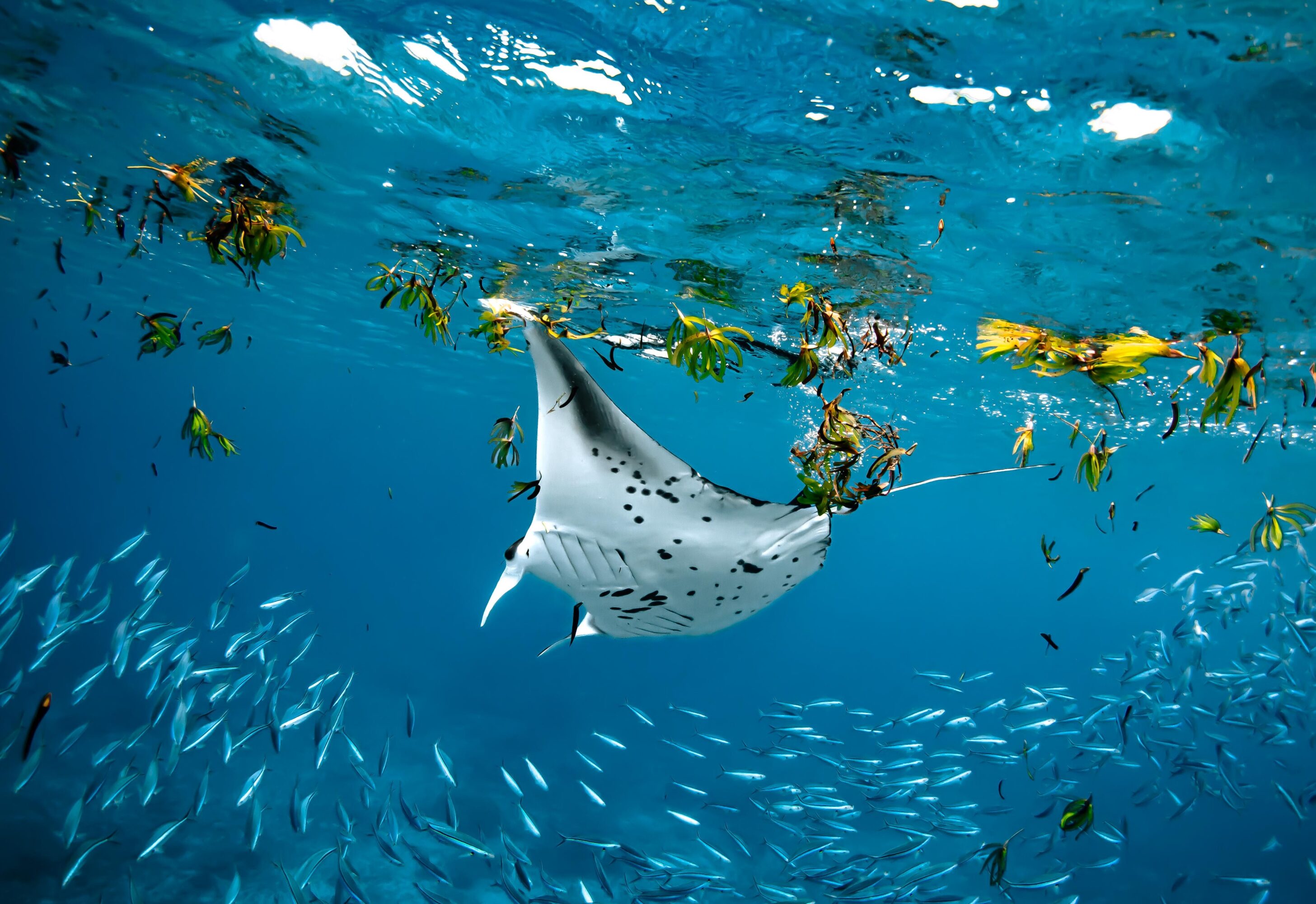
Alfie the manta ray surface-feeding alongside fusiliers, with seagrass floating around like confetti. Photo by Dillys Pouponeau | © Save Our Seas Foundation
A new study from the SOSF-DRC, led by Dillys and published in the journal Frontiers in Marine Science, offers insight into the continuous presence of reef manta rays around the island and confirms that D’Arros provides a consistent food supply. Reef manta rays are filter-feeders, with a diet that consists exclusively of tiny animals – specifically copepods, shrimps, krill and crab larvae – that are collectively known as zooplankton. ‘Because food is available all year round, the mantas are supported throughout the year,’ explains Dillys, who is a research officer for the SOSF-DRC. Combined with other important factors, such as the presence of cleaning stations and lack of predators, the availability of food explains why these remote waters are so important to reef manta rays. ‘This gives D’Arros exceptional value and underscores why continued efforts to protect it are so important,’ she adds.
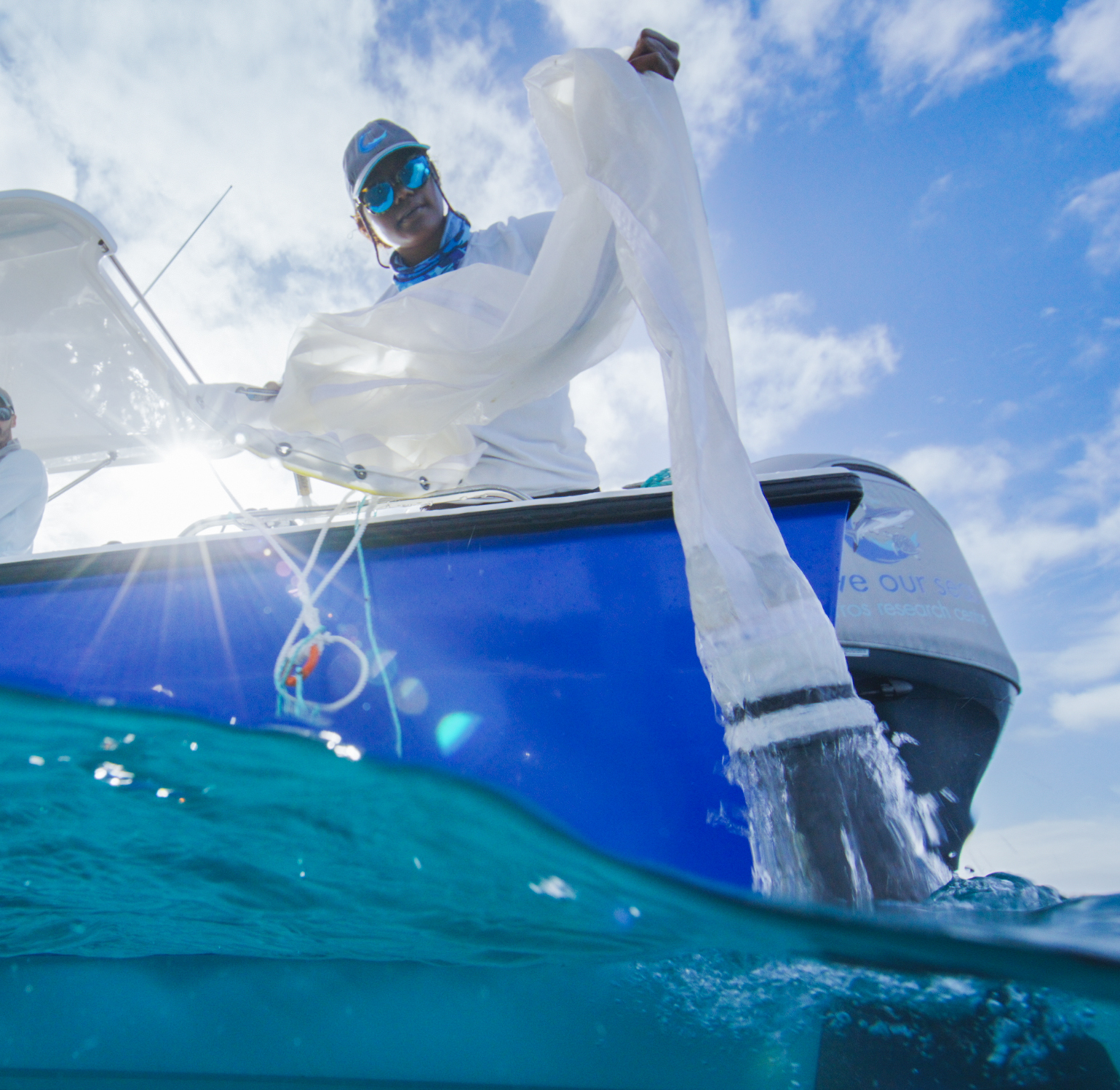
SOSF-DRC researcher, Dillys Pouponeau, retrieves the plankton net from the water to collect a plankton sample. Photo by Dan Beecham | © Save Our Seas Foundation
Moreover, the study sheds light on the conditions needed for the reef manta rays to begin feeding. To find this out, the SOSF-DRC conducted manta surveys by boat almost every week for a year. When the rays were encountered, the team recorded information about their behaviour, noting whether they were feeding or not, before deploying a plankton net to collect a sample from where they had been observed. These samples were then taken back to the lab on the island to be analysed, where the total biomass (the total quantity) of plankton per water volume was calculated.
The results showed that just the presence of plankton is not enough; reef mantas only start feeding when and where plankton is highly concentrated and exceeds a certain threshold. For mantas, feeding expends a lot of energy – they are continuously swimming with their mouths agape, using specialised fins to funnel plankton-rich water in to be filtered. They must consume vast quantities of their microscopic prey to sustain themselves – and this explains why they choose areas where plankton is thickest. It’s like deciding to go to your favourite restaurant; the menu must be just right to warrant making the effort!
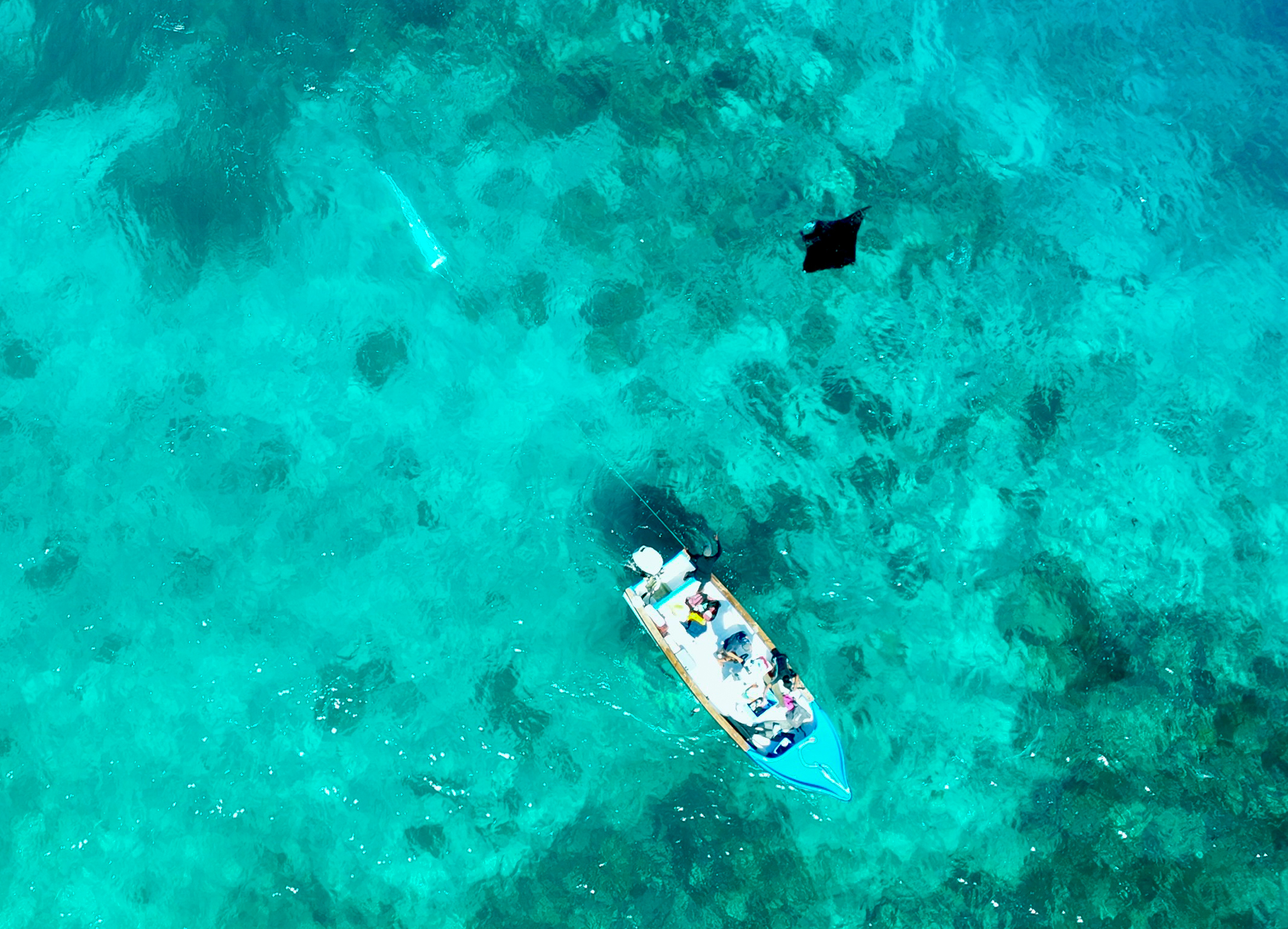
Dillys and the team collect a plankton sample near a feeding manta ray. Photo by Henriette Grimmel | © Save Our Seas Foundation
In the study, the densest patches of zooplankton coincided with the high tide – between two hours before and five hours after – and this was when the reef mantas were observed feeding the most. Furthermore, feeding behaviour was more commonly sighted on the north to north-eastern side of the island.
These findings will be crucial for optimising conservation efforts around D’Arros. In recognition of their exceptional biodiversity and global ecological importance, the waters surrounding the island have been designated as a Zone 1 Marine Protected Area or ‘no-take zone’, where extractive activities like industrial fishing are prohibited. ‘Effective conservation practices rely heavily on detailed understanding of a species,’ Dillys says. ‘Research like this provides exactly that by identifying where, when and why mantas use the island. With this information, we can better design and implement regulations within the marine protected area that directly support their conservation, particularly by limiting activities that may interfere with their behaviour.
‘For example, boats sometimes cross these areas. Regulations on boat zoning and speed are therefore essential to minimise disturbance to surface-feeding mantas and reduce the risk of boat strikes, a threat recognised globally and one that has occurred in Seychelles before.’
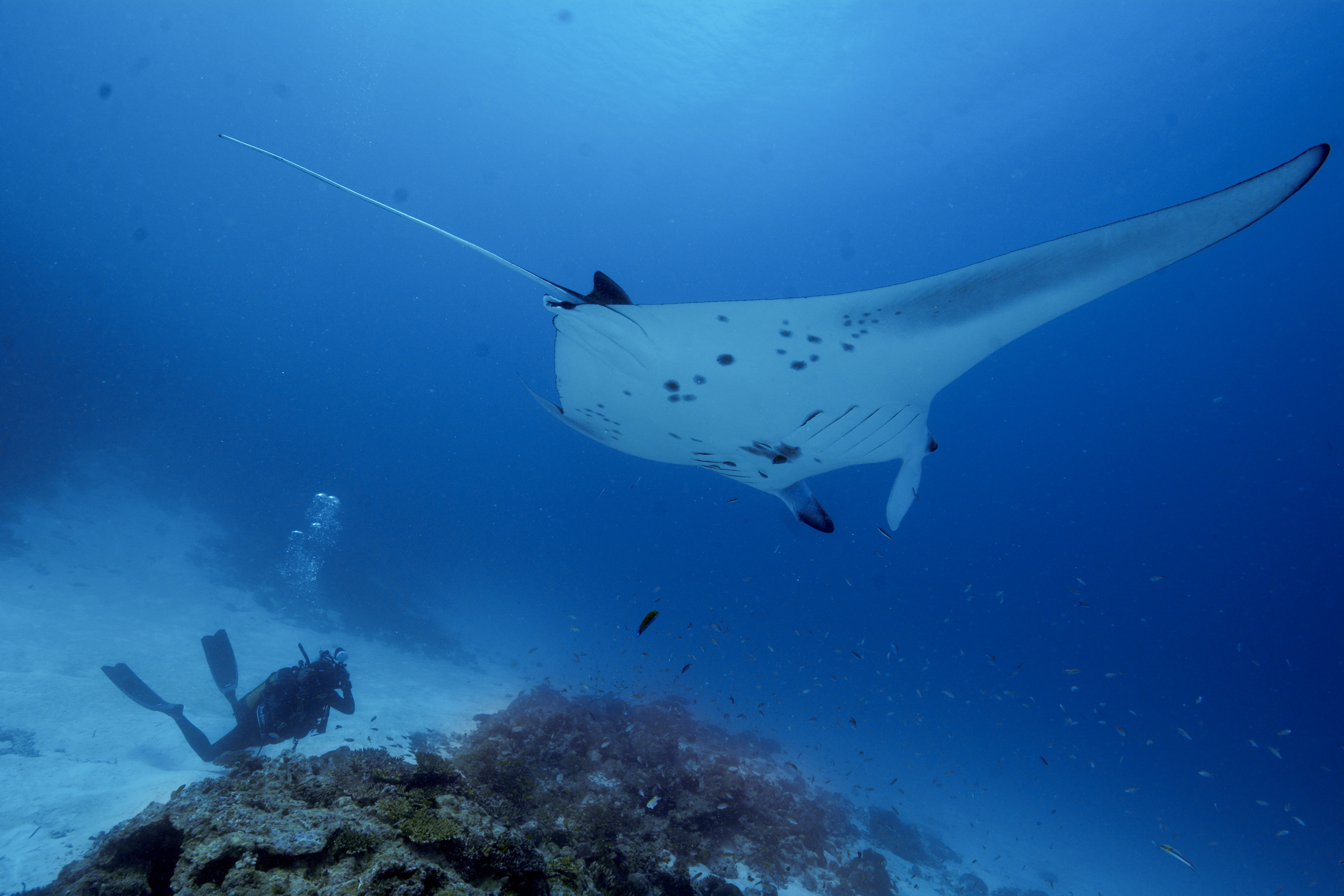
Dillys photographs Tom the manta ray at the cleaning station. Photo by Henriette Grimmel | © Save Our Seas Foundation
The secluded waters of D’Arros Island offer the perfect opportunity to study these iconic creatures, which unfortunately are under threat. Reef mantas are keystone species and therefore ecologically vital; their decline would have serious consequences for underwater systems. For Dillys, understanding more about the species and its requirements is imperative. ‘We need mantas in the ecosystem to maintain critical ecological functions,’ she explains. ‘This knowledge helps us to protect not only the reef manta ray, but also the broader ecosystems it supports.’
This sentiment was central to the vision of the founder of the Save Our Seas Foundation, Abdulmohsen Abdulmalik Al-Sheikh, when he established the SOSF-DRC. ‘D’Arros is truly special and it was important to me to create a world-class field station capable of gaining the knowledge we need to adequately protect it.’ He adds, ‘That research is now having real conservation impact and will preserve the magic of D’Arros for generations to come.’