
Giving Ghana’s guitarfish a fighting chance
Save Our Seas Foundation Conservation Fellow Dr Issah Seidu is one of the winners of the 2026 Whitley Award for Nature.
He is using the award to expand his work into more community-led conservation action, which includes training fishers, protecting habitats and supporting alternative livelihoods, as well as backing the establishment of Ghana’s first locally managed marine areas.
Issah Seidu has the prescient ability to cast his sights on the not-too-distant future and discern where his best efforts to fight for Ghana’s fragile wildlife should go. A Save Our Seas Foundation (SOSF) project leader and an inaugural recipient of the SOSF Conservation Fellowship, he is also the founder and leader of Aqua Life Conservancy, a Ghanaian non-governmental organisation (NGO) dedicated to the conservation of marine and freshwater biodiversity.
Issah spent the early part of his career driving change for his home country’s waters but, although he’s worked on a variety of scientific projects and conservation challenges, his concerns haven’t abated. Instead, he’s noticed a trend that sees Ghana’s threatened shark-like rays set to disappear in our (very immediate) lifetime.
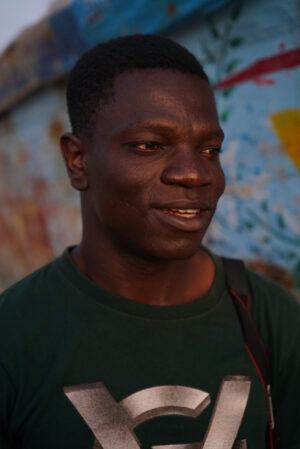
Photo by Gabriella Angotti-Jones | © Save Our Seas Foundation
Sharks and rays are disappearing in Ghana’s coastal waters
‘Shark-like rays, which include sawfish, wedgefish and guitarfish, are threatened with extinction globally,’ Issah explains. ‘These species are targeted for their white fins, which are very lucrative in the international fin market.’
‘Sawfish are functionally extinct in Ghana,’ he continues. ‘Wedgefish are also silently going extinct, and the last time fishers caught them in Ghana was in the 2010s. The extinction of sawfish and the severe decline of wedgefish mean that guitarfish will be the next to suffer local extinction if conservation efforts are not intensified.’
These species’ declines are a trend Issah is determined to halt before the very last rays disappear right off the map. And for his efforts and ideas, he has won a 2026 Whitley Award. The Whitley Fund for Nature (WFN) is a grant-giving charity supported by Patron HRH The Princess Royal and WFN Ambassador and former Trustee Sir David Attenborough.
The focus of their efforts, in their own words, is to ‘offer long-term, laddered support to courageous change-makers leading local solutions to the global biodiversity and climate crises; they are acting on the latest science and igniting projects with passion. Through these award-winners we support work rooted in communities that creates lasting benefits for wildlife, landscapes and people’.
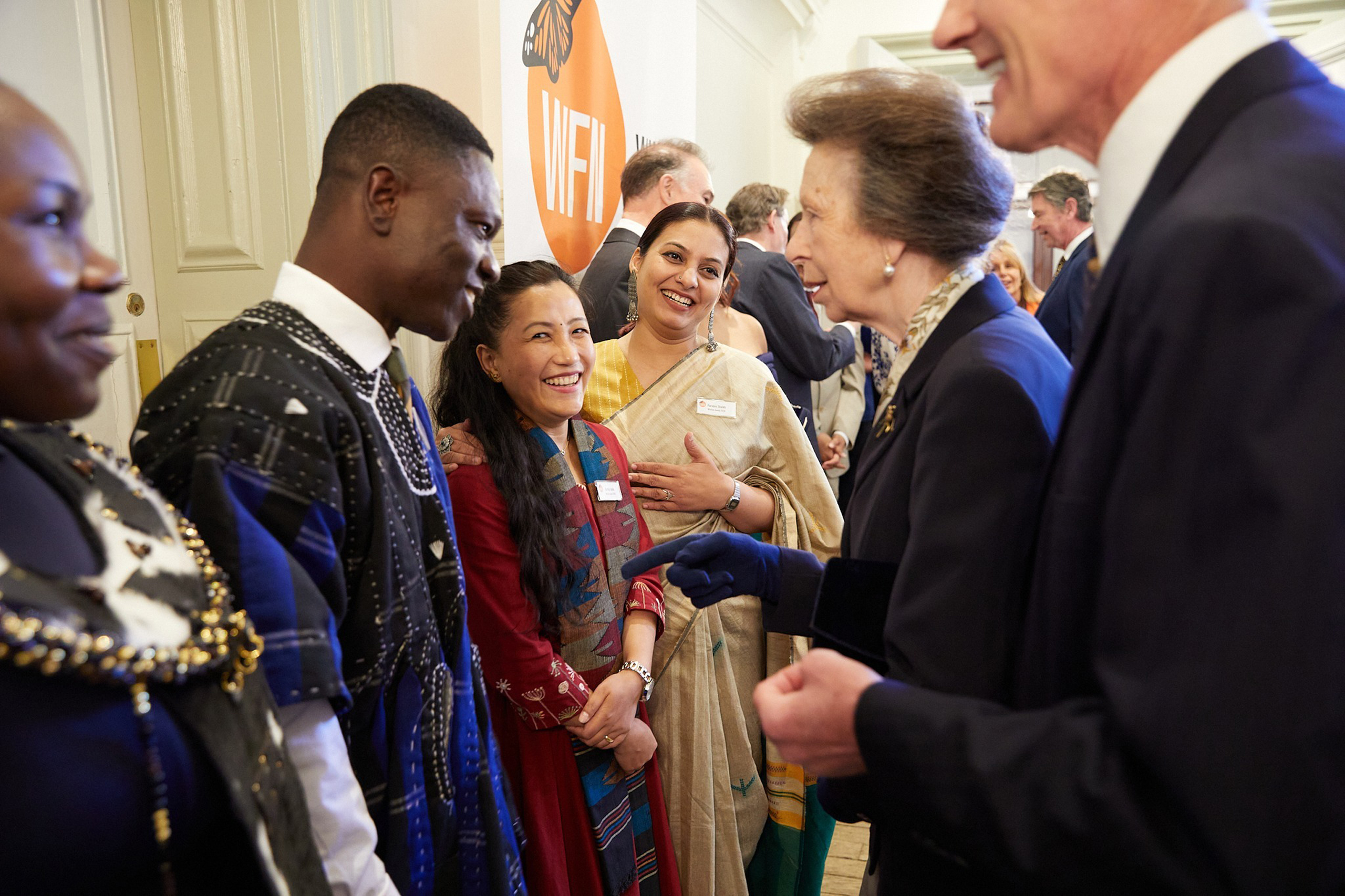
Photo © Whitley Fund for Nature
Guitarfish are at the end of the ‘rhino ray’ extinction line
The shark-like rays from five particularly endangered ray families are also dubbed the ‘rhino rays’. While this nickname may more accurately reflect their elongated snouts relative to those of other sharks and rays, it’s a moniker that draws extinction parallels with the better-known terrestrial rhino. ‘Guitarfish are now among the most threatened marine species globally and Ghana’s coast has become one of the most important remaining areas where they are still regularly encountered.’ For this reason, Issah’s WFN-funded project is called Fishers and guitarfish: preventing extinction along Ghana’s western coastline.
‘Guitarfish populations have declined drastically due to intense fishing pressure and the high demand for their fins and meat. Because guitarfish grow slowly, mature late and produce few young, they are highly vulnerable to overexploitation and their populations recover very slowly once depleted,’ explains Issah. His worries are three-fold: the loss of guitarfish is something we would grieve collectively (even if not consciously for the majority of us) because it would be another thread pulled from the incredible tapestry of life that has us all woven together on this planet; the extinction of guitarfish would be like triggering some level of ecosystem domino reaction; and there would be immediate consequences for Ghana’s coastal communities.
‘On Ghana’s coast, artisanal fisheries frequently catch guitarfish, both intentionally and as bycatch,’ Issah explains. ‘Without urgent conservation action, local populations could collapse, leading to ecological and socio-economic consequences. As bottom-dwelling mesopredators, guitarfish play an important role in maintaining healthy coastal ecosystems and balanced marine food webs. Their disappearance could disrupt the stability of the ecosystem and reduce the resilience of coastal fisheries that many communities depend on for food security and livelihoods. Directing conservation efforts towards guitarfish now is therefore critical to preventing local extinction and safeguarding Ghana’s marine biodiversity.’
Photo by Gabriella Angotti-Jones | © Save Our Seas Foundation
Local leadership and community-driven solutions
As a biological scientist fascinated by the treasure trove of life on his coastline, Issah has long realised that his conservation work cannot be divorced from its social and economic implications. It’s an understanding that has required learning, listening and observation – and it’s not without its challenges.
‘One of the key challenges in our work is the highly mobile and diverse nature of Ghana’s artisanal fisheries,’ says Issah. ‘Many fishers migrate seasonally along the West African coast, moving between landing sites in Ghana and neighbouring countries, depending on fish availability and fishing opportunities. This mobility makes it difficult to maintain continuous monitoring, collect long-term data and ensure consistent engagement in conservation activities.’
A real challenge for scientists and conservationists working on the ground is the current mainstream reality of funding cycles, reporting requirements and expected project outcomes. Meaningful conservation solutions take time. Not only do natural systems not operate on our budget cycles, but the people who will be most impacted by any interventions have to be engaged and included in processes that require a lot of learning, unlearning and relationship-building.
This is something Issah knows all too well, and it’s a reality he tries to balance by seeking opportunities to fund and implement his work on much longer time-scales. Patching together funding, fellowships and grants, he creates a stepladder of sorts to build incrementally something coherent, visionary and sustainable. ‘Migratory fishers often come from different ethnic backgrounds and may have varying levels of trust in researchers or conservation initiatives. Building relationships therefore requires time, local partnerships and an ongoing presence within communities. In some cases, fishers may also be hesitant to share information about catches, especially for threatened species such as guitarfish, sharks and rays that provide important income. Despite these challenges, including migratory fishers is essential because they are central to fisheries dynamics and can become strong partners in conservation when meaningfully engaged.’
Scale, impact and building longevity into the conservation forecast for Ghana’s coast
‘The Whitley Award provides an opportunity to scale up and strengthen our conservation efforts for threatened guitarfish and rays along Ghana’s coast,’ affirms Issah.
He has been a project leader at the SOSF and received the inaugural Conservation Fellowship. ‘The Whitely Award complements and builds directly on the work I have been carrying out as one of the first Conservation Fellows. The fellowship has been instrumental in generating baseline scientific data on guitarfish, sharks and rays in Ghana, strengthening local conservation networks and building the trust of fishing communities over several years. The SOSF’s support has enabled us to document critical species and critical areas for the survival of guitarfish, further identify conservation priorities and develop strong approaches to community engagement.’
This latest recognition of Issah’s determination and hard work is another rung in the long-term ladder. ‘Through the award, we are expanding into more community-led conservation action, like training fishers, protecting habitats and supporting alternative livelihoods. We can also support the establishment of locally managed marine areas, strengthen local leadership and build long-term systems for monitoring sustainable fisheries management.’
The SOSF is proud of Issah’s achievements and happy that he has received this recognition by the Whitley Fund for Nature. We are certain he will continue to fight for a sustainable future of Ghana’s sharks, rays and coastal communities.
Photo © Whitley Fund for Nature