
Behind-the-scenes of Blue Planet III’s Smith’s swimming crab spectacle
When passion and patience pays off
The ocean is a vast cornucopia of wonders. Even for underwater cinematographer Dan Beecham, who has witnessed more of the ocean’s secrets than most, nature still finds ways to surprise him. One such moment occurred during a seemingly routine dive off the shores of D’Arros, a remote island in Seychelles which is renowned for its incredible biodiversity.
It was a site Dan had dived dozens of times while assisting shark scientist (now Save Our Seas Foundation CEO) Dr James Lea on his fieldwork expeditions. On that particular day in 2017, there was nothing to suggest that there would be anything out of the ordinary – until Dan glanced down into the azure waters.
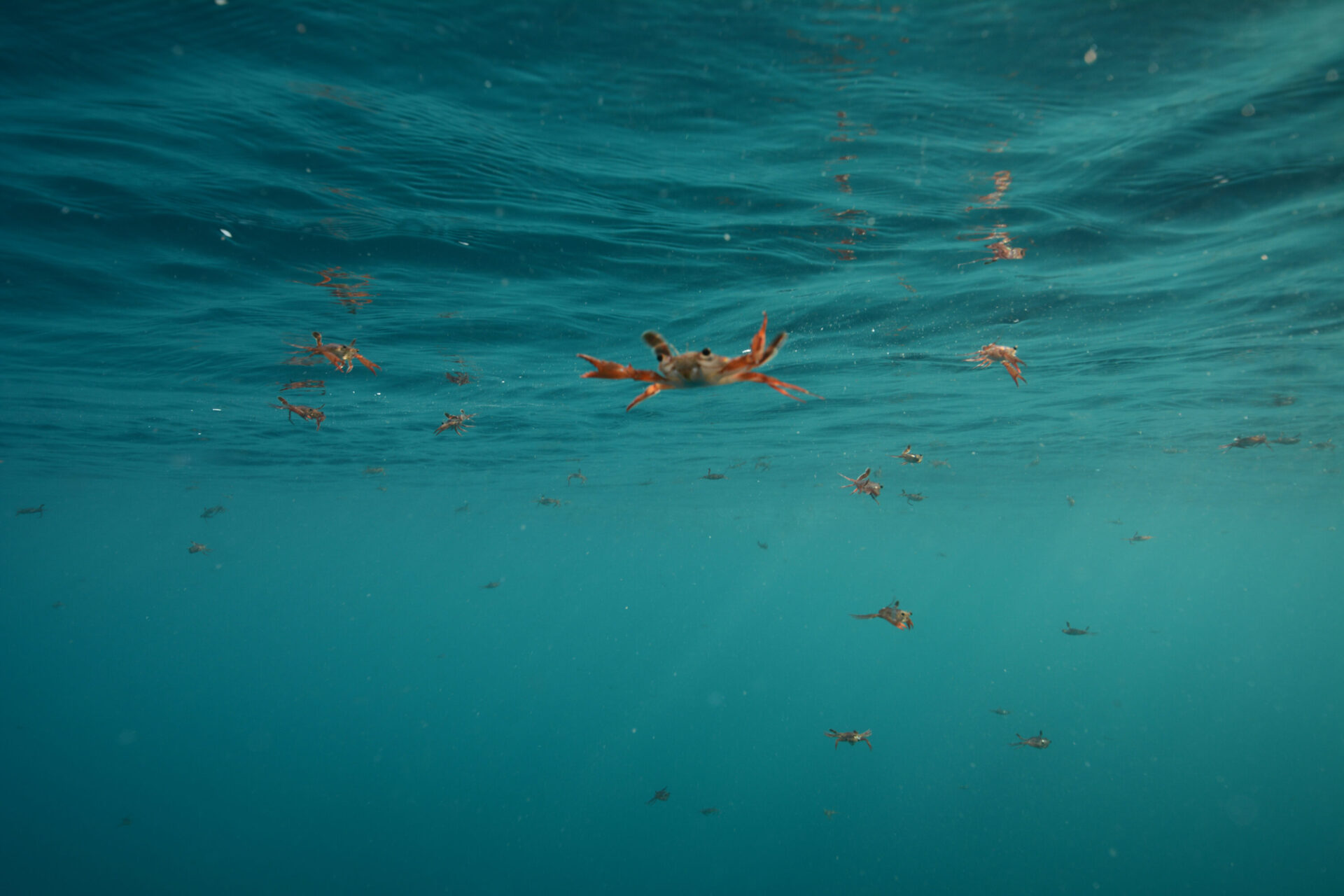
“Imagine my surprise, when I looked over the side of the boat in preparation for the dive, to see the water column full of tiny bright orange crabs, from the surface down to the sea floor,” Dan writes of his experience. “Thousands, probably tens of thousands, of tiny open ocean nomads.”
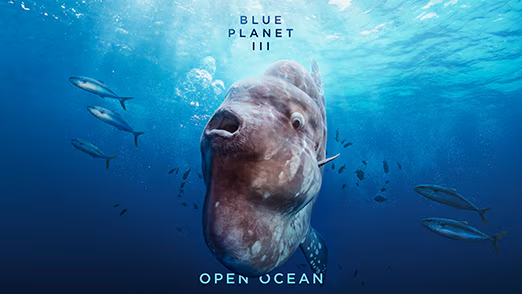
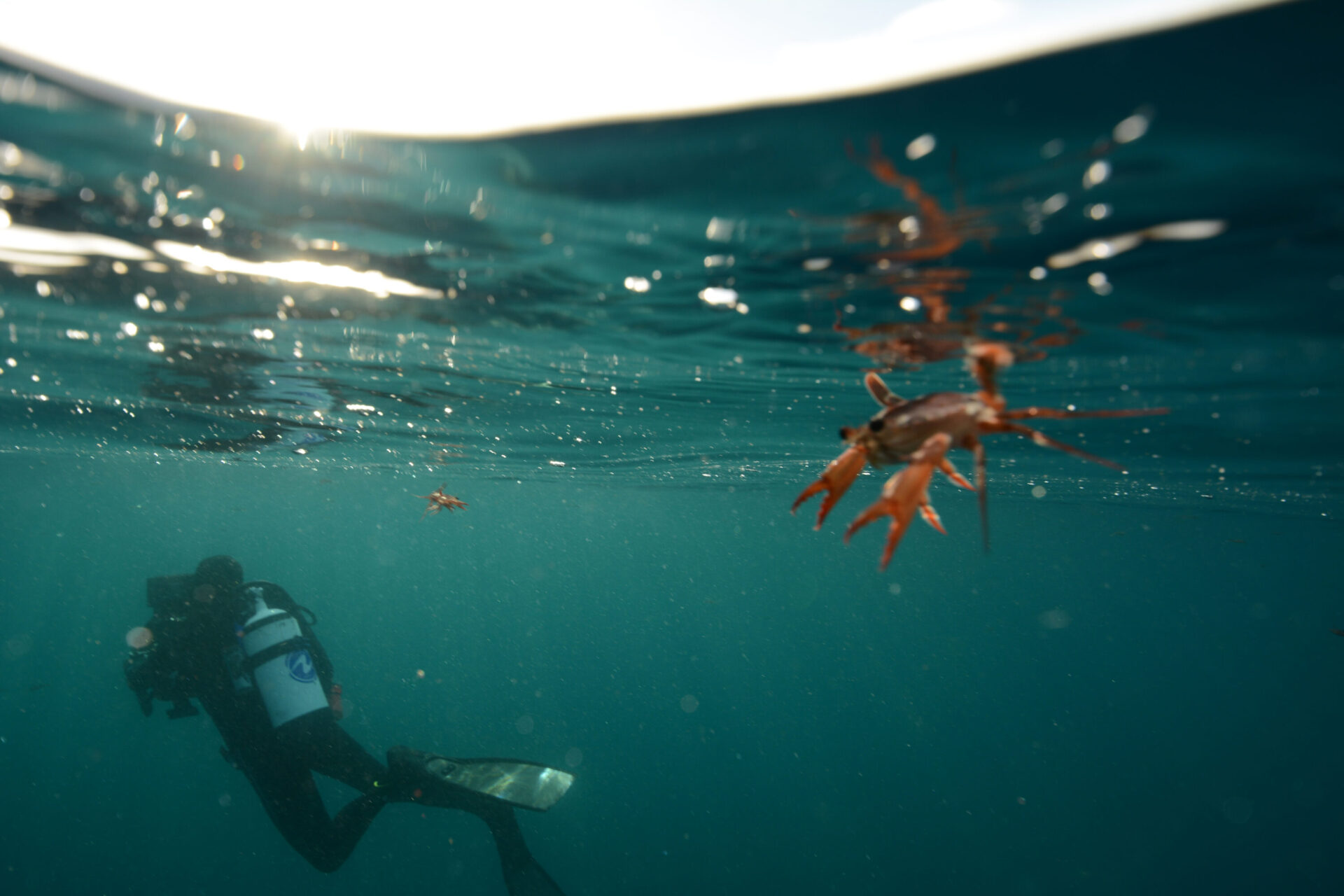
What they had come across was a surface swarm of Smith’s swimming crabs – a fleeting phenomenon occurring in the western Indian Ocean between June and September. It is a sight few people get to witness; most aggregations take place in the open ocean, far from the coast. But this November, millions of people will be connected with these endearing tangerine travellers as Dan’s footage is featured in the Open Ocean episode of BBC’s landmark series Blue Planet III.
Capturing the crabs on film was the result of a six-year obsession. That initial chance encounter happened at a time when Dan was ‘off duty’, having just wrapped filming on Blue Planet II. He had travelled to D’Arros with only a simple stills camera, but knew there was the potential to record something really special. These massive pelagic gatherings were not only a mysterious spectacle, but the animals themselves were seriously charismatic; highly curious, investigating anything and everything that drifted into their path. If that happened to be another Smith’s crab, a fight would ensue – one that was often to the death. “A story like this is something of a holy grail in wildlife filmmaking,” Dan says. The question was, had it been a once-in-a-lifetime event, or something he could return to document?
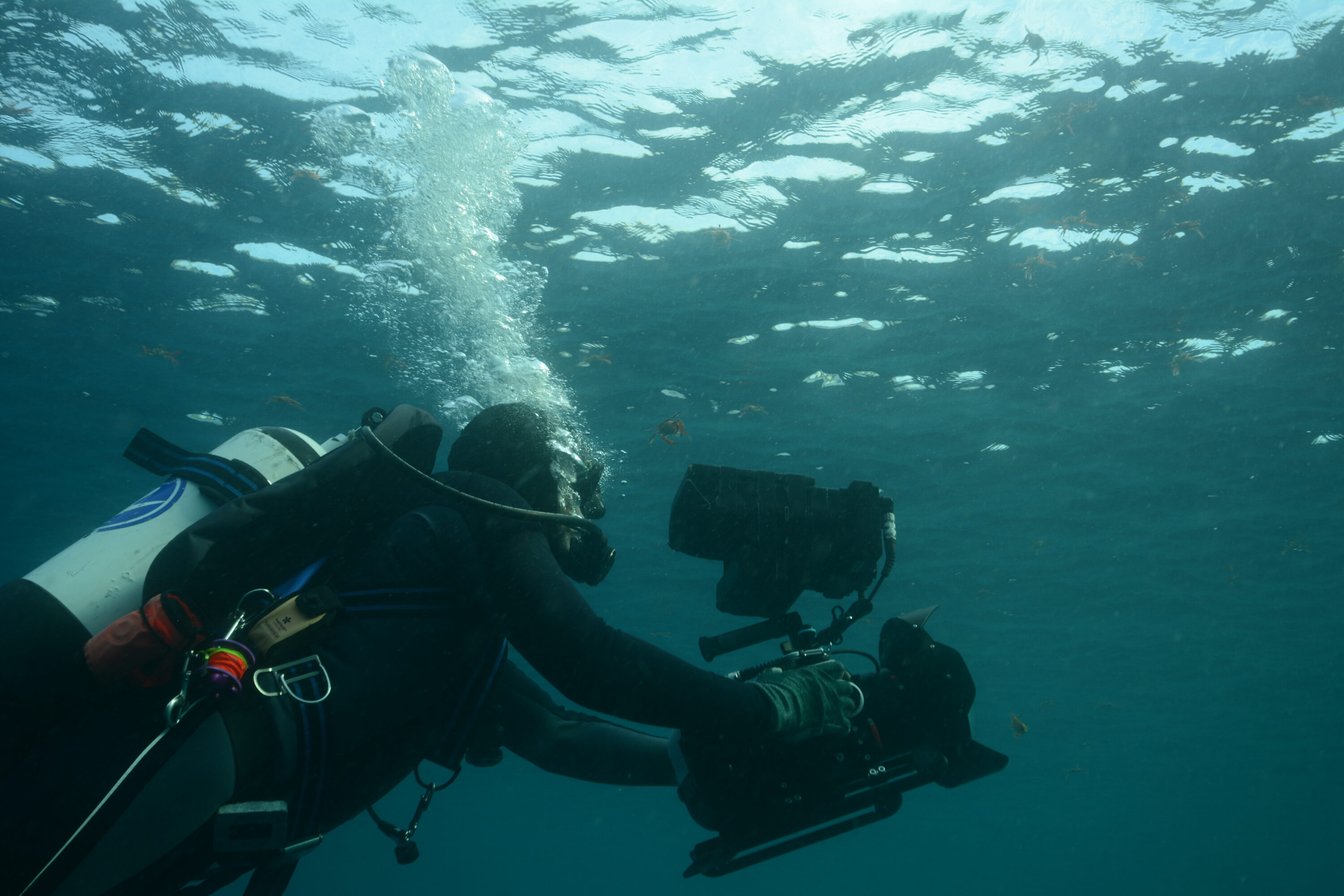
Photo by Henriette Grimmel | © Save Our Seas Foundation
Upon returning home, Dan threw himself into research; scouring scientific journals, reaching out to marine biologists, fishers and guides and even setting up a google alert for ‘Smith’s swimming crabs’. What he found were crumbs of information. The very few scientific reports available discussed gargantuan swarms of up to 15, 000 individuals per kilometre squared, peaking in July. The crabs seemed to be drifters, carried by the wind and currents created by the southwest monsoon. There was possibly some correlation with the tides and lunar cycle, but exactly when and where the crabs would appear seemed impossible to predict. “For years, that initial sighting haunted me.” Dan recalls. “I had seen something few people had, and something which was so difficult to explain. I will admit I became slightly obsessed.”
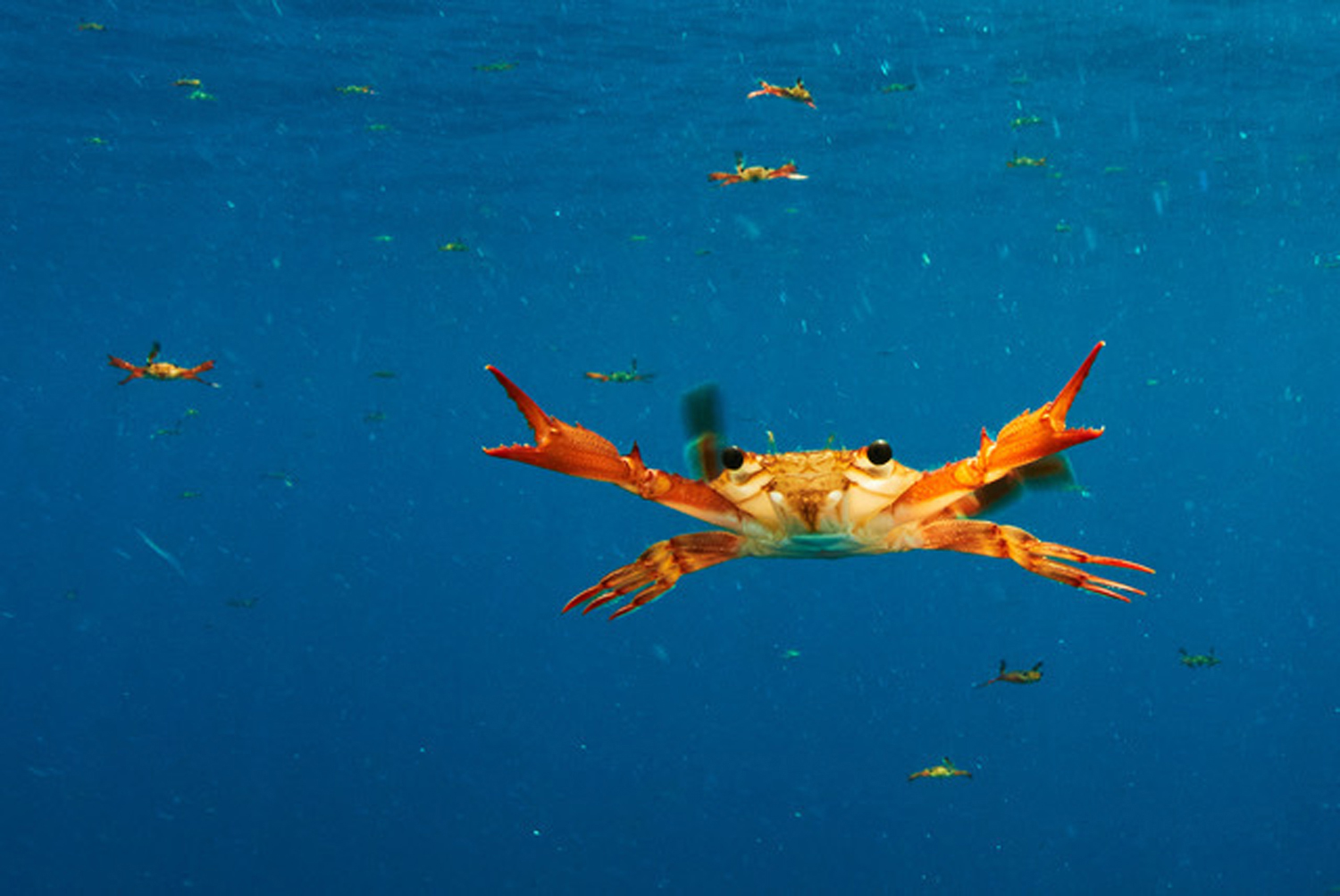
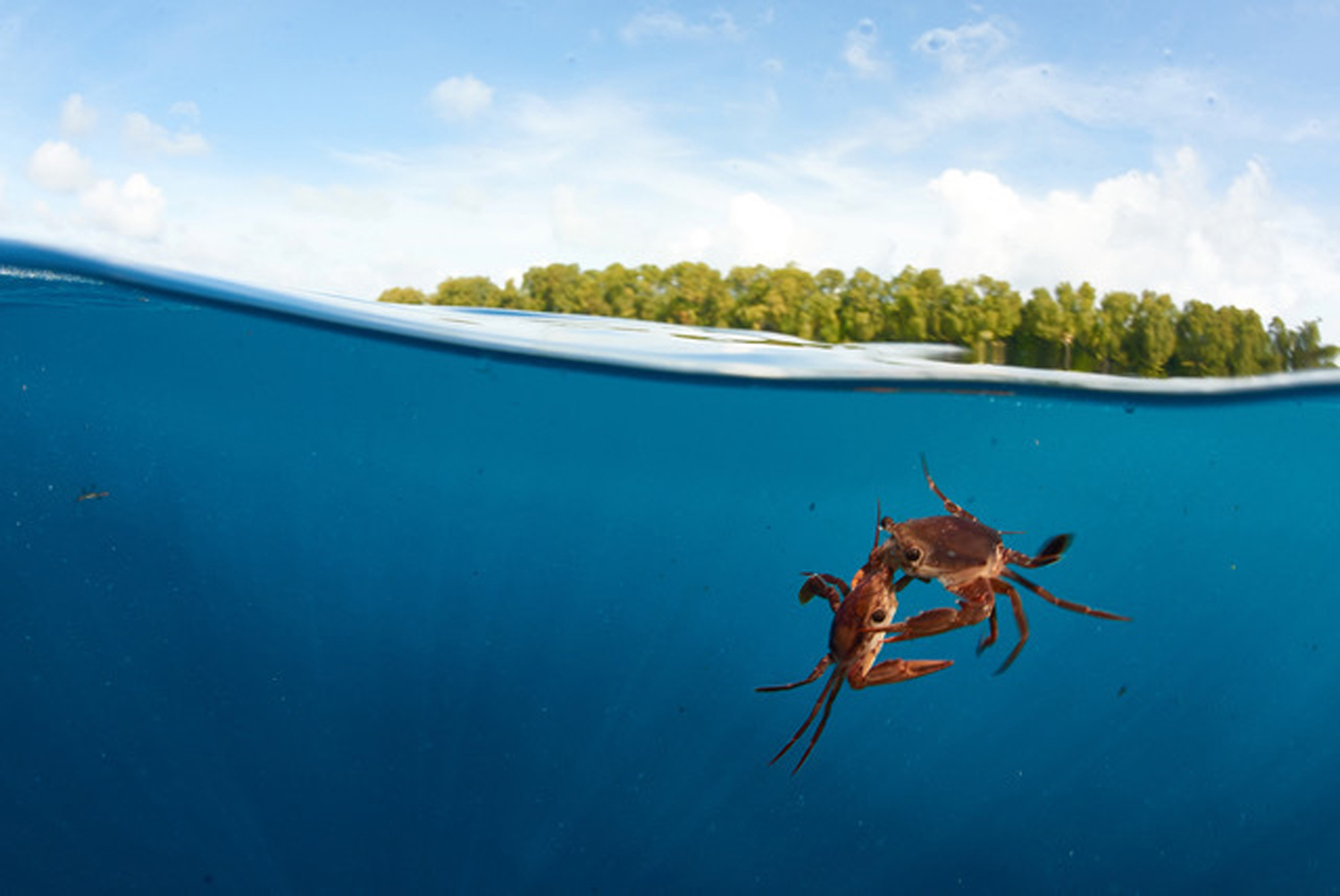
Unbeknownst to Dan, many miles away someone else was following the same trail of breadcrumbs. In 2022 Seychellois scientist Dillys Pouponeau, Research Officer for the Save Our Seas D’Arros Research Centre (SOSF-DRC) had come across a single ‘Smithie’ while conducting a reef manta survey in the same waters Dan had dived in years previously. This strange orange visitor was something new. “Working in the ocean for all these years…I had never seen it before,” she recalls. Curious, she took a video of the crab drifting through the water column, waving its paddle-shaped back legs aloft with the serious expression of a tango dancer. But when it came to identifying the species for her Instagram caption, Dillys – like Dan – found an online dead-end. “I couldn’t find any videos of these animals alive, to be able to compare and see what species they were,” she says. Instead, she posted her encounter wondering aloud who she had seen, and what they were doing there.
Photo by Dillys Pouponeau | © Save Our Seas Foundation
Slowly, others began to comment with their own sightings – including one fanatic cinematographer who had been waiting for this exact moment. Dan immediately contacted Dillys and the pair began swapping stories and learnings. Conversations online and with local fishers indicated the crabs were something of a seasonal event, blown around by the monsoon winds and filling the bellies of larger animals, like tuna and giant trevallies.
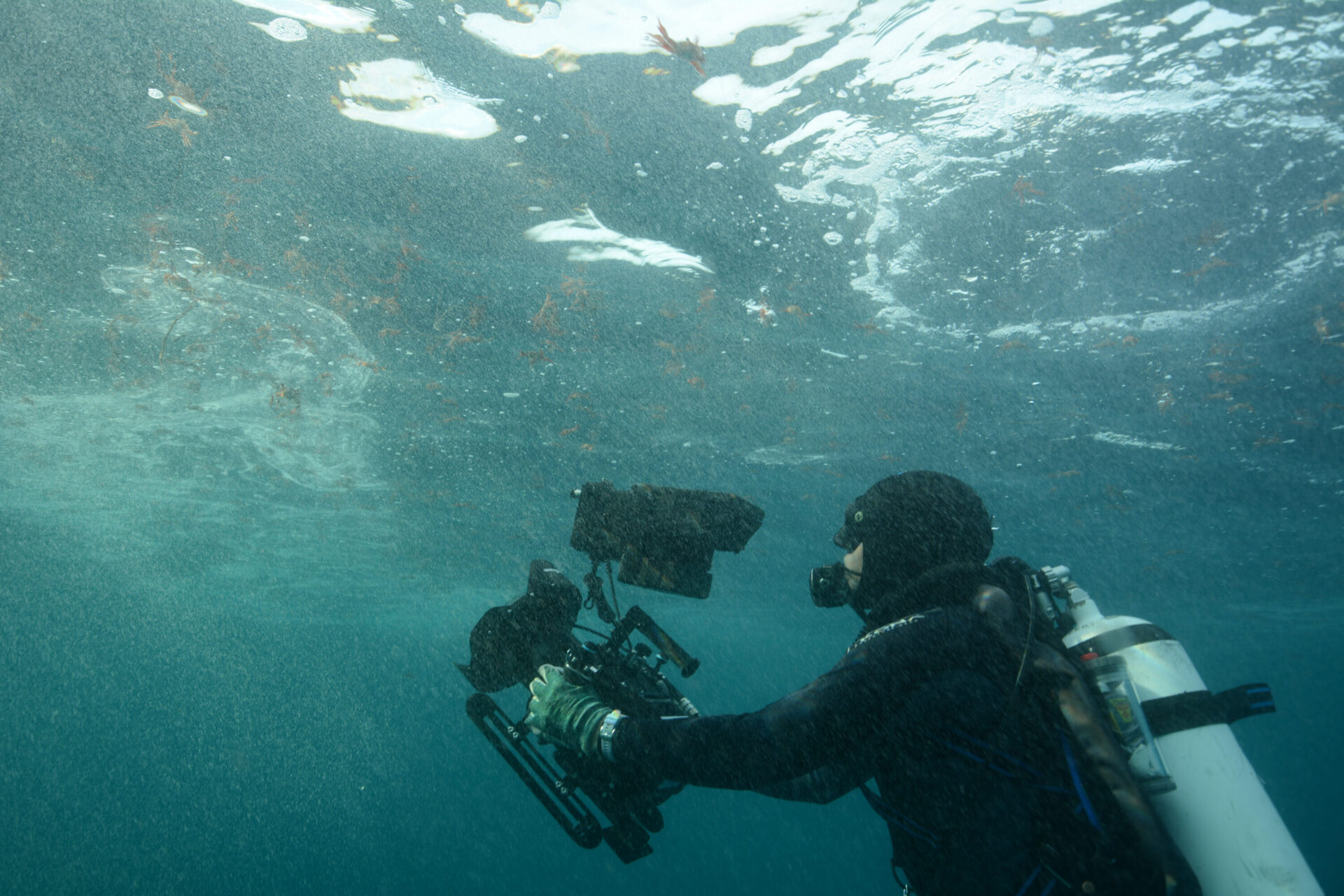
“I didn’t think anything of it…I didn’t think this was something we’d be able to come back to, and actually see them perform,” Dillys says. “But I didn’t realise how much of a fanatic Dan was!” It was the evidence Dan had been searching for. With a gap between shooting assignments that coincided with the southwest monsoon and the chance of a reliable sighting, the stars aligned. Six years after that initial encounter, Dan headed back out to Seychelles to join Dillys and the SOSF-DRC team to try his luck at capturing a swarm on film.
And, as luck would have it, the trip was a roaring success. Their first dive found a few crabs, which expanded into hundreds and then thousands as the full moon drew closer. These incredible scenes – over half a decade in the making – have been turned into a captivating story by producer Natasha Fellows, unfolding via the iconic narration of Sir David Attenborough.
The gathering of the ‘Smithies’ is more than just a fun tale. They form a crucial, seasonal component of the Indian Ocean food web. “They feed on plankton and other small animals, and this is where they seem to have a role in controlling smaller organisms, especially when there is a lot of them together,” Dillys explains. “But they are also a source of food for top predators, like sharks and tuna. For a place like D’Arros, which is an internationally important site for so many shark species, they are doing good for these animals.”
Six years of dedication, passion and collaboration across oceans, distilled into five minutes. The story of the Smith’s swimming crabs is a true example of when patience and curiosity pays off.
You can read Dan’s full blog of his experience here, and watch the full sequence for yourself by catching Blue Planet III: Open Ocean on BBC iPlayer.