
2025 Save Our Seas Foundation Conservation Fellows Announced
The Save Our Seas Foundation (SOSF) Conservation Fellowship was launched in 2023 to celebrate 20 years of the SOSF.
It directly supports the living costs of someone carrying out shark and ray conservation work in the Global South, or in a region where conservation resources and investment have been scarce. The aim is to retain their passion and innovation in the sector and further develop their expertise, so that the ‘brains trust’ is empowered to help develop new generations of conservation impact.
The three recipients of the second cycle of the Conservation Fellowship have worked hard to advance in the scientific field, and even harder to pioneer conservation projects in their country. These women are at a critical juncture in the early stages of their careers: they have each developed new ways of understanding our oceans and found pathways to put their research into conservation action. Hailing from largely under-resourced and under-researched regions, they are well placed to make a powerful impact on shark and ray conservation efforts – but they have had to overcome more challenges than scientists in better-funded regions and in graduate student programmes that are better supported.
Photo © Rihab Louhichi
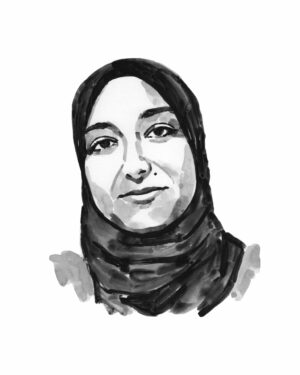
Rihab Louhichi has been forging ahead with shark and ray research and conservation efforts in the Gulf of Gabès, the most important fishing area in Tunisia; it supports about 50% of the national fishing fleet and accounts for roughly 50% of the country’s catch. It is a shark and ray biodiversity hotspot, where 27 shark and 21 batoid species have been recorded. Fisheries targeting sharks and batoids operate seasonally during spring and summer in the Gulf of Gabès. However, these fisheries target endangered species such as guitarfish and the sandbar shark Carcharhinus plumbeus, raising significant conservation concerns. Rihab has been worried that the fisheries appear to operate in shark and ray nursery grounds, without effective management, and that this would lead to declines in several populations. As a PhD researcher in marine biology at the Faculty of Science of Sfax and a member of the Marine Biodiversity Laboratory of the National Institute of Marine Sciences and Technologies (INSTM), Rihab has been working to confirm the aggregation zones of elasmobranchs in the Gulf of Gabès. Protecting these grounds is critical for ensuring healthy levels of recruitment and the overall viability of the populations.
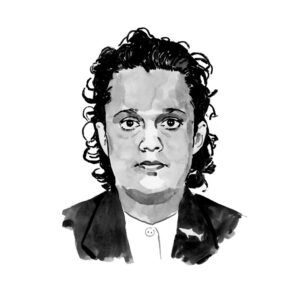
Buddhi Pathirana blazed through cultural and social barriers to achieve her qualifications in marine biology in Sri Lanka. Raised in the rural village of Erathna, which is located at the base of the well-known Adam’s Peak and far from Sri Lanka’s coastline, she nonetheless graduated with a first-class degree in fisheries and marine sciences. Known as ‘Shark Girl’ by the fishers and traders who she went on to work alongside during her tenure at the Blue Resources Trust, Buddhi is on a singular mission. In August 2022, she formed an organisation called Ocean Rosy to conserve the marine environment and its species, with a special focus on sharks and rays along Sri Lanka’s west and south coasts. While establishing their own channel to conduct research and share their findings, she and her team have been empowering young girls through their school awareness programme. Buddhi also worked to understand how rising sea temperatures will affect rays, testing the idea that higher temperatures will lead to smaller animals over time – a problem compounded by overfishing.
Ilse Martinez realised that the gaps in our understanding of the conservation status of many sharks and rays could only be filled if we understood the stories told by generations of fishers who knew the ocean in different ways. Born in Mexico City, she had to figure out how to crack a career dedicated to sharks and rays (her passion since childhood) with no clear opportunities to study them. Instead, she sought internships and volunteered in conservation projects that inched her closer to shark and marine conservation. Since then, she has gone on break the mould of the classic marine biologist. When she began studying the artisanal shark fisheries in the southern Gulf of Mexico, she realised she had to understand both the fisheries and the humans involved – and how they influence each other. Ilse is sensitive to the complexities of conservation and champions the importance of working side by side with coastal communities. Her focus has been on Términos Lagoon, the largest coastal lagoon in south-eastern Mexico. Being culturally and economically important for the communities along its coast, Términos Lagoon has shaped the history of Campeche State. It is also important for sharks and rays, being a nursery area for at least five shark species and a historical elasmobranch fishing ground.
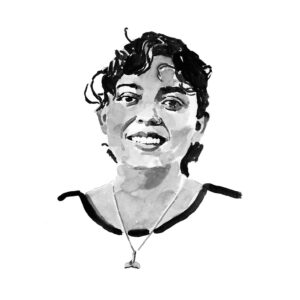
Photo © Ilse Martinez
The Save Our Seas Foundation is delighted to play some role in helping these committed and talented change-makers to deliver conservation projects. All too often, conservationists struggle to secure the support they need to thrive in their profession. Passion and deep-rooted beliefs are what keep many extraordinary people across the planet delivering in what is, for the most part, not a very well-paid career compared to other professions – and one that is often not considered prestigious. These Conservation Fellows have already proved their resilience and commitment. We hope that their fellowships begin to turn the tide for them – and for the sector more broadly – and will encourage us all to look at what we value, support and invest in for our shared future.