
While my guitar(fish) gently weeps: the hidden exploitation of an understudied, recently described ray
It is 6:00 a.m. at the crack of dawn as my team and I, usually consisting of three to four persons, wake up and prepare for a day covered in fish juice. With eyelids heavy, and some of my teammates still groggy under the dark of night, we make our way down to the extensive row of jetties running along the bank of the Bernam River. Large trucks transporting freshly landed fish and workers on their bikes drive up and down the narrow road connecting all the jetties together. A pungent smell is rife in the air – attracting stray dogs who linger about to scavenge from the many fishes which drop from the containers during transport. Behind the gates of each privately owned jetty, these workers – usually made up of foreign nationals – eagerly wait as the catch is landed.
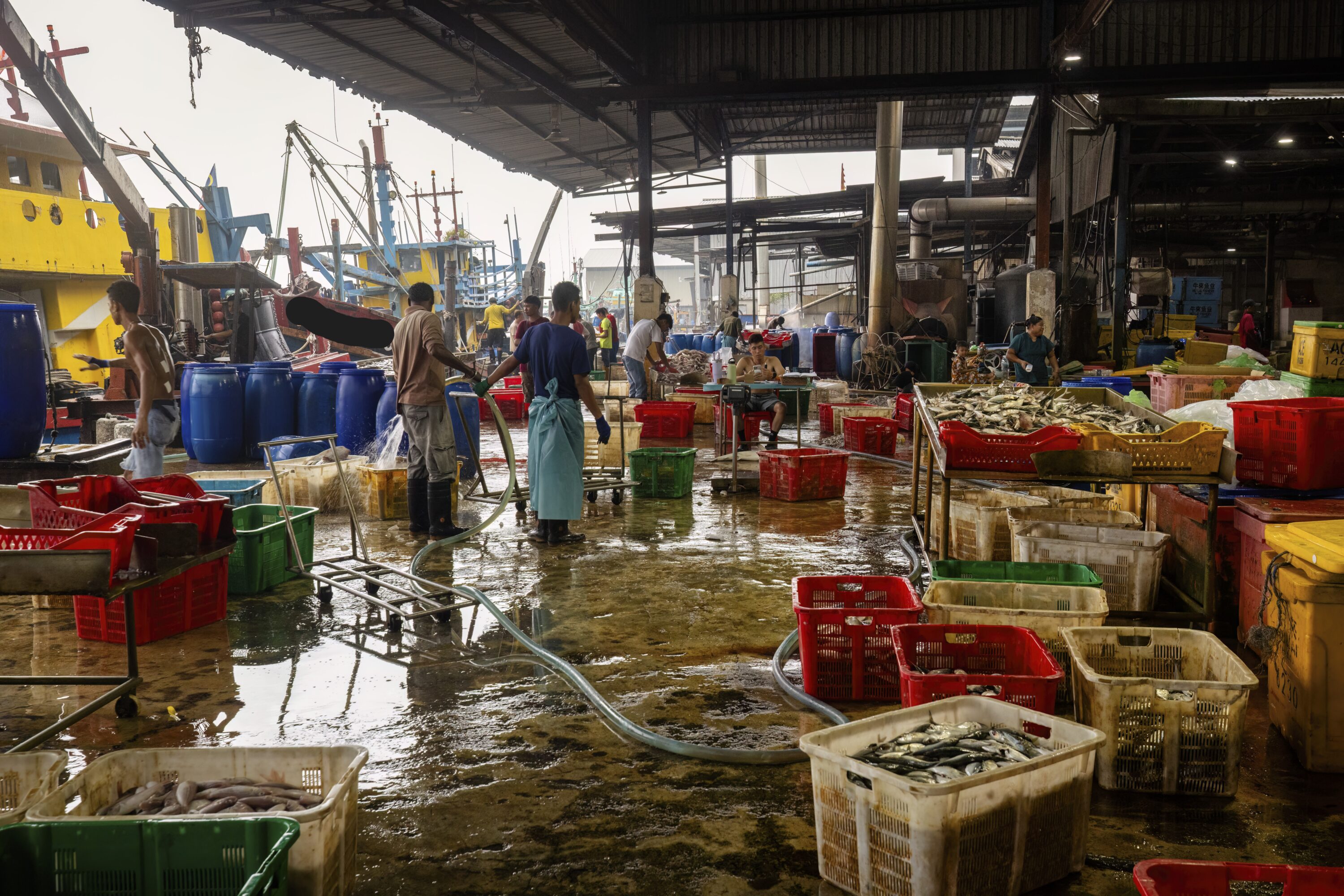
A busy morning at a jetty in Hutan Melintang, Perak, Malaysia. Photo © Scott Nishiki
A crane pulls out a blue barrel from the hull of a big colourful trawler moored to the side of the jetty. It is then set on top of a wooden platform, where workers quickly tip it over, spilling long silvery fishes and ice water into a basket. Then, another barrel emerges, and another, and another. We wait patiently as workers hurriedly haul trolleys and baskets past us – weighing and sorting the catch. We catch a glimpse of a slender brown-coloured fish amongst the silvery scales and ice shards and promptly investigate; and there it was – a Ranong guitarfish. Not soon after, an entire barrel full of them is emptied, filling about two baskets. We quickly go to work, whisking away the baskets to a secluded area of the jetty [with permission of course]. One by one, the guitarfish are taken out of the basket which could well hold over forty individuals. Crouched on the fish juice-soaked ground, a teammate rapidly takes measurements with a tape, while another one struggles to weigh the slimy fish with a hook scale. By the time we are done with the baskets, it was almost two hours later. We flick the guitarfish goop from our hands and rinse our equipment, only to find two more basketfuls on the jetty.
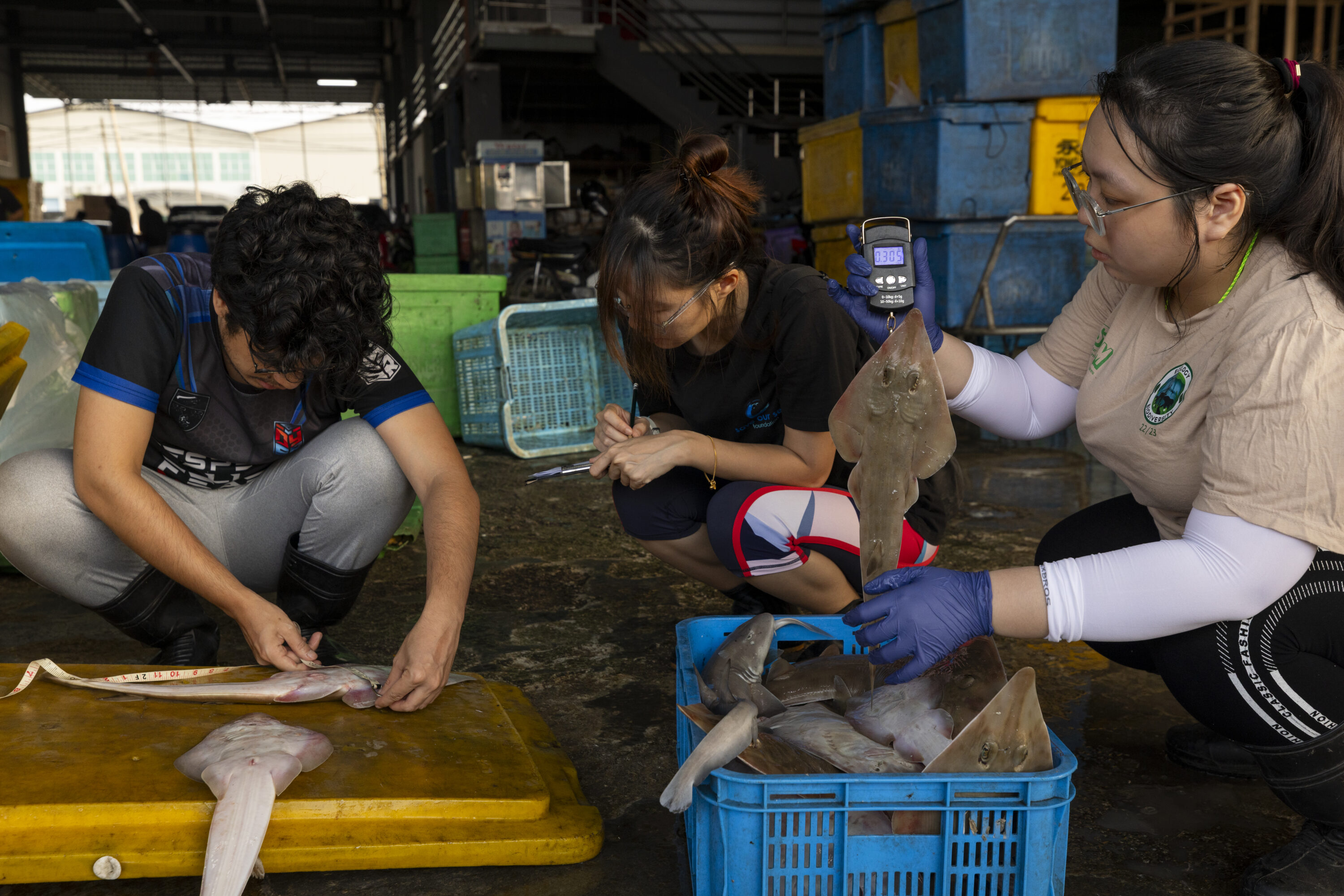
Measuring, weighing, and sexing Ranong guitarfish at a jetty. Photo © Scott Nishiki
After all is done, the jetty owner sends us away with a smile and two plastic bags full of guitarfish.
On the way out we see the baskets filled with guitarfish we had just worked on being loaded up onto a truck alongside all manner of nautical creatures. A vast array of such baskets are arranged neatly – filled to the brim with “trash fish”. Gurnards, ponyfishes, pufferfishes, porcupinefishes, cornetfishes, and even newborn guitarfishes. It is evident where these fish are headed to – certainly not a market – but a big factory to be processed into something that does not resemble them in any way. Fishmeal; to end up being fed to aquaculture fishes which in turn end up in our bellies. Thus ends our morning of work as well as the work of those jetty people. Tomorrow will be the same. Piles and piles of hundreds of guitarfish, newborns, adults, males and females – which will never be seen by the public.
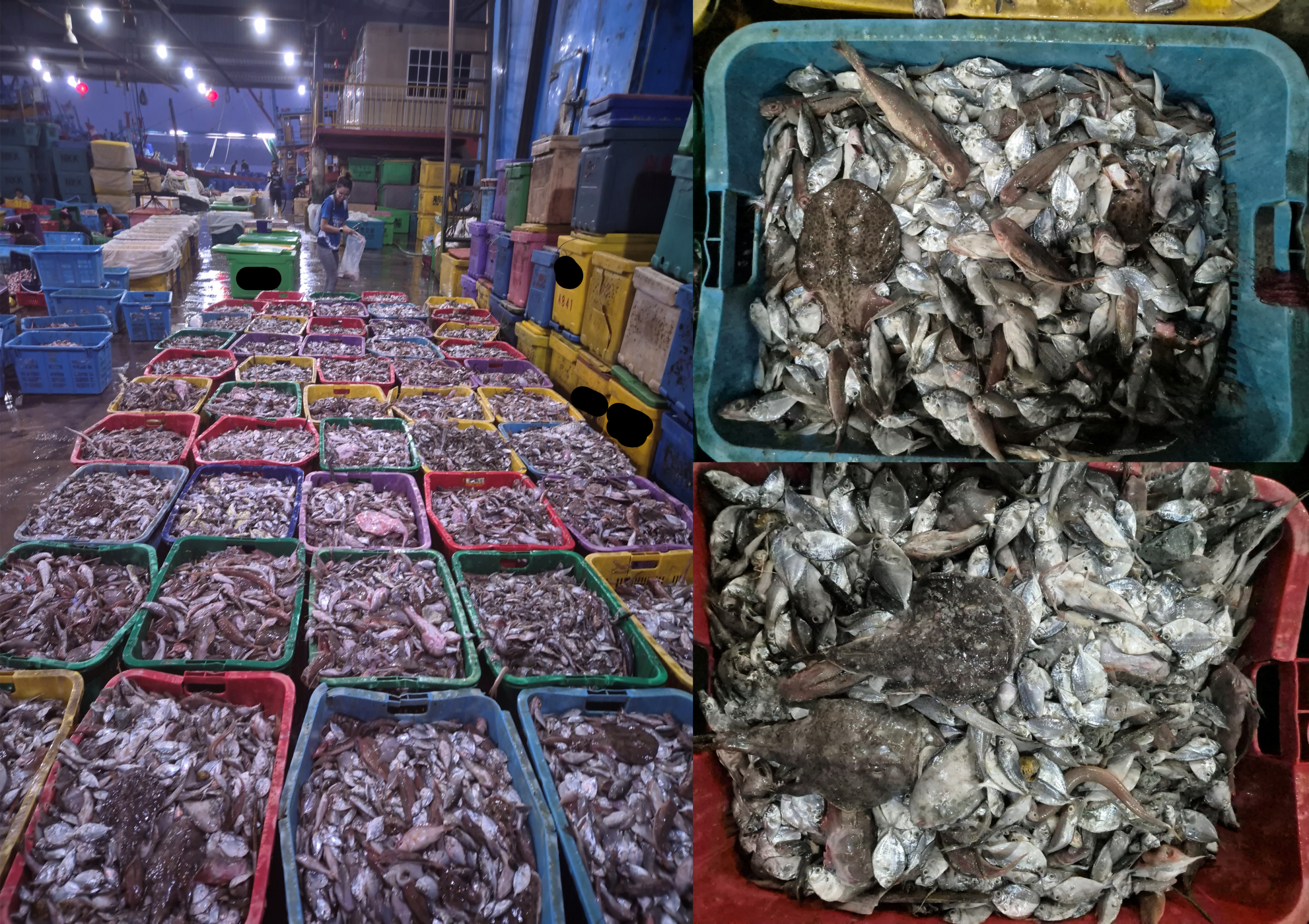
Basketfuls of “trash fish” awaiting to be transported at a jetty. Photo © Irsyad Pishal