
Where to begin? Searching for sharks and rays in the Gulf of Oman
Historically, the Gulf of Oman was a global hotspot for sharks and rays. Situated on the northern edge of the Indian Ocean, the region supported an extraordinary diversity of marine life, including many shark and ray species found nowhere else on Earth, a phenomenon known as endemism. Until relatively recently, much of the Gulf’s coastline remained remote, unexplored and largely undeveloped, allowing these species to thrive.
Today, the picture looks very different. While some parts of the Gulf of Oman remain relatively untouched, others have experienced some of the fastest rates of coastal development anywhere in the world. Rapid expansion of tourism and coastal infrastructure has led to the loss of vital marine habitats, including coral reefs, seagrass meadows and mangrove forests. The consequences for marine wildlife have been profound, particularly for sharks and rays that rely on these coastal habitats for feeding, resting and, crucially, as nursery areas for their young.
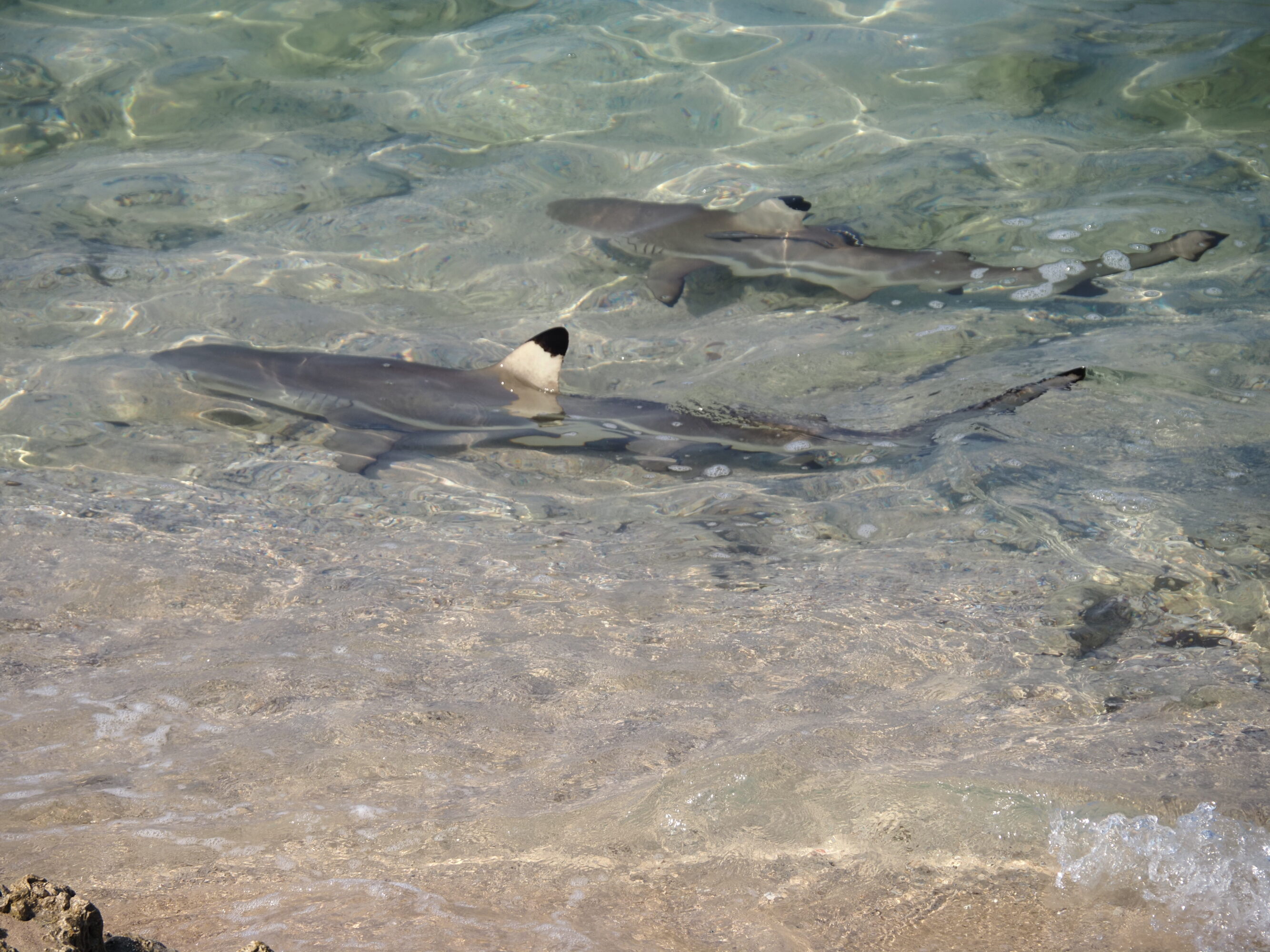
Blacktip reef sharks spotted in the shallows of the United Arab Emirates’ East coast. Photo © Owen Exeter
Combined with other human pressures, including overfishing, pollution and climate-driven ocean warming, the degradation of these ecosystems has driven many shark and ray species in the region into severe decline. The green sawfish (Pristis zijsron) is believed to have already disappeared almost unnoticed. Others, such as the whitespotted wedgefish (Rhynchobatus australiae), are now on the brink. As a result, the Gulf of Oman and the wider Arabian Sea are recognised as one of the world’s hotspots for threatened shark and ray species.
Despite its exceptional marine biodiversity and the intense pressures it faces, the Gulf of Oman has received far less scientific and conservation attention than the more widely recognised Red Sea or even its neighbour, the Arabian/Persian Gulf. As a result, surprisingly little is known about the status of its modern-day shark and ray populations. There is now an urgent need to establish which species still persist and, critically, to identify the remaining hotspots of natural habitat that support them. This knowledge is essential for guiding effective marine management and establishing the protections needed to safeguard the region’s remaining populations before they are lost.
The challenge is knowing where to start in such a vast and diverse region. Marine research is expensive and time-consuming, while funding for conservation is often limited. Our project aims to overcome these challenges by combining local ecological knowledge with targeted scientific surveys. We will bring together shark and ray sightings from social media, work with local citizen scientists and dive communities, and carry out pilot underwater surveys to begin mapping shark and ray hotspots along the southern Gulf of Oman coastline. This collaborative approach is essential. Although formal scientific surveys are scarce, divers, fishers and other ocean users hold a wealth of ecological knowledge built up over years spent on the water.
From the remote Musandam Peninsula to the wrecks and reefs off Sharjah’s east coast, and the stunning Daymaniyat Islands, divers continue to report sightings of butterfly rays, leopard sharks and even the Critically Endangered wedgefish. These observations offer hope that important populations of endangered species still survive. By identifying where the most at-risk species persist and building a network of engaged citizen scientists, we can provide the evidence needed to guide future research, inform conservation action and help protect the Gulf of Oman’s remaining shark and ray populations.
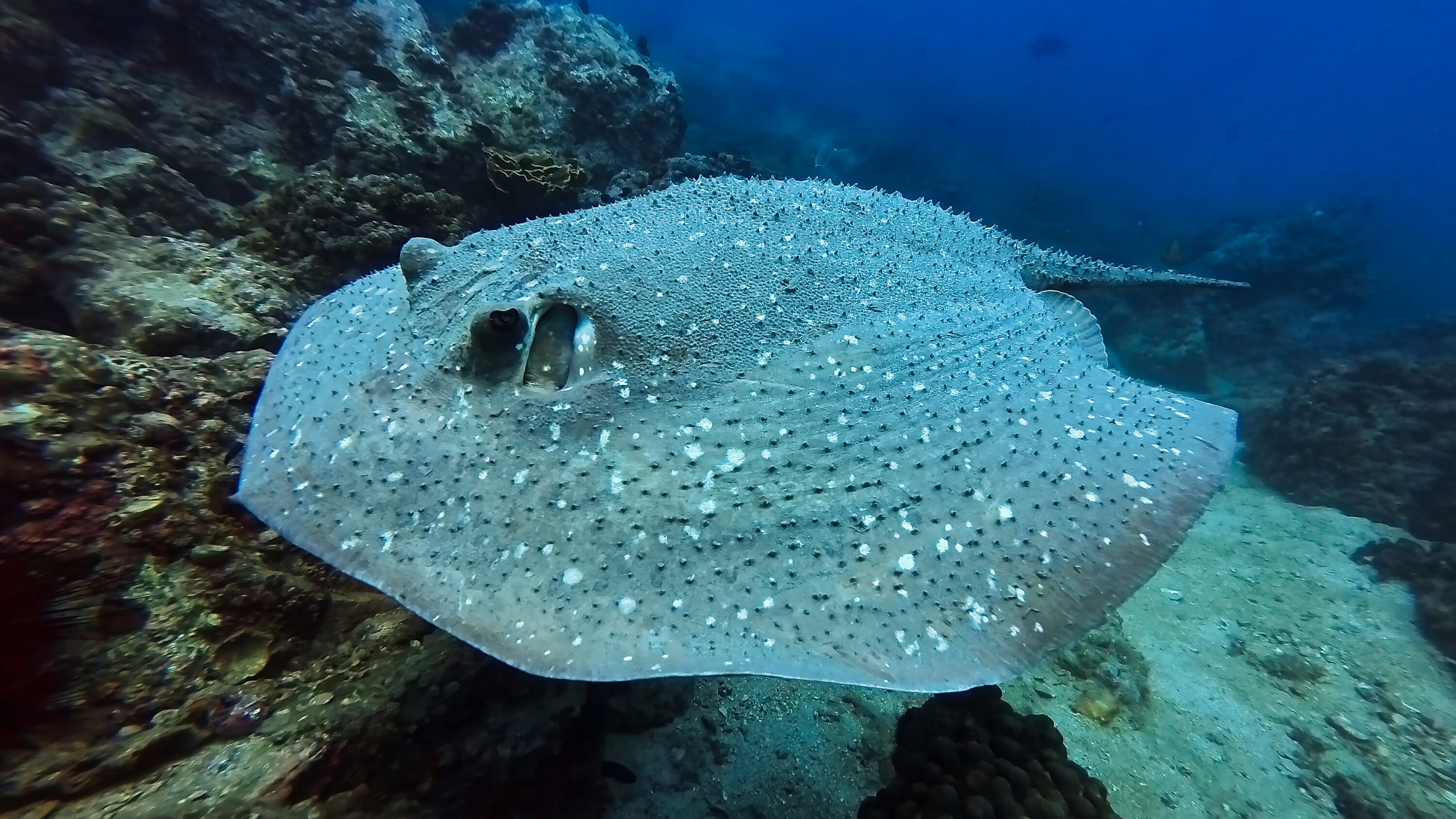
An endangered porcupine ray photographed by one the of project team on a dive near Khorfakkan, UAE. Photo © Owen Exeter