
When the wind blows, tropical round rays seek refuge in shallow, warm waters.
Every dry season, strong trade winds blow from the Caribbean across the northern Pacific coast of Costa Rica. During this time, warm, tropical surface waters are pushed out and replaced by cold, nutrient-rich subsurface waters. This is a natural oceanographic process known as upwelling where ocean conditions change dramatically. During these events, oxygen levels are naturally low, and sea temperatures can drop by as much as 10 °C in less than 24 hours. For tropical species adapted to warm, stable waters, coping with these sudden changes can become a matter of survival. Some species move to warm, shallow coastal waters to escape the cold, while the most tolerant species are attracted by increased ocean productivity. However, it is still unclear how upwelling affects animals that spend most of their lives buried in the sand, such as round rays.
Hidden in the sandy bottoms of the northern Pacific coast of Costa Rica are two small round rays: the leopard round ray (Urobatis pardalis) and the starry round ray (Urotrygon asterias). These rays blend perfectly with their surroundings and can be found in small bays all year-round. Round rays are among the most common coastal elasmobranchs in the Eastern Tropical Pacific, but we know surprisingly little about them. Unlike many sharks and rays featured in documentaries and conservation campaigns, round rays are rarely the focus of attention. Yet several species face significant threats and population declines. In tropical regions, bottom trawl fisheries accidentally catch a wide variety of rays. However, because some species are difficult to identify, they are often grouped together in landing statistics. The lack of information makes it challenging to determine their true conservation status.
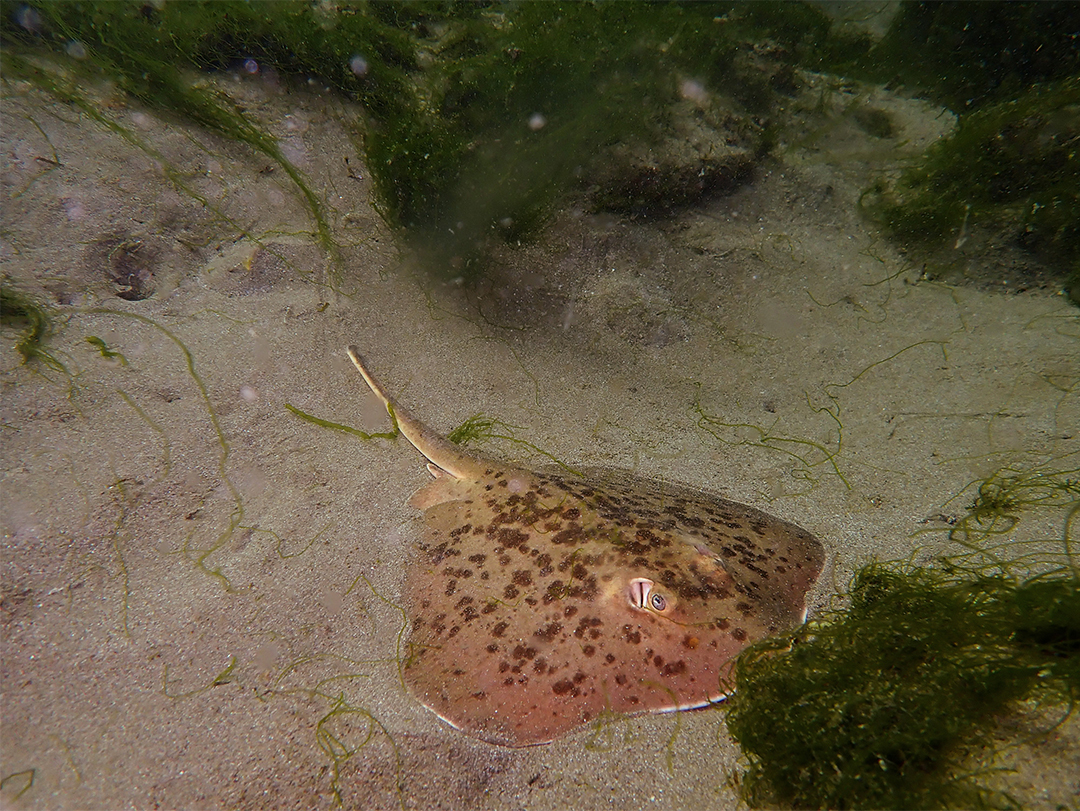
The starry round ray (Urotrygon asterias) shortly after release. It spends much of its life partially buried in sandy bottoms, where its camouflage provides protection from predators. Photo © Sebastián Mena
The degradation of coastal habitats and the effects of climate change are adding to the growing pressures on round ray populations. In addition to warming the oceans, climate change may also alter natural processes such as coastal upwelling, affecting its intensity, duration and frequency. This raises a key question: how do round rays respond to such dramatic environmental change in a tropical upwelling system? When the water suddenly becomes colder, oxygen levels decrease and the distribution of their prey changes. Do round rays remain in the same place or move in search of more suitable conditions? And if different species share the same site, does upwelling bring them closer together or drive them apart? These questions inspired our study on the movement ecology of the leopard and the starry round rays in El Jobo Bay, a small embayment subject to a seasonal upwelling.
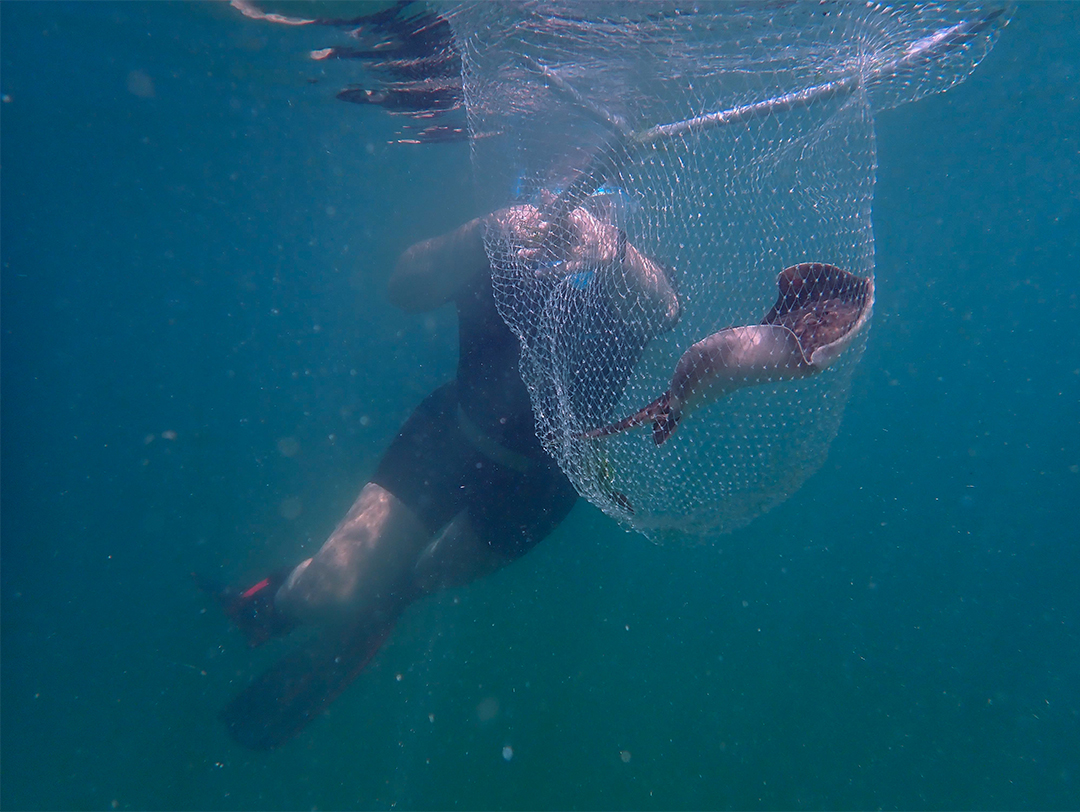
Each round ray was carefully captured in shallow water using a hand net before being fitted with an acoustic transmitter and released back into the bay. Photo © Chiara Del Pinto
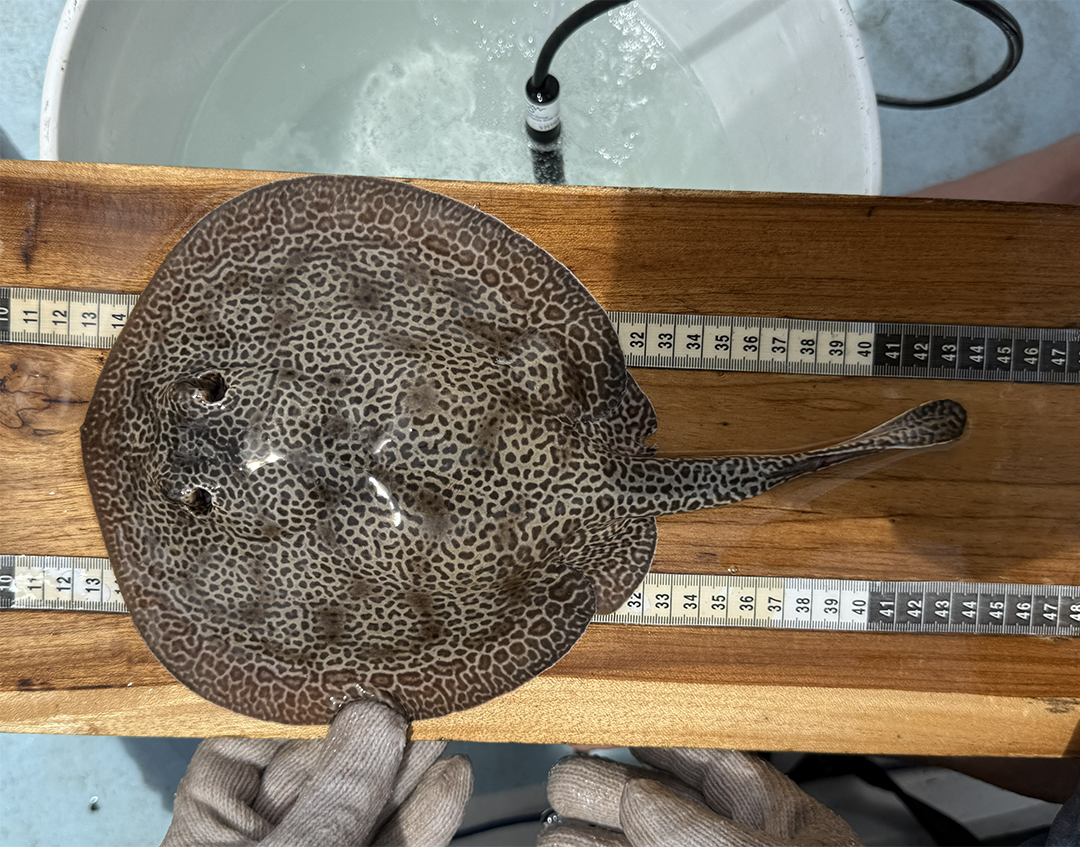
Measuring and identification of Urobatis pardalis before surgery. Photo © Paola Vivian Vásquez
To address our research questions, in 2025 we tagged 28 round rays (14 leopard round rays and 14 starry round rays) with acoustic transmitters to monitor their movements inside El Jobo Bay with an array of 23 acoustic receivers. This set-up allowed us to determine how long both species remain inside the bay, the areas they use the most, how their movements change throughout the year, and how they could coexist in a dynamic environment. We expect that seasonal upwelling will influence how both species use the bay. As colder, nutrient-rich waters enter the bay, both rays may spend more time within warm, sheltered coastal habitats, reduce the size of their home ranges, and alter their daily activity patterns. We also expect them to share shallow coastal habitats more frequently while using different behavioral strategies to coexist. Understanding these responses to natural environmental variability will help us better predict how coastal rays may cope with future changes as climate change alters the intensity, timing, and variability of coastal upwelling.
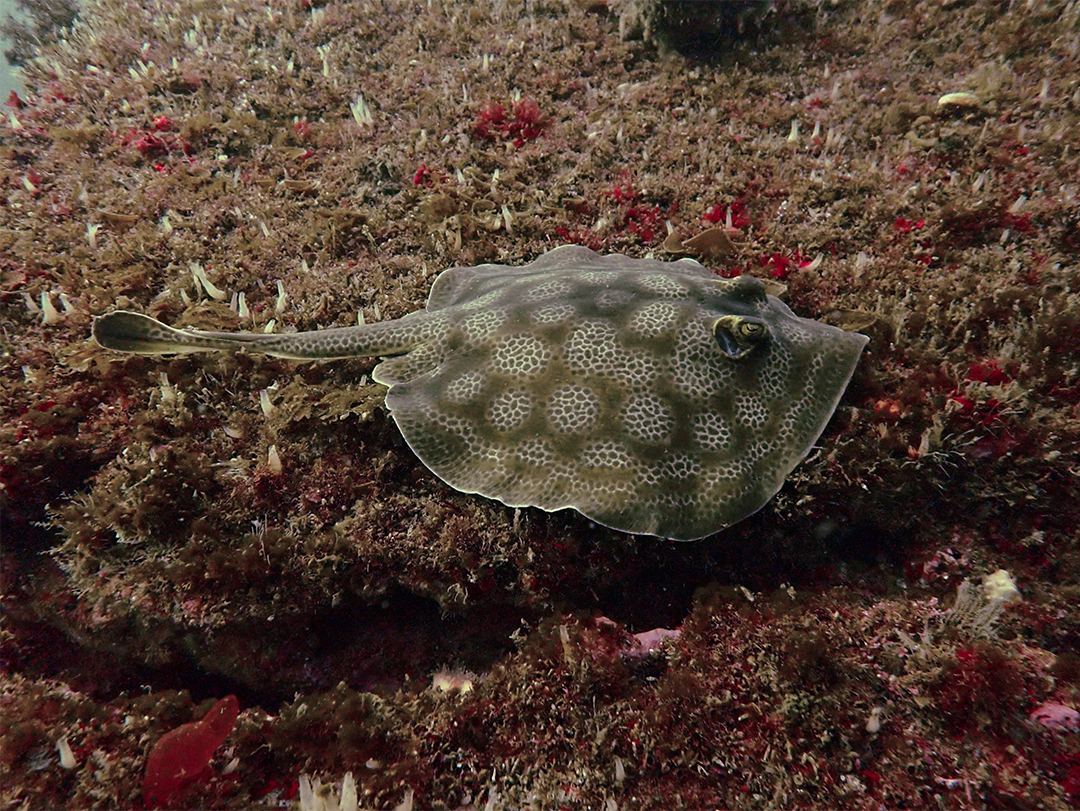
The leopard round ray (Urobatis pardalis) after release. It is frequently associated with rocky reefs and mixed habitats in El Jobo Bay. Photo © Paola Vivian Vásquez