
Tracing sharks and rays: a Journey from sea to market in Guatemala
Sharks and rays are regularly caught in Guatemala’s fisheries, yet their journey does not end at the landing site. Once landed, these species enter complex supply chains where their origin and identity are no longer traceable, limiting the ability to monitor trade, enforce regulations, and ensure sustainable management, particularly for species listed under international agreements such as CITES.
This gap lies at the heart of our project, which seeks to trace shark and ray products in seafood markets, identifying where traceability is lost and where conservation efforts can be most effectively strengthened.
Why focus on markets?
Fishing data alone cannot capture the full picture of shark and ray utilisation. At Blue World Foundation, we have conducted landing monitoring for over a decade, generating long‑term datasets on shark and ray catches. However, this is often where our knowledge ends; once products leave the landing sites, their pathways become unclear.
As shark and ray products move through commercial supply chains, they may be processed, transported inland, or sold under generic market names that hides their origin and species identity.
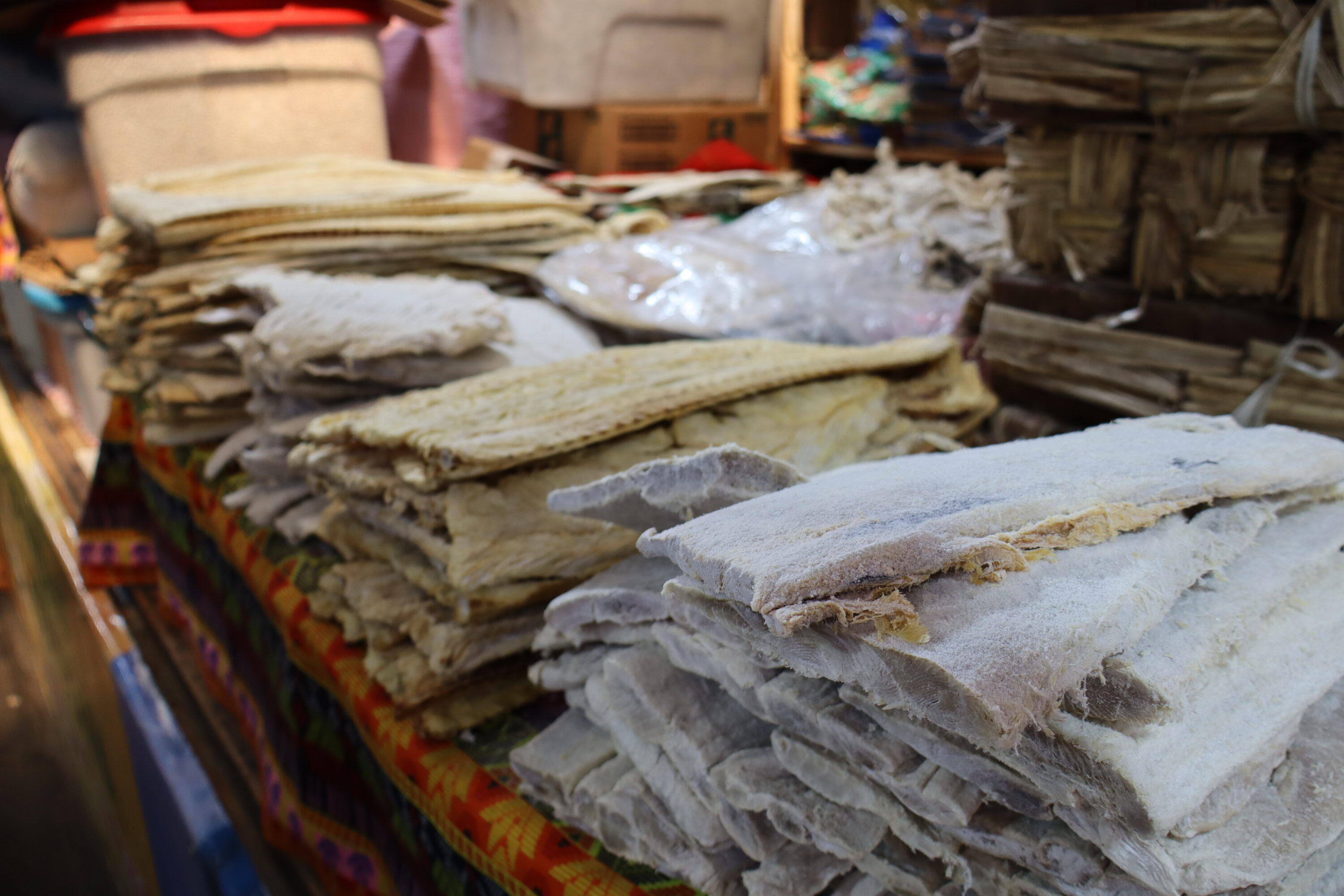
Dried and salted seafood products displayed at a local market in Guatemala. Photo © Blue World Foundation
First steps in the field
As an initial phase, we surveyed 18 seafood markets across Guatemala, including Guatemala City, Chimaltenango, Quetzaltenango, Iztapa, Sipacate, and Puerto Barrios, key urban centres and coastal ports within the country. These visits were conducted before Easter week, a period of increased seafood demand, to establish a baseline for product availability and pricing.
Across all markets surveyed, 58 seafood products were documented in fresh, dried, or salted forms. Some products were explicitly sold as shark, ray, or manta, while others were marketed under broad commercial names such as “cod”, “salmon”, or “mahi‑mahi”, labels commonly used in the local seafood trade.
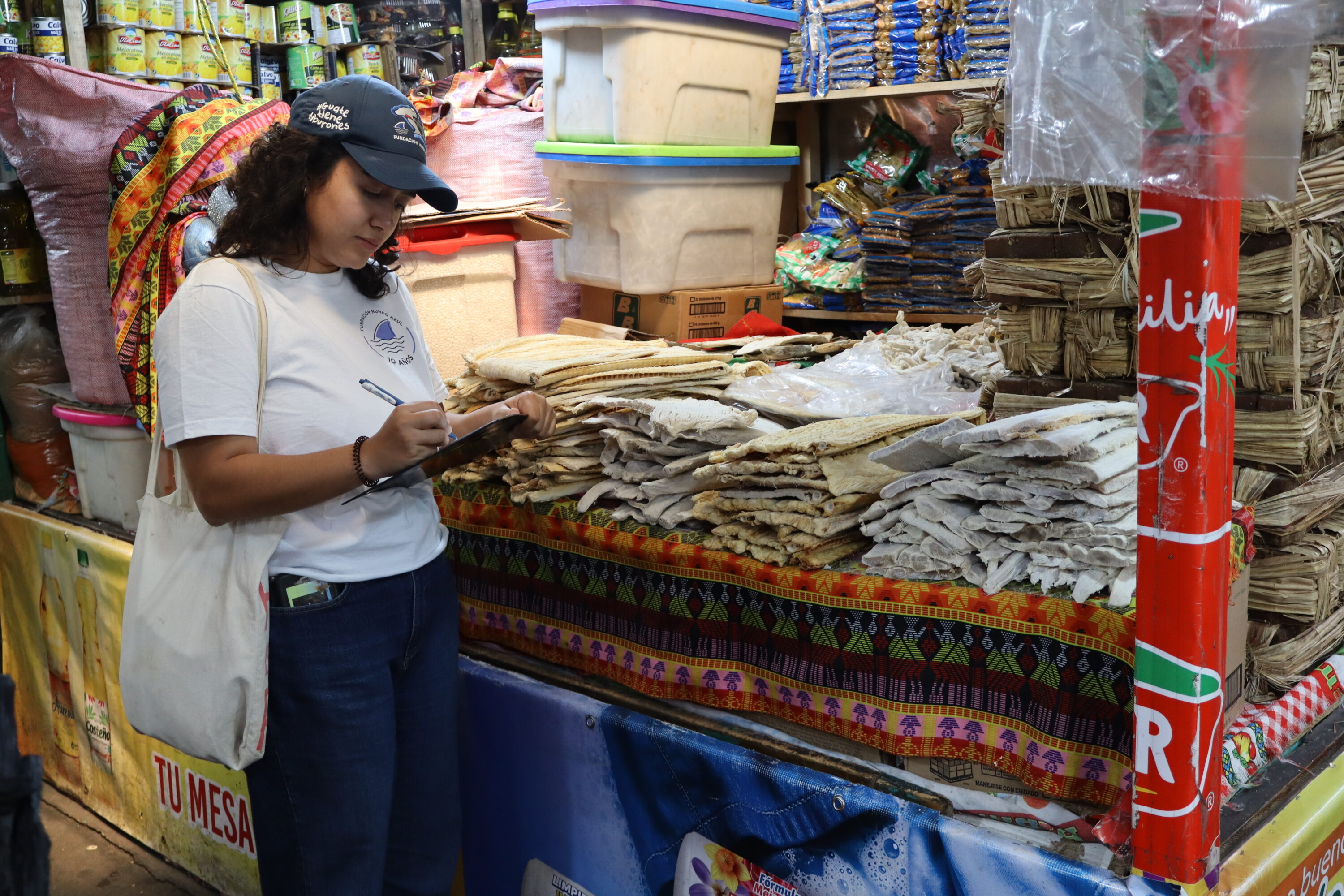
Collecting market data on seafood products and prices in Guatemala. Photo © Blue World Foundation
Prices, patterns, and samples
Average prices varied notably by product type and commercial name, highlighting how labelling and presentation can influence market value and consumer perception:
· Fresh shark meat averaged USD 11 per kg.
· Dried and salted ray or manta averaged USD 7.6 per kg.
· Dried products sold as “cod” averaged USD 22 per kg.
· Other dried fish marketed as “mahi‑mahi” averaged USD 16 per kg.
Overall, these differences highlight how certain products gain economic value as they move through the supply chain, particularly when sold under widely recognized or premium commercial names
To further investigate species identity, tissue samples were collected from selected products during market visits. These samples were preserved in ethanol, stored in Eppendorf tubes and are now ready for genetic analysis.
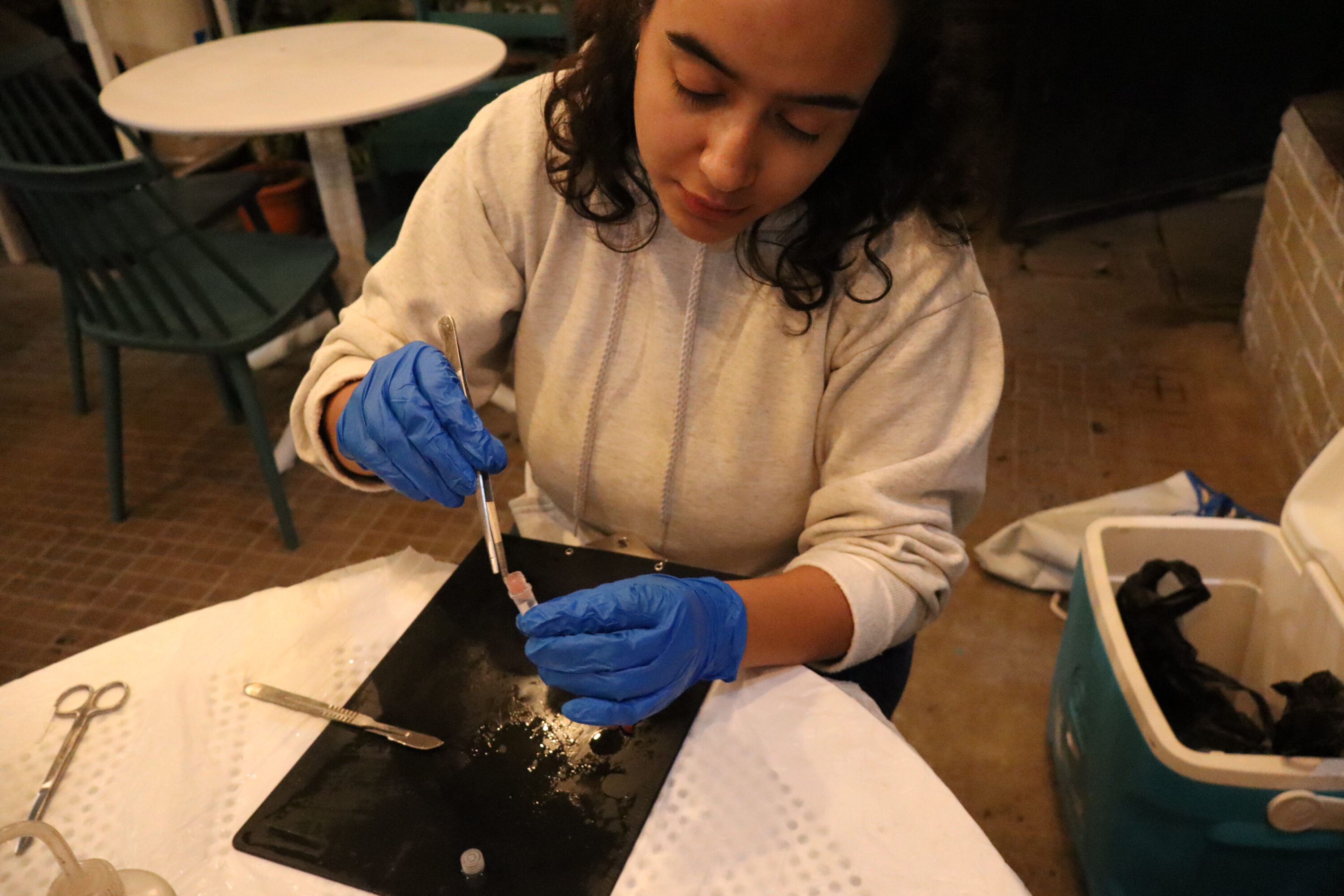
Preparing tissue samples for genetic analysis by transferring small tissue fragments into Eppendorf tubes. Photo © Blue World Foundation
What’s next
Starting in May, the project will expand to include structured interviews with fishers, traders, processors, and vendors. These conversations will help reconstruct how shark and ray products move from coastal landing sites to inland markets and identify where key information is lost.
Combined with genetic analyses, these data will provide new insights into what shark and ray products are commercialised in Guatemala, helping to inform management decisions and strengthen conservation efforts.