
Tigers of the sea: are Shark Bay’s apex predators feeding on its most vulnerable?
In the relatively pristine waters of Shark Bay, Western Australia, a quiet ecological struggle is unfolding and it could shape the future of some of the ocean’s most threatened marine megafauna. Despite being one of the world’s largest seagrass ecosystems, Shark Bay has not escaped the impacts of climate change. Following the extreme marine heatwave of 2010/2011, sightings of dugongs and sea turtles, both critical to the health of the seagrass meadows, dropped dramatically.
Yet their top predator, the tiger shark, did not follow the same pattern. While dugong numbers fell by 67% and green turtles by 39%, tiger shark populations remained remarkably stable. Today, dugongs and turtles have recovered, but Shark Bay remains highly vulnerable to the increasing intensity and frequency of marine heatwaves.
This disconnect between predator and prey under a rapidly changing climate raises an urgent question: How much are tiger sharks feeding on threatened dugongs and turtles? That is what our research is aiming to uncover.
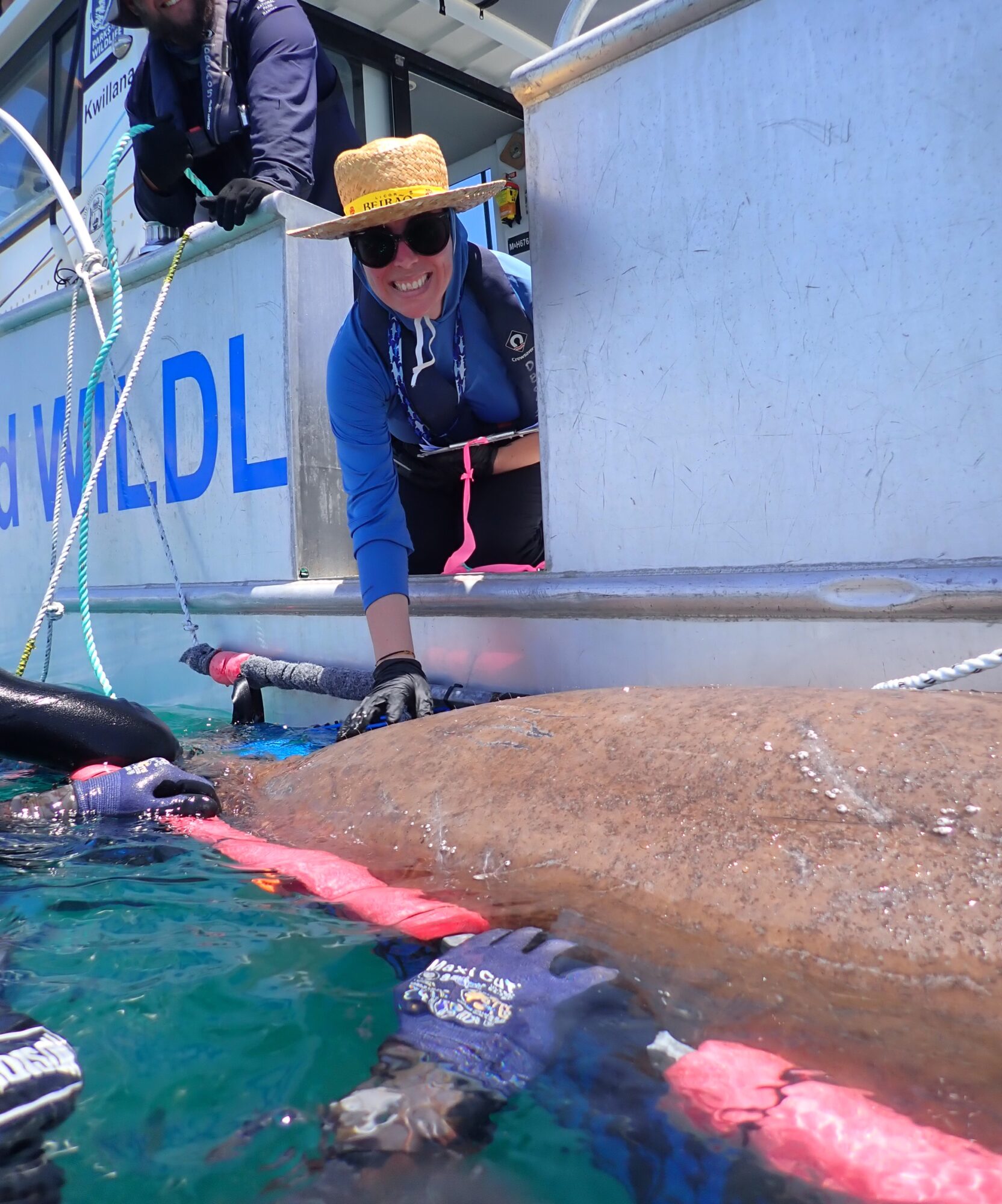
Olga Azevedo collecting samples from a dugong in Shark Bay, Western Australia. Photo © Ana Sequeira
Known as Gathaagudu to the Malgana people, Shark Bay is a UNESCO World Heritage Site. It’s home to more than 10% of the world’s dugongs, Australia’s largest loggerhead turtle nesting colony, and at least 28 shark species, including tiger sharks, wide-ranging apex predators with remarkably flexible diets. Their role in the ecosystem is vital: they help regulate prey populations and maintain balance within the food web.
But when the ecosystem is stressed, like after the 2011 heatwave, those dynamics can shift. If tiger sharks normally rely on these species for food, they may struggle to find them if they move away in alarming numbers again. Or, if they are preying on endangered megafauna, it could place even more pressure on species already trying to recover.
To find out, we are using stable isotope analysis to investigate what tiger sharks are really eating in Shark Bay. This technique allows us to trace the sharks’ dietary sources and understand how dependent they are on threatened species like dugongs and turtles. We have now collected all the necessary tissue samples and are ready to begin the analysis, marking an exciting step forward in the project.

Olga Azevedo sampling a tiger shark. Photo © Hannah Calich
By mapping the current food web and identifying shifts in predator–prey interactions, we hope to gain critical insights into the resilience of Shark Bay’s ecosystem under climate pressure. Ultimately, understanding the dietary habits of tiger sharks will help guide conservation strategies for both predator and prey, ensuring that tiger sharks continue to play their vital role without tipping the balance further, and that this spectacular, seagrass-rich sanctuary remains a haven for marine life long into the future.
Stay tuned for updates as we dive deeper into the lives of Shark Bay’s ocean giants.