
The devil is in the fishing pressure on devil rays in coastal Kenya
An on-going dialogue with fishers on the Kenyan coast, that includes recording fisher local ecological knowledge (LEK), citizen science, and landings data, reveals the species of devil rays occurring on the Kenyan coast. Additionally, fishers report disappearing species and declining volumes of devil and manta rays in their catches.
This is a response of one fisher interviewed at Vanga (south coast of Kenya) when asked why they no longer land manta and devil rays at the once popular site for the species in coastal Kenya. Mr. Hamisi’s response is a direct accusation of the foreign migratory fishers (WaPembas) who seasonally cross into the country. The WaPembas (originating from Pemba Island, Tanzania) have had frequent conflicts with local fishers due to the perceived unsustainability of their fishing gears such as the ring nets (small scale purse seines). As a result of the depletion of manta and devil rays at Vanga site (near Kenya-Tanzania border), only a few sites are now landing mobulid rays on the Kenyan coastline.
Ngomeni beach is one such site on the north coast of Kenya that lands mostly devil rays. This site records four species of pelagic devil rays (Mobula mobula, M. thurstoni, M. eregoodoo and M. kuhlii). However, fishers who were interviewed report rapidly declining catches, especially of Mobula mobular (the spinetail devil ray) attributed to increased fishing pressure and to “climate change” by some fishers. Two (M. mobular, and M. thurstoni) of the four devil rays at Ngomeni are now listed in the IUCN Red List as Critically Endangered. Fishers seasonally depend on the devil rays for their livelihoods (November-March) making the drift gillnet fishery that targets them to be a real threat to the sustainability of the rays. The fishers are not aware of the vulnerability of these rays but acknowledge that they hardly have more than two pups in their abdomen when they are cut open–underscoring their low productivity.
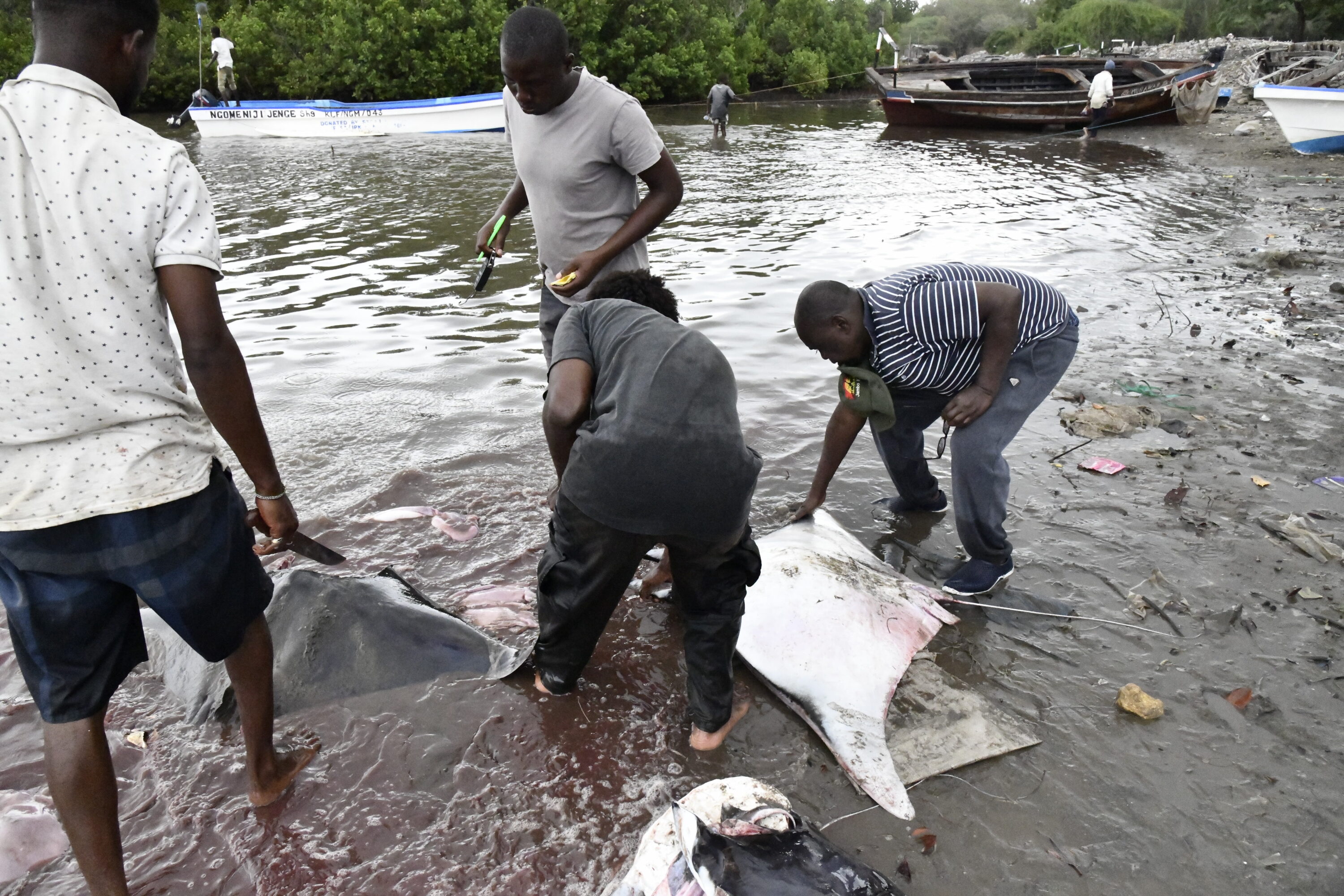
Landings of Longhorned pigmy devil rays at Ngomeni Beach, Kenya. Photo © Milton Apollo
Although fishers are agreeable to conservation measures such as seasonal bans on the use of the drift gillnets, they are commonly asking for alternative sources of livelihoods as a tradeoff for conservation actions for the devil rays. By engaging directly with the local fishermen, the project is generating valuable insights into ray and shark populations, including documenting fisher LEK on the globally threatened species that require urgent conservation actions by all stakeholders.
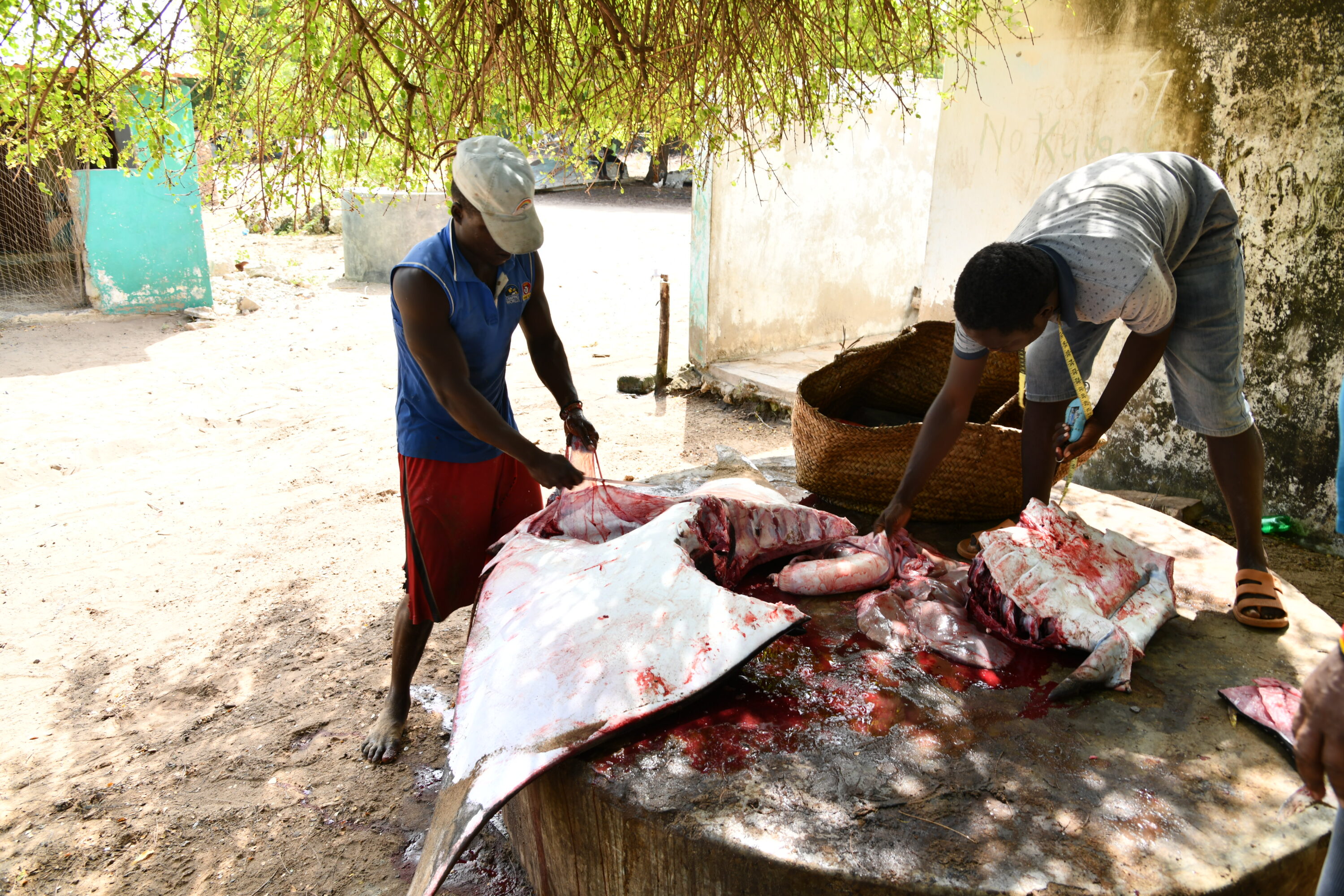
Carcass of devil rays: a source of meat and gill plate trade. Photo © Milton Apollo