
Starting ‘em young: rethinking how we mentor undergraduate student researchers to succeed in today’s ever-changing science landscape
For many marine scientists, their undergraduate years are a time of unparalleled independence, growth, and self-discovery.
During no other period of one’s life is there such freedom to pursue one’s broadest interests in both the laboratory and the classroom while developing the fundamental skills of research and scientific inquiry. This is also when the next generation of researchers, policymakers, and advocates are first faced with the difficult and ever-changing reality of leading a science-based career in a world where the sciences are experiencing seemingly unprecedented levels of mistrust, skepticism, and undervaluation. This daunting image is a major source of career anxiety for researchers of all levels and has increasingly led to early-career researchers abandoning science in favour of more “stable” industries. This alarming loss of young talent calls on us to rethink how we prepare the next generation to anticipate and adapt to the unique demands of a modern research career.
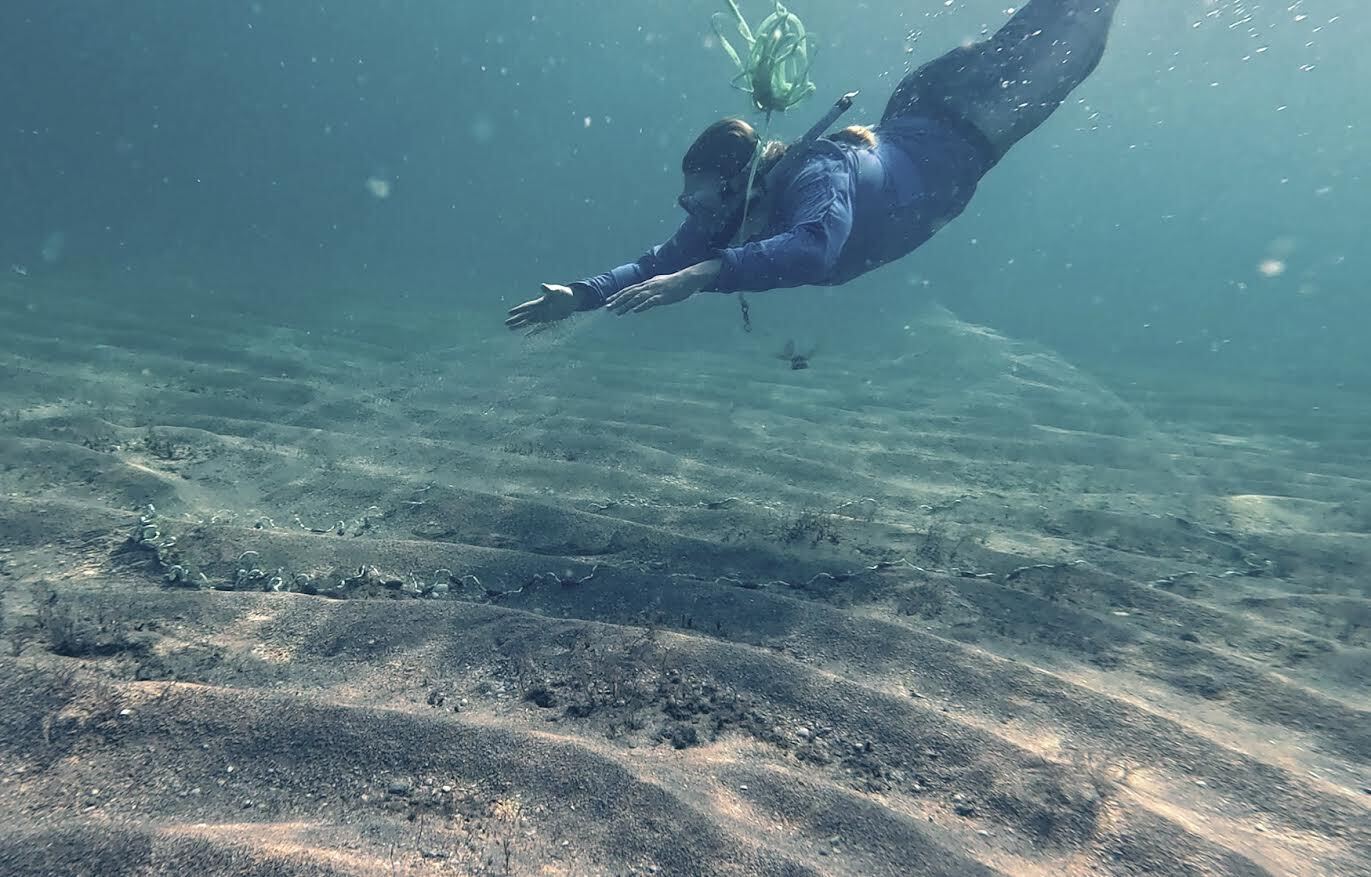
Once a guitarfish is spotted, a cast net is used to contain the guitarfish before securing it and bringing it to shore. If you want a taste for how well-camouflaged guitarfish can be (even when they aren't entirely buried in sand, which is rare) try spotting the one in this image. Hint: look beneath the right hand of the researcher. Photo © University of Miami Shark Research and Conservation Program
While we can all appreciate the importance of engaging with research at an early age, not all undergraduate research experiences are created equal and some do a much greater job of preparing students for their career after graduation. It is my hope that the following account of my positive experiences working on this project as an undergraduate research intern will provide some guidance to graduate students, lab managers, and other research personnel who want to best mentor their students to achieve meaningful personal and professional growth through their work.
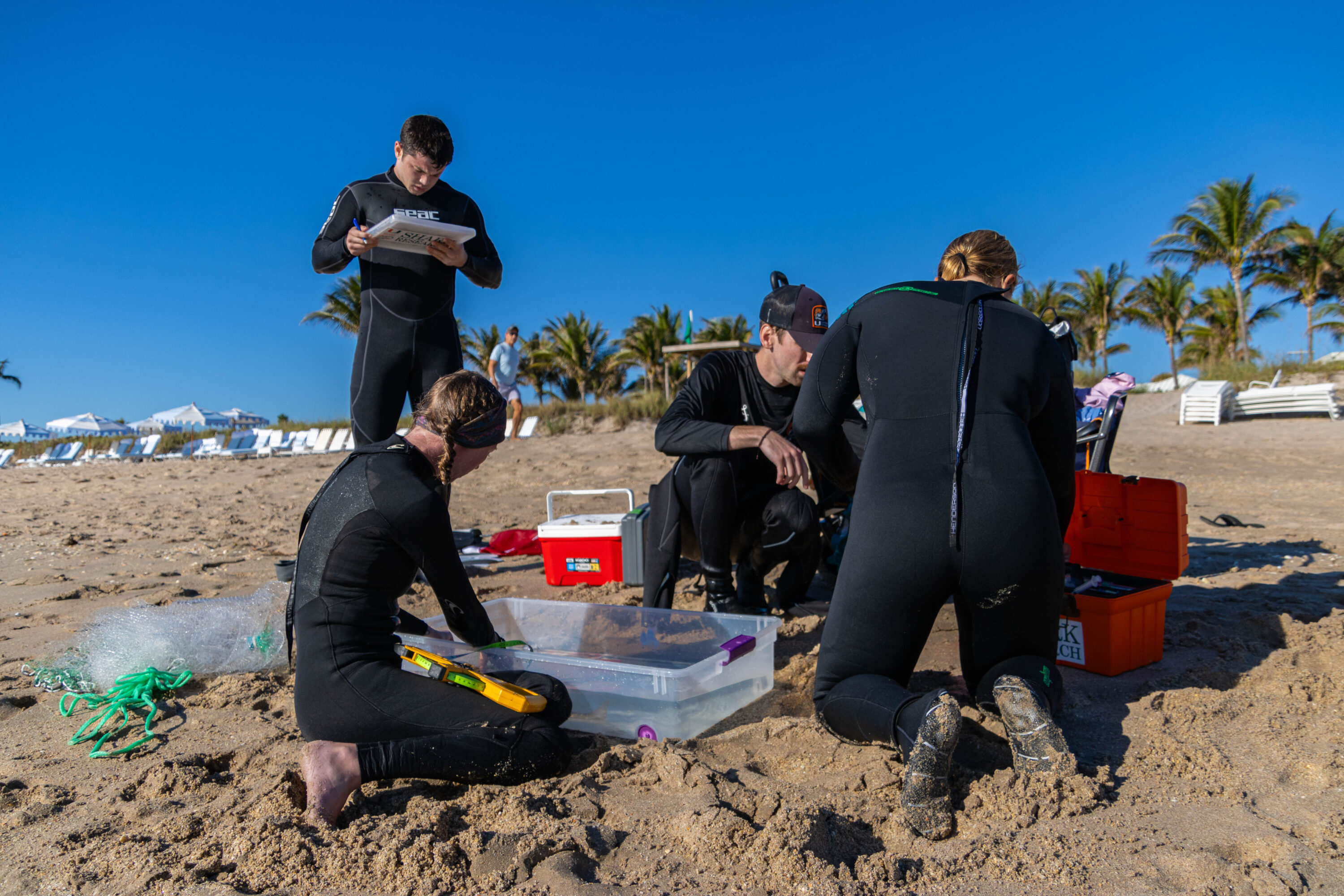
After being brought to shore, a guitarfish is placed in a shallow seawater-filled container while a team of researchers works to measure, document, and collect samples. Having a coordinated team helps ensure the workup process is efficient and thorough, providing us with valuable data while minimising unnecessary stress on the guitarfish. Photo © Jason Hill | University of Miami Shark Research and Conservation Program
The first and arguably most important takeaway from my experiences with this project was the importance of developing a strong rapport between the student and the research lead. As in many undergraduate research projects, I did not personally know my research mentor prior to beginning the project, yet (now Dr.) John Hlavin and I set aside time in our initial conversations to get to know one another’s academic and career journeys, scientific interests, and past research experiences. This simple act not only allowed us to understand and work with one another more effectively over the course of the project, but it also established a sense of openness and mutual respect between us and gave me an important sense of agency over my own experience within the project. This small act also encouraged me to better utilise John and the rest of our lab as resources for additional insight into what a life in marine science actually looks like outside of my degree, ultimately helping to inform my current career path.
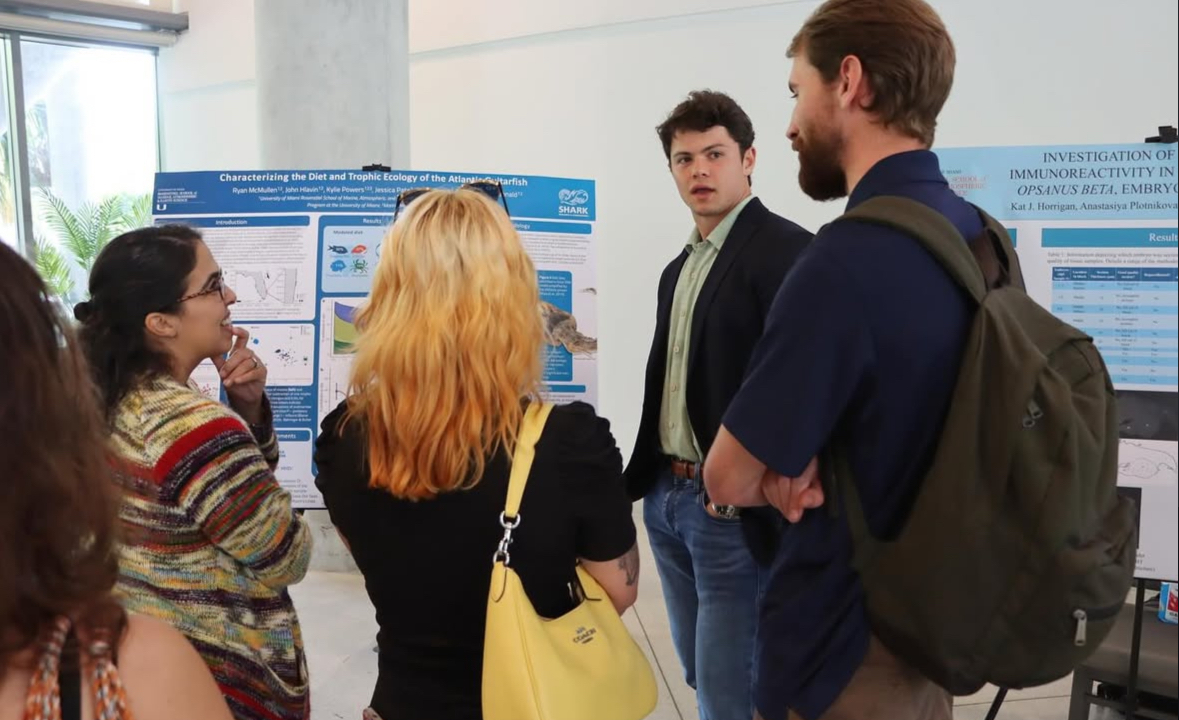
The initial findings of this project are presented at the Rosenstiel School of Marine, Atmospheric, and Earth Science Undergraduate Research Symposium. In addition to this poster, we shared our work via oral presentation at two other scientific conferences, providing valuable public speaking and networking experience while allowing me to connect with potential graduate school advisors. Photo © The University of Miami Rosenstiel School of Marine, Atmospheric and Earth Science
Compared to other research experiences, this project was unique in that it enabled me to engage with it over the course of its full lifespan – from its initial field and lab work, to its analysis and modelling, to its presentation at scientific conferences and eventual publication. Being so fully engaged in each phase of this project not only allowed me to develop a diverse applied skillset, but it also provided me with a strong understanding of how each model and piece of data fitted together to ultimately tell a story about the Atlantic guitarfish. Such a critical understanding of a project’s design and progression is unfortunately missing in many undergraduate research experiences where students are instead trained to complete relatively few lab tasks without gaining valuable skills in presenting, networking, and writing nor understanding how their work contributes to a larger research narrative. As I look forward to my upcoming PhD research, I credit this project’s end-to-end structure for not only my strong understanding of stable isotope analysis and dietary DNA analysis, but also my ability to think critically and apply these methods in new and impactful ways.
While nothing about my experience with this project is particularly groundbreaking, it stands in stark contrast to the common issues that plague most undergraduate research experiences. In addition to preparing me for success in my next research opportunity, the features I’ve outlined here have made this work deeply enjoyable and have led to countless valuable new connections within my lab, university, and the broader marine predator ecology community. While this style of mentorship and project design is not always possible, it is always important for mentors of all kinds to recognise how they can best adapt their work to help the next generation of scientists navigate their early career and achieve their own definition of success.