
Sharks on the menu: Gulf of California orcas reveal a hidden specialisation
When most people think of orcas or killer whales, they imagine powerful predators capable of hunting almost anything in the ocean. And they would be right. Around the world, orcas feed on fish, seals, dolphins, turtles, sharks, and even large whales. But there is a twist: while the species as a whole has one of the broadest diets in the animal kingdom, many killer whale populations are actually specialists. Some depend heavily on salmon, others focus on marine mammals, and a few have become experts at hunting sharks and rays. This remarkable combination of flexibility and specialisation is one of the reasons killer whales are among the most fascinating predators in the ocean.
For years, we have been following a group of killer whales known as the “Moctezuma pod.” Time and time again, we witnessed these whales hunting sharks and rays. We observed them preying on mobula rays, pelagic stingrays, bull sharks, whale sharks, and even white sharks. These repeated encounters made us wonder: could these whales actually be specialists rather than opportunistic predators?
To find out, we studied skin samples from eight killer whales and compared them with samples from several of their potential prey species. By analysing stable isotopes—natural chemical tracers that provide information about an animal’s diet—we were able to reconstruct what these individuals had been eating over the previous weeks and months.
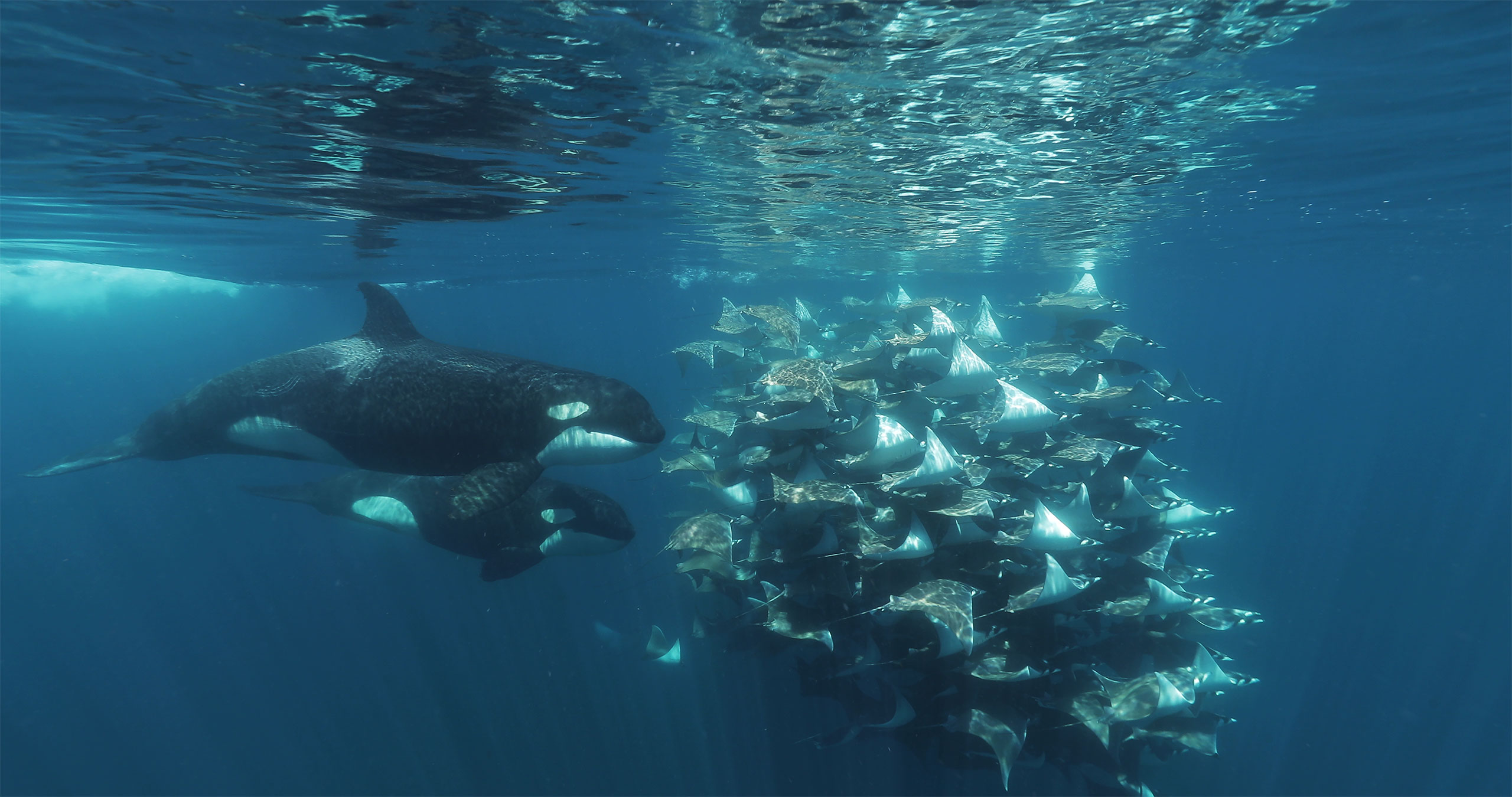
Two individuals from the Moctezuma pod corral a school of mobulas. Photo © Erick Higuera
What we found surprised us
The results showed that sharks were the dominant prey source for the killer whales we sampled. In fact, mako sharks and white sharks together represented more than half of the estimated diet of these killer whales.
We also found that the killer whales occupied one of the highest positions in the Gulf of California food web and shared very similar isotopic signatures. In simple terms, this means that most of the orcas we studied appeared to be feeding on similar prey and using similar foraging areas. Rather than displaying a broad, varied diet, they showed signs of a surprisingly focused feeding strategy.
This is important because it challenges the traditional view of killer whales in tropical and subtropical waters. These populations have generally been considered opportunistic predators that take advantage of whatever prey is available. Our findings suggest that at least some groups in the Gulf of California may be doing something very different. They may be specialising on sharks and rays and passing these hunting behaviours from one generation to the next through social learning.
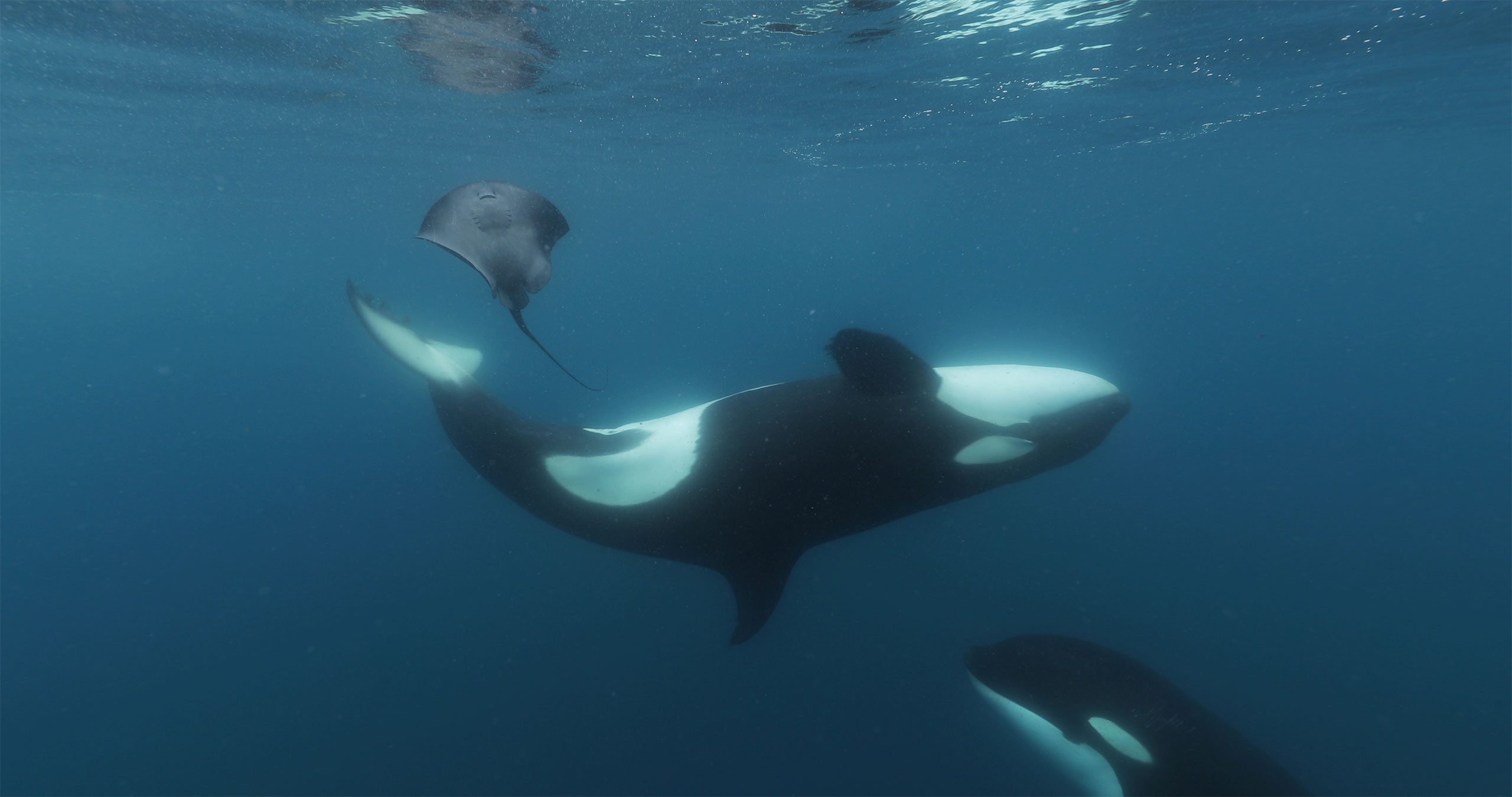
Individual from the Moctezuma pod employing a tail-slapping hunting technique on a pelagic stingray. Photo © Erick Higuera
Why does this matter?
Killer whales sit at the top of the food chain, and understanding what they eat helps us better understand how marine ecosystems function. If some groups depend heavily on sharks and rays, then changes in elasmobranch populations could affect these killer whales as well.
Our study also highlights the value of combining years of field observations with modern scientific tools. Without the repeated sightings of shark-hunting killer whales, we might never have recognised this pattern. Together, the observations and isotope analyses reveal a fascinating picture of a group of predators that may have carved out a unique ecological role in one of the most productive seas on Earth.
The next time you see an orca, think beyond whales and dolphins. In the Gulf of California, sharks might just be their favourite meal.