
Setting the stage for guitarfish rhythms
The majority of people have no idea what a guitarfish is. We usually start by trying to explain their morphology (a bit like a guitar, but it swims), and show a picture which typically prompts a “wow, they’re so weird looking! What do you do with them?” It turns out the general population is also intrigued by these shark-like rays, they just haven’t heard of them yet.
A project born from spotting juvenile Halavi guitarfish during turtle surveys, our initial research focused on establishing a nursery. We then expanded this into a movement study of young-of-the-year, juveniles, and adults. We collected blood samples to uncover two things: what these guitarfish are eating, through fatty acid analysis (fats store differently depending on what an animal eats – a powerful clue for diet!); and to determine concentrations of heavy metals in their bodies. After processing we found ourselves with leftover plasma, and that’s where things got interesting.
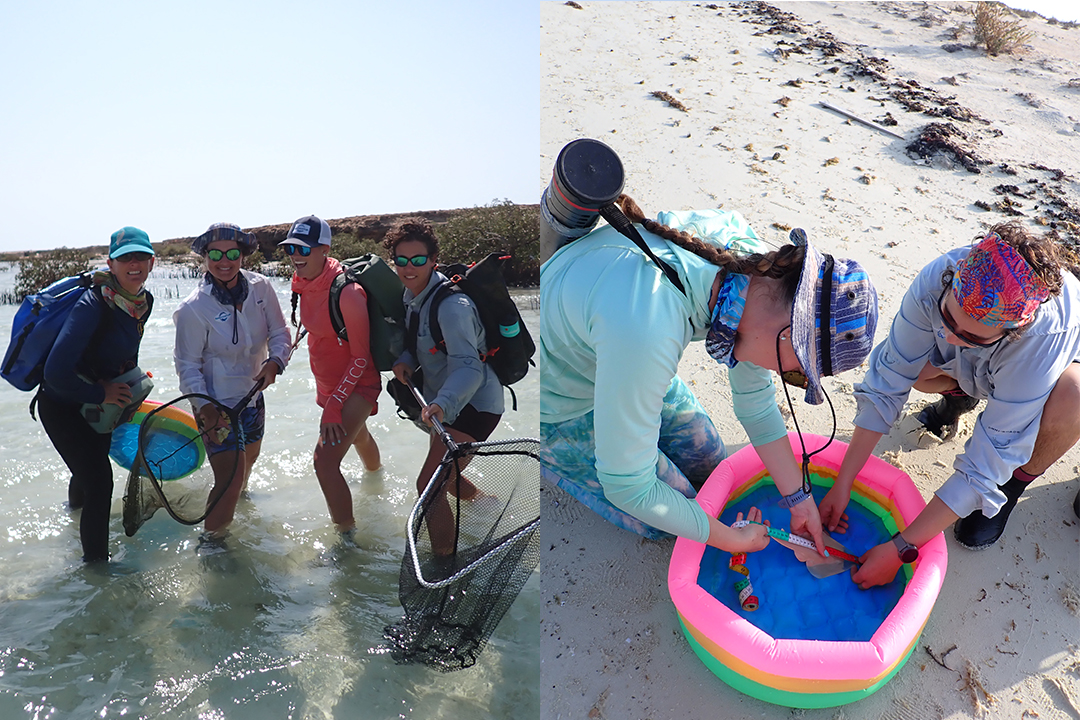
Photo by © Bradley Peterson
While analyzing blood samples for tiger sharks, we started chatting about how this is an underutilized tool for monitoring populations when up popped – “wait a second, has this been done with guitarfish?” The answer is a no, and also a no for the genus, and basically for the entire order. The Rhinopristiformes (Rhino Rays) are an order of more than 60 species considered at high risk for extinction globally, so understanding their biology and ecology is extremely important.
Many physiology studies take place in settings such as aquariums, valuable for establishing baseline values of various biomarkers under controlled conditions. However, these conditions are not always transferable to animals living in the wild. These animals are living under a variety of pressures such as food availability, changing temperatures, and interactions with humans or human-based activities. As our world continues to change, warming temperatures, extreme climate events, and increasing human activities will impact not only food availability and habitat, but also, the animals themselves.

Photo by © Rhonda Suka
Presently, there is no way for us to compare the physiological values from our data to that of Halavi guitarfish elsewhere, since no studies exist. Meaning, we will not be able to tell if our population is more or less stressed, whether their seasonal cycles of stress or reproduction differ, or whether the changes from neonates to adults is the same throughout their range. However, that’s exactly why it’s important that our research establishes baseline physiological markers for this population. In the future, this will allow us to: 1) monitor this population under changing climate and anthropogenic stresses, 2) use them as a comparison point for other populations, and 3) provide context for other Rhino Ray species.
Similar in a way to a human blood test from our general physician, we will analyze these guitarfish plasma samples for nutritional biomarkers, metabolism indicators, and reproductive hormones for each life stage over several seasons. By looking at cholesterol, triglycerides, and ketones, we will be able to determine how each life stage differs in their nutritional requirements and how seasonality may impact their health. Examining endocrine hormones released by the thyroid: thyroxine (T3), triiodothyronine (T3), and the ratio between the two (T3:T4) tells us about metabolic shifts and energy flow, an indicator of growth. Analyzing hormones of juvenile and adult guitarfish for estradiol, progesterone, and testosterone gives us a better idea of reproductive seasonality, maturity, and hormonal changes with growth. And of course, to make the analysis even more fun, none of these markers are standalone, as many interact with each other.
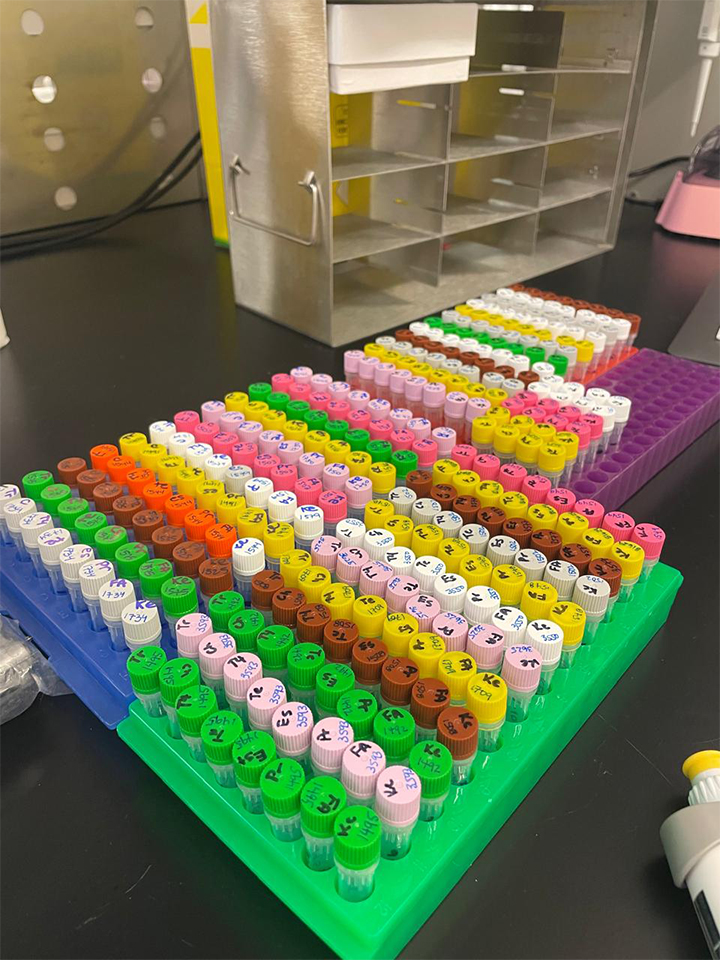
Photo by © Kaitlyn O'Toole
So finally, after aliquoting samples to over 750 tubes, purchasing kits for analysis, organizing which samples get what tests, we have finally begun running samples. Stay tuned for our findings!