
Science, Education, And the Future of Sharks & Rays in Honduras and the Mesoamerican Region
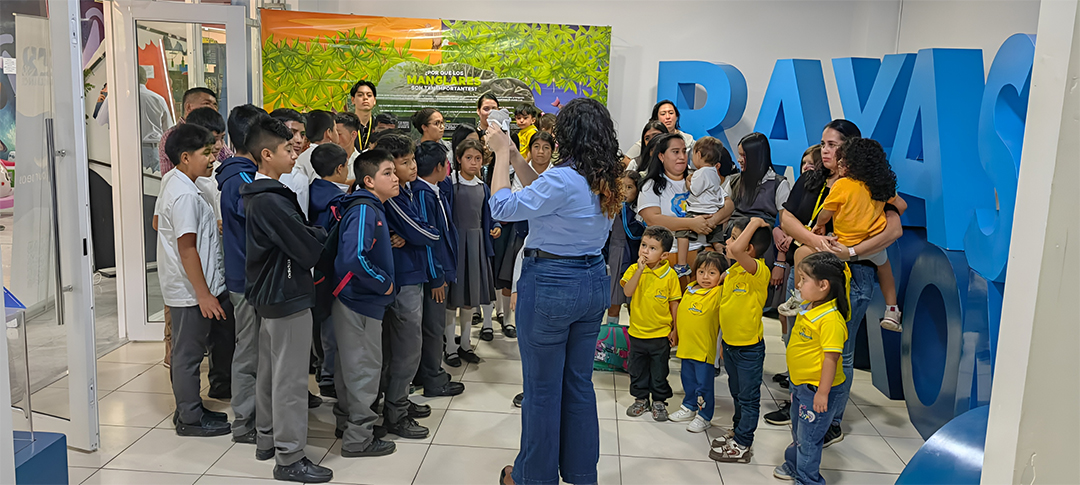
Communications and outreach officer Dissel Reyes is giving a tour to a group of students. Photo by © Blanca Molina & Ammonite Museum
When we launched this project over a year ago, we could not have anticipated such a positive public reception. We knew young people would enjoy the virtual reality headsets and the chance to get a closer look at the ocean, and that children would likely love that experience and other exhibition features, but we were truly surprised by how many adults and people from diverse backgrounds showed interest in the exhibit.
Above all, they were keen to learn about sharks and rays, discover how to get involved in protecting them, and learn more about these incredible animals.
Over the past 18 months, we traveled extensively across Honduras, visiting coastal and inland cities, schools, information fairs, and key events focused on decision-making for coastal marine conservation, finalizing the third quarter of the year with a collaboration with Ammonite Museum in Honduras,
As for 2026, one of this year’s highlights was World Oceans Day, when we partnered with another cultural venue, the Museum of National Identity (MIN) in Honduras, to host a week-long event showcasing the exhibition’s features, workshops, and talks. This week was titled “Honduras Azul” (Blue Honduras).
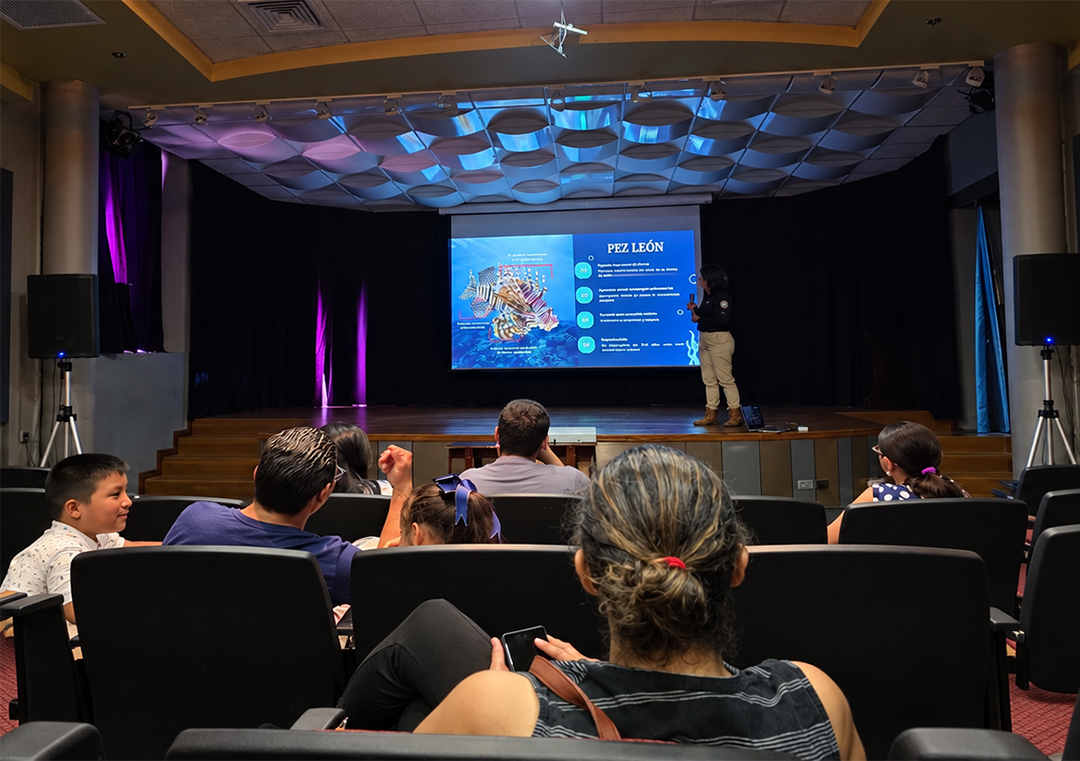
Key invited speaker at Honduras Azul, Allyson Oviedo. Photo by © Dissel Reyes
Democratizing science and making it more accessible is part of our mission, which means bringing it into key spaces, such as sustainable tourism forums and initiatives that support the conservation of keystone species. One such venue was the Expo HORECA event, where we showcased elements of the exhibition. There, students, professionals, and representatives from the tourism and hospitality sectors engaged with virtual reality content, informational materials, and interactive resources, effectively bridging marine science with the people who directly shape the country’s tourism experiences.
Perhaps one of the most enriching experiences, however, has been bringing this exhibit to the coastal area of Puerto Cortés, Honduras, and giving artisanal fishermen and their families access to knowledge about the species they have known all their lives, species that are part of their livelihood. While they are familiar with what these species look like and even know their names, seeing the emotion on their faces as we show them and explain how we take this knowledge beyond the coast is truly priceless.
The next step in this journey is to transcend borders; we’re preparing to launch this experience in Belize. After all, the oceans are interconnected, and the MAR region teems with incredible creatures. Our goal is to share this knowledge across nations and borders, and we take great satisfaction in seeing public curiosity grow with every post, image, visitor, and promotional event.
Adapting content for different cultures and audiences is always exciting; everything from selecting designs and images to preparing the space that will house the exhibit in the coming months is an integral part of this educational and communication process, and we are keen to have it ready and welcome the Belizean people to enjoy this experience.
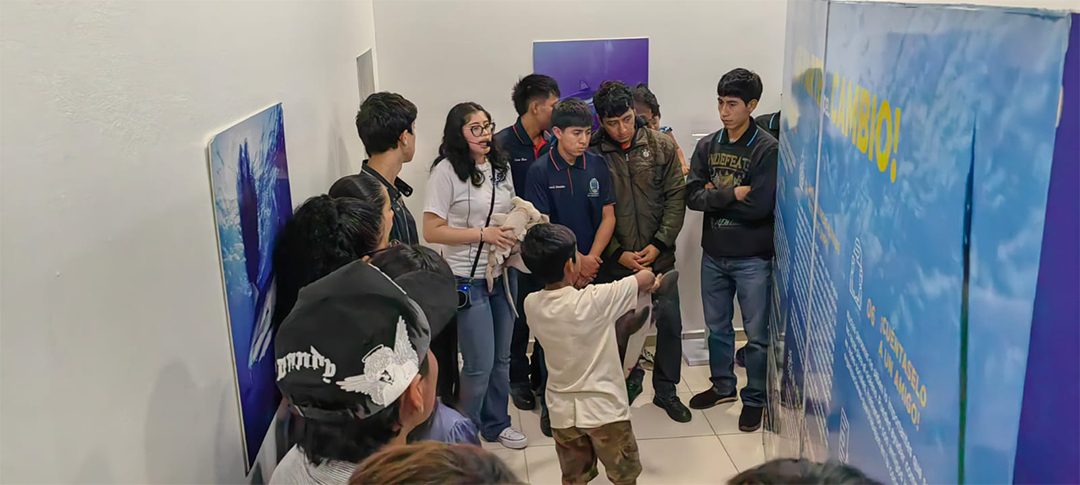
One of our guides explaining the information on the panels and the importance of Sharks and Rays. Photo by © Dissel Reyes
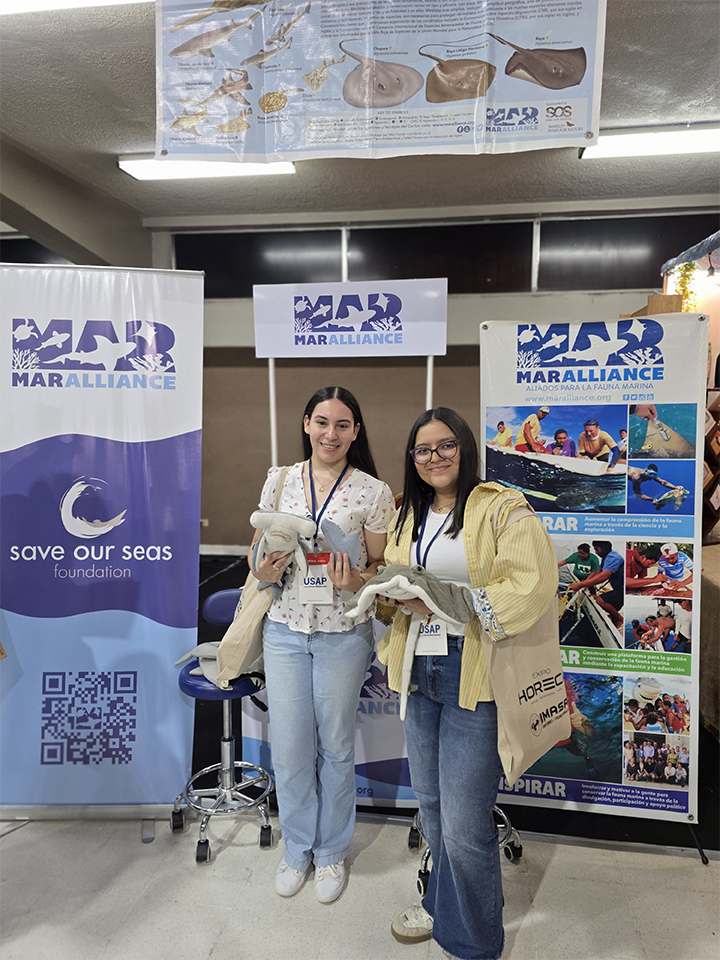
Informational booth at Expohoreca. Photo by © Dissel Reyes