
Saving the Disappearing African Wedgefish in the Gulf of Guinea Through Fishers’ Voices, Coastal Livelihoods and Conservation Action
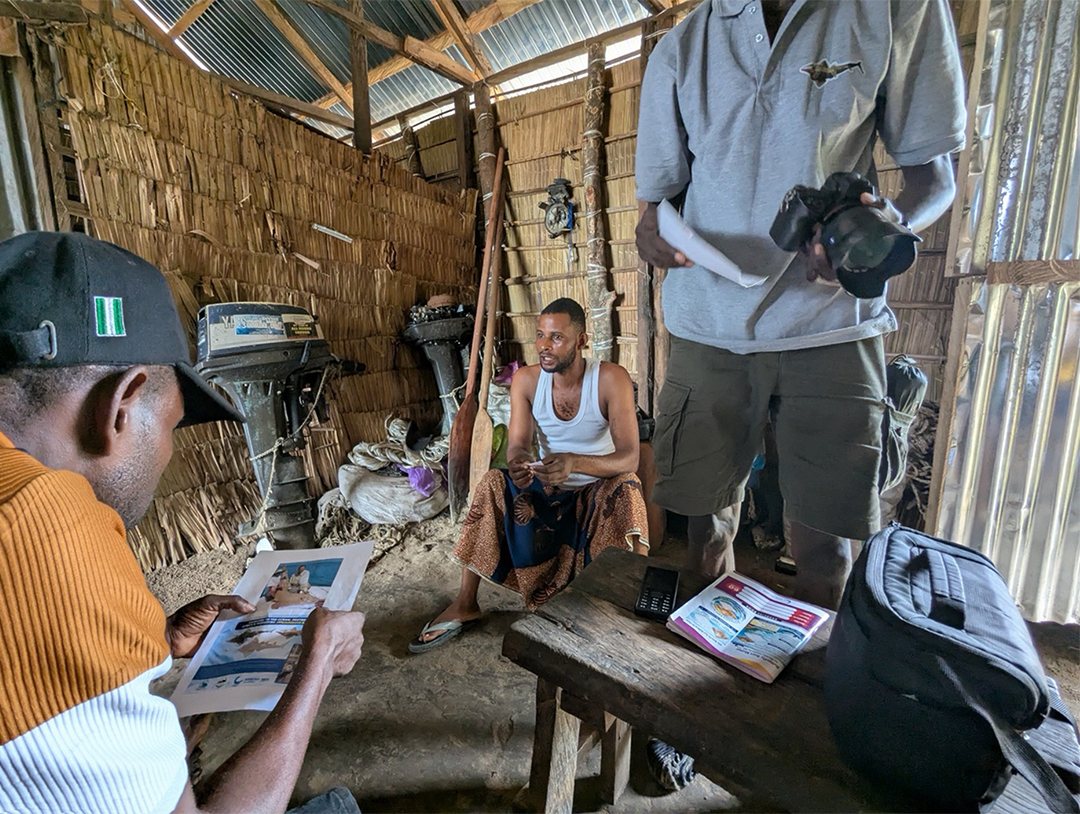
Fishers’ Knowledge and Coastal Livelihoods Conservation Video Series Production. Photo by © Segun Olayinka Oladipo
The African wedgefish (Rhynchobatus luebberti) is one of the most threatened marine fishes in the world. Once widely distributed along the West African coast, this distinctive shark-like ray is now classified as Critically Endangered on the International Union for Conservation of Nature (IUCN) Red List. Overfishing, incidental capture, demand for its valuable fins, and degradation of coastal habitats continue to threaten its survival. Despite these concerns, we still know relatively little about its remaining populations, distribution, and the extent of its exploitation in the Gulf of Guinea. As a conservation researcher working on African fish biodiversity, molecular taxonomy, and conservation genetics, I am concerned about the future of this species. My research has shown me the importance of combining scientific evidence with the experiences of people who depend directly on marine resources. This understanding forms the basis of my ongoing African wedgefish conservation work, supported by the Save Our Seas Foundation (SOSF).
Along the coast of the Gulf of Guinea, fishing is more than an occupation. It provides food, income, and economic security for thousands of households. For generations, fishing communities have developed extensive knowledge of marine species, fishing grounds, seasonal changes, and the environmental conditions affecting their catches. These experiences provide valuable information that is often missing from formal scientific records. However, fishing communities also face considerable challenges. Fluctuating catches, rising fishing costs, limited livelihood opportunities, and growing pressure on marine resources create difficult circumstances for small-scale fishers. For families who depend on daily catches, conservation measures must recognize these economic realities. Fishers should not simply be viewed as contributors to the decline of threatened marine species; they must also be recognized as important partners in their conservation.
Through our conservation work in Nigeria, we have already undertaken community conservation education activities to raise awareness about the African wedgefish and other threatened sharks and rays. These activities have focused on improving understanding of threatened marine species, their identification, the pressures affecting their survival, and the importance of responsible fishing practices. Engaging fishing communities in conservation education is important because many threatened species remain poorly recognized, even in areas where they may occur in fisheries catches. An important part of this effort is listening to local fishers and understanding their experiences. Their knowledge of historical catches, species occurrence, fishing methods, and changes in coastal fisheries can contribute to a better understanding of the pressures facing the African wedgefish. I believe that lasting conservation outcomes are more likely when the communities directly affected by conservation decisions have opportunities to contribute their knowledge and participate in developing solutions.
Alongside the community education activities, I am currently working on generating a DNA barcode reference library for the African wedgefish, an important component of our Save Our Seas Foundation supported research project, Biomonitoring for Conservation: DNA Barcoding the African Wedgefish. One of the major challenges in conserving this species is accurate identification. The African wedgefish shares several morphological features with other wedgefishes and guitarfishes, making identification difficult, particularly when specimens have been processed or their distinguishing external features are no longer available. This creates problems for fisheries monitoring, biodiversity assessments, and the documentation of species entering local and international markets. Our ongoing molecular research aims to address these challenges by generating and validating DNA barcode reference sequences that can support reliable identification of the African wedgefish. By analyzing genetic material obtained from tissue samples, we are working to establish a reference resource that can help distinguish this species from closely related rays. Once developed and validated, the reference library will provide a scientific basis for improved species identification, fisheries monitoring, conservation research, and efforts to implement international wildlife trade regulations, including the Convention on International Trade in Endangered Species of Wild Fauna and Flora (CITES).
For me, the value of this research extends beyond the laboratory. A reliable DNA barcode reference library can help address gaps in species identification, but genetic data alone cannot protect the African wedgefish. We also need meaningful engagement with fishing communities, improved awareness, responsible fisheries management, and stronger cooperation among researchers, conservation organizations, and government institutions. The conservation education activities already undertaken in Nigeria represent an important part of this broader effort. While we continue developing the genetic reference library, community participation remains central to our approach. We want scientific information to be useful not only to researchers but also to fisheries managers, conservation practitioners, and the coastal communities whose livelihoods are closely connected to marine biodiversity.
The accompanying video series brings together these concerns which are the decline of the African wedgefish, the experiences and challenges of West African fishers, the importance of local knowledge, and the need for wider conservation awareness. All these highlight why protecting threatened marine species requires attention to both ecological and human dimensions. The African wedgefish faces an uncertain future, but there are opportunities to improve its conservation through research, education, and community participation. By combining the knowledge of local fishers with molecular approaches such as DNA barcoding, I hope to provide information that supports better decisions about the species and its habitats.
My goal is to help ensure that the African wedgefish does not disappear from West African waters before we have adequately documented its diversity, understood the threats to its survival, and taken meaningful steps to protect it. Protecting the African wedgefish is not only about saving a Critically Endangered species. It is also about recognizing the importance of coastal communities, strengthening scientific knowledge, and improving how we manage the marine resources on which people and biodiversity depend.
Video Production and Acknowledgments
Videography and Editing: Adedotun Ajibade
Conservation Research and Project Lead: Dr. Segun Olayinka Oladipo
Research Funding Support: Save Our Seas Foundation (SOSF)
Copyright: © 2026 Segun Olayinka Oladipo. All rights reserved.
This blog accompanies our African wedgefish conservation video series, documenting the importance of fishing communities, conservation education, and ongoing scientific research in protecting threatened marine biodiversity in West Africa.