
Life at sea: remote offshore fieldwork
For most people when they think of the deep sea, they often picture a dark, remote, uninhabitable area. While they wouldn’t be wrong in that assumption as studying the deep sea comes with a lot of unique challenges, it is actually home to an incredible amount of biodiversity. I know I was very surprised by the sheer number of different species and colour that came up out of the depths while I was out on a research survey in January and February 2026 aboard the research vessel ‘Tangaroa’ with Earth Sciences New Zealand.
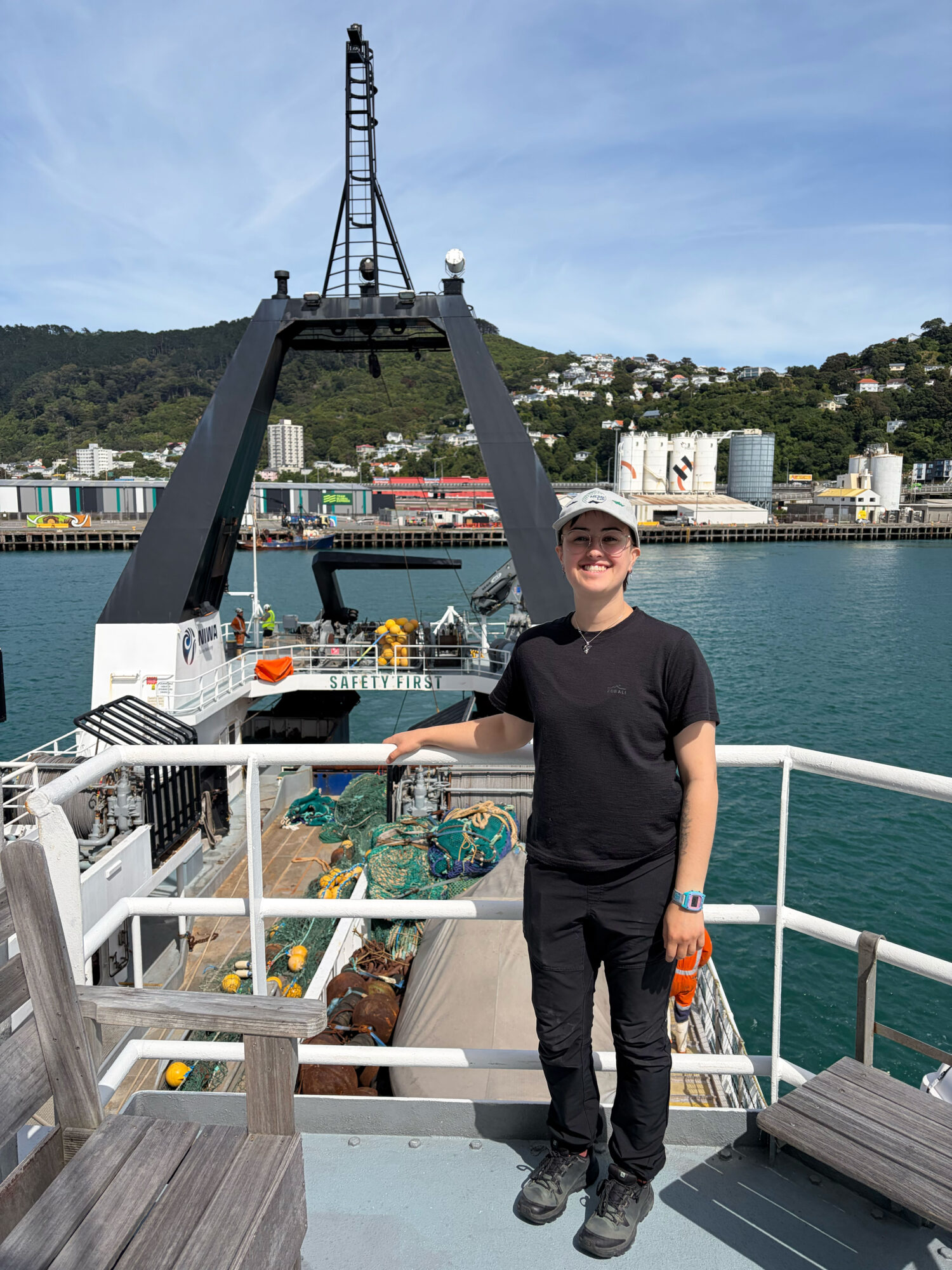
RV Tangaroa leaving port in Wellington, New Zealand. Photo © Brit Finucci
Living hundreds of kilometres offshore with no land in site for weeks at a time is the reality for a lot of deep-sea research. You need to go beyond shallower coastal waters to areas deeper than 200 meters (650 feet). That’s how I found myself at sea off the coast of New Zealand’s South Island earlier this year on a fisheries survey, funded by Fisheries New Zealand, which is designed to monitor commercially important deep-sea fish stocks such as ‘Hoki’.
I joined the survey to collect samples for my PhD research on deep-sea sharks, skates and chimaeras. The species I work with don’t usually come to mind when you think of sharks, like the great white or whale shark. Instead, these lesser-known species have incredible traits where some can glow in the dark or live for hundreds of years, and they play a critical part of deep-sea ecosystems.
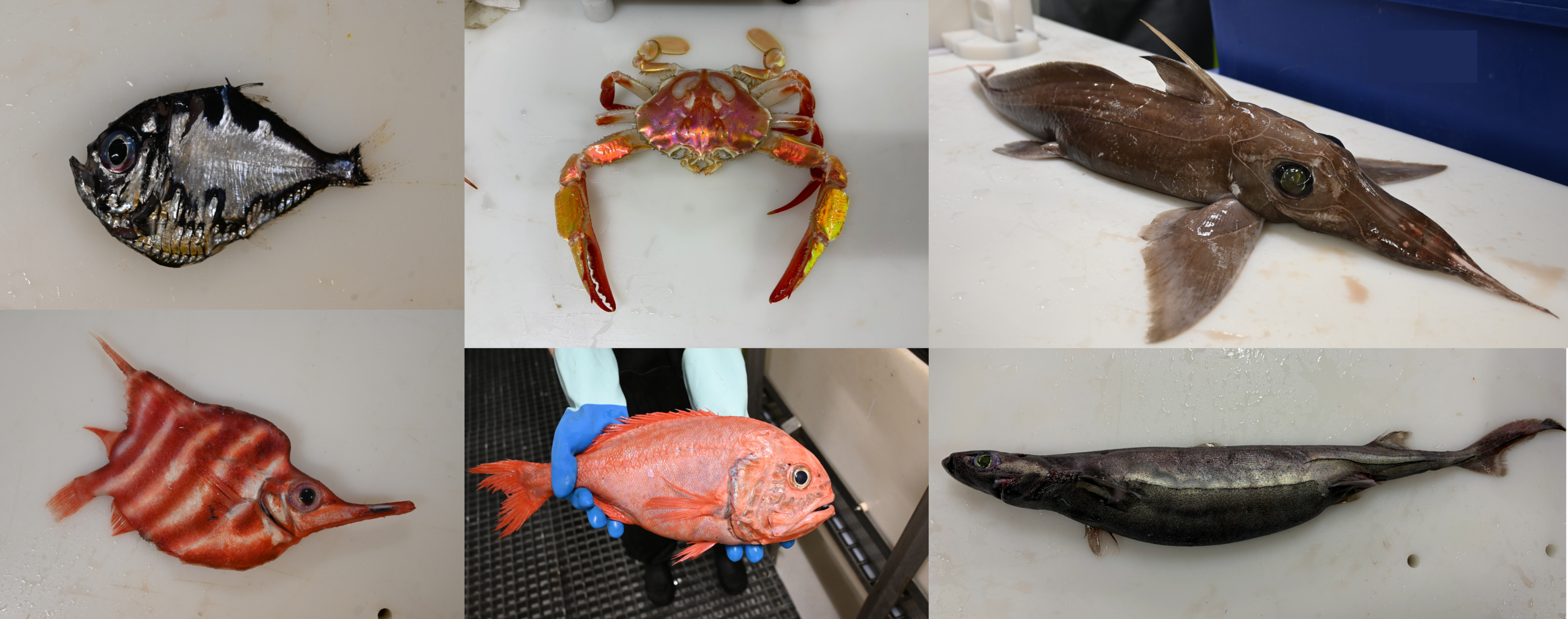
A selection of species that were captured on the fisheries survey. From left to right, top row: Hatchetfish (photo © Sam Boothroyd); Swimming Crab (photo © Teah Burke); Australasian Narrow-nosed Spookfish (photo © Sam Boothroyd ); bottom row: Banded Bellowsfish (photo © Sam Boothroyd); Orange Roughy (photo © Sam Boothroyd); Lucifer’s Dogfish (photo © Teah Burke).
Since I was on the night shift (when some of the coolest and weirdest critters come up), a typical day started at around 2pm. I’d wake up, have a quick breakfast, and check if we had a catch that needed to be sorted or if one was coming up soon. Then I would head to the locker room and change into my daily outfit which consisted of steel-toed rubber boots and waterproof overalls. From there we would spend the next twelve hours sorting through fish, measuring, weighing, assigning sex and maturity stages and taking samples for projects all around the world. Amongst all the work we were doing we also managed to make time to see who could make the best midnight toastie, compete in Code Names or play darts which is harder than you think when you add in a rocking boat.
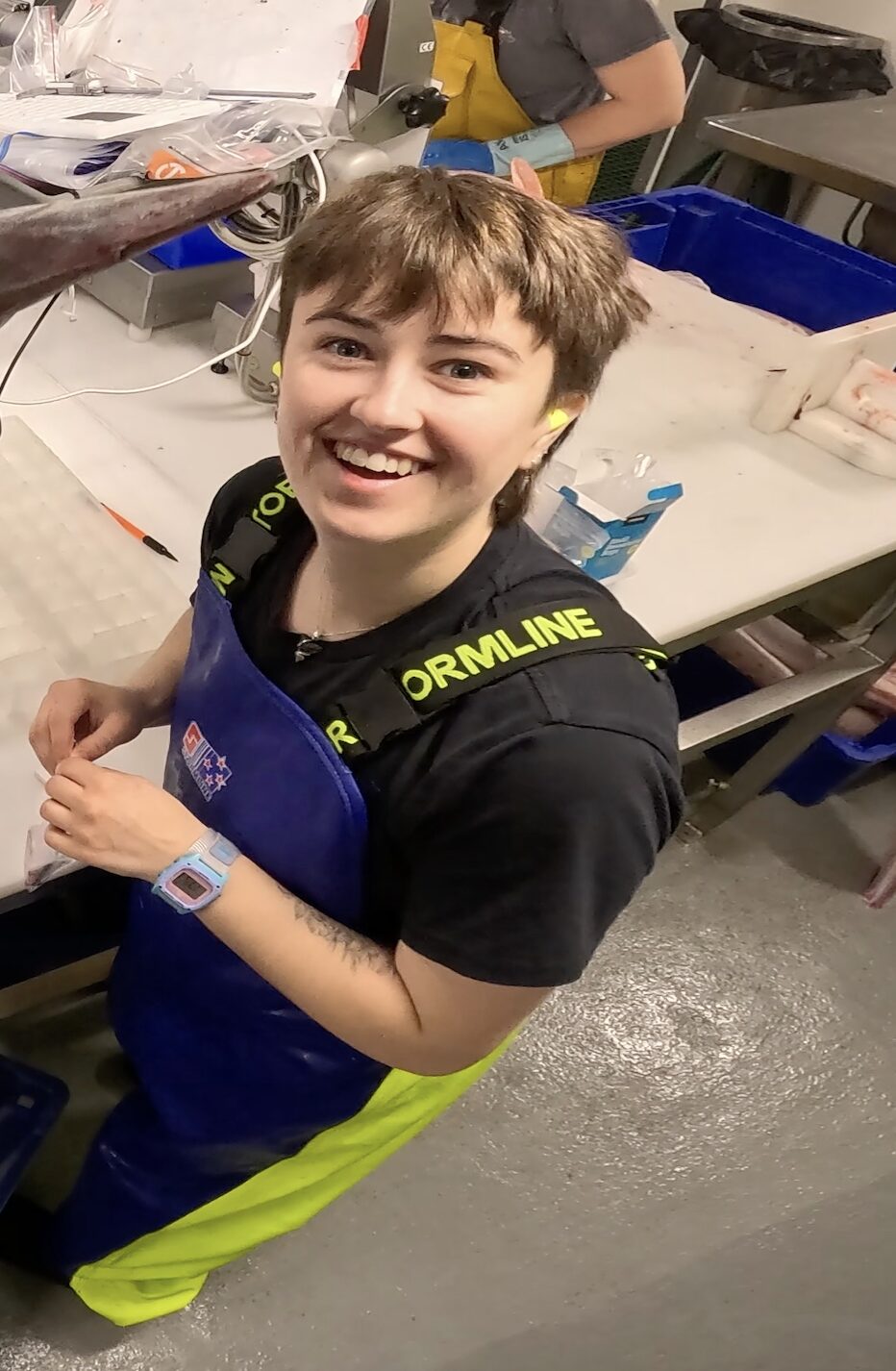
Daily outfit on RV Tangaroa which consisted of wet weather overalls, steel-toed rubber boots and hearing protection since the boat was very loud in the wet lab area of the ship. Photo © Teah Burke
For my project I managed to collect tissue samples from 19 species of sharks, 8 skates and 6 chimaeras. In total we sampled 640 individual animals! These samples will allow us to better understand the diet and food web interactions in this area which will be important as we try to understand how deep-sea species will be impacted by threats such as overfishing, climate change or mining.