
Imaging the chromosomes of the white shark
What do the chromosomes of a great white shark look like under the microscope? From the beginning of this project, this has been the question I set out to answer while causing minimal harm to the animals. In a previous blog post, I explained the importance and challenges of studying shark and ray chromosomes. Chromosomes are bundles of DNA found in many living organisms, including sharks, rays, and humans. Studying them can help reveal certain genetic diseases, help us understand how shark and ray DNA has evolved over 400 million years, and whether they have different-sized sex chromosomes, as seen in most mammals. Collecting these data for sharks and rays, however, can be challenging because their physiology differs greatly from animals more commonly studied in laboratories, meaning our procedures must be carefully adapted.
Since encounters with white sharks are relatively rare, I first focused on establishing a more reliable method for collecting chromosomes by working with shark species closer to home. With the help of the Grubbs Lab at Florida State University and the staff at Gulf Specimen Marine Laboratories, we collected samples from local species such as the blacknose shark, blacktip shark, and bonnethead shark.
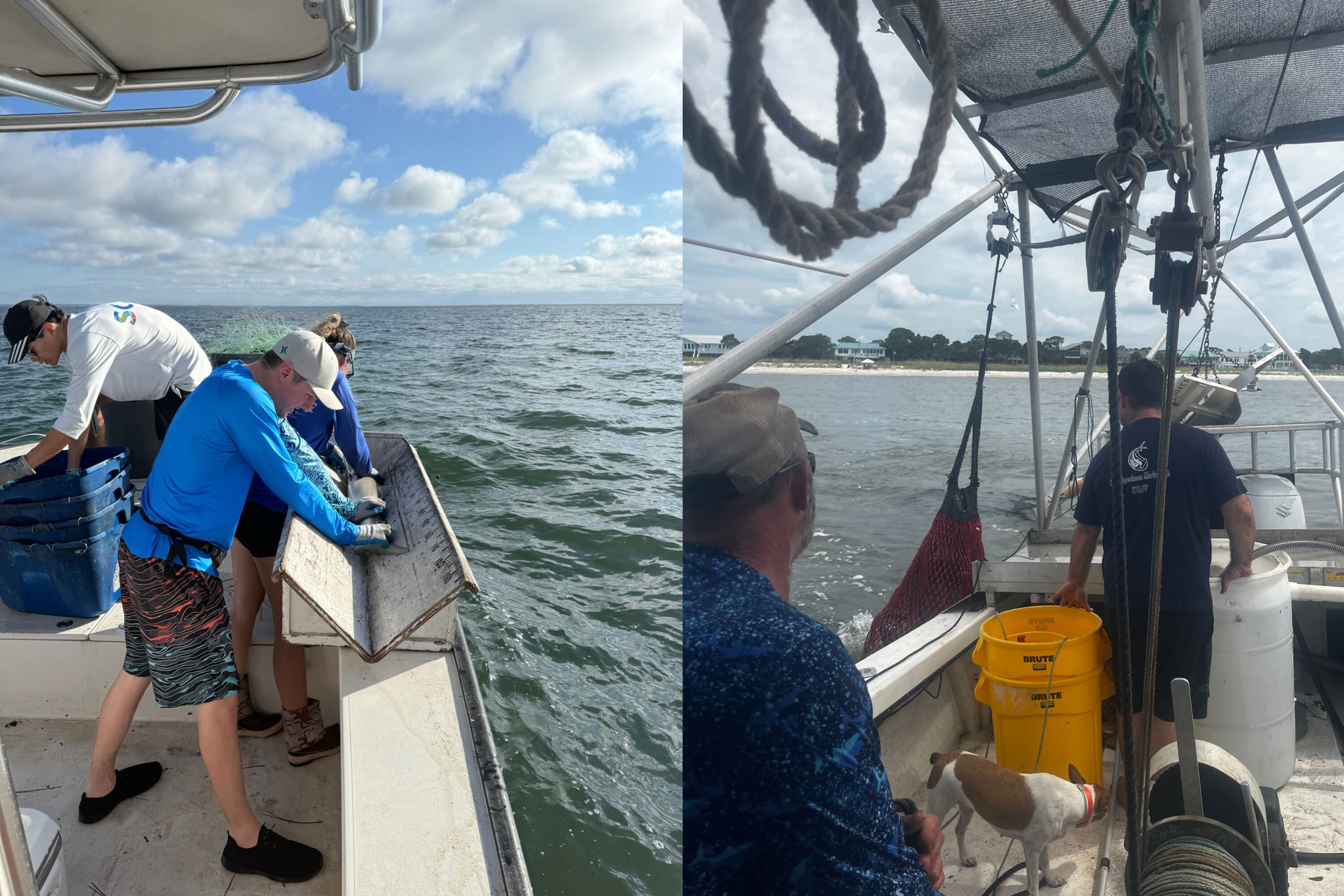
Researchers and the project leader fishing for sharks and collecting data. Photos © Emma Jackson (left) and Adrian (Szu-Hsuan) Lee (right)
When a shark is brought on board, I draw a small blood sample from the underside of their tail while other data are collected, and then the animal is released back to the ocean. These blood samples are then kept cool and brought back quickly to the lab. There, I place the cells in the cell culture media to be grown for a short period of time. As the cells grow and divide, I treat them with a chemical that preserves their chromosomes, allowing them to be stained and viewed under the microscope.
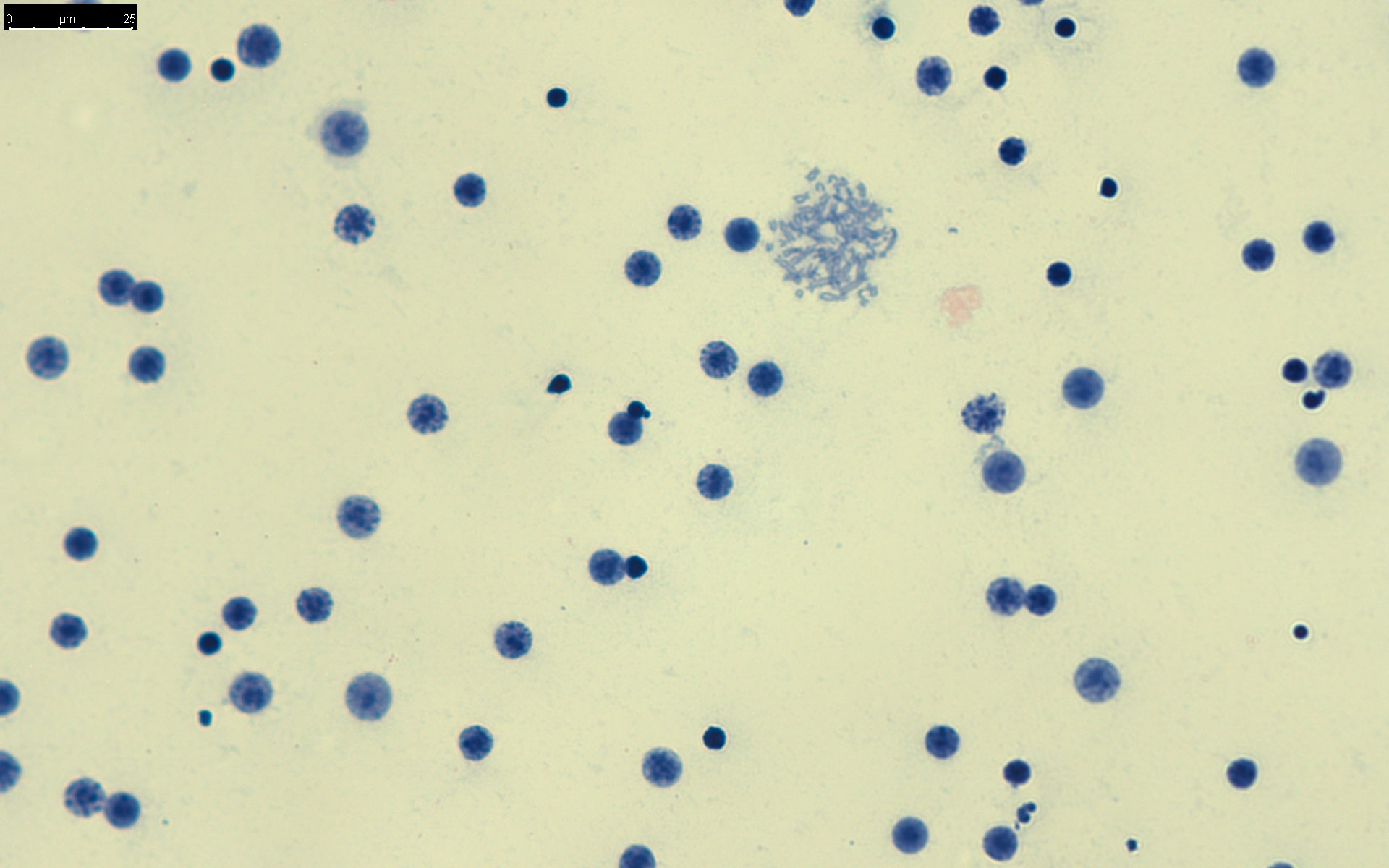
Chromosome image of a blacktip shark. Photo © Adrian (Szu-Hsuan) Lee
Of course, it didn’t always go smoothly. The cell culture can be contaminated with bacteria or fungi, and the cells could die due to stress, or simply not divide fast enough to get a snapshot of their chromosomes. The process required repeated adjustments and patience, but with each attempt, I gained experience that better prepared me for a white shark sample.
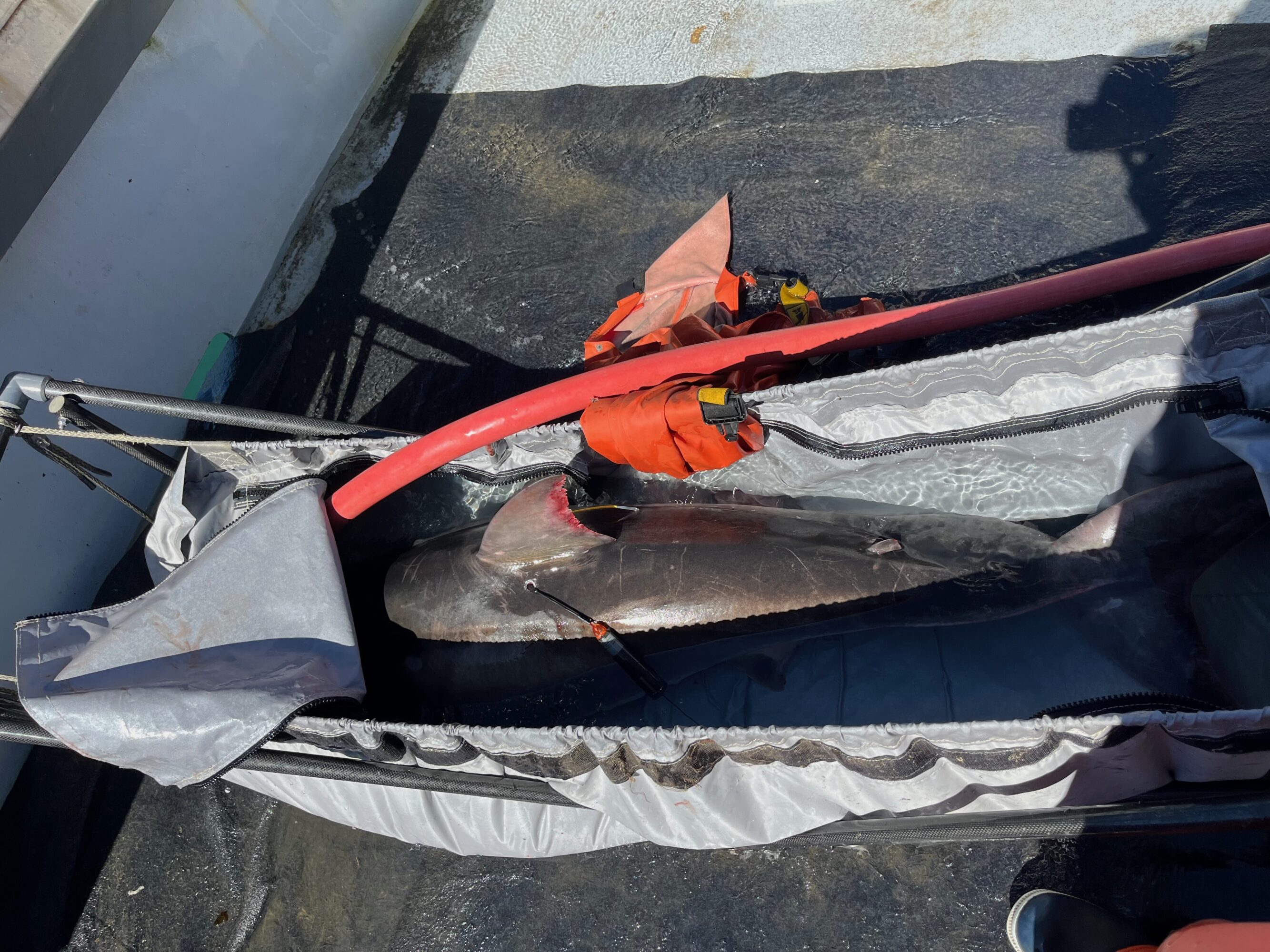
A captured white shark. Photo © Kady Lyons
In mid-October 2025, we finally came across a white shark sample. With the help of our collaborators, Dr. Lowe and Dr. Lyons, we managed to obtain a blood sample from a juvenile female white shark off the coast of California. Using the experiences from before, I was able to prepare chromosome images from the cells of this white shark.
We still hope for opportunities to collect the chromosomes from a male to compare their sex chromosomes. Even so, these results show that it is possible to collect the white shark chromosomes without harming them and give us the precious materials to do more downstream analysis.
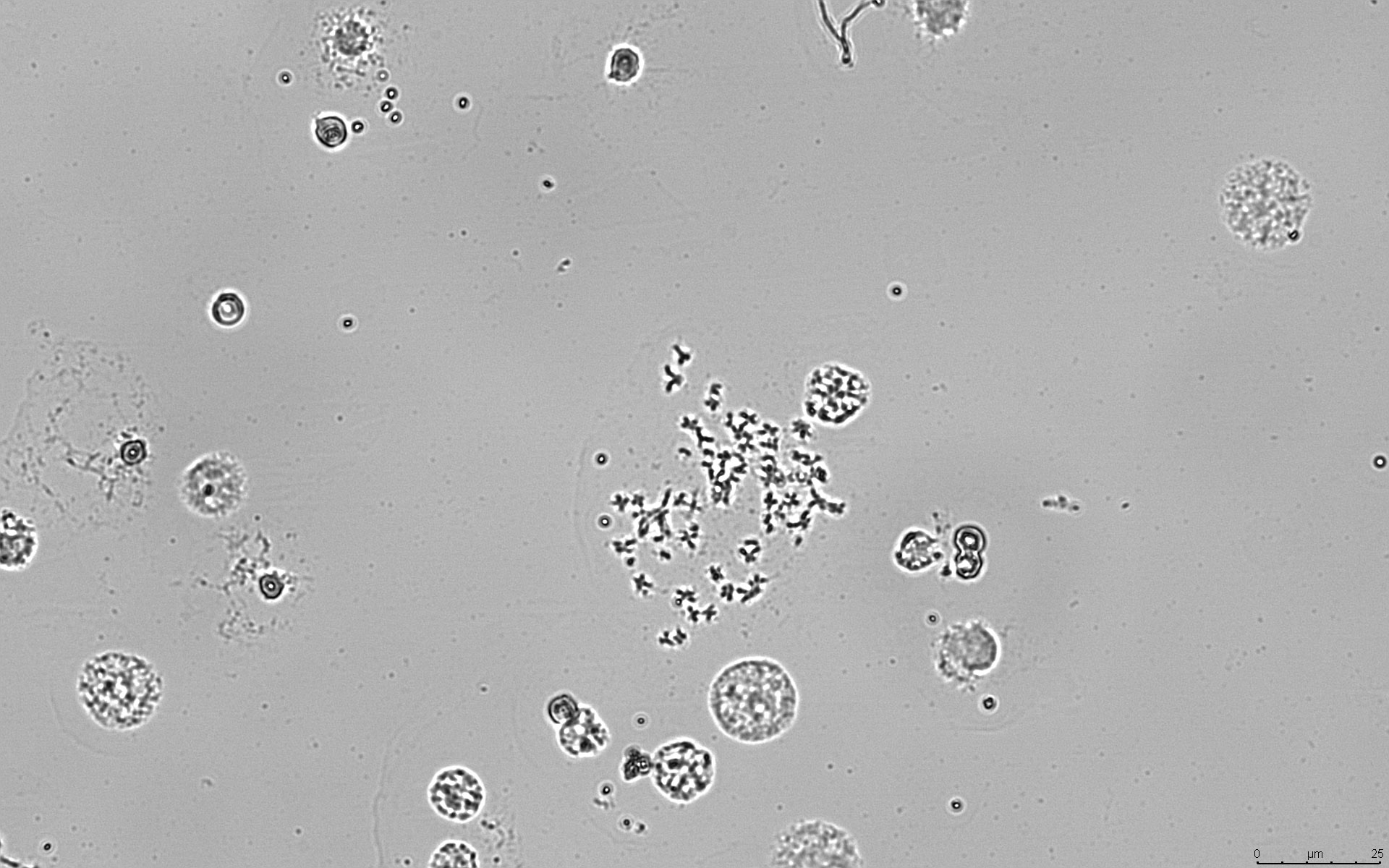
A chromosome image of the white shark. Photo © Adrian (Szu-Hsuan) Lee