
Hidden in Plain Sight: Uncovering Timor-Leste’s Sharks and Rays
After countless hours searching online for information about Timor-Leste’s sharks and rays, I arrived expecting to find almost no existing knowledge. Oh, how wrong I was! And how grateful I am that I began this journey by listening to the people who know these waters best.
Over two years, I travelled across the country, crossing mountains from north to south and navigating rivers and bumpy, unpaved roads from east to west, visiting 13 fishing communities. People welcomed me with curiosity and generously shared their knowledge. Sharks and rays were part of their daily lives. Some species appeared seasonally, while others were rarely encountered. I became fascinated by their local names and the stories behind them (more on that in my next blog!).
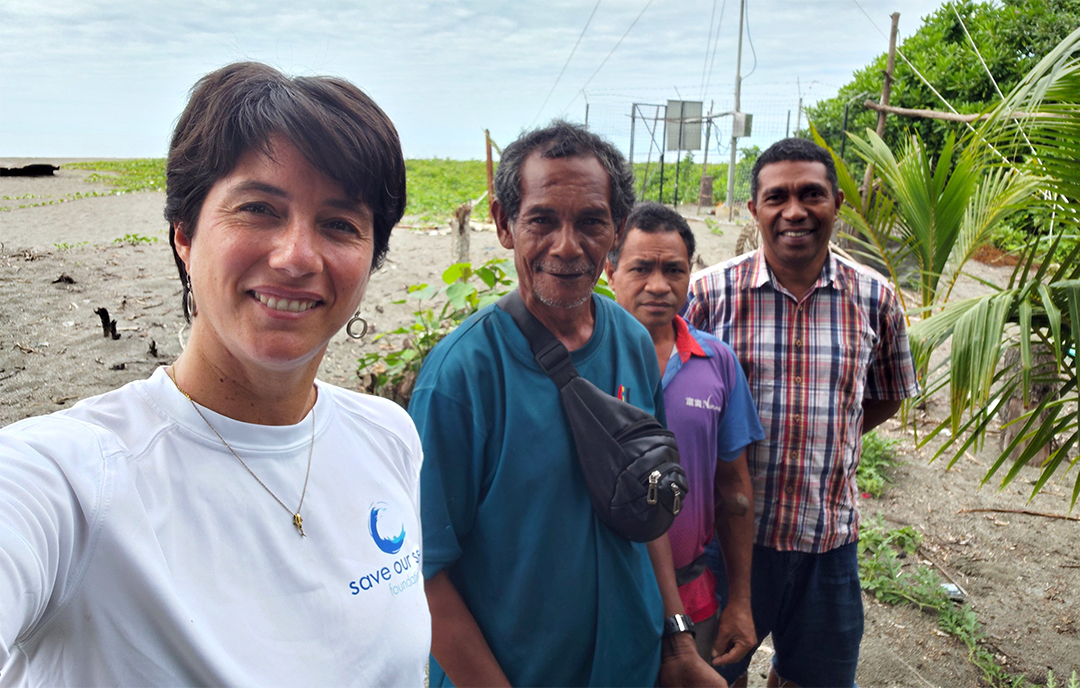
Learning from fishing communities whose knowledge and observations are essential to documenting Timor-Leste's sharks and rays. Photo by © Adriana Gonzalez
I also visited fish landing sites, which presented their own challenges. With no dedicated fishing ports for artisanal fisheries, small canoes land directly on beaches, and shark and ray catches are often infrequent. Nevertheless, these observations provided valuable information, particularly along the southern coast.
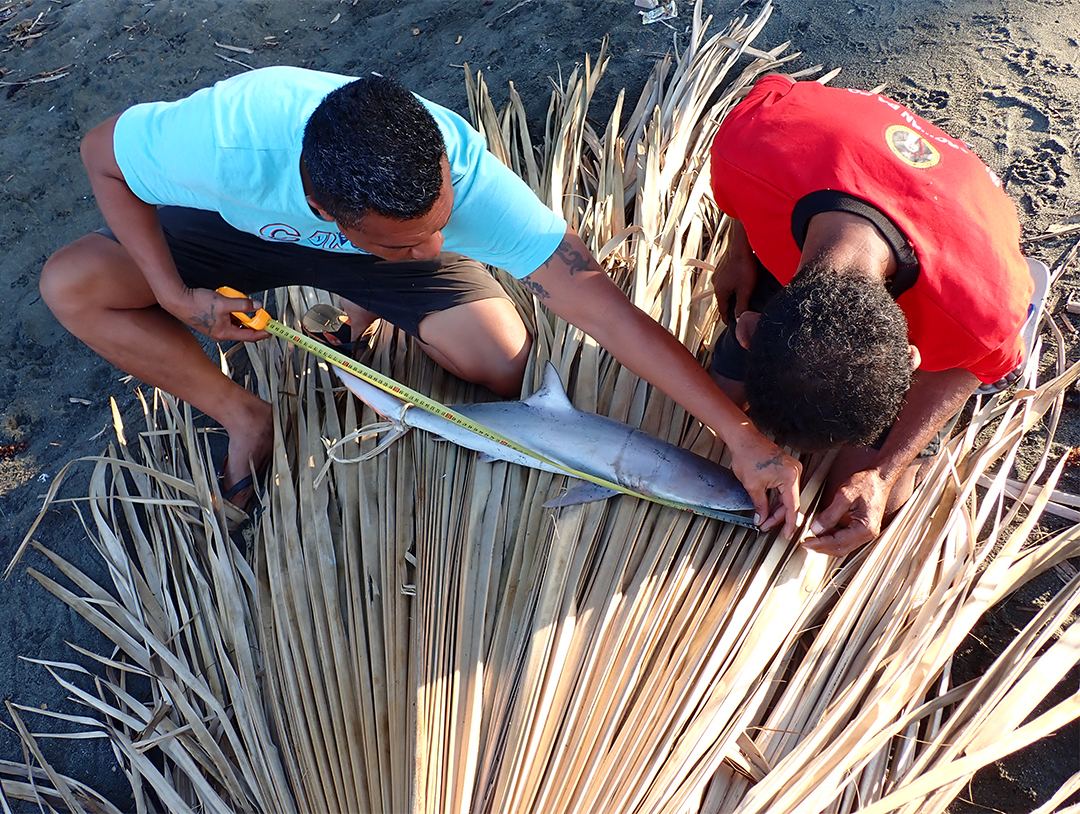
Measuring a shark at a fisheries landing site to document body size and contribute to species-level monitoring. Photo by © Adriana Gonzalez
In the north, clearer waters and fewer crocodiles have supported a growing recreational diving community. I connected with passionate ocean enthusiasts, including an Australian diver who has spent over a decade enjoying marine life and developed his own shark-focused citizen science project. Other, like Ivan, describe the habitat like the back of one’s hand, describing them with remarkable detail. Spearfishers also contributed remarkable observations from rarely visited locations. Jafet Potenzo Lopes, a finalist in the Save Our Seas Ocean Storytelling Photography Contest, has demonstrated a strong commitment to documenting sharks and rays in Timor-Leste through consistent contributions to iNaturalist, including landing-site observations and drone footage.
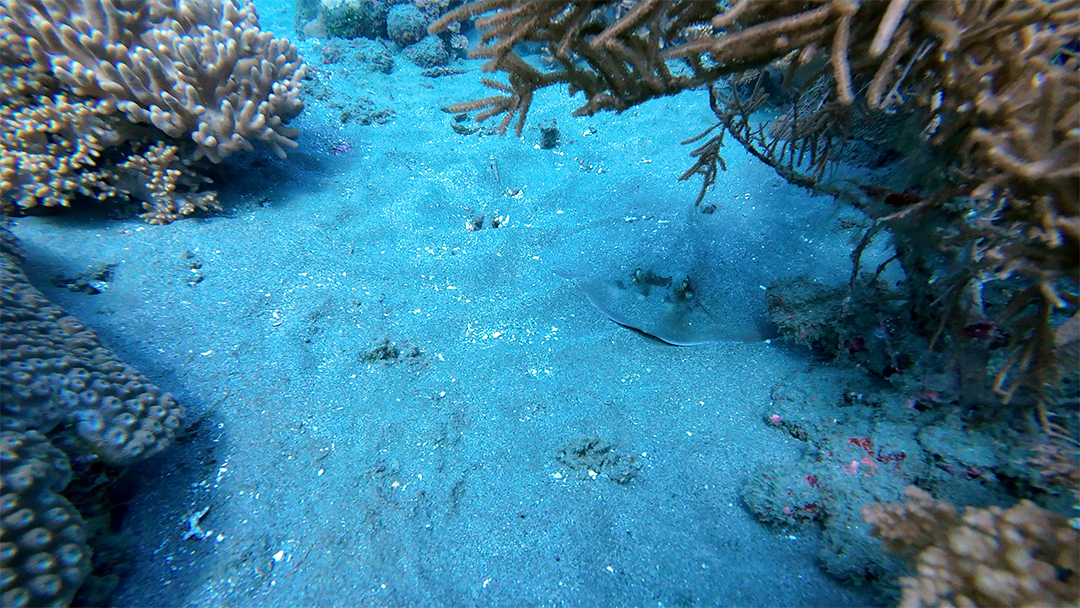
Hidden in plain sight! A shark sheltering beneath the reef and a ray blending into the seabed. Photographs contributed by © citizen scientists highlight the importance of underwater observations in documenting marine biodiversity.
I had arrived thinking I would be starting from scratch. Instead, I found myself inspired by people already documenting their marine biodiversity.
By combining these observations and verifying records through photographs and videos, we documented 26 shark and 21 ray species. We are now preparing Timor-Leste’s first comprehensive checklist of sharks and rays.
Some discoveries were particularly exciting: little-known deepwater species, including gulper sharks; hammerheads using coastal estuaries as potential nursery areas; and the Whitefin Smoothhound, previously known only from neighbouring Indonesian waters.
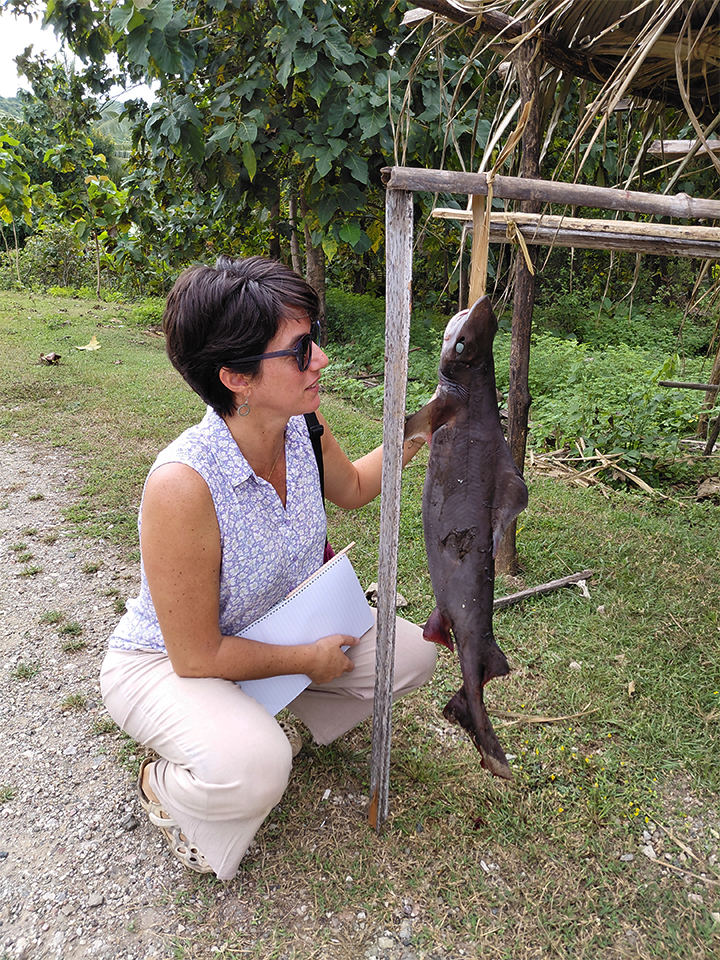
Examining a deepwater shark documented in Timor-Leste. Such observations provide valuable insights into the country's poorly known deepwater shark diversity. Photo by © Adriana Gonzalez
But identifying species is only the beginning. After all, how can we protect species we don’t even know exist?
To help bridge this knowledge gap, we delivered a workshop to train local fisheries enumerators in shark and ray identification, strengthening their ability to document these species during routine fisheries monitoring. We are also developing Timor-Leste’s first shark and ray identification guide, making this knowledge accessible to fishers, divers, and other ocean users, and supporting future research and conservation efforts.
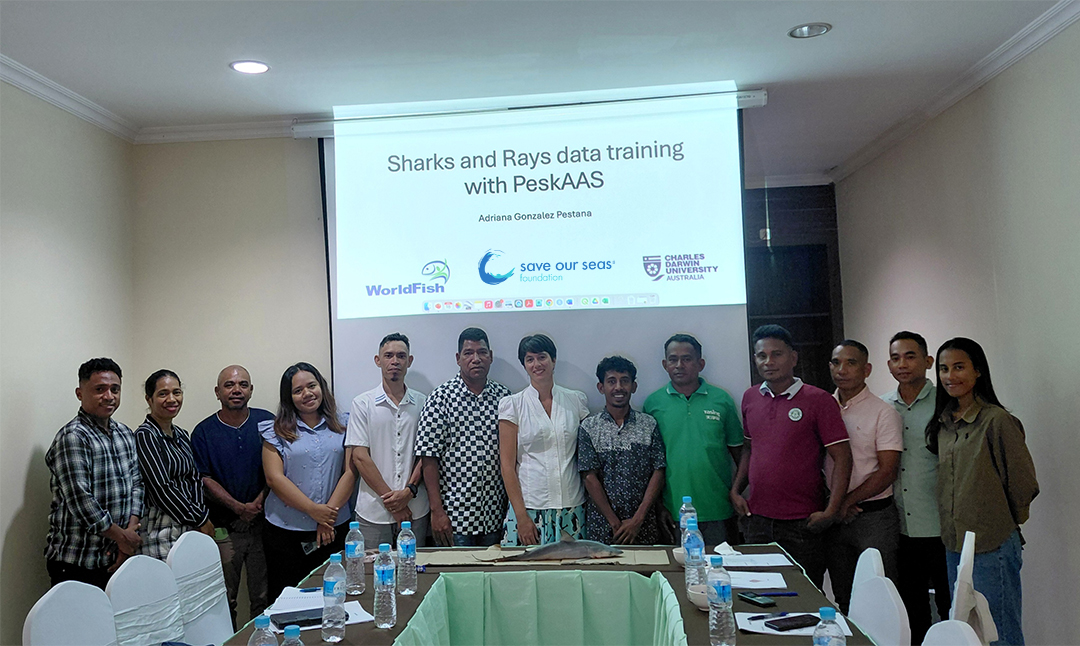
Shark and ray identification training delivered to fisheries enumerators in collaboration with WorldFish, supporting improved species-level monitoring in Timor-Leste. Photo by © Adriana Gonzalez
These findings offer only a glimpse of the country’s extraordinary diversity. Many more discoveries undoubtedly await, and I cannot wait to keep exploring these waters, alongside the people who have already taught me so much.
Tetum vocabulary
- Shark: Tubaraun, Ama, Uu (names varying among communities)
- Ray: Pari, Ari, Hai (names varying among communities)
- Hammerheads (shark): Martelo, Ta’a
- Ocean: tasi
- Female sea: Tasi Feto (describing the calm, placid, and gentle sea on the north coast)
- Male sea: Tasi Mane (describing the rough, wild, and big on the south coast)
- Knowledge: matenek, hatene
- Fishing: peska, kail ikan (fish with a line)