
Gullies in the gullies!
Spotted gully sharks are a southern African endemic coastal shark species, easily recognised by their spotted patterns. They can reach sizes of up to 2 m and weigh around 36 kg. They are one of South Africa’s most commonly caught species along the Eastern Cape coastline. They are targeted for the enjoyment of the fight, since they are extremely strong for their size, and are often sought after by anglers in recreational league competitions for points. However, very little is actually known about their movements. This is something we aimed to change, tackling this as part of my honours thesis, where I looked at the movements of the juveniles in what is known to be a spotted gully shark hotspot in the Port Alfred region. This was done using acoustic telemetry, whereby tags are surgically implanted into the shark and then the shark is released back into the sea where it was captured. Acoustic receivers that have been placed in the sea then detect the tagged sharks as they swim past. Between 14th October 2024 and 23rd February 2025, we managed to tag and release 15 juvenile (8 females, 7 males) spotted gully sharks in the Port Alfred region (many thanks to the Acoustic Tracking Array Platform and Save Our Seas Foundation for the joint transmitter grant that provided tags for this project) and monitored them for 10 months. Here is what we found.
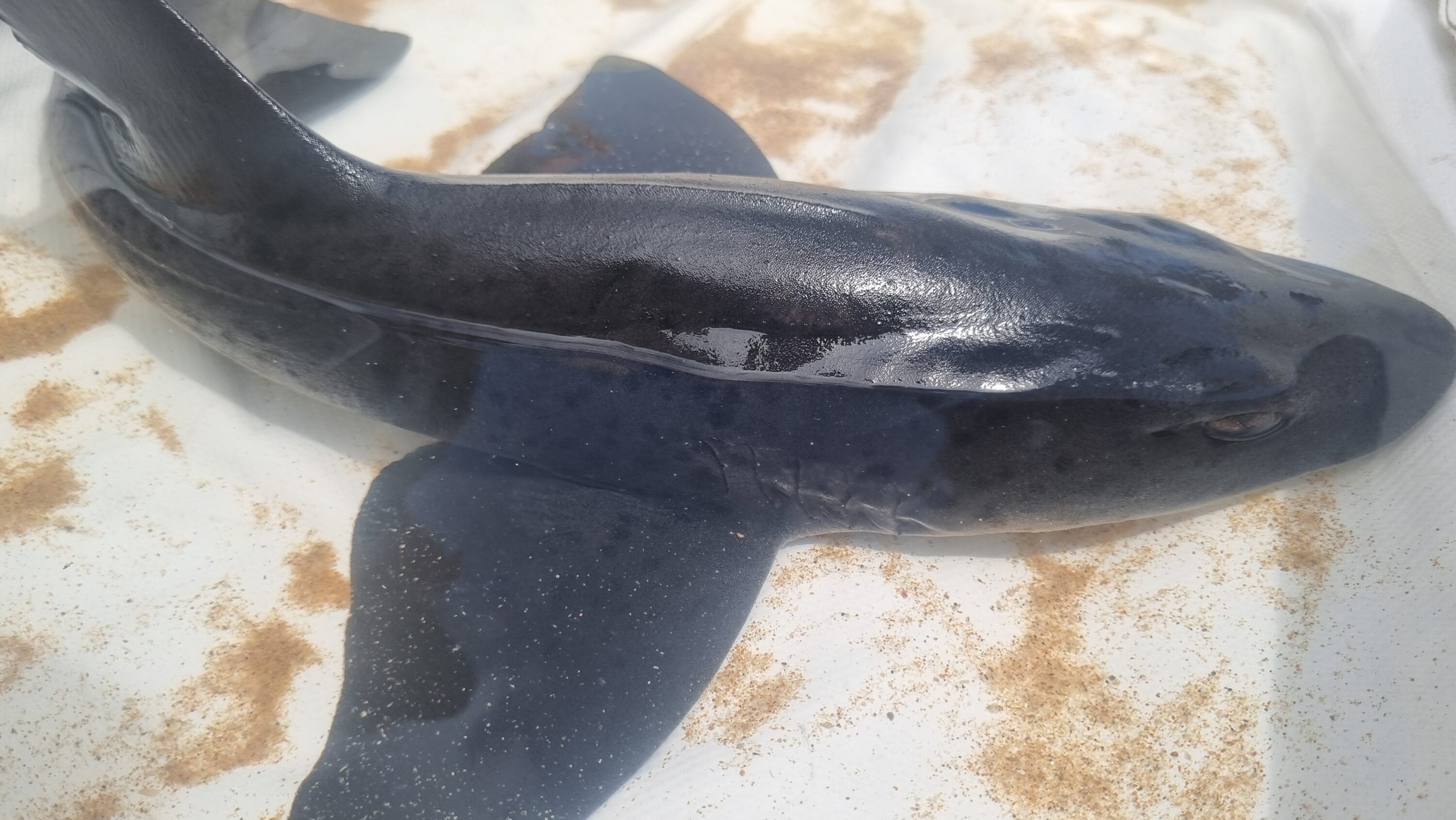
A juvenile spotted gully shark (Triakis megalopterus) waiting to be tagged. Photo © Dr Taryn Murray
Of the 15 juveniles, only 9 sharks (6 females, 3 males) were detected over the 10-month period. The sharks didn’t end up being detected as much as we thought they might, only being recorded 2683 times. We tested for what is known as residency, which is an understanding of how much time an animal spends in a specific area. We found that these sharks were not very resident to the Port Alfred array based off of the number of detections. However, we have since realised that these sharks are more resident than we thought. The receivers off of Port Alfred are all approximately 600 m offshore or further, so we soon realised that the sharks are actually spending most of their time within the first 200 m from the shore, out of the detection range of the receivers!
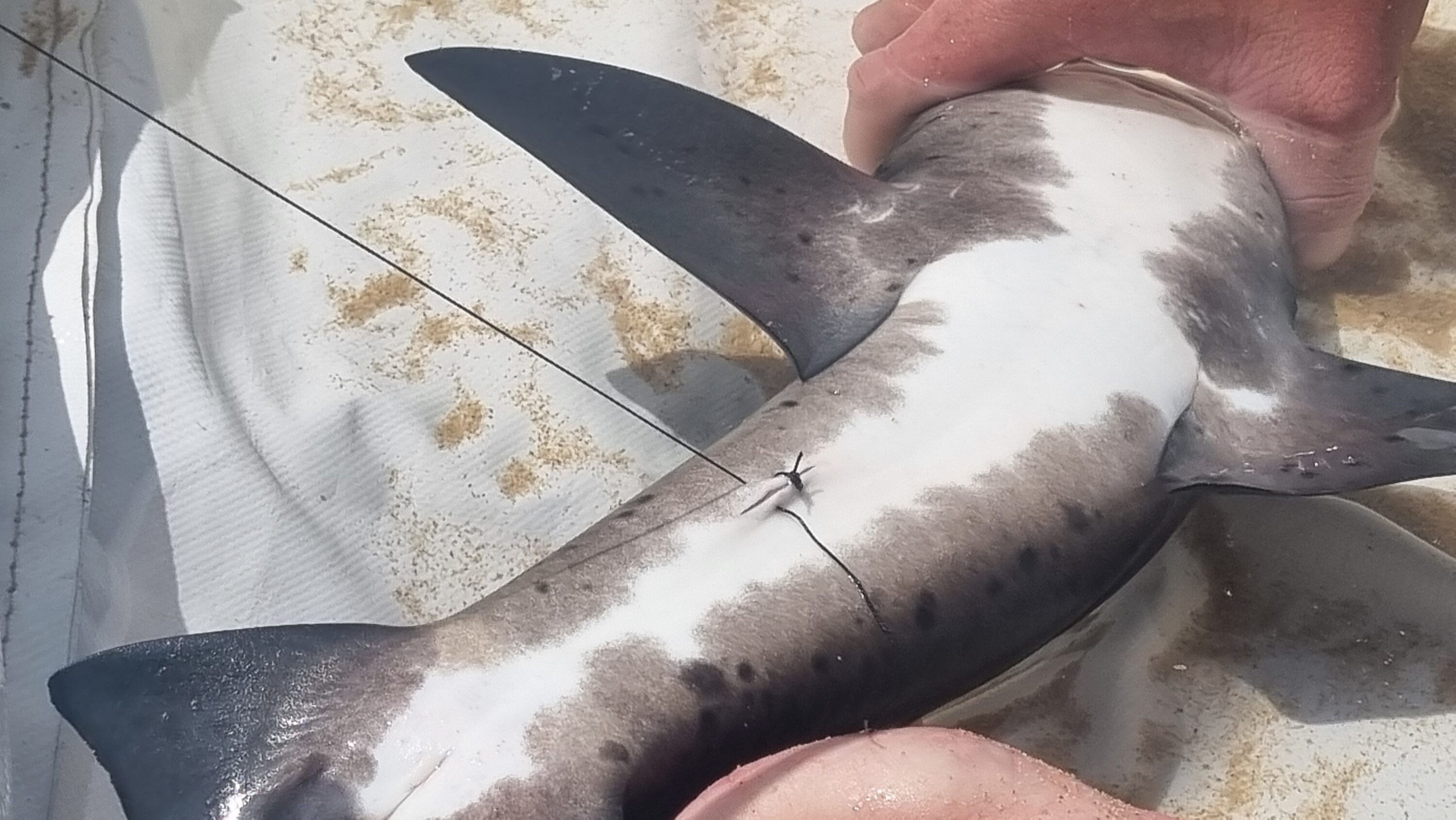
A juvenile spotted gully shark (Triakis megalopterus) has just received its tag, and now is being stitched up. Photo © Dr Taryn Murray
We also noted some unique behavioural patterns. Some sharks showed longshore connectivity, which means that the sharks were moving up and down the coast between different receivers. One was a male (825 mm), which spent 1 month near to where he was caught, before moving westward towards Algoa Bay. A small female (590 mm) showed similar movement patterns, spending 4 months near to her capture site before moving westward as well, travelling a total distance of 80km between receivers. Another small female (590 mm) was recording moving approximately 3 km offshore within a few days.
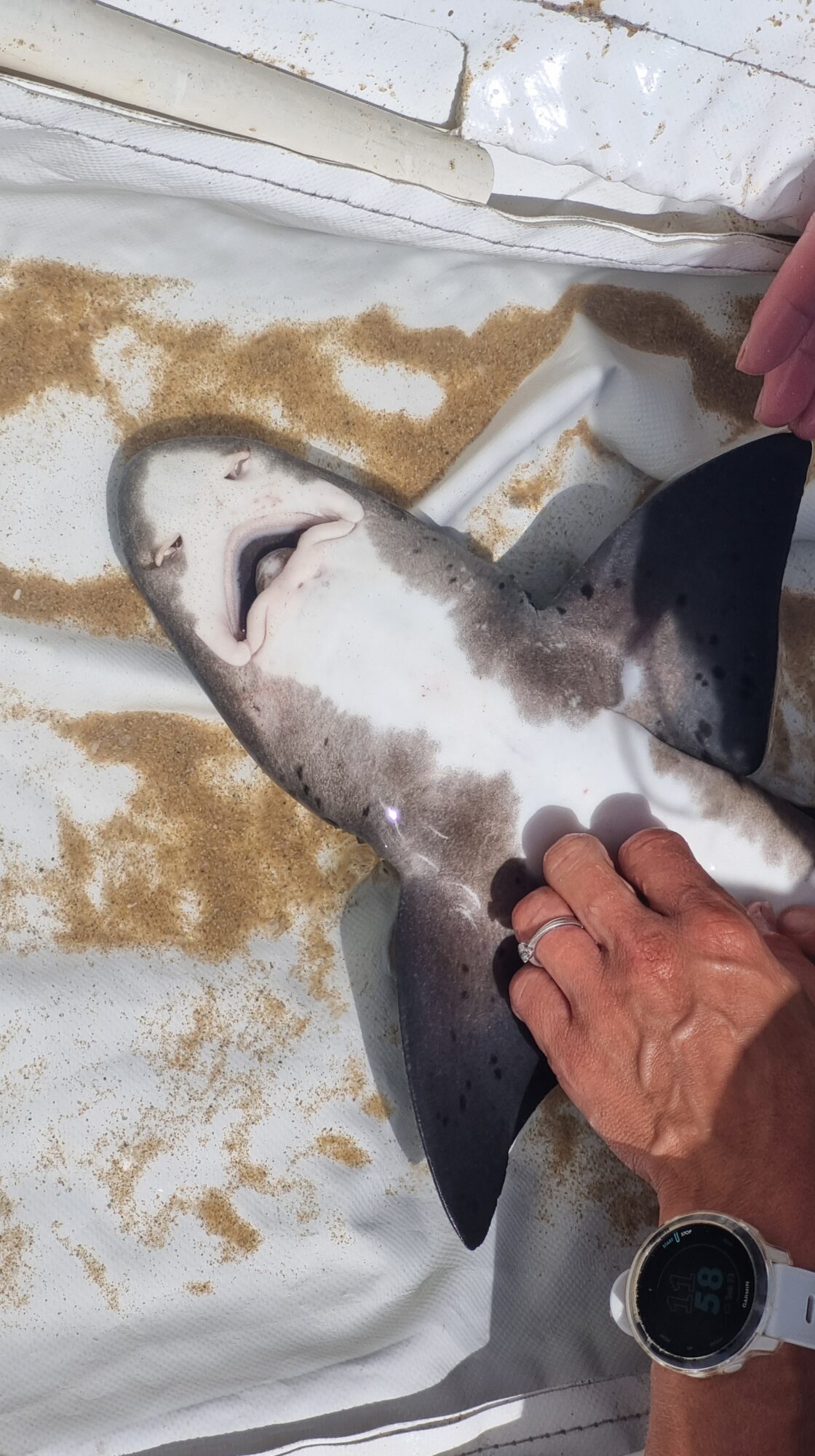
A juvenile spotted gully shark (Triakis megalopterus) held upside down to induce tonic immobility. Photo © Dr Taryn Murray
The most interesting story, however, came from the smallest female shark (540 mm), who was detected on 8 different receivers in the Port Alfred region, but for just a few hours. Interestingly, she travelled a total of 34 km within a period of 24 hours, something quite unusual for such a small shark. On closer inspection, and through solid detective work, we realised that she must have fallen prey to something quite a lot bigger! What gave this away? Mostly her swimming speed, which was an average of 2.1km/h; quite speedy for a small shark. The potential culprit? We think a young great white shark, which have also been recorded traveling at speeds of 2.1 km/h. Although we can’t prove 100% that it was indeed a great white, this is our best guess.
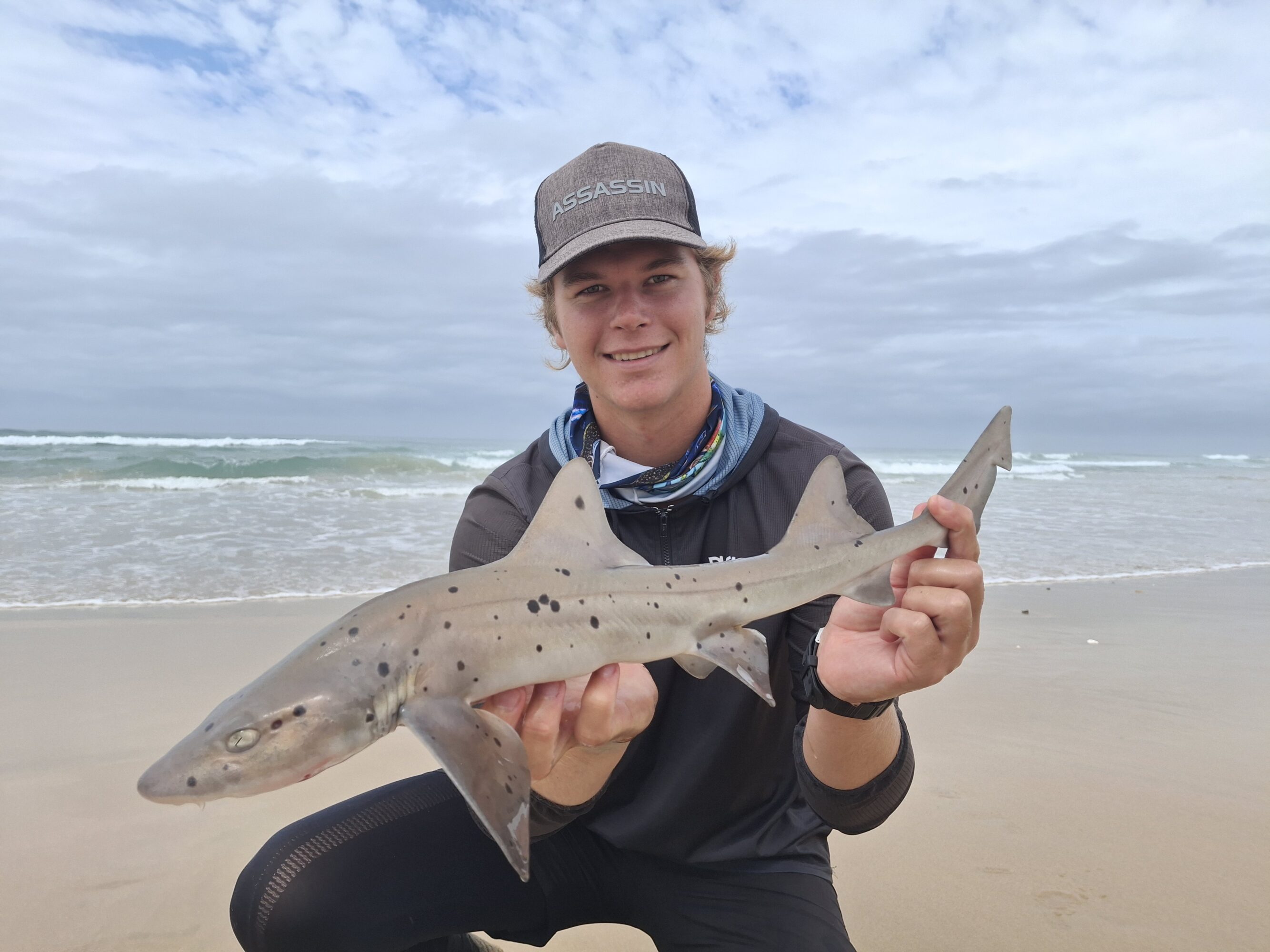
MSc student Reagan Kieck holding a juvenile spotted gully shark (Triakis megalopterus). Photo © Dr Taryn Murray
Although this is a small preliminary study, this information can help us determine if the Port Alfred area is a nursery habitat for this species, which could then potentially be identified as an Important Shark and Ray Area, making the area important for conservation. We are excited to learn more about this species by continuing this work as part of my MSc, where we’ll continue collecting the data for the juveniles, but have also tagged adults in the same region, allowing for some fantastic size class assessments of differences in movement. Further, adults have been tagged in Algoa Bay allowing for a comparison of adult movements in two different habitat types, and data collected on adults released, from the Two Oceans Aquarium as part of their release programme, will allow us to compare movements between aquarium-released sharks and their wild counterparts! Lots of exciting work to come.
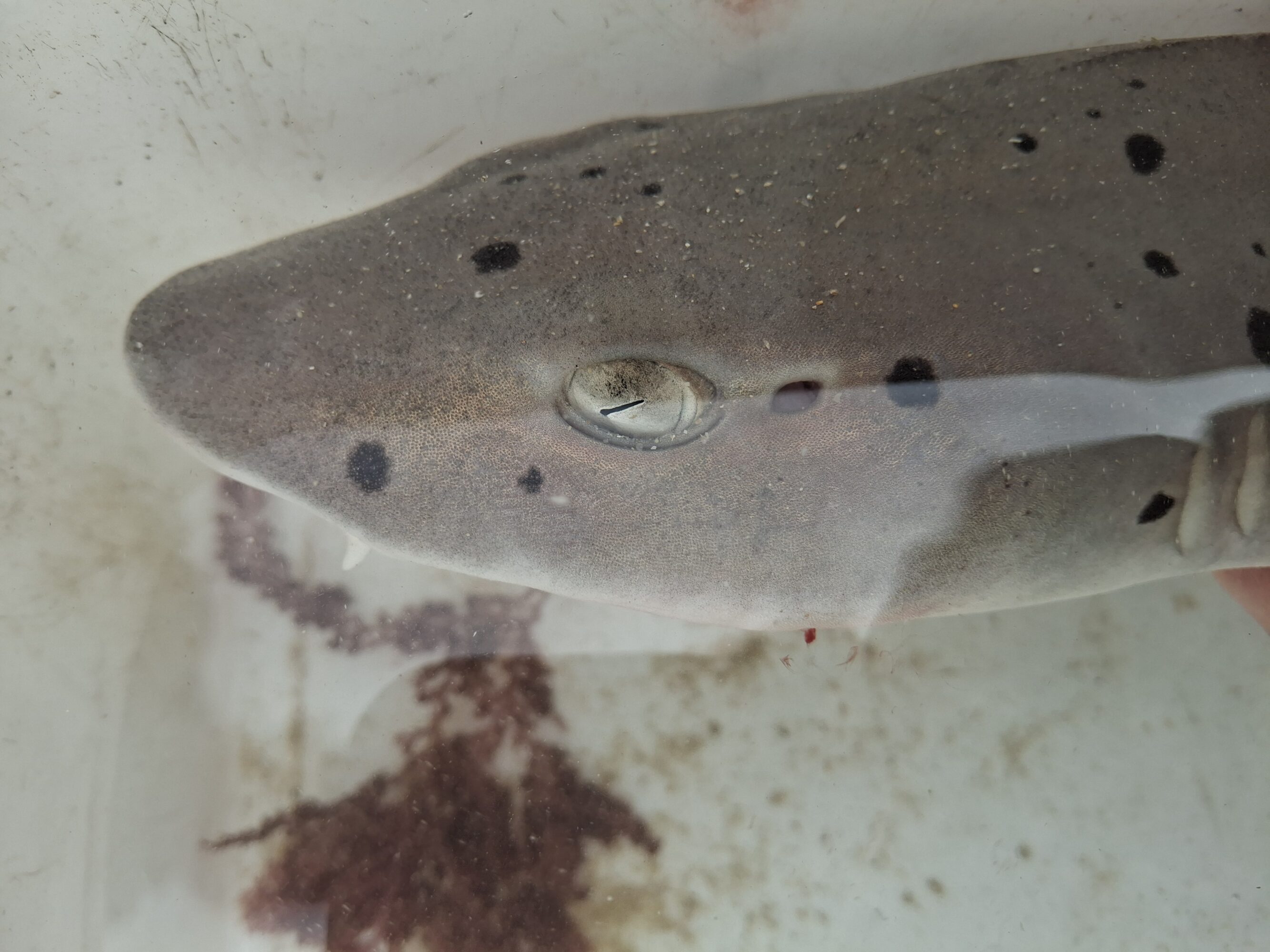
A close-up image of a juvenile spotted gully shark (Triakis megalopterus). Photo © Dr Taryn Murray