
Ghosts of a healthier ocean: searching for Zanzibar’s predators
In 2022, I visited Zanzibar for the first time. Like many people before me, I arrived with images of beautiful coral reefs, turquoise waters and vibrant marine life. As a marine biologist, I couldn’t wait to get underwater and see it for myself.
So, as many tourists do, I headed to the most popular snorkelling/dive spot at the tip of Zanzibar, around a tiny island called Mnemba.
What I experienced was distressing.
The reefs were littered with broken coral, with clear signs of damage from excessive tourism pressure. The fish communities were dominated by small-bodied species, with very few predators – clear signs of overfishing. It was obvious that these reefs were under immense pressure.
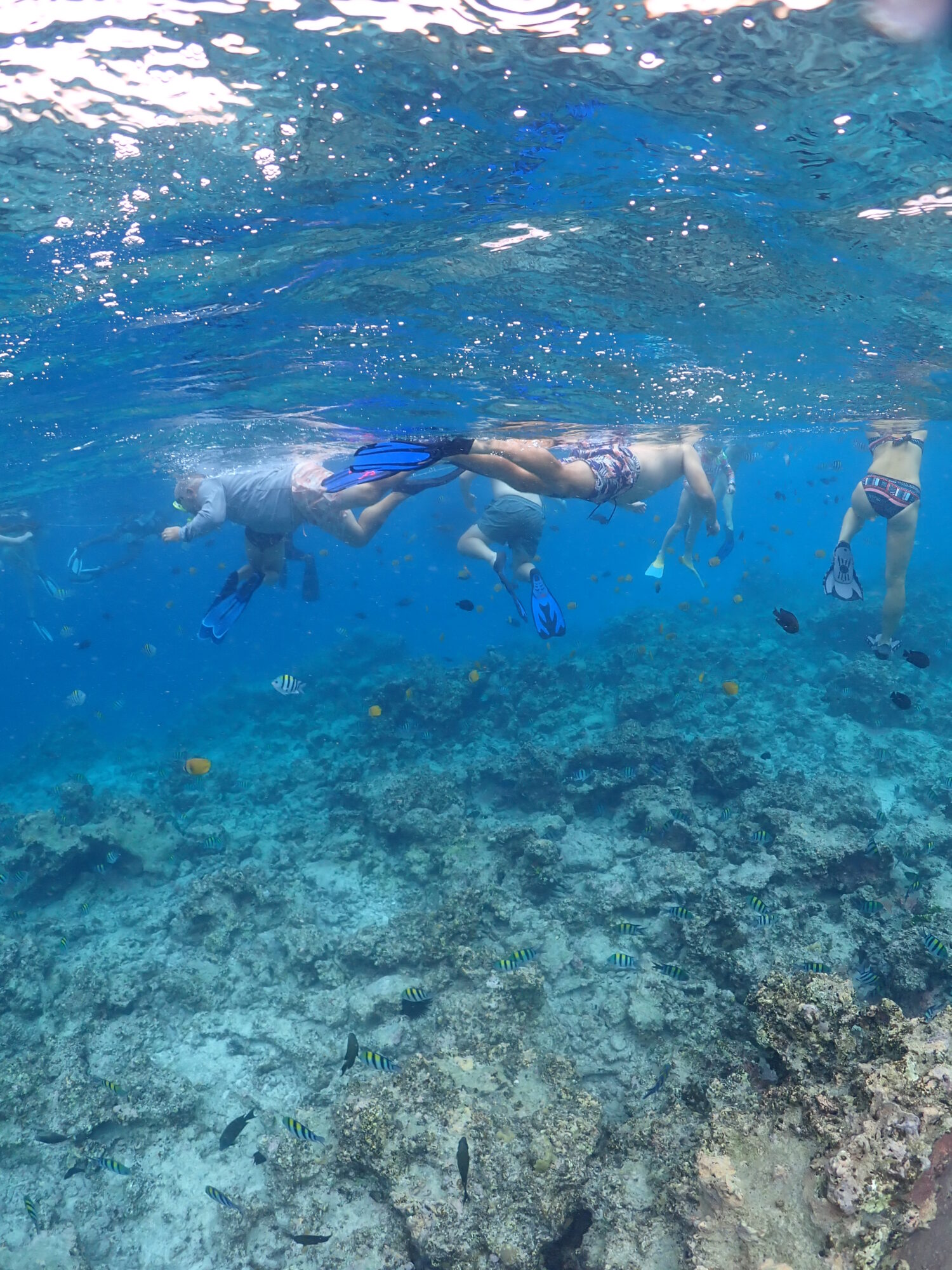
Coral reefs and costal regions are vital to Zanzibar's tourism industry. Photo © Camilla Floros
What many visitors are not told is that Zanzibar is home to more than two million people, many of whom depend on the ocean for food, livelihoods and cultural identity. As the population continues to grow, balancing the needs of people with the protection of marine ecosystems has become increasingly important.
Fast forward to 2026, and I now visit Zanzibar regularly, not as a tourist, but as the Programme Lead for Oceans Without Borders (OWB), the marine conservation programme of Wild Impact. Together with the Ministry of Fisheries and Blue Economy, local communities and conservation partners, we are working to understand, restore and protect the reefs around Mnemba Island and the Mnemba Island Marine Conservation Area (MIMCA).
Marine ecosystems are critical to Zanzibar’s economy, contributing approximately 30% of GDP. Coral reefs support tourism, fisheries and coastal protection; they are not just natural assets, they are fundamental to the wellbeing of both people and the economy.
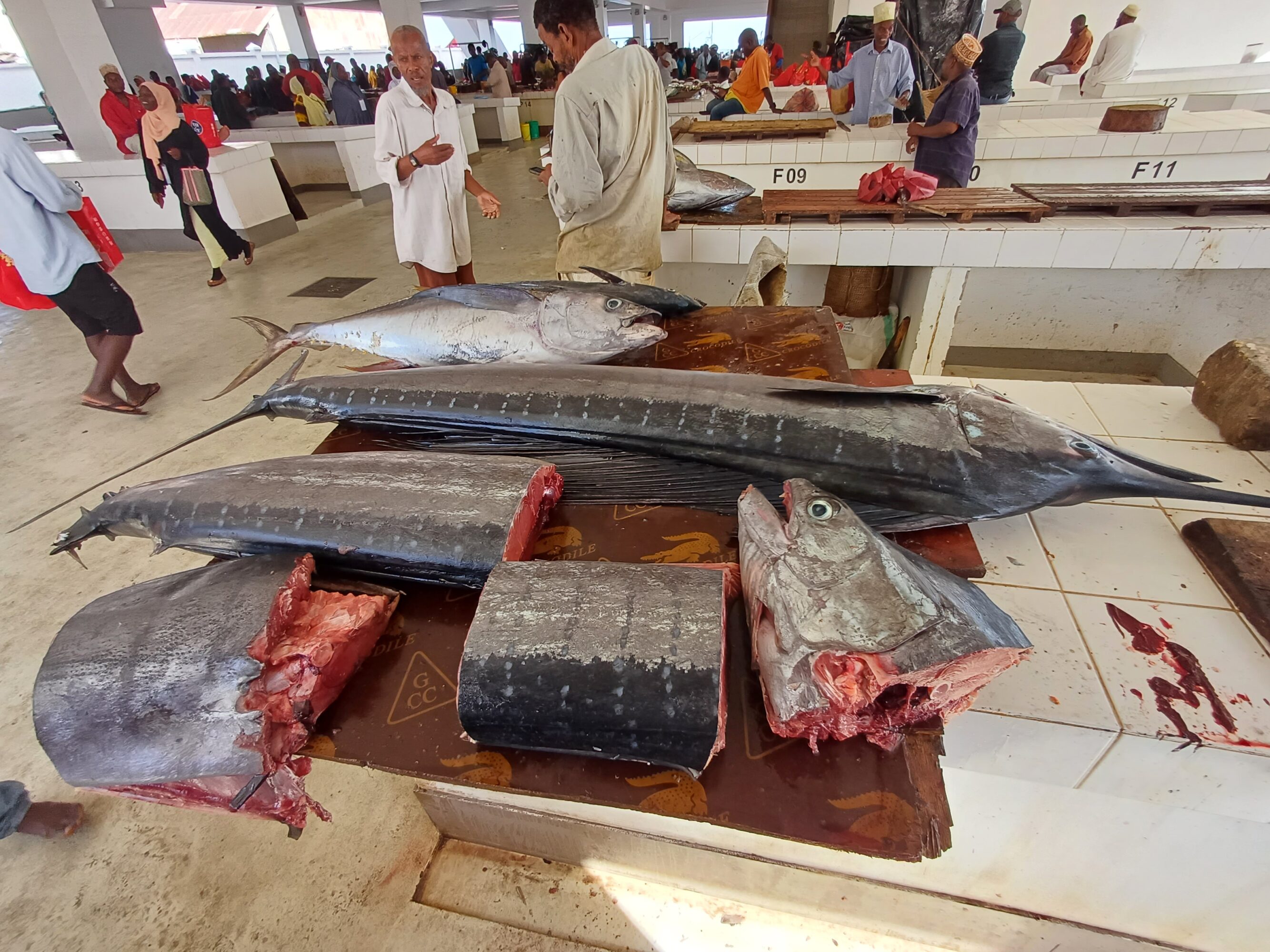
Marine species sold at a local fish market in Zanzibar. Photo © Camilla Floros
Our work includes habitat monitoring, coral restoration through underwater nurseries, and the deployment of reef stars in partnership with Mars Sustainable Solutions. More recently, we have begun deploying Baited Remote Underwater Video systems (BRUVS) to assess fish communities around Mnemba and MIMCA. These surveys, supported by the Save Our Seas Foundation, are helping inform the establishment of Fishery Replenishment Zones designed to support the recovery of fish populations.
One of the key motivations for starting our BRUV surveys was a simple observation: the apparent absence of large predators from the reefs we were monitoring.
In four years of monitoring the reefs around Mnemba, I have yet to see a single shark on a dive.
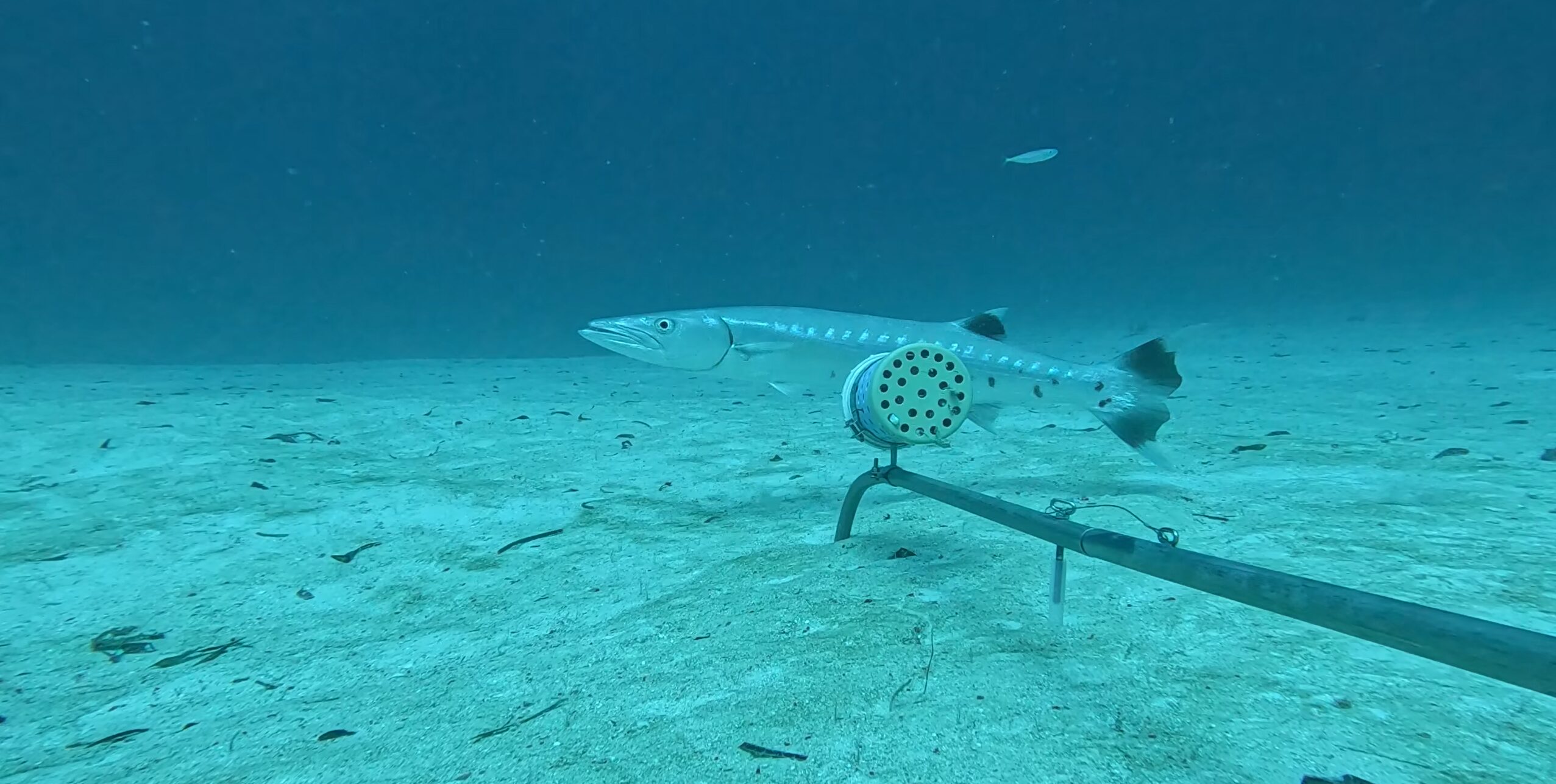
BRUVS deployed around the reefs of Mnemba, Zanzibar. Photo © Camilla Floros
Mnemba’s fringing reefs have steep drop-offs, reaching depths of more than 80 metres along its outer edge. Sitting at 40 metres, just before the reef drops away, I search for sharks and large predators, hoping to catch a glimpse of movement. Occasionally, large dark shapes can be seen far below, disappearing as quickly as they appear.
Depth is a known refuge for fish, particularly large predators that can remain beyond the reach of fishing nets and handlines. We cannot survey these depths on conventional scuba, but BRUVS can and we hope they may still harbour the sharks that once patrolled these reefs.
That hope is what drives much of our current research.
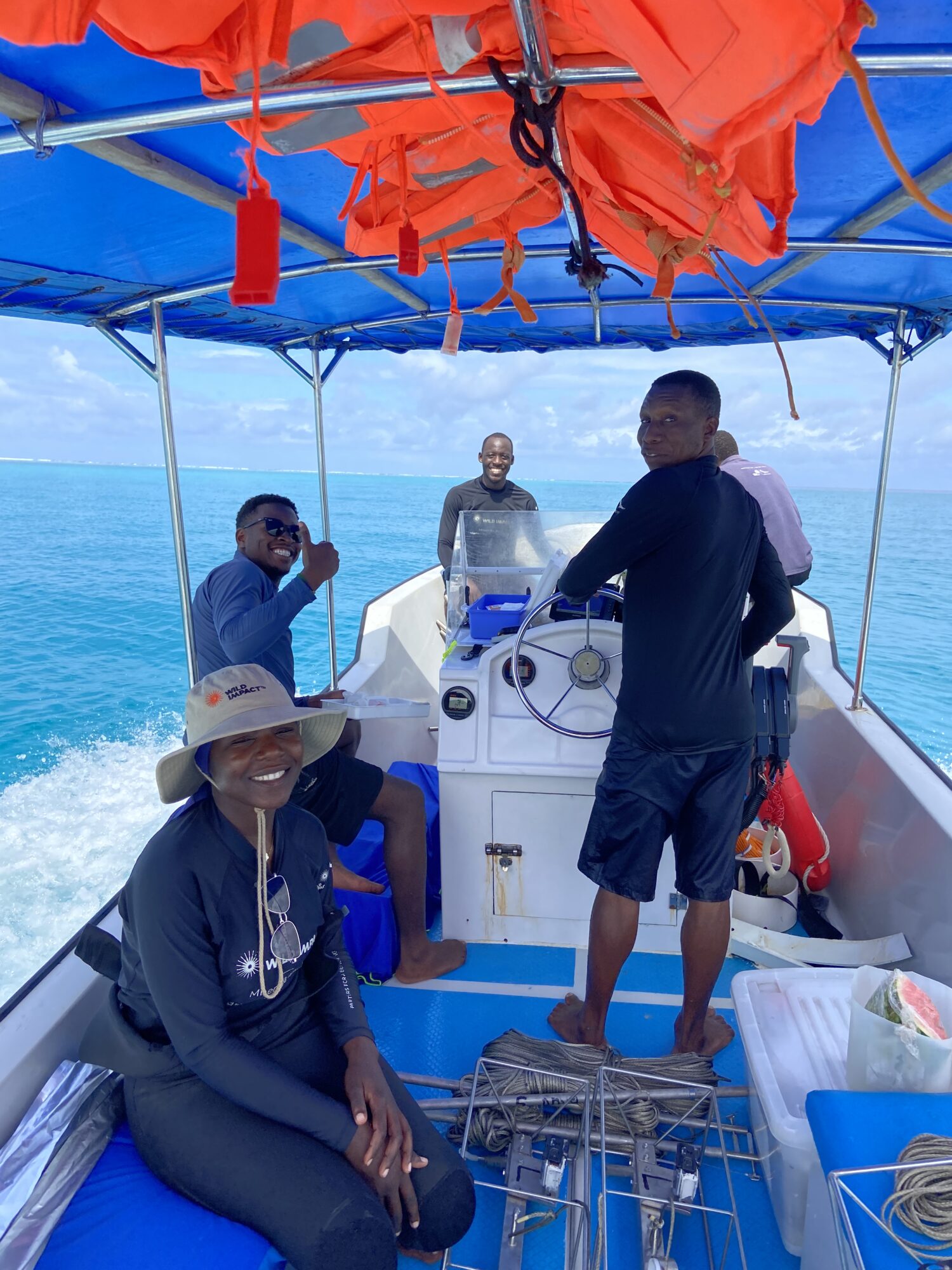
The Mnemba OWB team deploying and monitoring BRUVS. Photo © Camilla Floros
The possibility that sharks have largely disappeared from the reefs around Mnemba and much of MIMCA is both emotionally and ecologically tragic. Sharks are not simply charismatic species; they play critical roles in maintaining the balance and resilience of marine ecosystems.
So, we are searching for Zanzibar’s predators.
Because every shark or large predator recorded on our cameras is more than just an exciting sighting. It is a glimpse of what these reefs once were, and perhaps what they could become again.