
From the field to the lab: uncovering what tiger sharks are really eating
This project investigating the diet of tiger sharks in Shark Bay has now entered an exciting new stage. After fieldwork, sample collection, and laboratory processing, the stable isotope analyses have now been completed, helping uncover the feeding relationships between tiger sharks, dugongs, turtles, and other key species within this unique marine ecosystem.
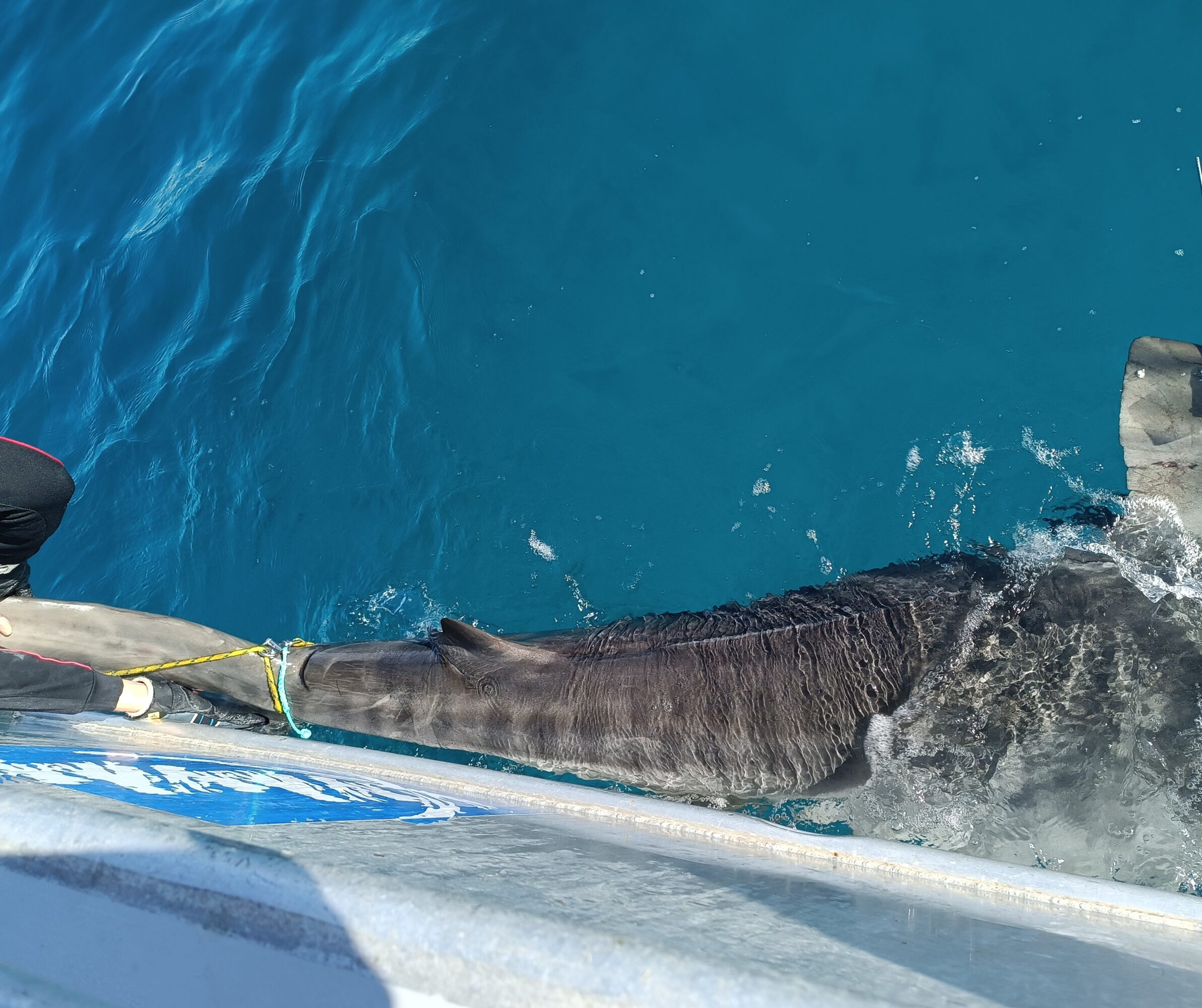
A tiger shark alongside the research vessel in Shark Bay, Western Australia. Photo © Hannah Calich
Stable isotope analysis is a powerful technique that allows scientists to trace where animals obtain their energy over time. Unlike stomach content analysis, which only captures a recent meal, stable isotopes provide a longer-term picture of an animal’s diet and ecological role. By comparing the chemical signatures found in shark tissues with those from their potential prey, we can better understand how dependent tiger sharks are on threatened species such as dugongs and sea turtles.
So far, tissue samples from tiger sharks and several potential prey species, including dugongs, turtles, dolphins, sea snakes, sea birds, rays, squid and a variety of fish species have been successfully processed and analysed. Completing the laboratory work marks a major milestone for the project and provides the foundation for the next step: detailed data analysis and interpretation. These results will help reveal whether tiger sharks are relying heavily on vulnerable megafauna.
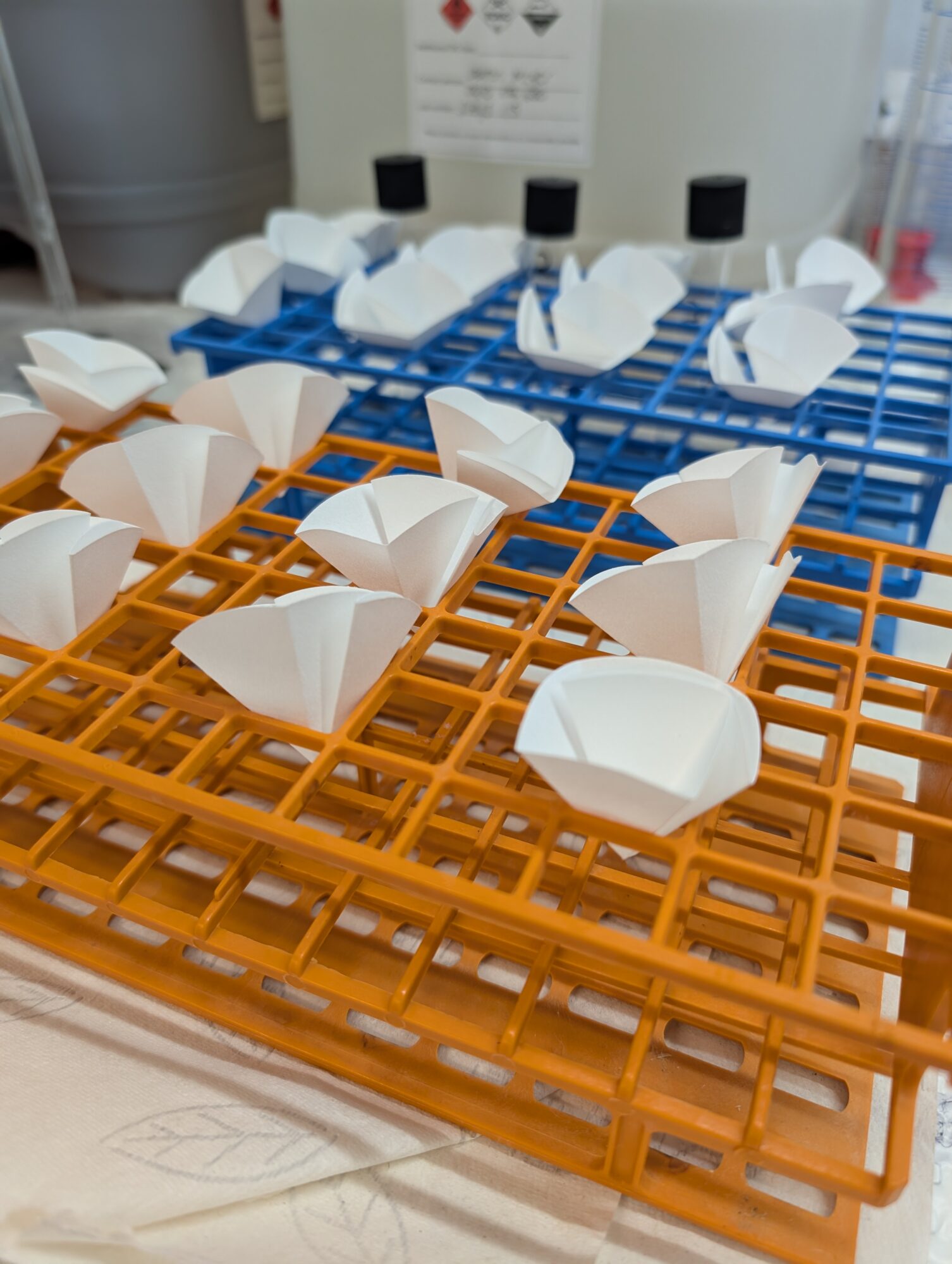
Preparing tissue samples for stable isotope analysis in the laboratory. Photo © Olga M. Azevedo
Beyond the laboratory, the project also reached an exciting milestone at the Sharks International conference, where preliminary results were presented in a research poster. The conference was an incredible opportunity to share the project with shark researchers, ecologists, and conservation scientists from around the world. The poster led to valuable discussions about climate change, predator–prey dynamics, and the ecological role of tiger sharks within Shark Bay’s food web. Fortunately for those who stopped by to chat, they were among the first to hear about some of the project’s early findings.
With the laboratory component now complete, the focus turns to refining the data analyses and bringing the project towards its final stages. As this research approaches completion, I look forward to sharing the final insights into the hidden connections shaping the future of Shark Bay’s ocean giants.