
From misconceptions to curiosity: introducing students to sharks and rays
Sharks and rays are often surrounded by misconceptions. For many people, they are still associated with fear, danger, or exaggerated images from movies and the media. Yet these species are part of Tunisia’s marine biodiversity and play an important role in maintaining healthy marine ecosystems.
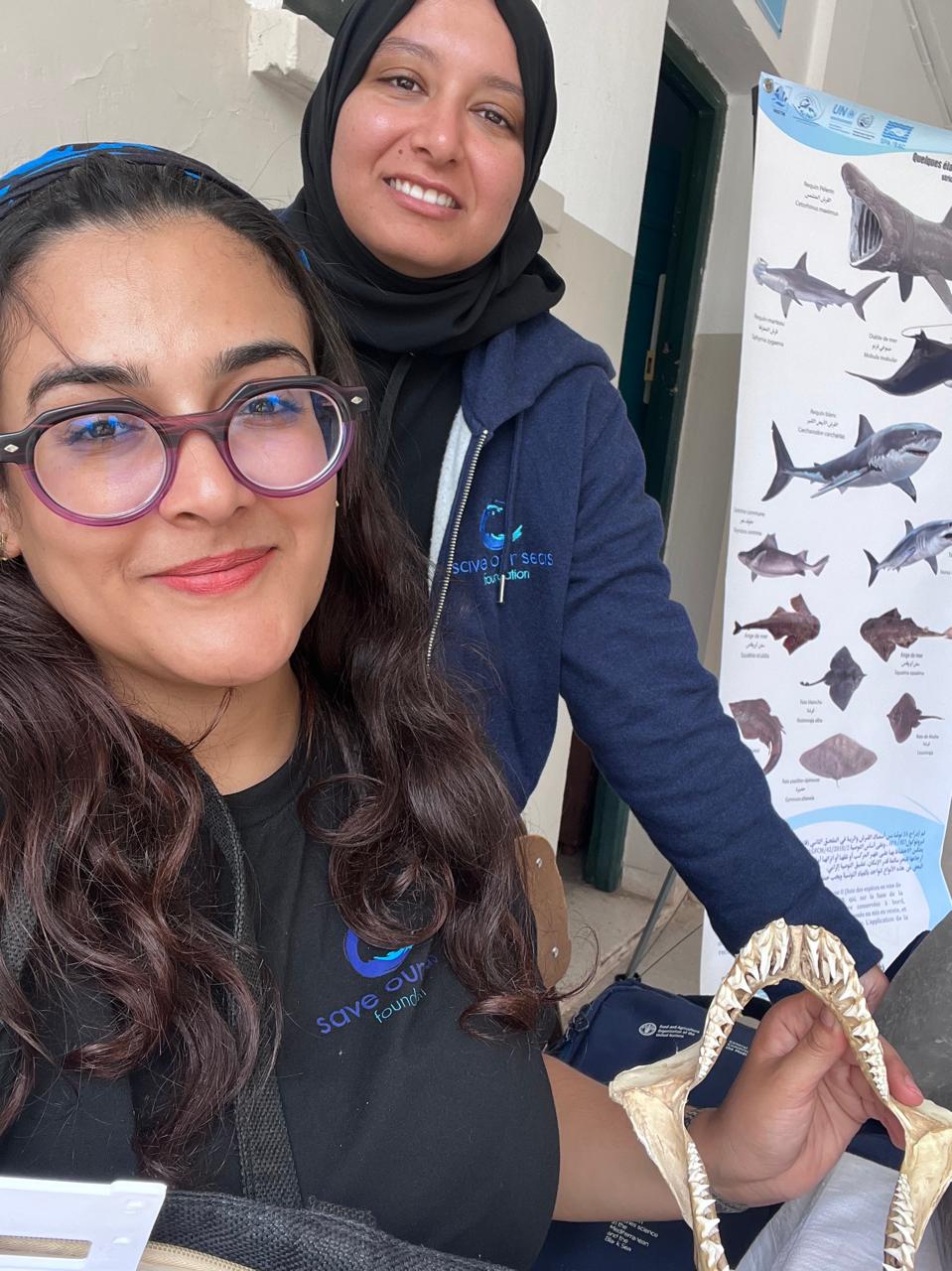
Members of the awareness team with a shark jaw specimen and an educational poster presenting protected shark and ray species. Photo © Sarra Louhichi
With this in mind, we organised an awareness stand at the Faculty of Sciences of Sfax, in collaboration with the student club Glam and Glow, and with the valuable help of my colleague Ichrak Bouzidi, who is also a Save Our Seas Foundation Small Grant project leader. The aim was to introduce students to the world of elasmobranchs in a simple, accessible and concrete way.
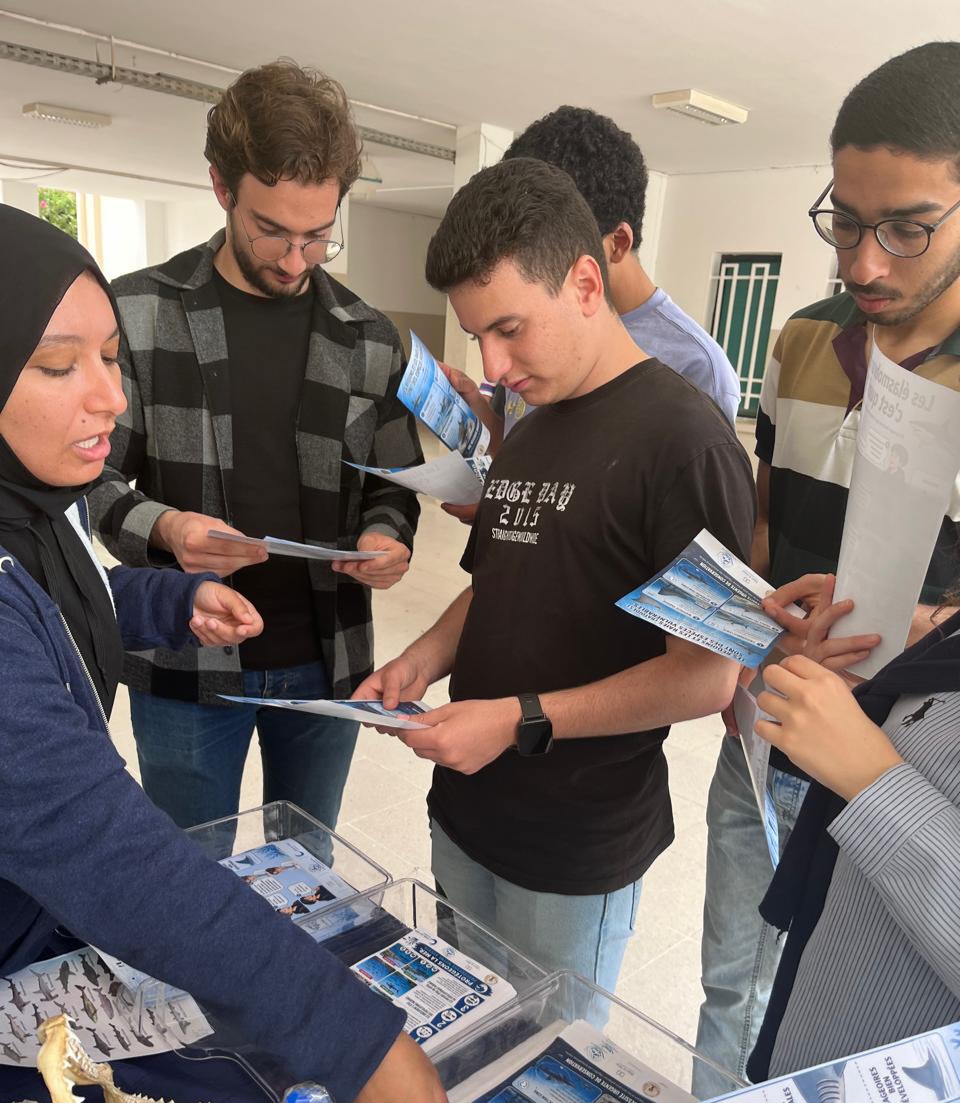
Students reading educational materials about sharks and rays and learning about the main threats affecting these species in the Mediterranean. Photo © Sarra Louhichi
Through direct exchanges, visual material and open discussions, we talked about the presence of sharks and rays in Tunisia, their ecological importance, their vulnerability and the threats they face, especially those linked to fisheries. The stand also gave us the opportunity to raise awareness about the consumption of these species, by explaining why it is important to know their conservation status and to think about the impact of our choices on marine biodiversity.
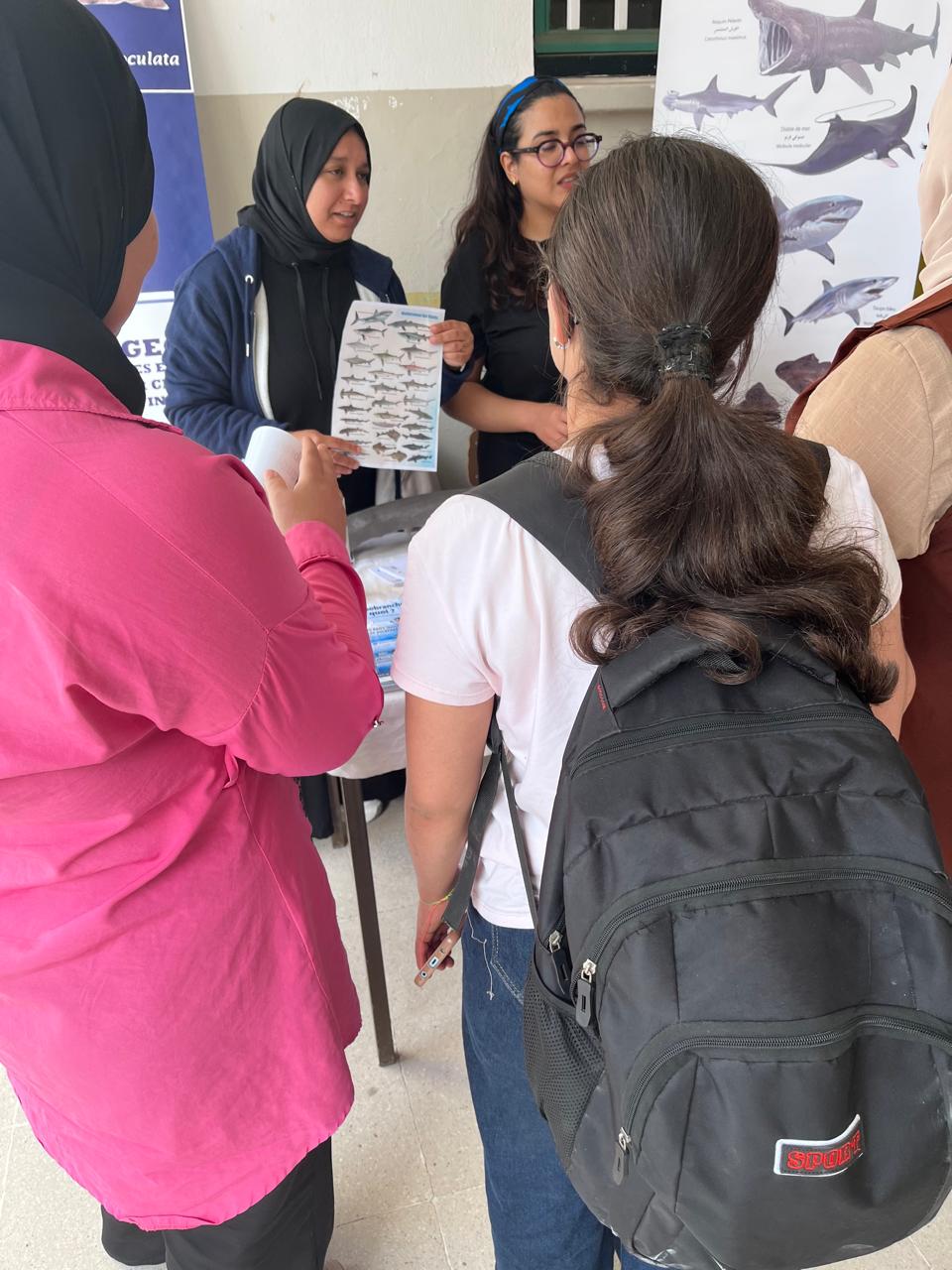
Discussing shark and ray diversity, their ecological importance and conservation with university students. Photo © Sarra Louhichi
This activity brought many interesting reactions. Several students were surprised to learn that sharks occur in Tunisian waters. Others still saw sharks as aggressive animals. Some already knew about sharks and rays, but did not know that there is a real field of research in Tunisia focused on their biology, fisheries interactions and conservation. For many students, the stand was both a discovery and an opportunity to correct false ideas.
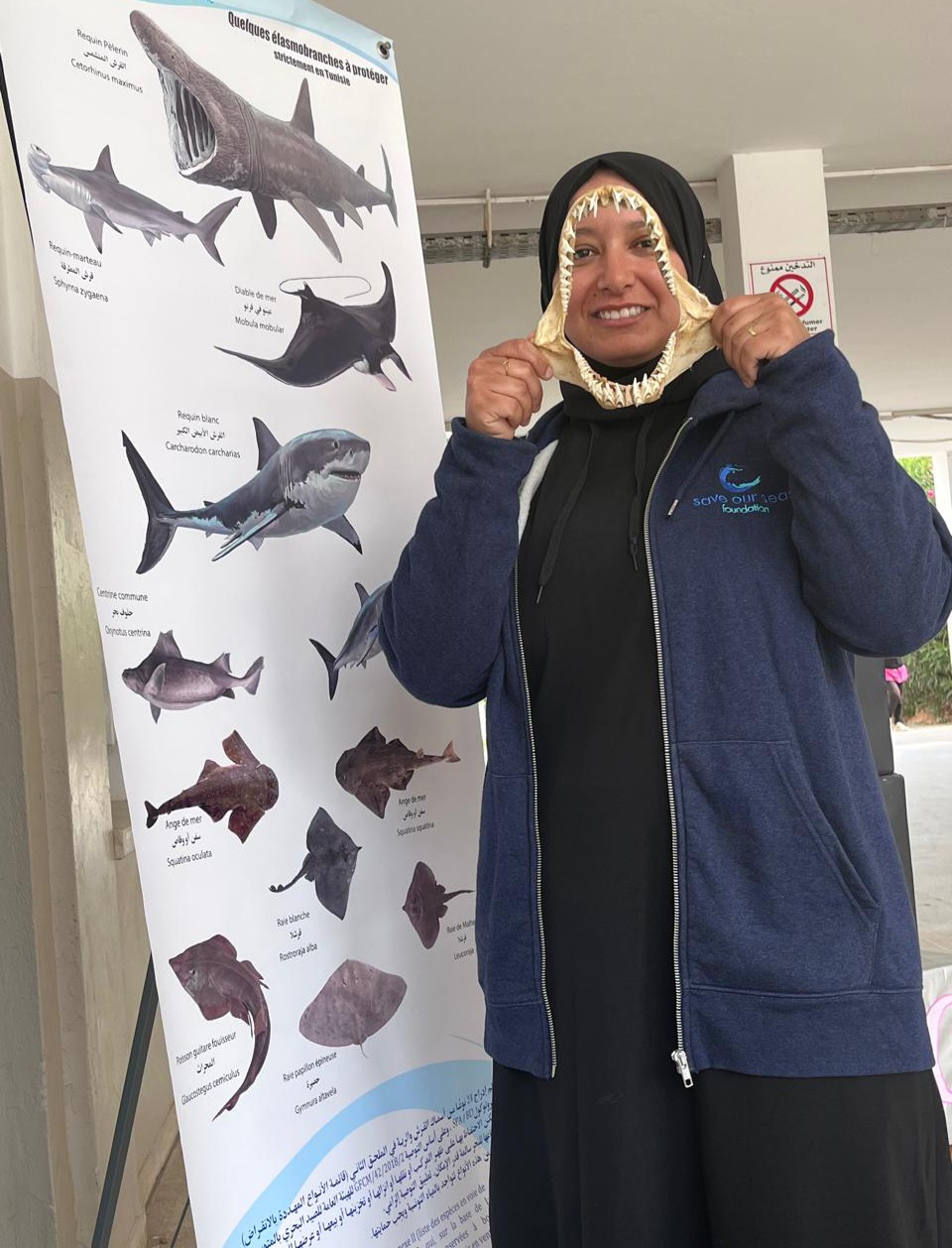
An interactive awareness activity using a shark jaw specimen beside a poster presenting protected shark and ray species. Photo © Sarra Louhichi
Although the stand was mainly designed for students, it also attracted the attention of several teachers, faculty staff and administrative members. Their curiosity, questions and discussions made the experience even more enjoyable and enriching. Seeing different members of the university community stop by the stand showed us that awareness about elasmobranchs can reach a wider audience than expected.
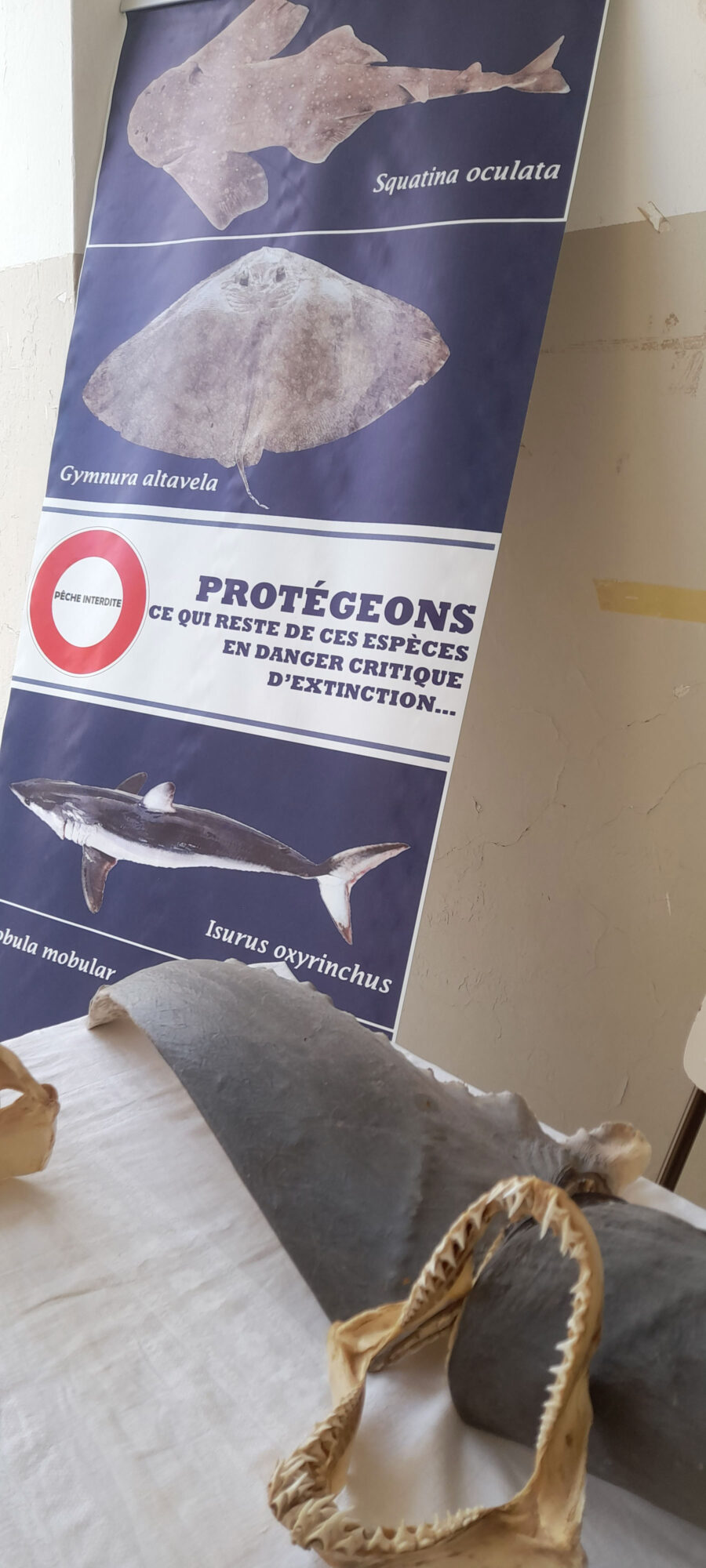
Shark and ray specimens displayed alongside an awareness poster highlighting protected and critically endangered elasmobranch species. Photo © Sarra Louhichi
Beyond awareness, we also wanted to open new horizons. In Tunisia, research on elasmobranchs is still not well known among students, and fieldwork in ports, fish markets and with fishers may sometimes seem unfamiliar or intimidating. However, this field is full of learning, human exchanges and discoveries. It gives young researchers the chance to better understand the reality of fisheries, listen to fishers’ knowledge and contribute directly to the conservation of vulnerable species.
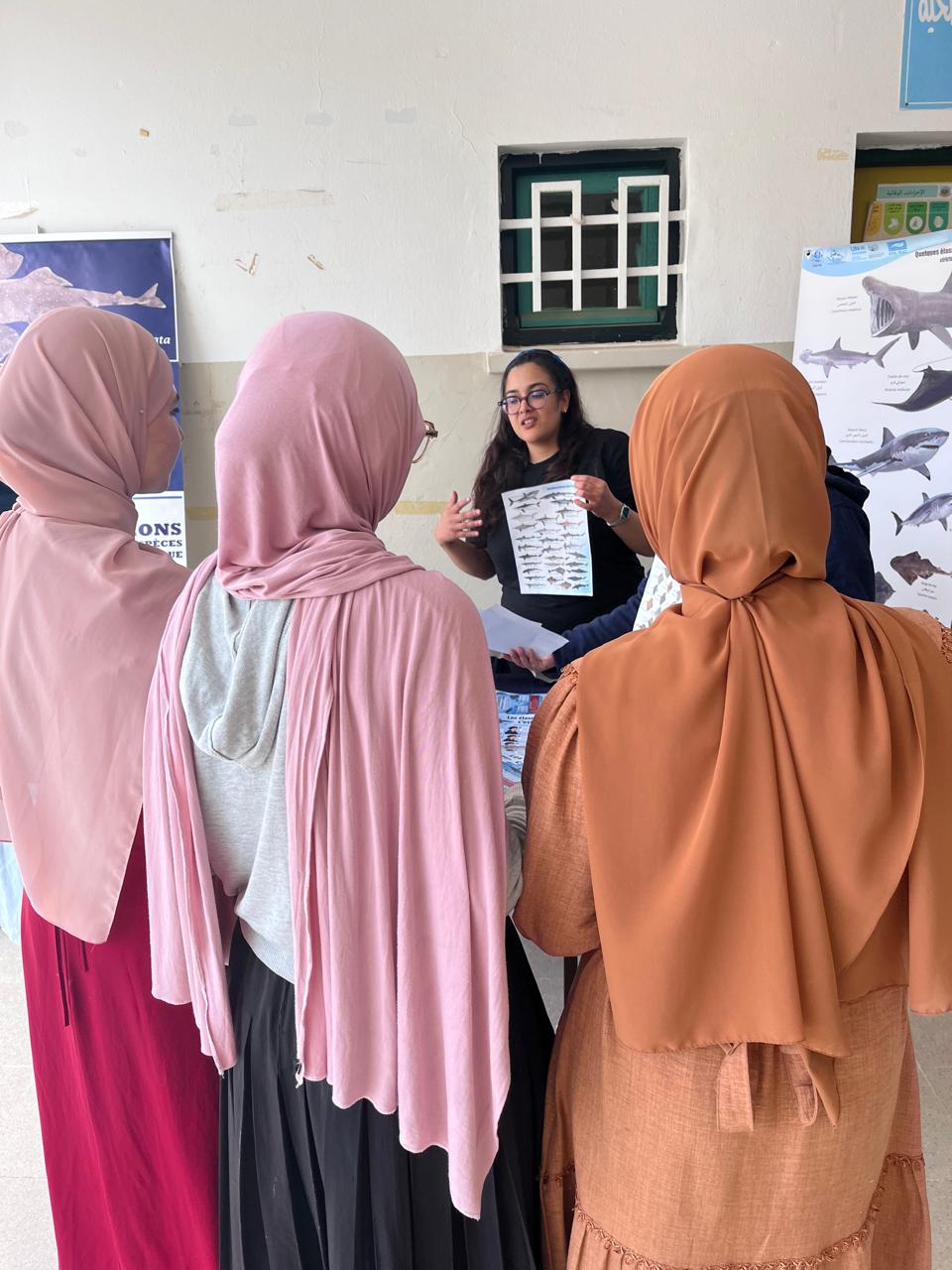
Explaining how to recognise different shark and ray species using identification guides and educational posters. Photo © Sarra Louhichi
Our message was also an encouragement: this research field needs curious, motivated and passionate students. There is still much to study, document and build around sharks and rays in Tunisia. By presenting this field through a simple and interactive stand, we wanted to make it feel closer, less intimidating and more attractive for students who may one day choose this path.
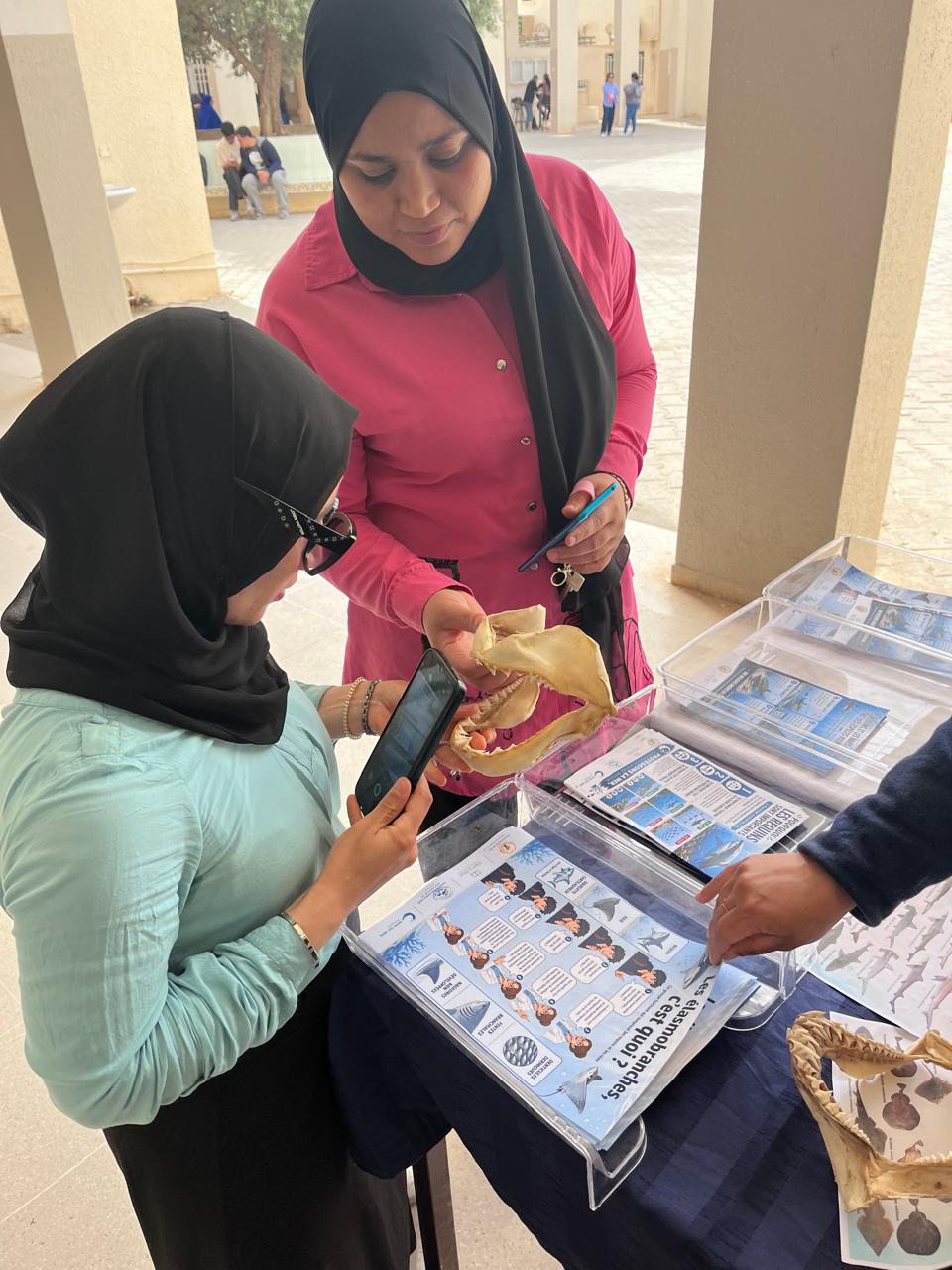
Students examining and photographing a shark jaw specimen during the interactive awareness activity. Photo © Sarra Louhichi
This experience reminded us that awareness often begins with a simple conversation, an object displayed on a stand, a question asked out of curiosity, or a misconception corrected with care. Through this initiative, we hope that we planted a first seed of curiosity among students at the Faculty of Sciences of Sfax. Protecting sharks and rays starts with knowing them, understanding them and recognising their place in our seas, but also with encouraging a new generation to approach this field, explore the terrain, listen to fishers and take part in the conservation of our marine biodiversity.
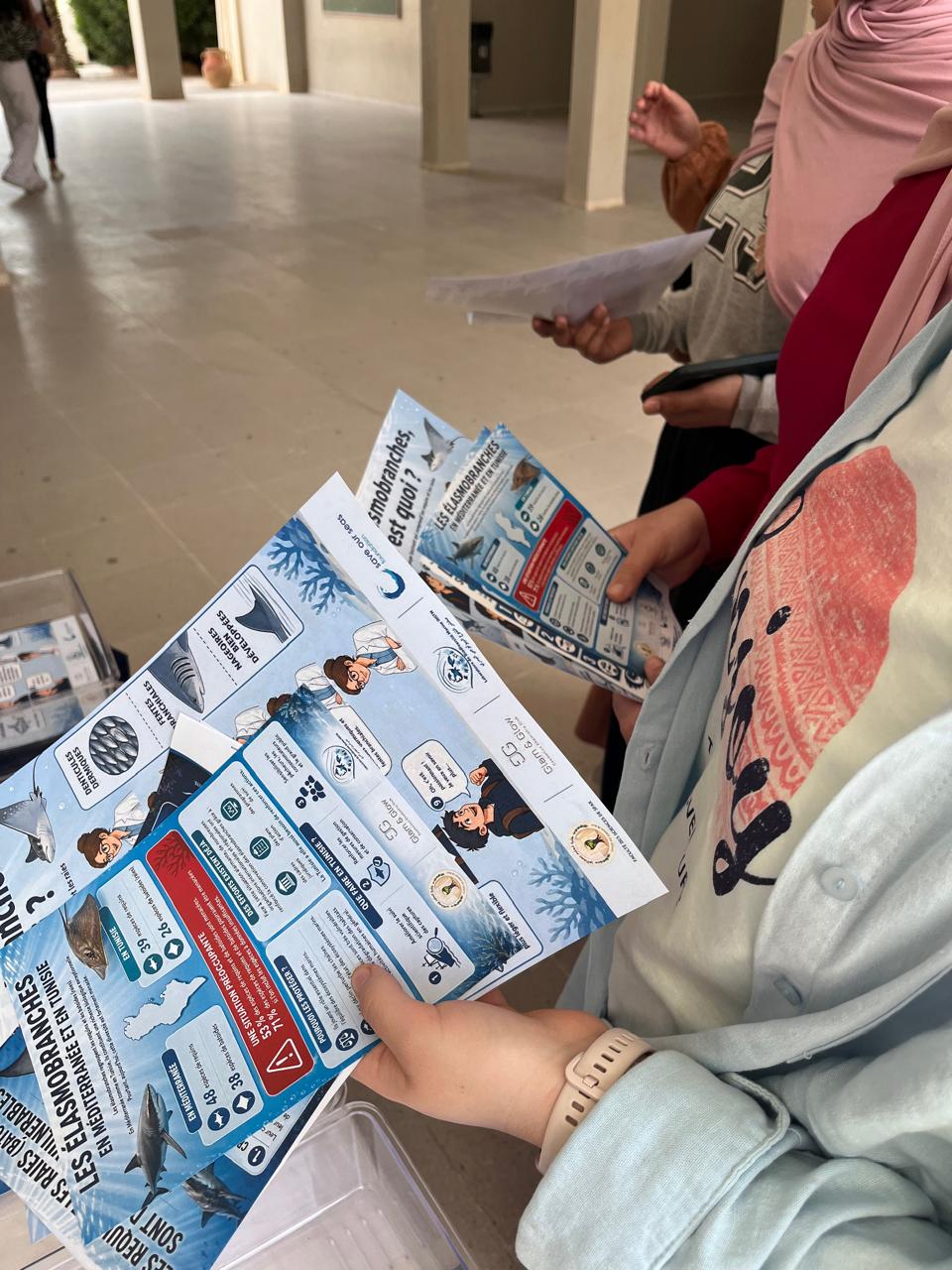
Students discovering educational flyers about Mediterranean sharks and rays, the threats they face and the actions needed for their conservation. Photo © Sarra Louhichi
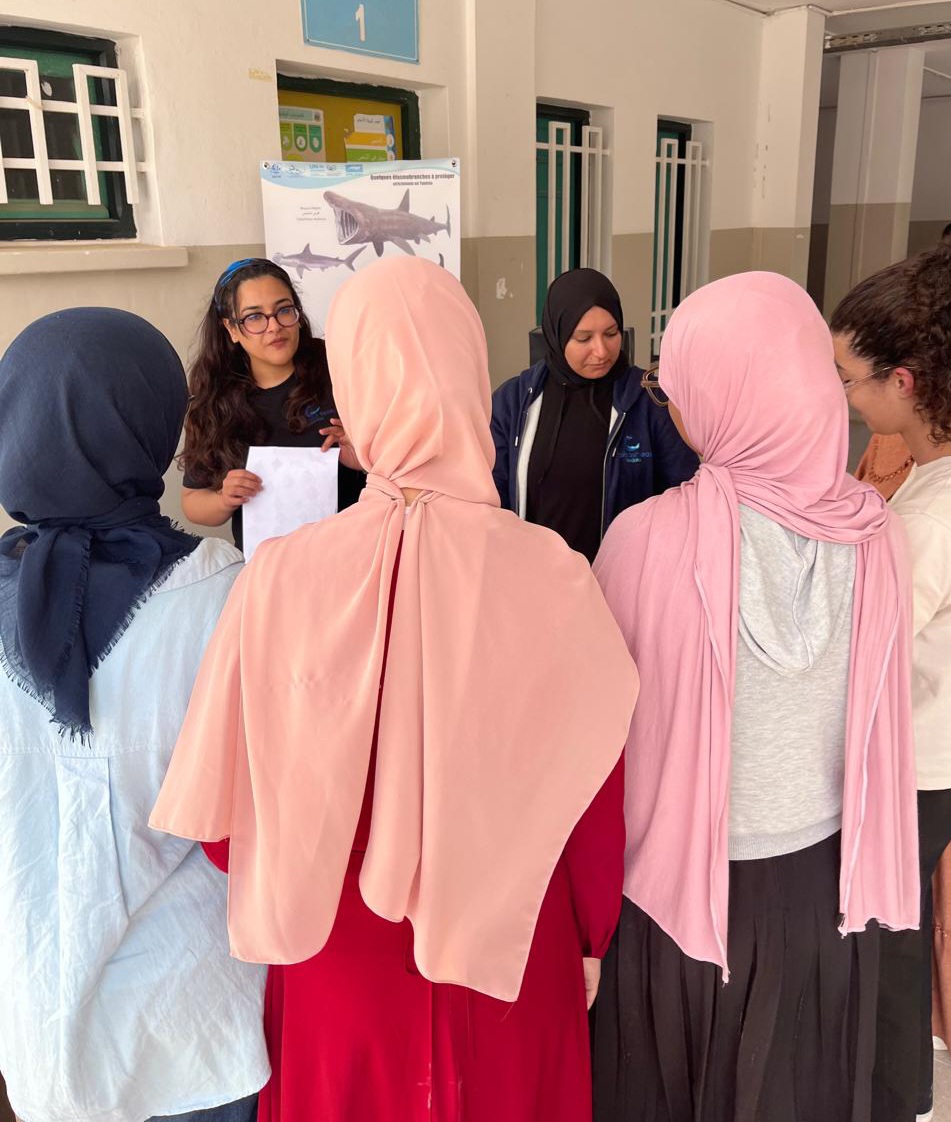
Introducing students to shark and ray diversity using an illustrated species identification guide. Photo © Sarra Louhichi