
Following the Seafood Trail: Uncovering Guatemala’s Fisheries Supply Chain
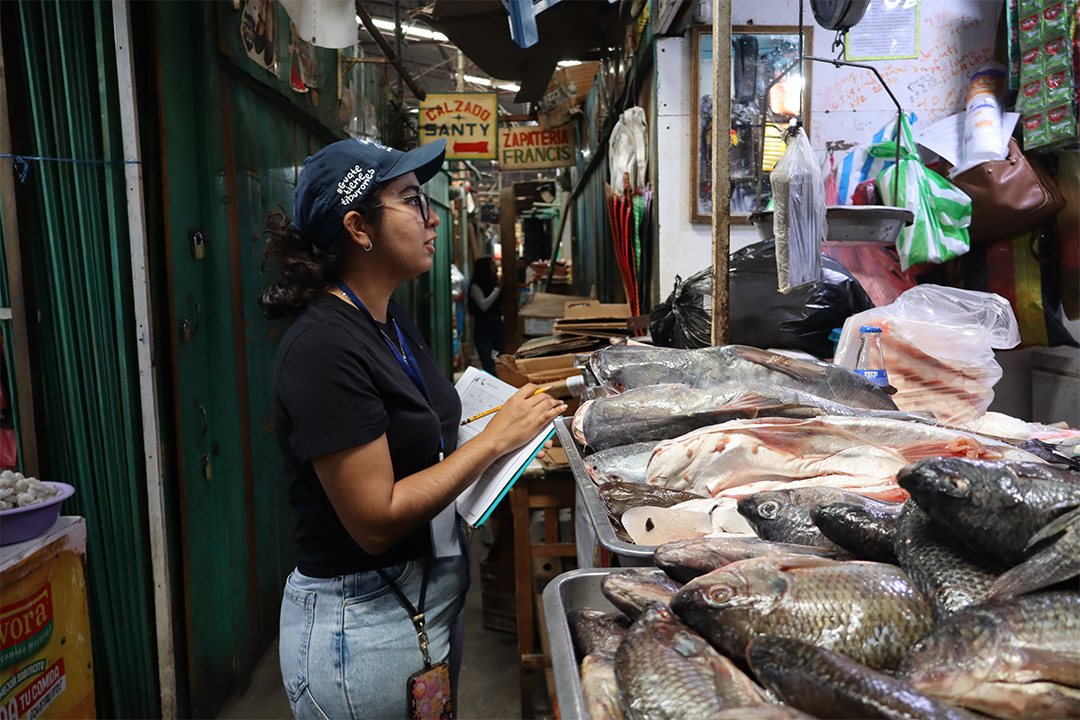
Interviewing a seafood vendor in Quetzaltenango in order to trace the journey of fish products through Guatemala's fisheries supply chain, from landing sites to consumers. Photo by © Blue World Foundation
In our previous blog, we shared how we surveyed markets and collected tissue samples across Guatemala. However, those findings raised more questions: Where do these products actually come from, and how do they move through the supply chain before reaching consumers?
To answer this question, we moved into the markets and talked directly with the stakeholders who make the seafood trade possible.
Listening to the people behind the fisheries
Between May and July 2026, we conducted 105 interviews with fishers, traders, vendors, processors, and distributors across key coastal communities and major urban distribution center, including Sipacate, Buena Vista, in Escuintla; Guatemala City; Chimaltenango and Quetzaltenango; Livingston, and Puerto Barrios, in Izabal.
Our surveys demonstrated the significant economic importance of these fishing resources to local livelihoods. On average, fisheries contribute 78% of household income and as much as 92% in households directly engaged in fishing. Moreover, sharks and rays are central to this trade, 62% of vendors and traders reported selling elasmobranch products.
We also traced how prices rise along the chain: fishers receive a median price of ~Q10 per pound at landing sites, whereas retail prices jump to ~Q36 per pound in markets, more than threefold increase. Despite high commercial activity across 132 documented trade relationships, resource depletion is a major concern: 96% of respondents reported experiencing periods of reduced catches or product scarcity.
These conversations are helping us map how seafood moves from coastal landing sites to distant urban consumers. Preliminary findings suggest that a small number of landing ports supply an extensive inland market network, passing through multiple intermediaries along the way.
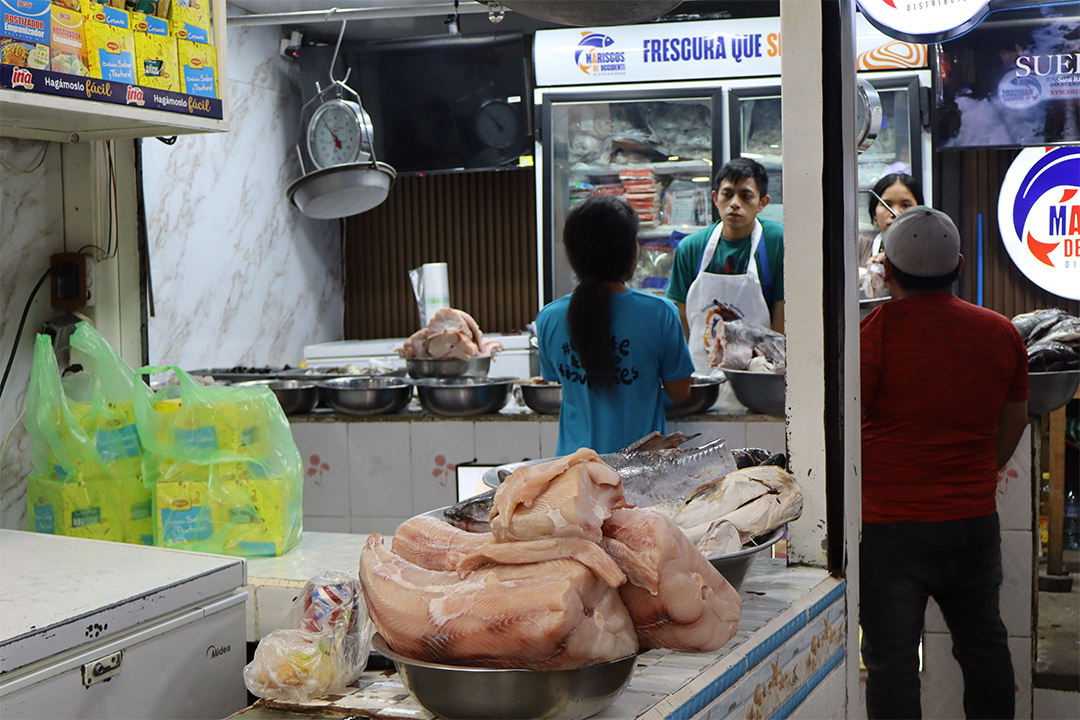
Seafood products displayed during an interview with a vendor in Quetzaltenango. Photo by © Blue World Foundation
What is behind the commercial label?
As seafood is processed, dried, or filleted before reaching consumers, species identity gets lost and make identification difficult. To solve this, we used DNA analyses on market samples.
Out of 58 seafood samples analyzed:
- 53 samples were successfully identified across 16 species.
- 40 samples (65.5%) were elasmobranchs.
- The most frequent species was the silky shark (Carcharhinus falciformis, 20.8%), followed by the bentfin devil ray (Mobula thurstoni, 11.3%) and sailfish (Istiophorus platypterus, 11.3%).
The biggest surprise came from products sold under generic names. Of 21 samples sold as “bacalao” (dried/salted cod), genetic analysis identified 19, revealing 8 different species, including 6 shark species, swordfish, and even american crocodile (Crocodylus acutus). Over half of the samples were actually elasmobranchs. In total, 14 of 38 identified elasmobranchs were sold under misleading names like bacalao, cherla, or salmón.
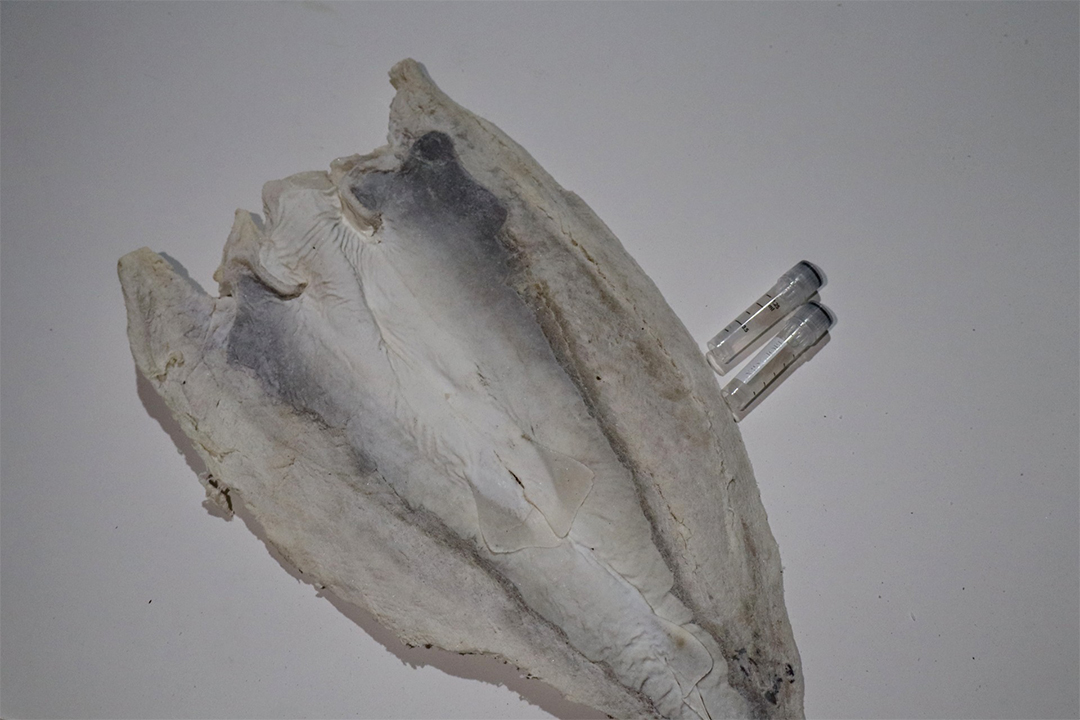
A dried and salted seafood product sold as cod alongside tissue samples collected for genetic analysis. Photo by © Blue World Foundation
What’s next?
Our next big steps will be to combine market data, interviews, and genetic results to reconstruct trade routes across Guatemala. By comparing our results with historical studies, we aim to determine if the same shark and ray species still dominate local markets or if unrecorded species are entering the supply chain unnoticed.
Ultimately, this phase is not simply about generating answers, but about uncovering the questions that will guide future research and action. By revealing where traceability is lost and uncovering hidden species in the trade, we hope to generate new insights that strengthen fisheries management and protect elasmobranchs in Guatemala.
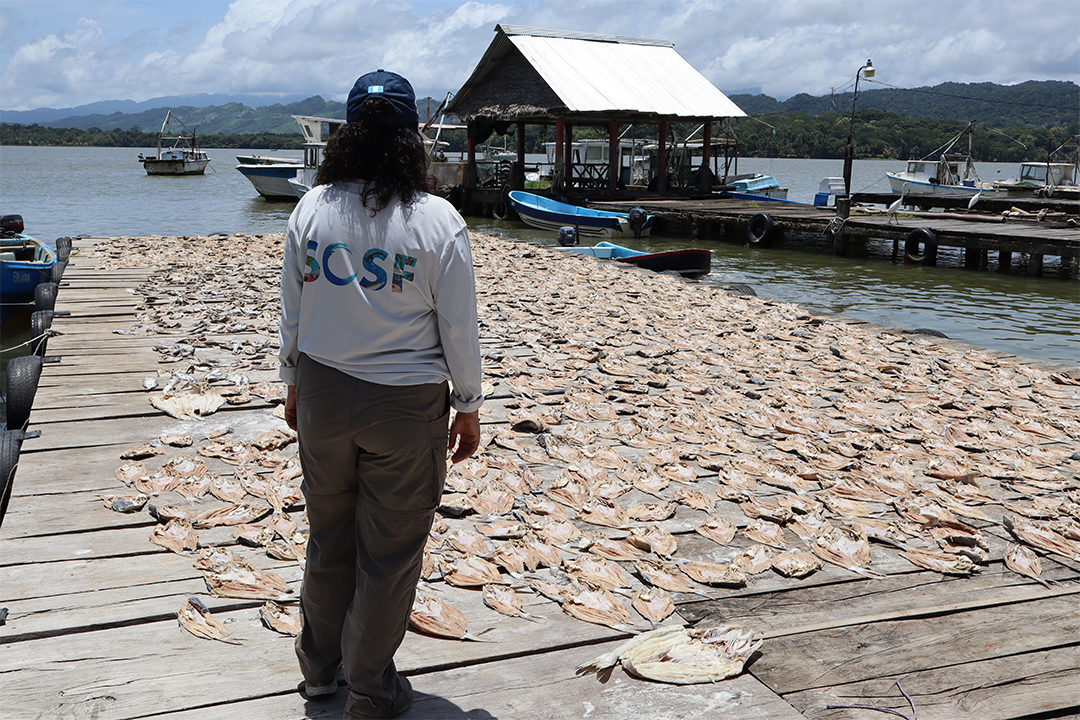
Traditional sun-drying of seafood products as preservation method in Livingston, Guatemala. Photo by © Blue World Foundation