
Conservation through conversations: engaging communities in Tunisia
Conservation work does not happen only during field surveys or data analysis. It also grows through discussions; awareness activities and the relationships built with local communities. Engaging different stakeholders plays a key role in strengthening conservation efforts and promoting a shared understanding of marine biodiversity protection.
As part of my Save Our Seas Foundation Small Grant project on shortfin mako shark bycatch in Tunisia, I dedicated part of the project to awareness and outreach activities involving students, young people and fishers from different coastal communities.
Raising awareness at the Faculty of Sciences of Sfax
An awareness stand was organised at the Faculty of Sciences of Sfax in collaboration with the student club Glam and Glow and with the valuable help of my colleague Rihab louhichi, who is also a Save Our Seas Foundation Small Grant project leader. Through posters, educational materials and open discussions, students were introduced to the diversity of sharks and rays found in Tunisian waters and to the importance of protecting vulnerable marine species.
Many students were surprised to discover that several shark and ray species inhabit Tunisian waters. Others were interested to learn that scientific research and conservation projects on elasmobranchs are actively being carried out in Tunisia. These discussions created an opportunity to correct misconceptions and encourage curiosity about marine biodiversity and fisheries-related research.
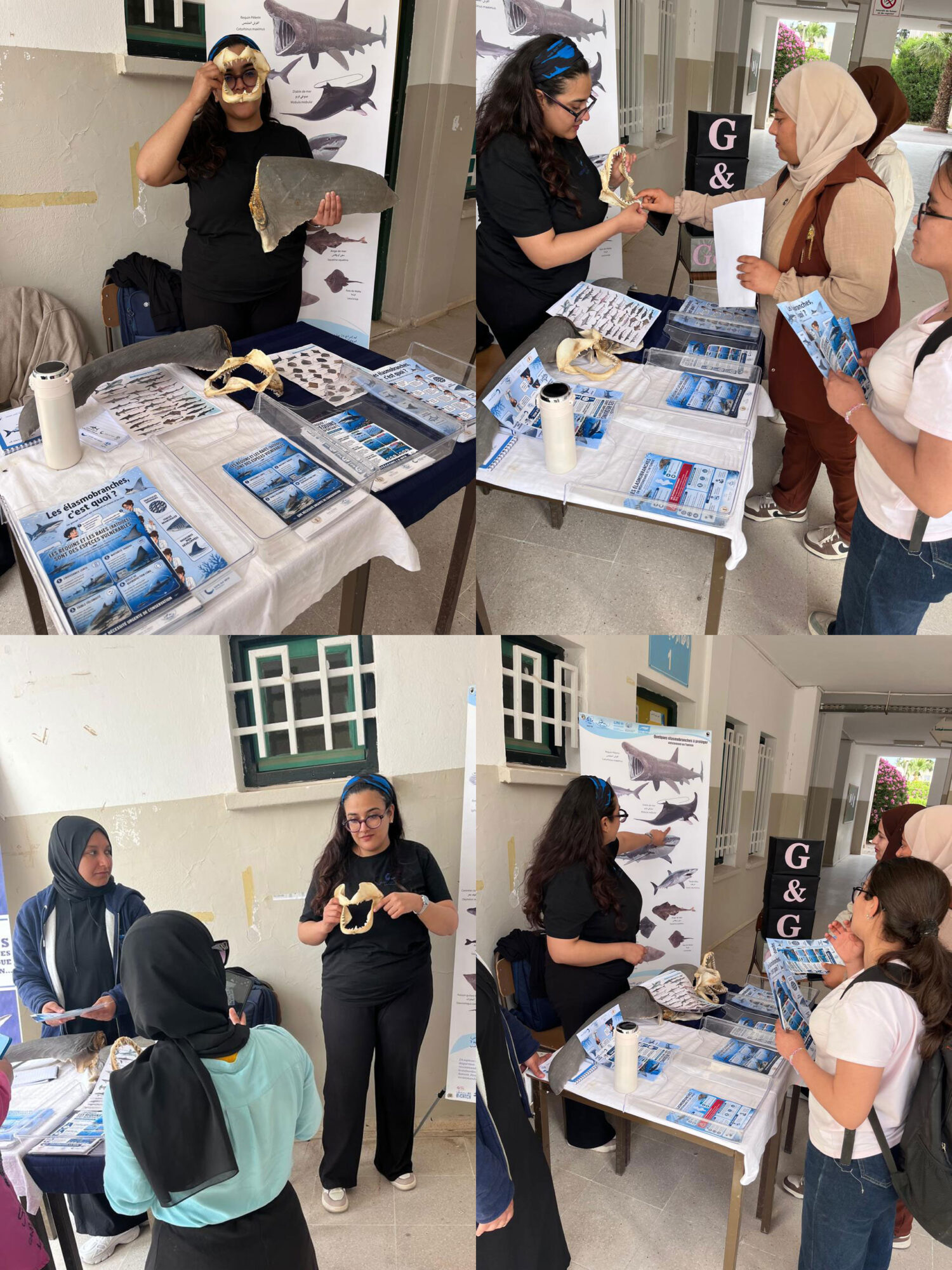
Discussing shark and ray conservation with university students. Photo © Ichrak Bouzidi
Sharing marine conservation with young people
Another awareness activity was organised at the Youth Complex of Kelibia, where young participants had the opportunity to discover more about sharks, rays and marine ecosystems through simple discussions and educational exchanges.
One of the most rewarding aspects of this activity was seeing how curiosity gradually replaced fear and misunderstanding. Many participants initially associated sharks only with danger, but discussions progressively shifted toward their ecological importance and the challenges these species currently face in the Mediterranean Sea.
To make the experience more interactive and engaging, I also presented shark samples that allowed participants to better understand shark identification, anatomy and biological characteristics. This practical component encouraged curiosity and created direct interaction with the educational material.
These exchanges reminded me that awareness activities do not always require large events or complex presentations. Sometimes, simple conversations are enough to encourage interest and reflection among younger generations.
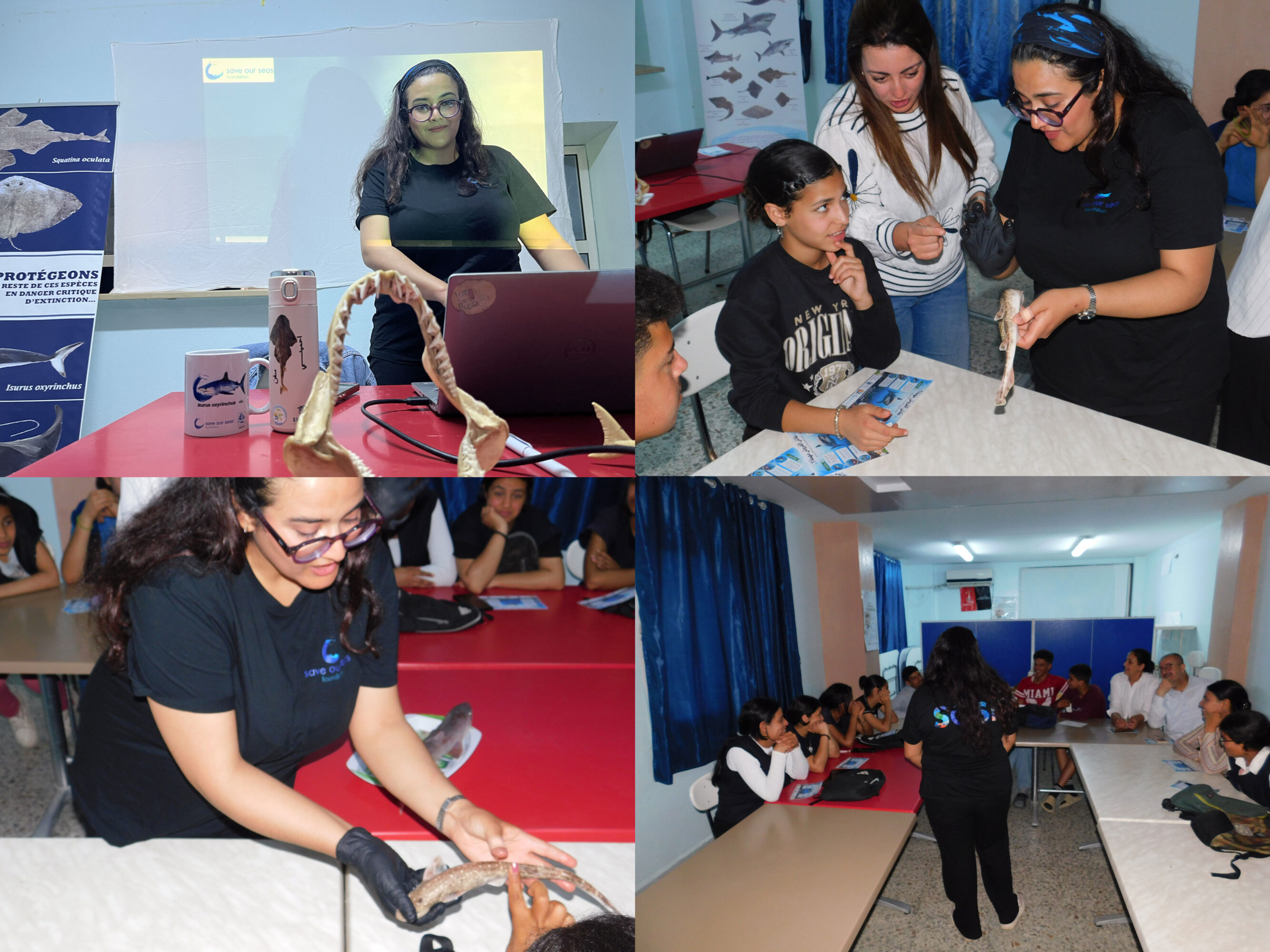
Interactive awareness session with young participants in Kelibia. Photo © Ichrak Bouzidi
Building connections with fishing communities
An important part of the project also involved maintaining contact with fishers encountered throughout the field activities. Rather than organised meetings, these exchanges often took place directly on fishing vessels or along the harbour docks, where discussions naturally developed around fisheries, sharks and local ecological observations.
Fishers shared valuable experiences and observations related to shark bycatch and fishing practices. These informal conversations helped strengthen trust and highlighted the importance of collaboration between researchers and fishing communities in conservation work.
As a small gesture of appreciation, symbolic gifts inspired by the shortfin mako shark Isurus oxyrinchus were offered to several fishers who contributed throughout the project activities. These included printed mugs and handmade MDF keychains shaped like a mako shark. Although simple, these gifts represented gratitude for their collaboration, kindness and willingness to share their time and knowledge.
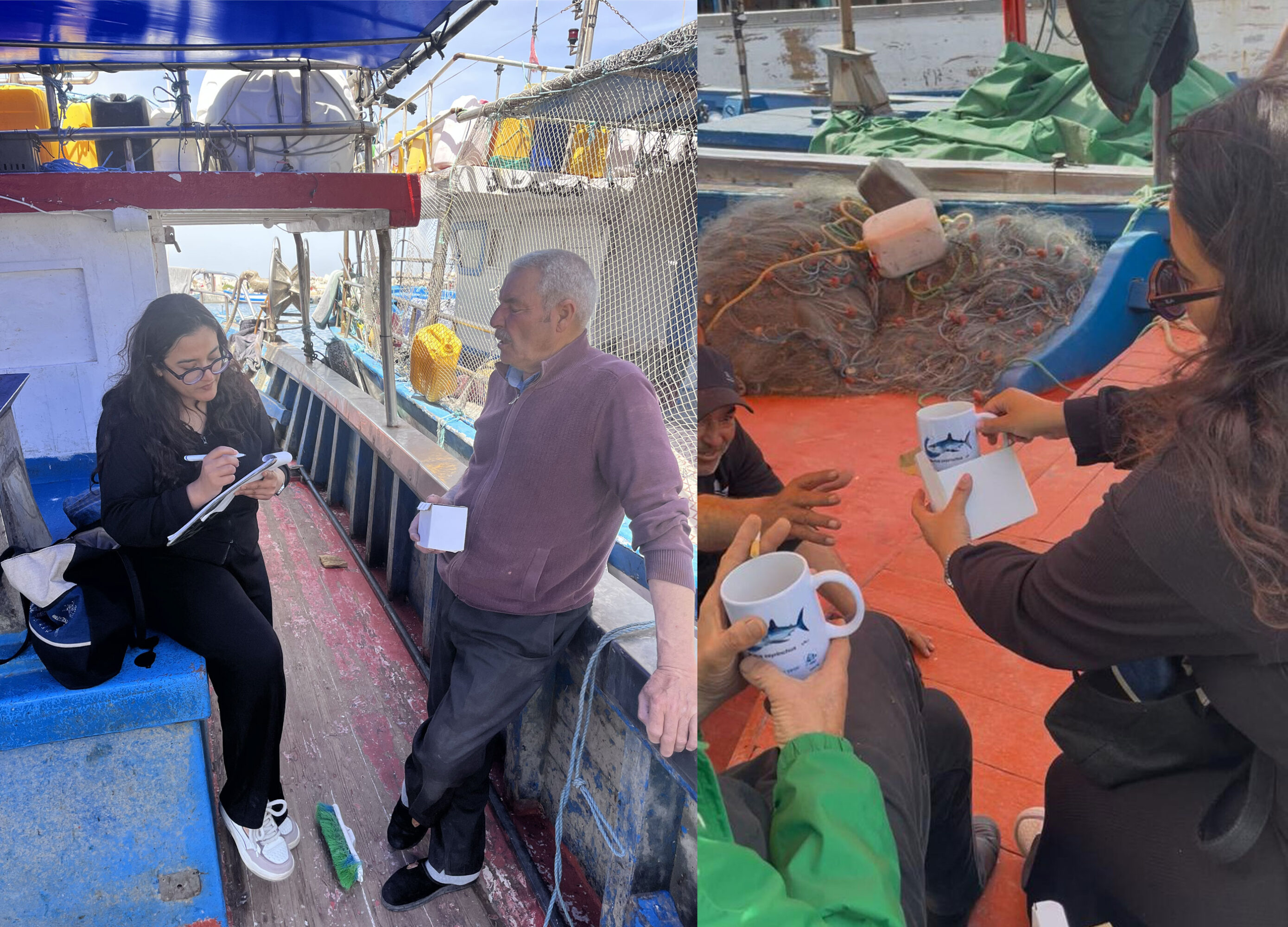
Exchanging knowledge with fishers during field activities. Photo © Ichrak Bouzidi
This experience reminded me that conservation is not only about studying species, but also about connecting people to the marine environment around them. Every discussion, awareness activity and human exchange can contribute to building a stronger culture of marine conservation for future generations in Tunisia.