
Comb-legged shrimp
A tiny red shrimp discovered during a night dive turned into a two-year detective story. With the help of an international expert, the mystery was finally solved.
A shrimp never photographed before?
One night, during a dive, I came across a tiny but brilliantly red shrimp crawling across the seafloor. Barely a centimetre long, it darted around in the gentle surge, making it almost impossible to photograph. After several attempts, I managed a single shot. It was not a particularly good one, but enough to spark my curiosity.
This was exactly the kind of species we wanted for the 1001 App. The problem was that I had absolutely no idea what it was.
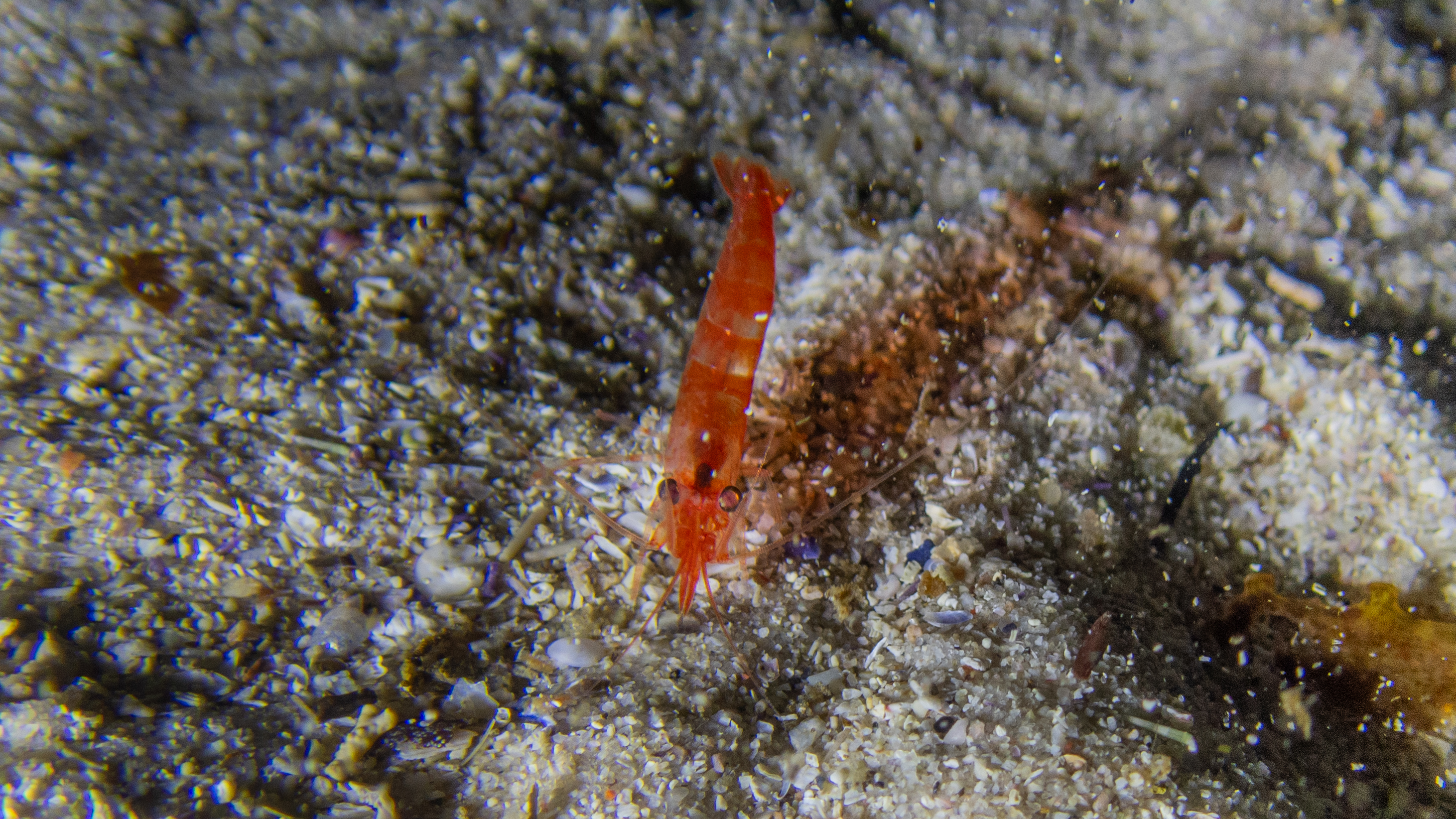
My first and only underwater photograph. Not a great image, but enough to begin asking questions. Photo © Jannes Landschoff
Shrimps can be notoriously difficult to identify. The differences between species often come down to tiny spines or minute body structures visible only under a microscope. I don’t like collecting animals, and we only do so very occasionally, with the necessary permits and for good scientific reasons. In this case, I felt there was one. I had never seen this shrimp before.
By sheer luck, I managed to catch it in a small jar. I photographed it, examined it under the microscope, worked through field guides, and searched the internet. Nothing. Searching for a “small red shrimp” wasn’t much help, especially after discovering that it could rapidly change colour and become almost transparent. I then turned to specialised taxonomic literature, but without already knowing the group, it was like trying to solve a puzzle without seeing the picture on the box. Eventually, other work took over, and I reluctantly gave up. Still, I kept the specimen.
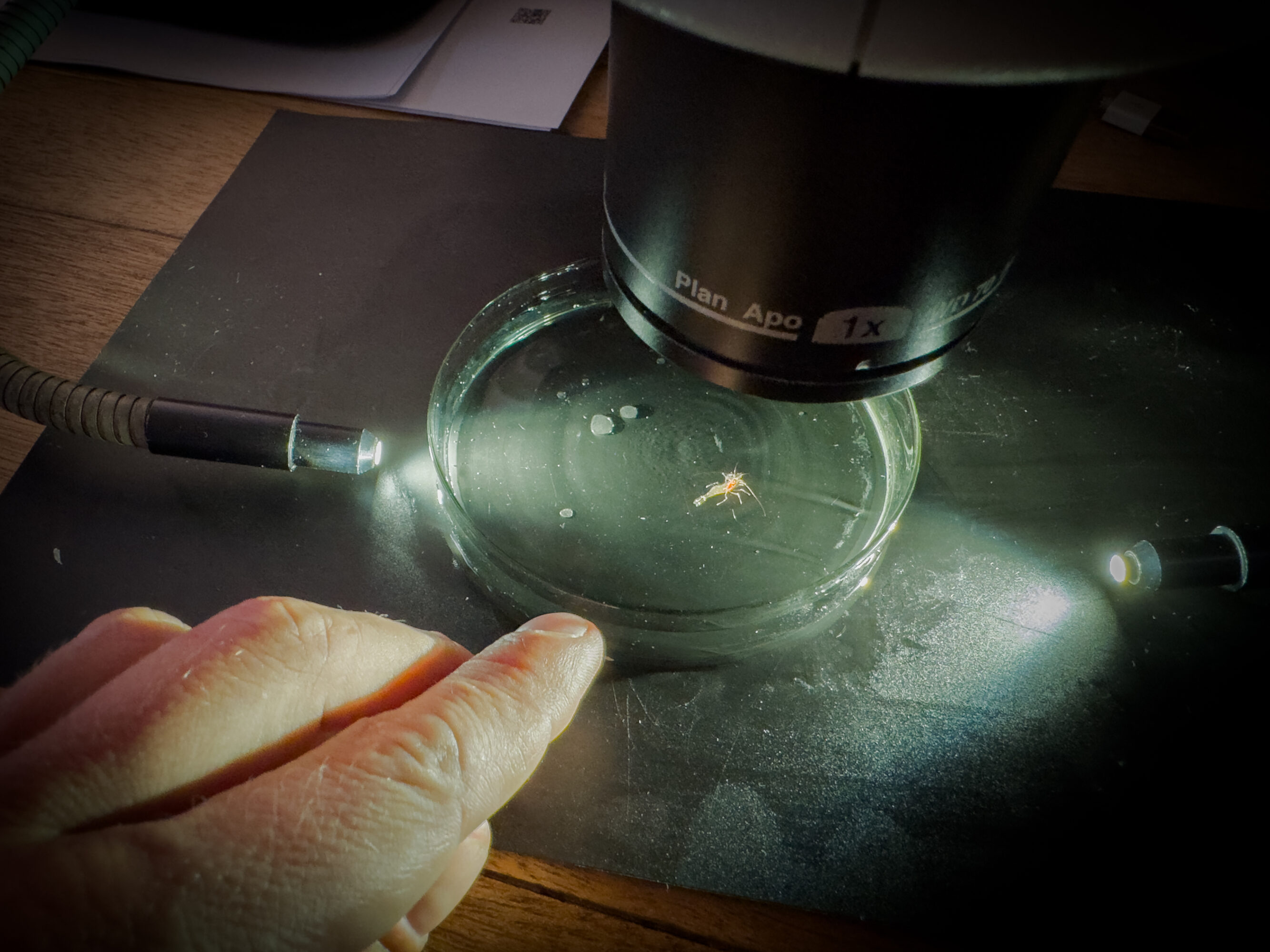
The animal is really not big at all. Photo © Jannes Landschoff
More than two years later, in June 2026, we hosted the international Crustacean Society Conference in South Africa. Suddenly I was surrounded by some of the world’s leading shrimp experts. I asked Valentin de Mazancourt from the Muséum national d’Histoire naturelle in Paris whether he would help identify my mystery shrimp.
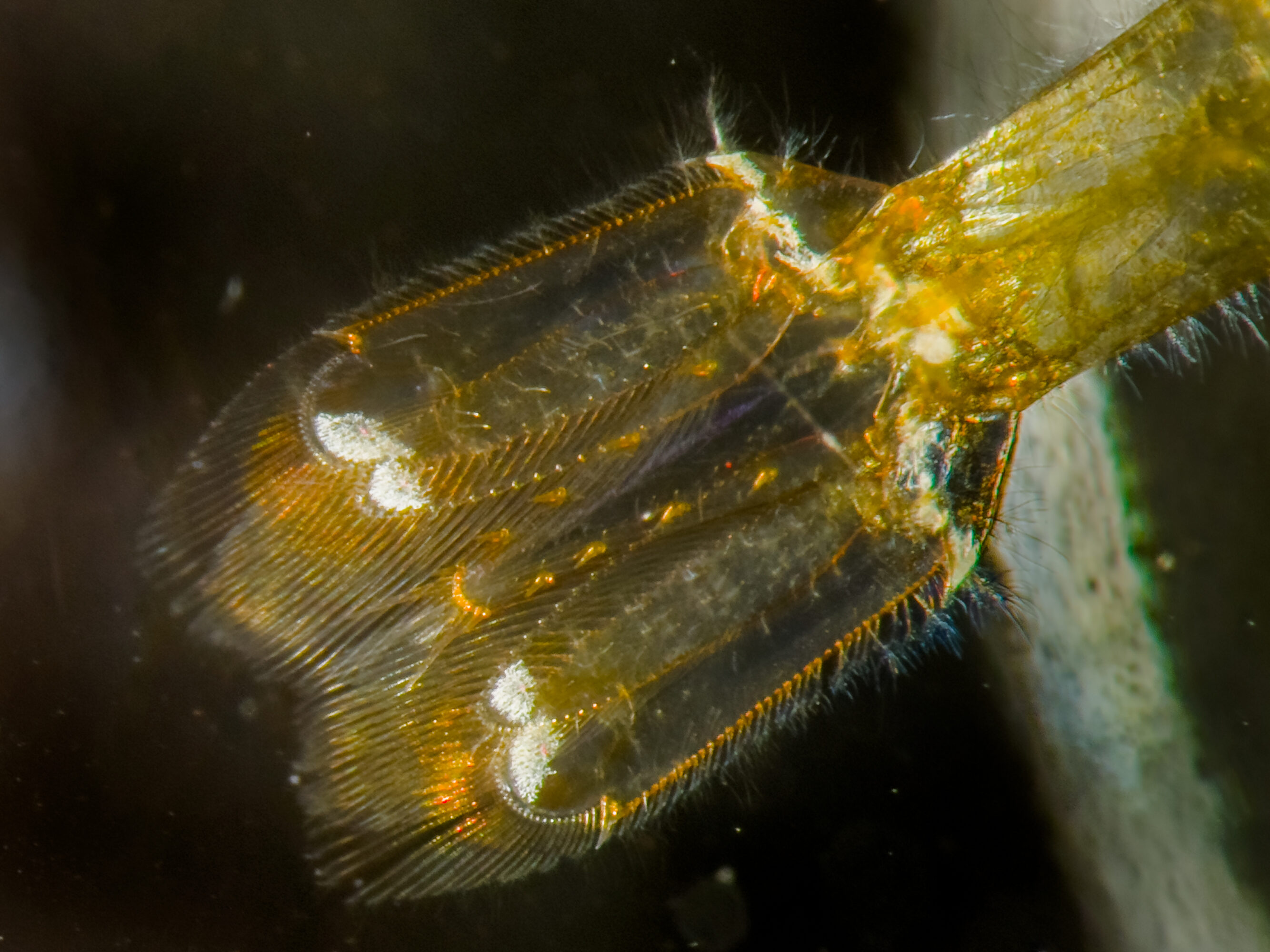
One of the microscope images I sent to Valentin as we worked towards identifying the mystery shrimp. The spines on the telson can be important for identifying shrimps. Photo © Jannes Landschoff
Over the following weeks, we exchanged emails as Valentin guided me through the process. The search gradually narrowed until only one critical feature remained: a microscopic spine on the inner margin of the first segment of the antennule. Under the microscope, there it was.
The mystery was solved. My little shrimp was Eualus cteniferus, the comb-legged shrimp.
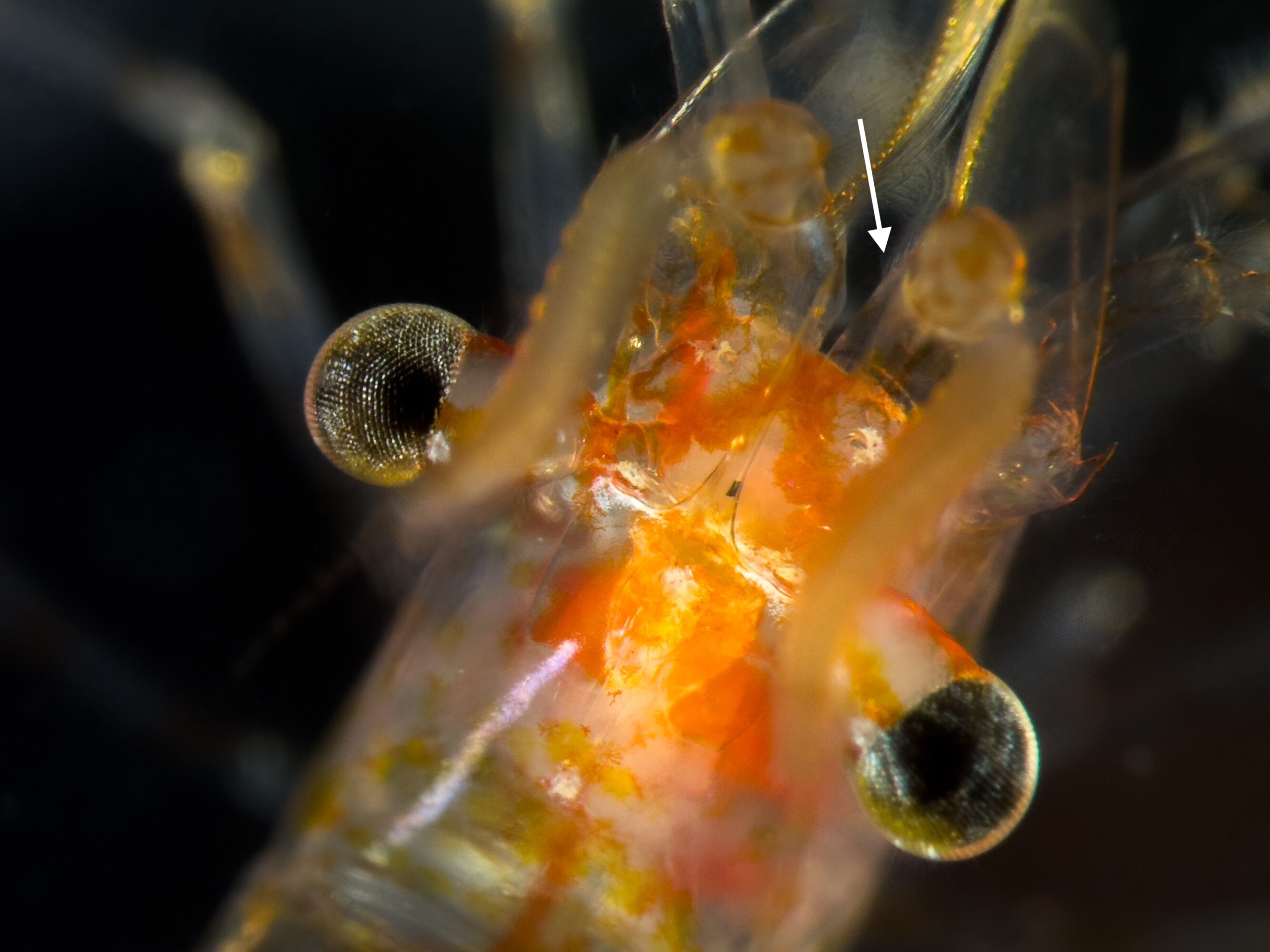
The tiny spine that solved the mystery is barely visible. Photo © Jannes Landschoff
The discovery turned out to be more significant than I had expected. As far as we know, no identified photographs of this species had ever been published before, making these the first images of the living animal. Even more exciting, our record from False Bay extends the known range of the species considerably. Until now, Eualus cteniferus had only been recorded as far south as Algoa Bay, much further east.
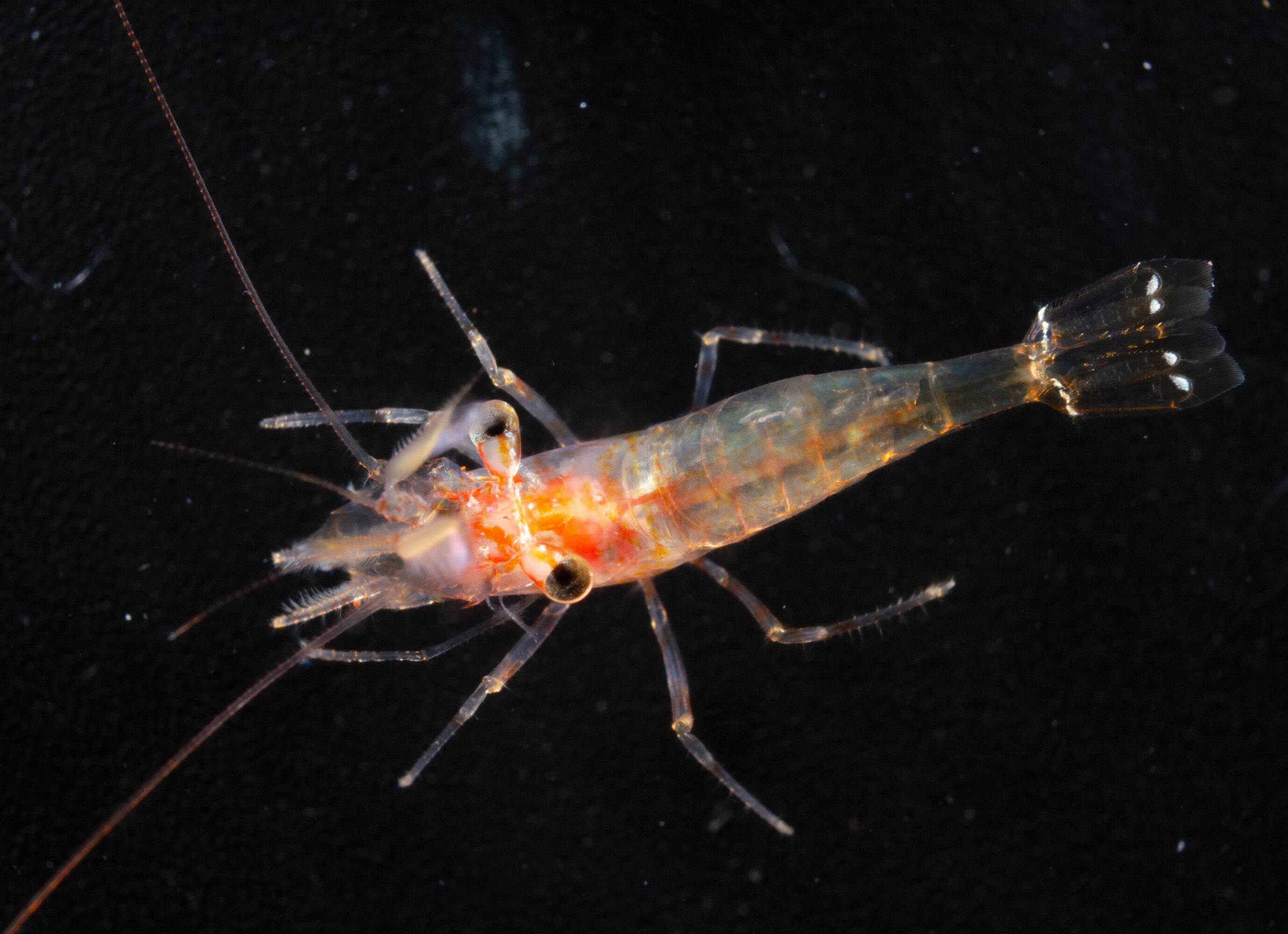
Our record of the Comb-legged shrimp, Eualus cteniferus, represented a significant extension of the species’ known range. Photo © Jannes Landschoff
For me, the story was about more than identifying a shrimp. It reminded me not to be intimidated by difficult groups and reinforced just how valuable scientific collaborations and networks are. Now the delicate Comb-legged shrimp has a name, a face, and a place in the 1001 Seaforest Species App.
Sometimes all it takes is a tiny spine, a generous colleague, and a specimen you’ve kept in a drawer for two years.