
Building the next generation of wedgefish conservationists
Not every classroom has four walls. For a group of fisheries and marine science students, learning began at the fish landing site, where fishing boats returned with their daily catch.
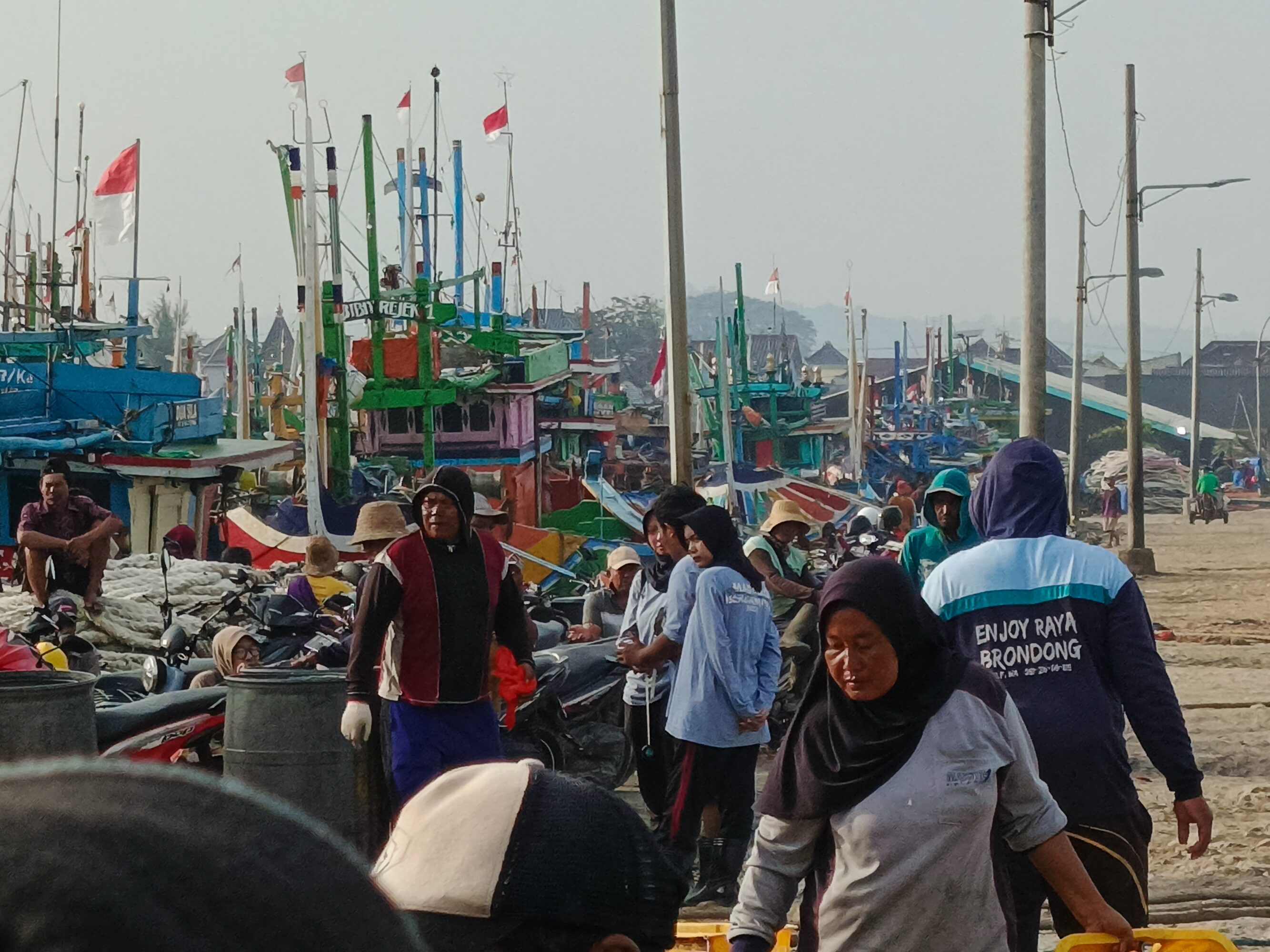
The bustling atmosphere of Tuban Fish Landing Site. Photo © Dimas Ardiansah
Palang Village, located in Tuban Regency, is one of the fish landing sites on the north coast of Java, where fishers bring in their catch from the Java Sea. Given the sparse research in this area, our project seeks to pioneer collaborative wedgefish conservation initiatives in Tuban. The limited number of researchers and local communities focused on sharks and rays represents a genuine challenge to the program’s long-term sustainability, compounded by external threats from fishing gear that frequently catch wedgefish as bycatch. Furthermore, long-term data requires generational continuity; conservation cannot be sustained by a single project alone.
Local university students have become an essential part of this journey. They grew up in coastal communities, familiar with fishing culture, and share a deep connection with the sea as a fundamental part of their lives. Through this involvement, they gain not only research experience, but also a sense of ownership over the resources they will one day be entrusted to protect.
Since February, students from several local universities, including Brawijaya University and Ronggolawe University, have participated in our fisheries monitoring activities. Before entering the field, they received training in species identification, data collection techniques, and fieldwork ethics. Their field activities included recording fisheries data, identifying landed species, and engaging with fishers to understand local fishing practices and community dynamics. Through this experience, students gained an understanding that effective conservation requires not only biological data on threatened species, but also consideration of fisher knowledge, community engagement, and the sustainability of local livelihoods.
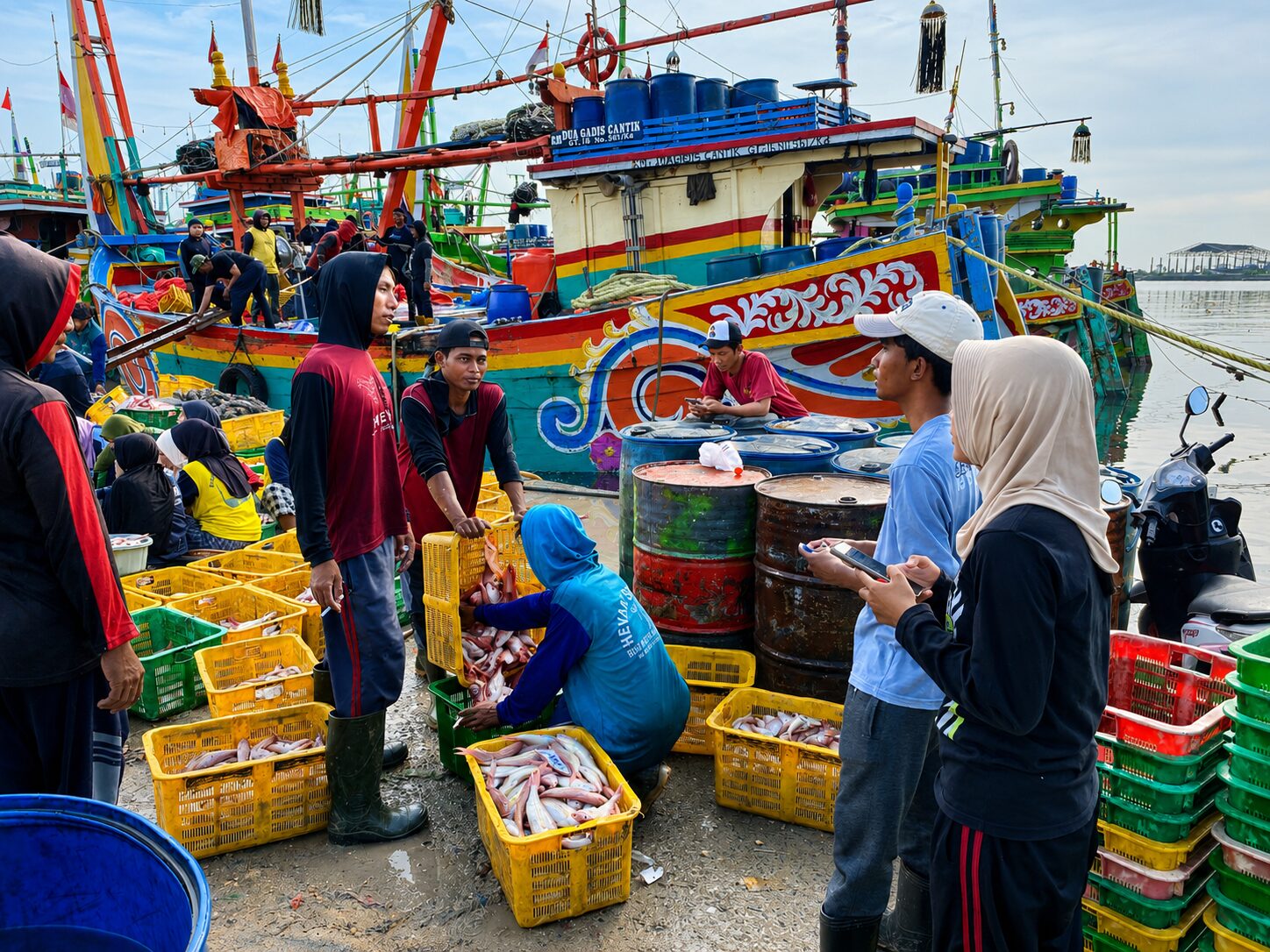
Field discussions with local fishers provide valuable insights. © Dimas Ardiansah
The impact is beginning to show. To date, 10 students from local universities have completed internships with the program, and 4 of them have returned to conduct their undergraduate thesis research, with topics ranging from fisheries biology and fishing grounds identification to social-ecological dimensions. One student even published their findings in an international conference proceeding titled “Characterizing the Baseline Catch Composition on the North Coast of East Java: A Case Study of Demersal Seine Nets in Tuban District.”
As one of the interns shared:
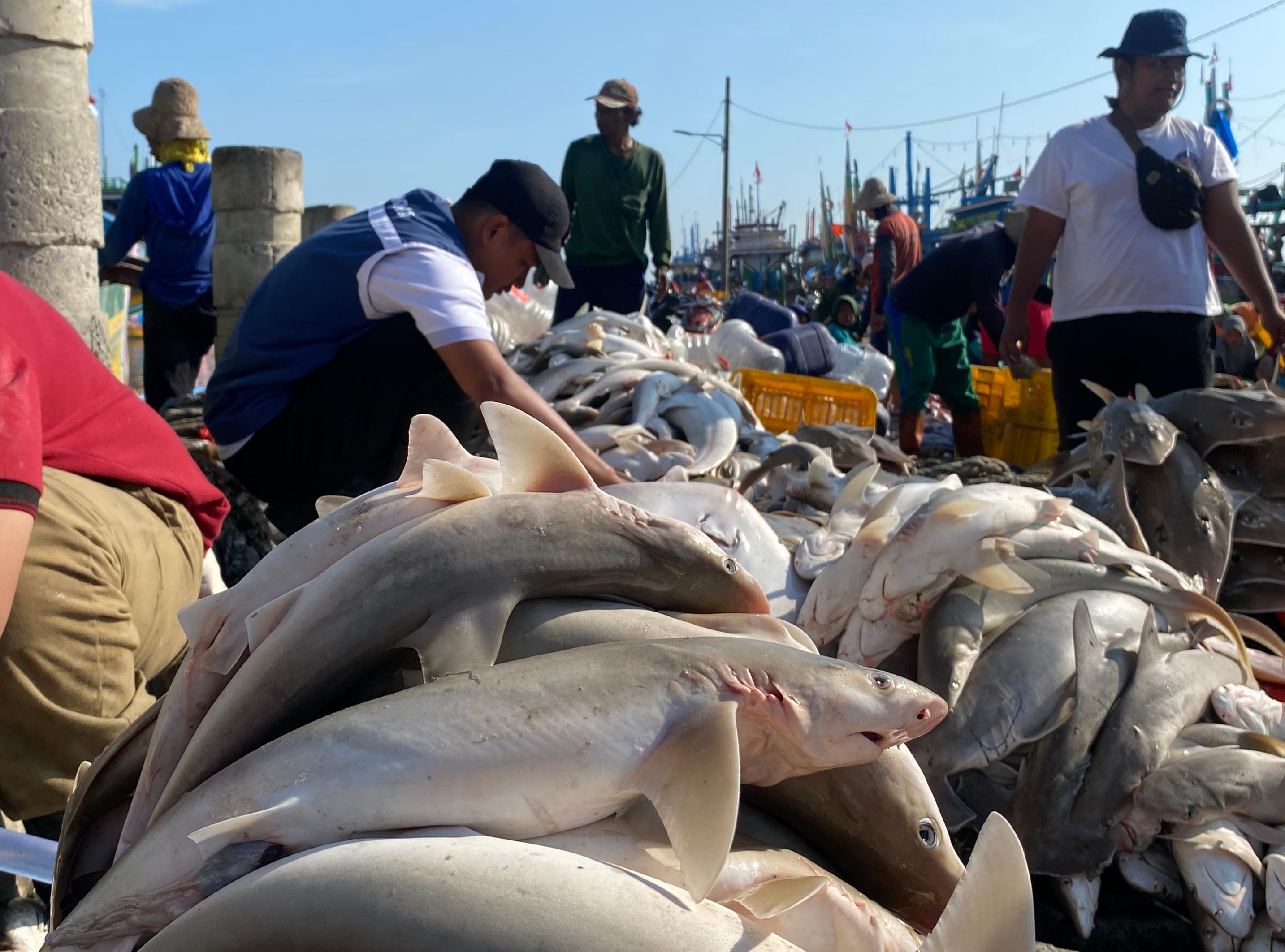
University students begin their fieldwork at Tuban Fish Landing Site. Photo © Akhmad Naufal
We believe that the success of conservation is not measured solely by the number of species monitored or the volume of data collected. Success is also reflected in how many young people choose to return, reconnect with the marine wealth of their home region, and decide to become part of the effort to protect it.
Our hope is that Tuban will be known not only as a fisheries hub, but also as a natural laboratory that produces a new generation of shark and ray researchers in Indonesia. When that time comes, we hope they carry with them not only knowledge, but also a deep sense of belonging to the sea where it all began.