
Bridging science and community: fieldwork and a growing collaboration with recreational fishers in the Paraná River
You might (or might not) remember me from our first blog post, where I introduced our project to tag the world’s largest obligate freshwater stingray — Potamotrygon brachyura — in the middle Paraná River, Argentina. Back then, we were just getting started, and things were far from smooth. Due to customs complications, we only had access to about 10% of the tags and just five applicators, significantly limiting our ability to move forward with the project.
Despite these constraints, we decided to carry out our own tagging trips, each lasting two days and two nights, between December 2024 and February 2025 in the Coronda River. This tributary of the Paraná consists of an intricate network of lagoons and interconnected channels that provide an excellent habitat for stingrays, as well as for many other fish species.
To catch stingrays, we deployed a series of baited hooks along a main line, known locally as “espineles”. These hooks are spaced apart and anchored with weights to the riverbed. For smaller individuals, we also used gillnets.
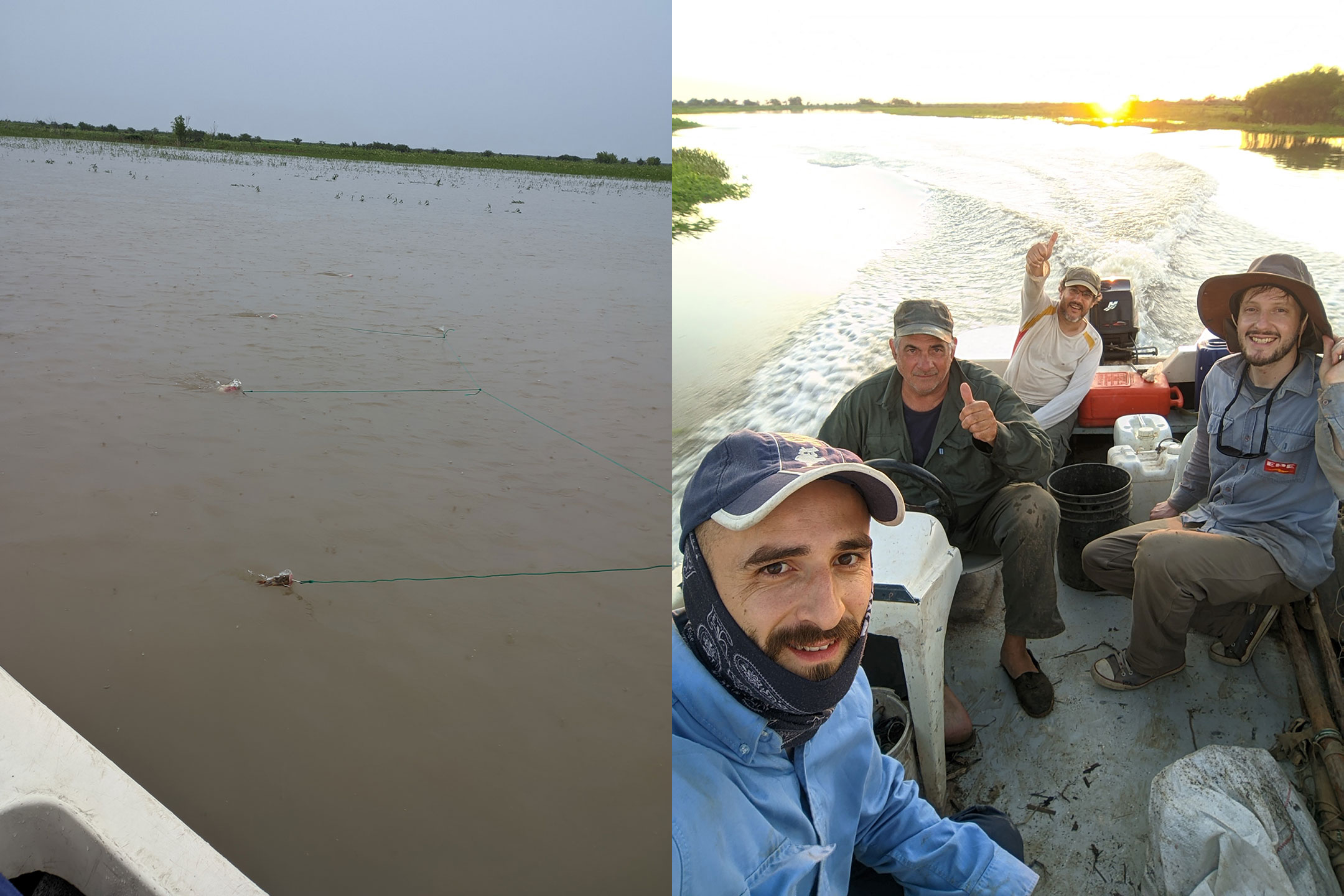
Left: A longline with multiple baited hooks attached to a main line ("espinel"), set to capture giant freshwater stingrays in a lagoon of the Coronda River system, Santa Fe Province, Argentina. Right: The field team, consisting of project leader Martín Vazquez (foreground), Dr. Luis Lucifora (background), and technical staff Esteban Creus and Patricio Alvarenga (middle, left and right, respectively). Photos © Martín Vazquez
Despite the intense effort, we were unable to capture any giant freshwater stingrays during these trips. However, we did successfully catch and release three individuals of the Ocellate Freshwater Stingray (Potamotrygon motoro), which, although not the target of our study, reaffirmed the suitability of the chosen habitat and methodology.
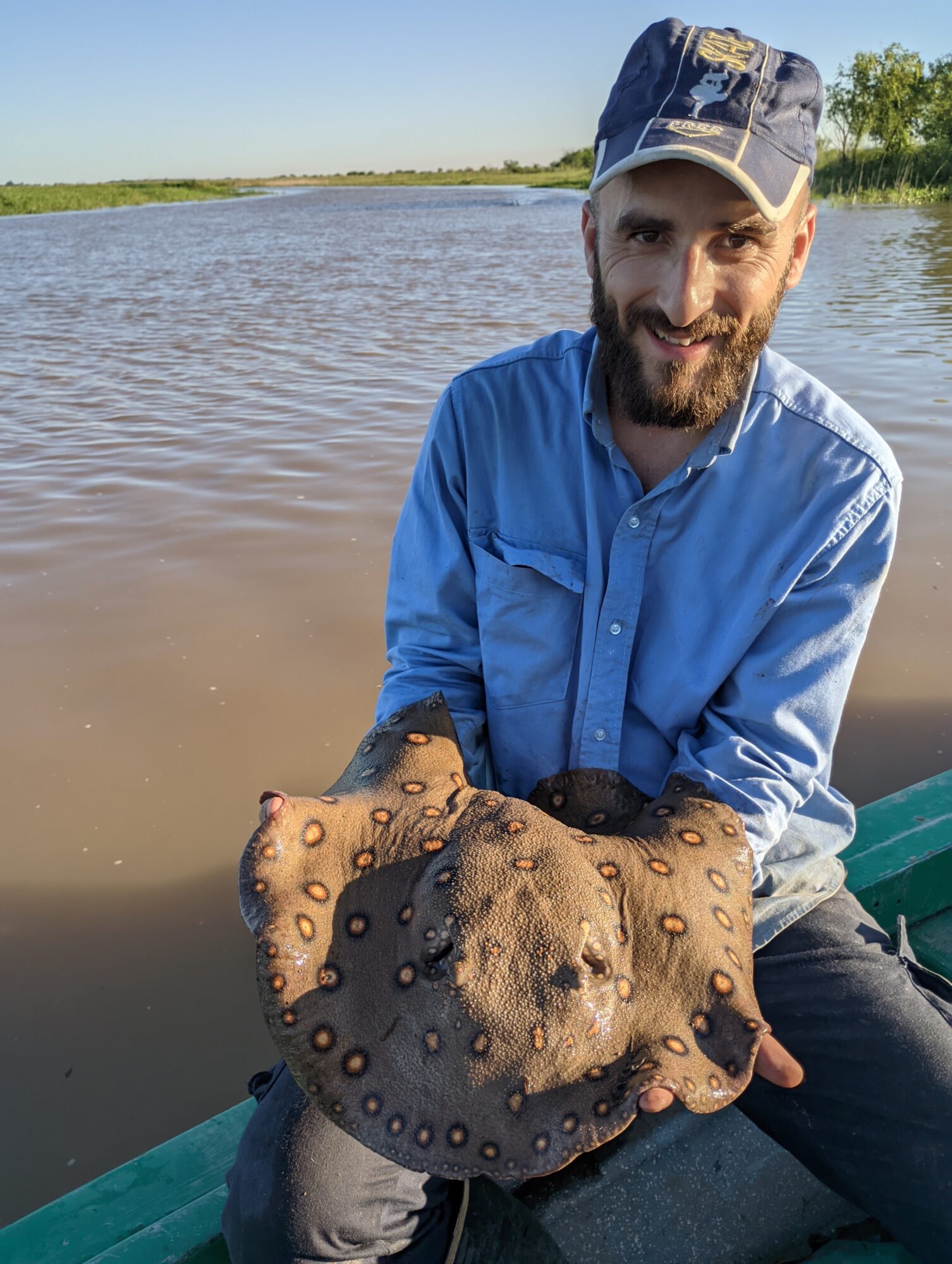
Project leader Martín Vazquez holding a specimen of the Ocellate Freshwater Stingray Potamotrygon motoro, whose stinger-bearing tail portion had been previously cut and healed — evidence of a past fishing event, a common practice among local commercial fishers to prevent injuries. Photo © Patricio Alvarenga
After analysing the outcome of these initial efforts, we realised that targeting the giant freshwater stingray requires very specific expertise. River stingray fishing is a highly specialised activity and not easy to carry out without experience. We are planning to carry out some field trips with experienced island fishers who specialise in stingray fishing in the near future. For the time being, in order to optimise our resources and improve our chances of success, we decided to shift our strategy.
Instead of relying solely on our own campaigns, we chose to engage recreational fishers who regularly encounter stingrays. By involving them directly in the tagging process, we could reduce operational costs and expand our coverage — both in the number of individuals tagged and in the geographical area monitored.
To support this new approach, we launched our official Instagram account (@rayasderio_argentina — feel free to check it out and follow us!). Through the account, we share our research lines, show the day-to-day of our fieldwork, and provide information about the stingray species found in Argentina and in the Paraná River. However, the account is primarily focused on the tagging project, making it one of the goals we set from the very beginning.
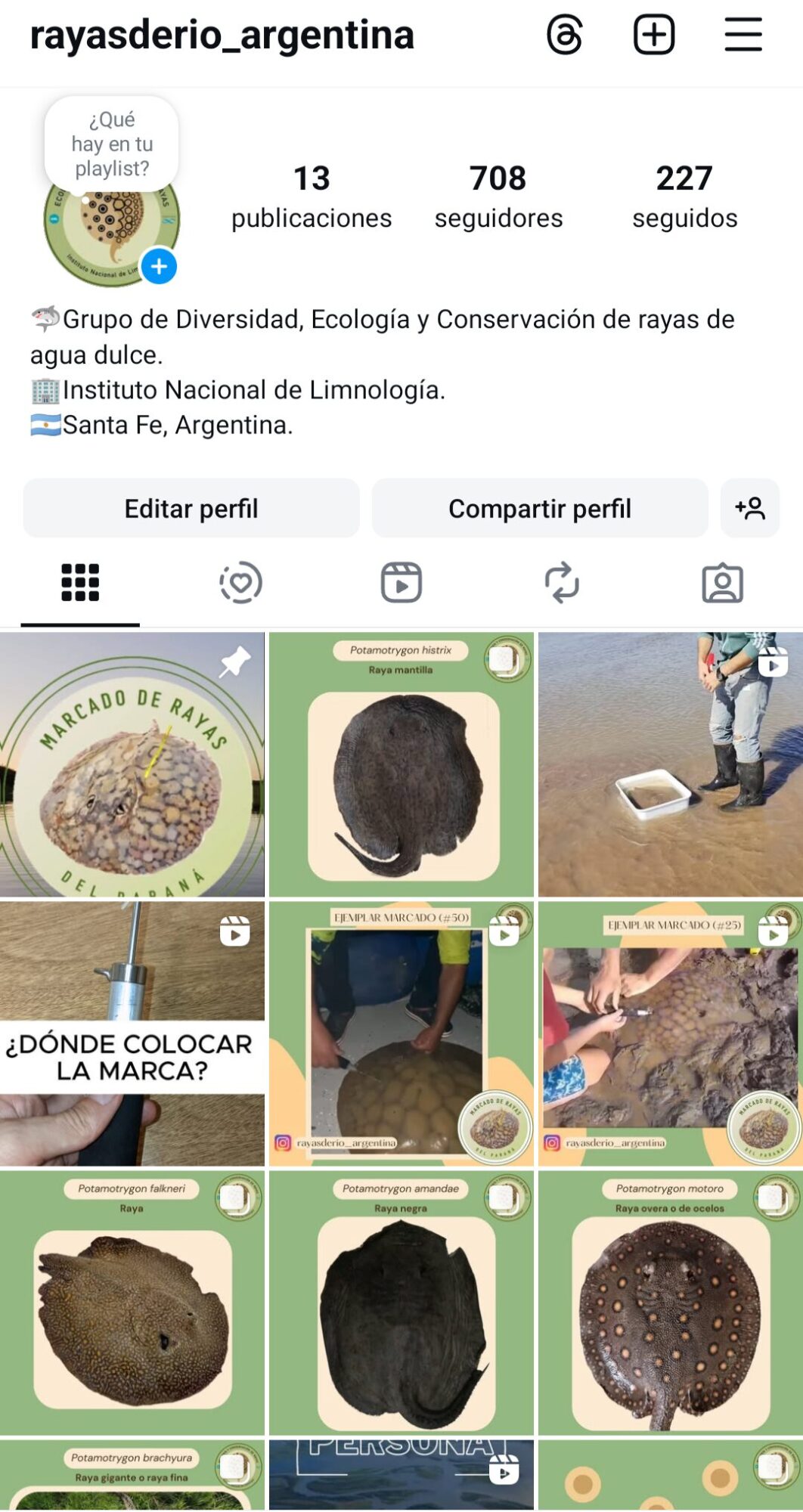
Cover of the Instagram profile we created to promote our giant stingray tagging project. It already has more than 700 followers and continues to grow day by day. Image © Martín Vazquez
Soon after launching the account, our outreach grew significantly. Many fishers reached out, asking for more information and expressing interest in joining the tagging effort. As a result, we have been sending tagging kits to various towns and communities along the middle Paraná River — a task that required a major logistical effort, but one that opened exciting new opportunities for collaboration. At the same time, at the end of February, we received fantastic news: after a long delay that inevitably disrupted our original timeline, we finally had in our hands the full set of tags and applicators we had purchased — an enormous relief! Even though there was little time left in the stingray season, this milestone allowed us to expand our tagging capacity and approach new collaborators for the project.
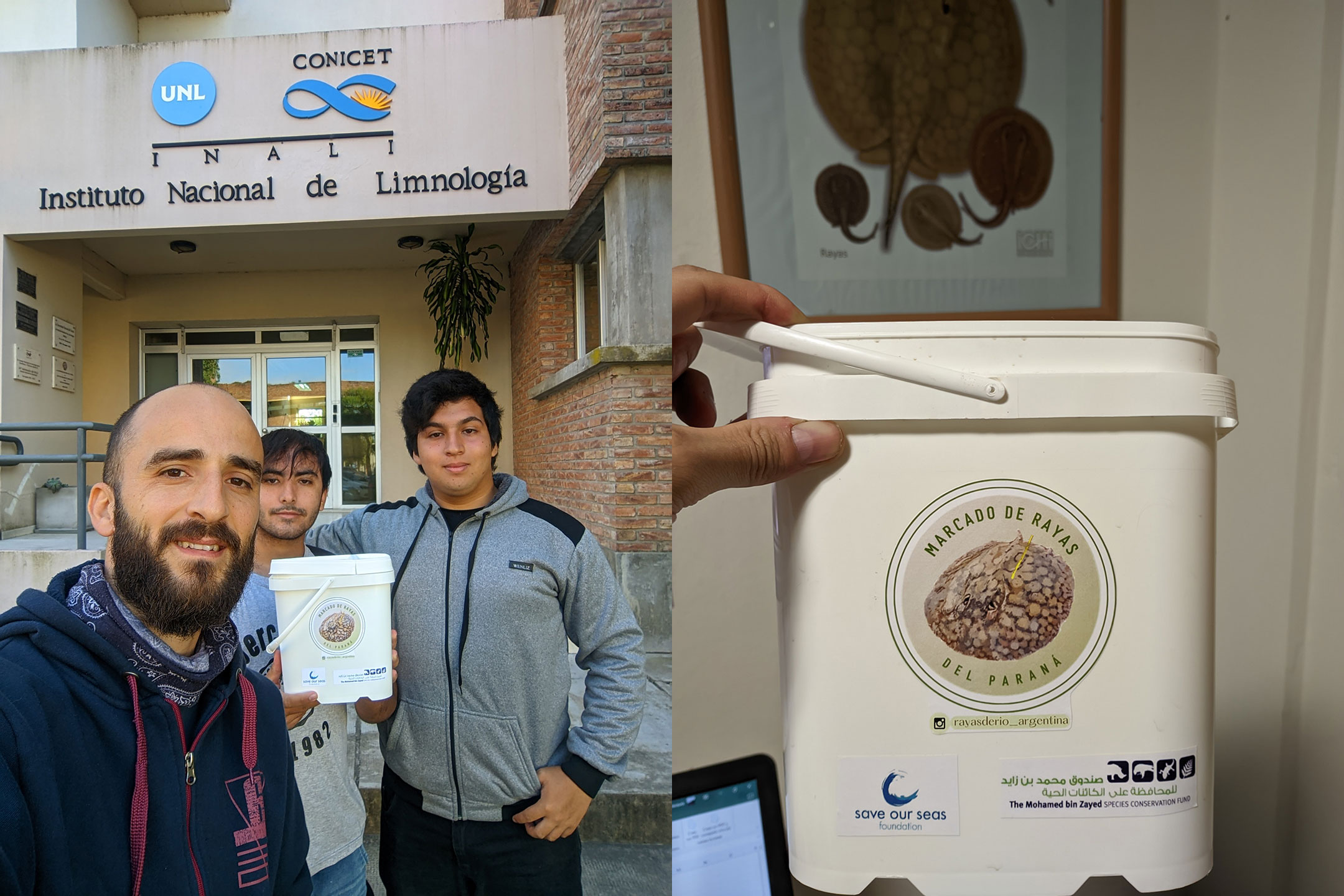
Left: Project leader Martín Vazquez alongside two young fishers from a local fishing group who visited the Instituto Nacional de Limnología to pick up a tagging kit and exchange experiences. Right: The tagging kit provided to each fisher, which includes tags and an applicator with its corresponding needle. Photos © Martín Vazquez
You might be wondering — was this new strategy successful? And did the Instagram account really help us recruit fishers to collaborate with the project? That will be an exciting story for our next blog, coming soon! So stay tuned — we have fantastic news to share with you.
Spoiler alert: several tags are already swimming along the Paraná River!