
Beyond the data: lessons from the artisanal fishermen of Seychelles
As scientists, we often approach data collection with a rigid, black and white mindset – one that is tethered to a strict schedule, with set times of the day and specific days of the week. On paper, it seems so simple – the fishermen go out, I collect my data.
But after just a few weeks of my project commencing, I quickly realised ‘schedule’ is simply not within these fishermen’s vocabulary. No, they certainly don’t operate on your typical nine-to-five clock. Instead, they watch and listen to the ocean, spending hours a day scanning the horizon. They wait for the telltale ripple that signals a school of mackerel swimming beneath the calm, turquoise surface. Without this cue, they simply don’t go – a fluid and often unpredictable pattern I had to learn!
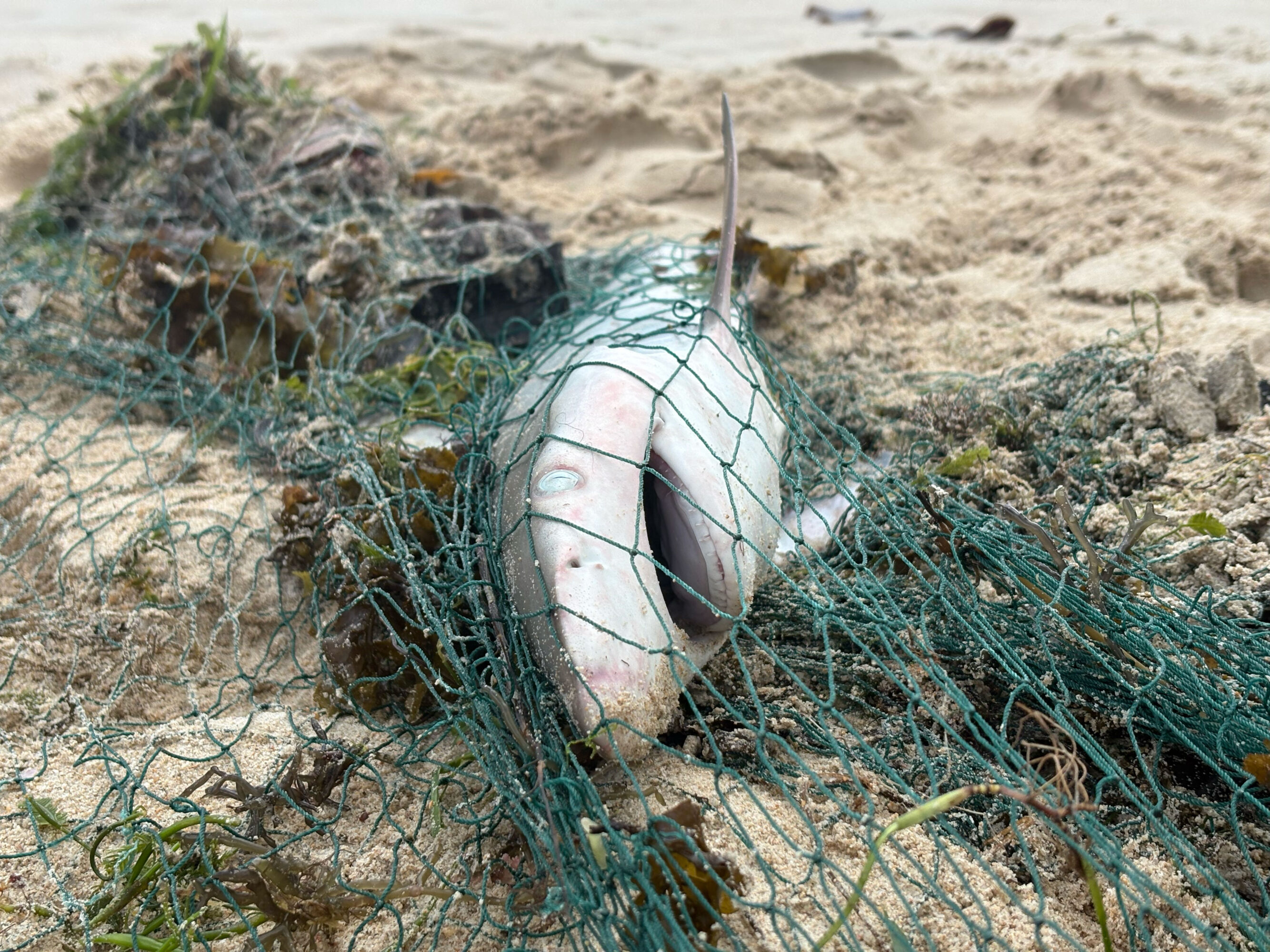
A juvenile blacktip reef shark caught in the beach seine net. Photo © Sophie Berlouis
This group of fishermen are, in fact, the last of their kind on the island of Mahé, using a traditional ‘pirogue’. Their slender, wooden boat is propelled by nothing more than oars and the raw strength of the crew. But while steering the boat is certainly laborious, hauling in the beach seine is the true test of endurance. The men line up along both sides of the net, heaving the ropes toward the shore – a gruelling process that can last up to half an hour. Often, curious tourists and locals join and help with this feat.
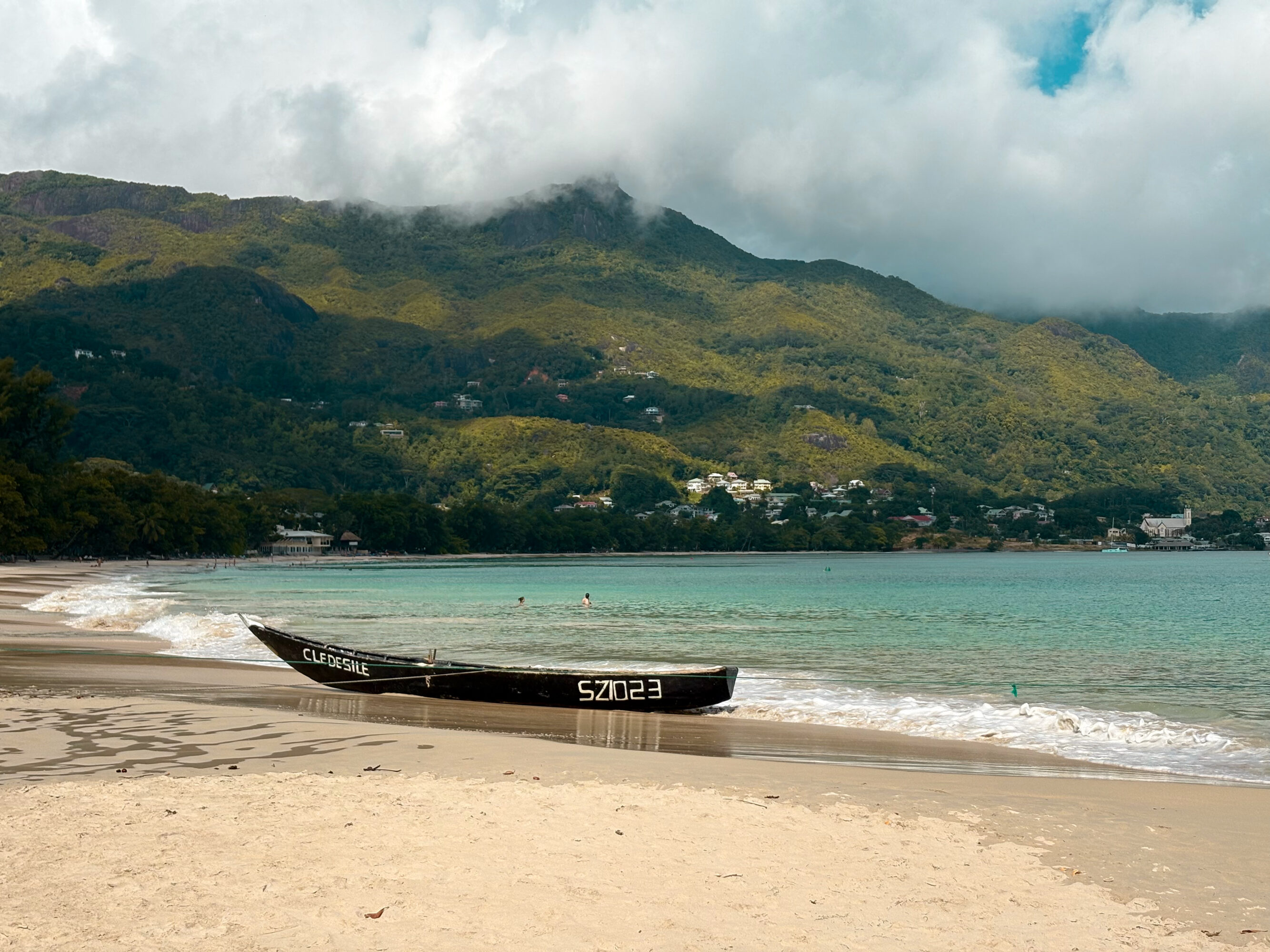
The last traditional pirogue in use on Mahé, Seychelles. Photo © Sophie Berlouis.
Sometimes, the back-breaking labour is worth it and the net emerges, overflowing with several kilos of mackerel. Other times, the net comes in empty, pulling just a few cornet fish, pufferfish and small pompanos – none of which hold any market value in the Seychelles.
However, whether they pull in lots of mackerel, or none at all, is not my area of focus. No, I am looking at something much more specific – their bycatch, elasmobranchs, in particular. Beau Vallon Bay has long been a known nursery ground for a diverse range of sharks and rays, and in just four months, I have already documented juveniles of seven different species! I have measured, weighed and collected fin clips from ocellated and ornate eagle rays, cowtail rays, pink whip rays, as well as spot-tail, blacktip, and scalloped hammerhead sharks.
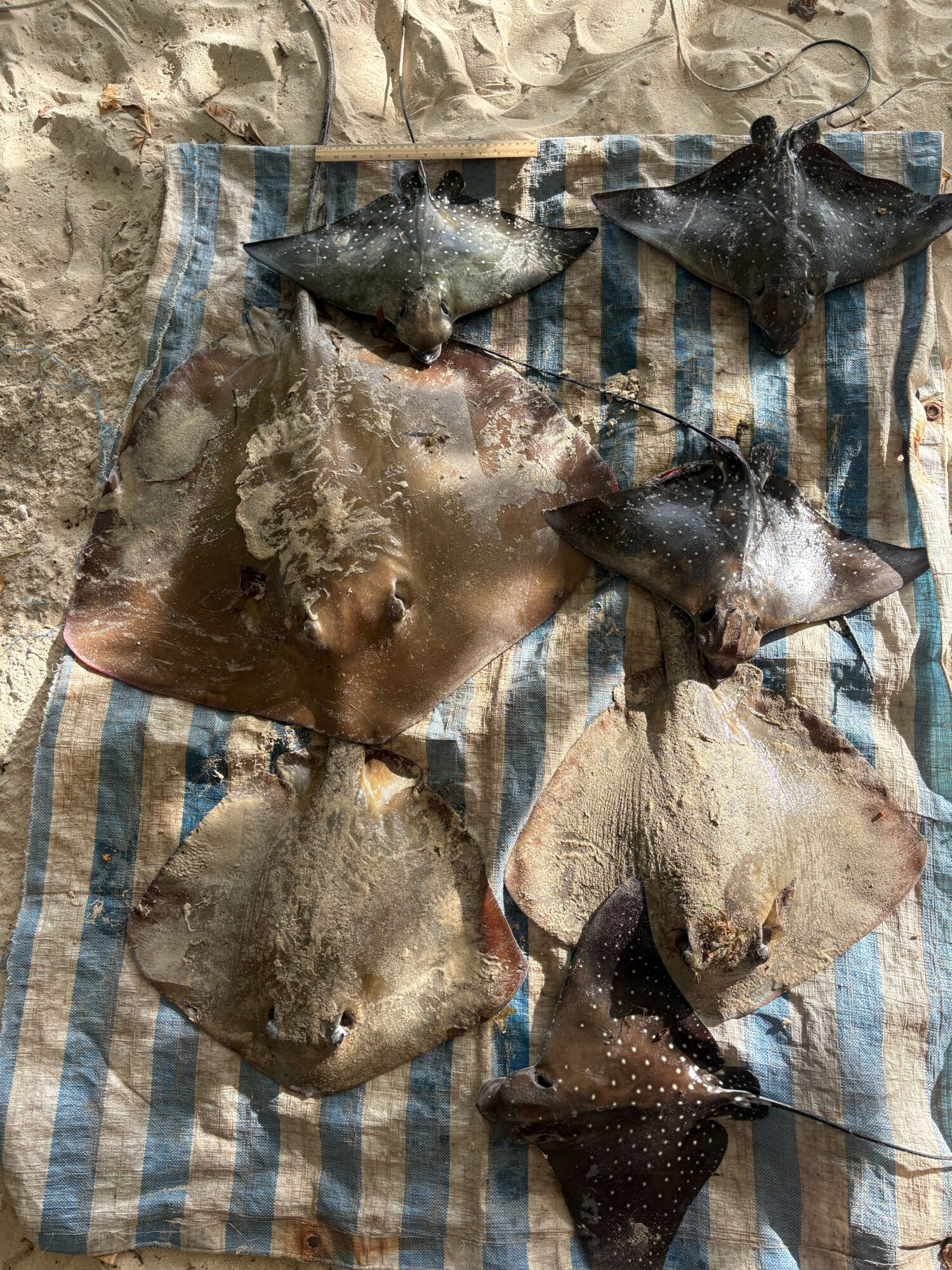
Three species of ray (ocellated eagle, cowtail, and pink whip ray) caught in one landing. Photo © Sophie Berlouis
Observing how the fishermen navigate their catch based on the local market has been equally fascinating. For instance, ocellated eagle rays are highly sought after by Seychellois and are therefore always kept once landed. In contrast, cowtail ray meat is less desirable, so they are often released if the rest of the catch is plentiful. Juvenile sharks, regardless of the species, are a different story – they sell quickly, destined for local curries, chutneys, and even breakfast samosas. At just 50 Seychelles rupees (USD 3.50) per shark, they are a reliable and welcome source of income for the fishermen.
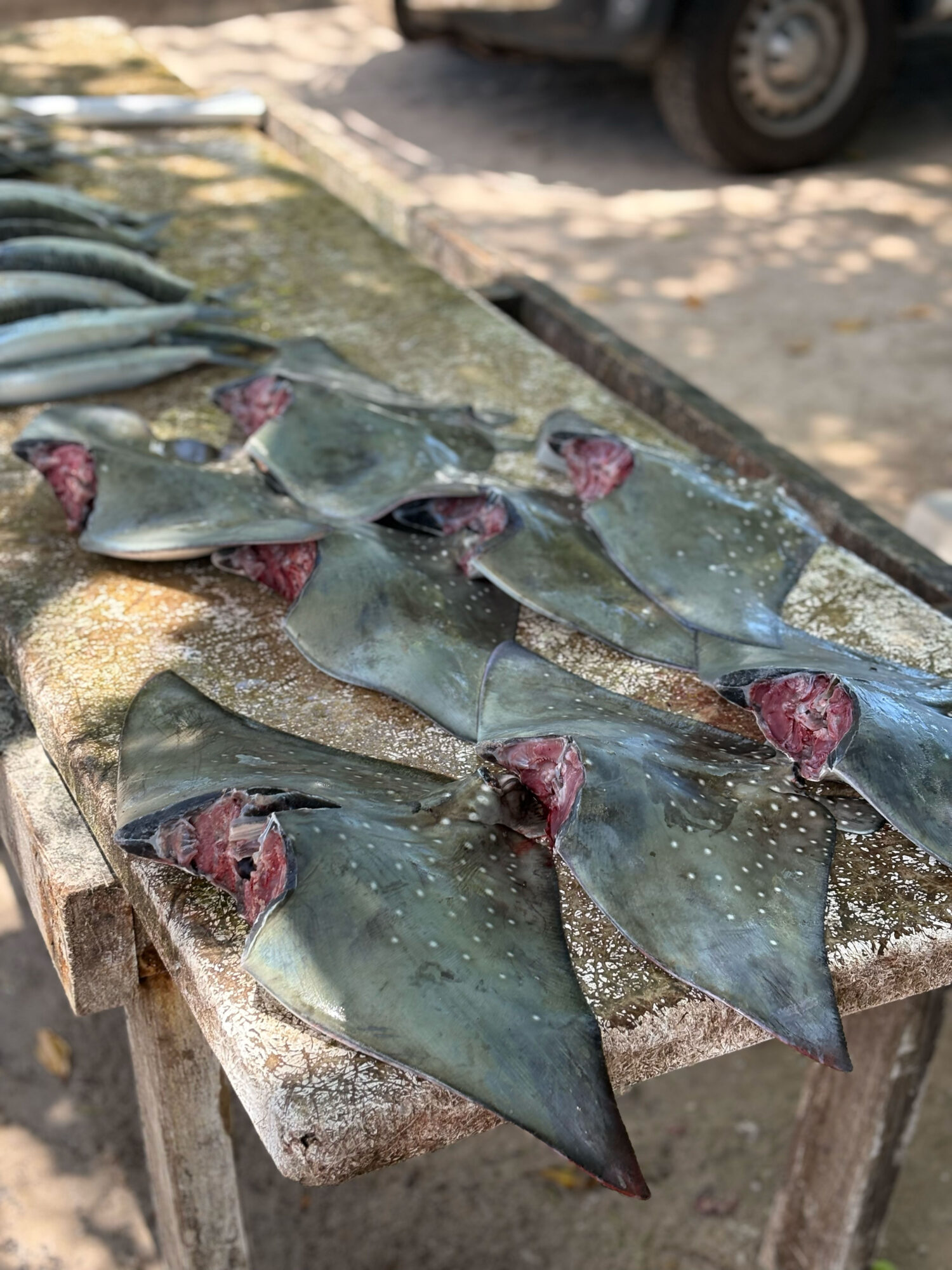
A successful catch of ocellated eagle rays, sold at 50 Seychelles rupees each. Photo © Sophie Berlouis
Before starting this project, I never imagined I would venture into fisheries science – I generally prefer my sharks and rays alive, rather than dead! However, I now realise that this collaboration represents one of the most vital components of conservation. If we cannot understand, support, and communicate with the people who harvest from the sea, our mission to protect it will remain fundamentally incomplete.