
Better together: technology, access, and the future of marine conservation
Marine conservation science is changing fast. New sensors, smarter software, and a growing culture of openness and collaboration are reshaping what is possible, and who gets to do it. Over the past two years, working on shark research along the southern Portuguese coast, I’ve really started to feel that shift firsthand. And recently, it took me all the way to Lima, Peru.
Insight from the Frontlines: ICTC 2026
In February 2026, I got the chance to attend the inaugural International Conservation Technology Conference, organised by WILDLABS together with a coalition of partner organisations. Over five days, more than 600 people from all over the world gathered in the Peruvian capital: engineers, ecologists, data scientists, Indigenous community members, conservationists, students, and funders. A mix you rarely see in the same room.
The programme included two days of hands-on workshops followed by three days of talks and discussions, bringing together people working across vastly different environments, from the deep ocean to tropical rainforests. Over those days, I saw first-hand how rapidly conservation technologies are evolving. Field sensors, biologging devices, environmental DNA, drones, remote sensing, and AI were being shared, tested, and discussed, demonstrating not only technical innovation but also approaches to capacity building, ethical governance, and inclusive participation.
It was also interesting (and reassuring) to hear people talk about challenges that felt very familiar from our hammerhead project, especially the high cost and technical demands of some of these tools.
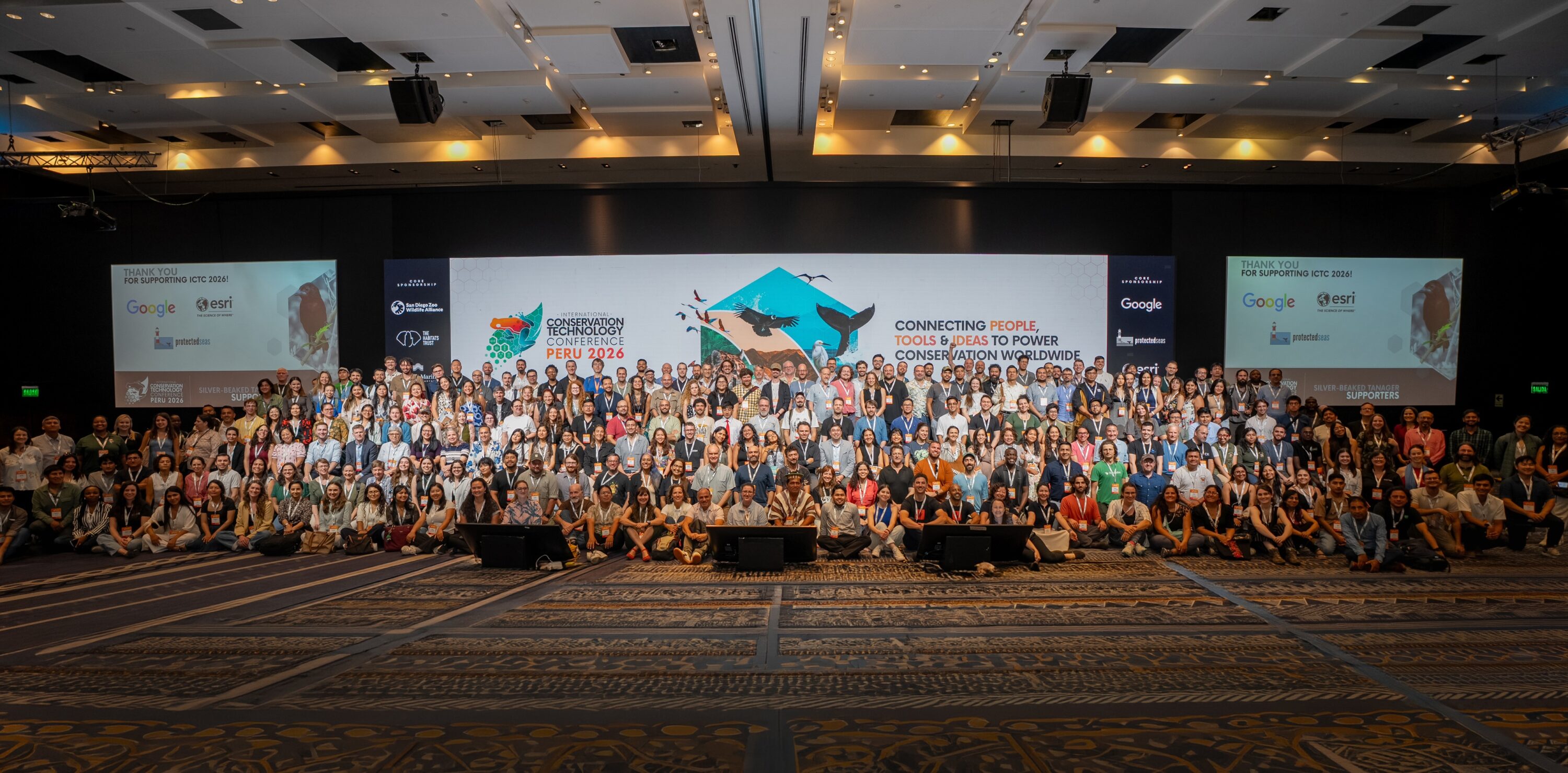
Over 600 conservation technology practitioners gathered in Lima, Peru, for the first International Conservation Technology Conference. Photo © WILDLABS / ICTC
Technology, Access, and the Reality in the Field
That access gap quickly became clear in discussions with other researchers, especially those early in their careers or working in regions with limited resources. High costs, technical complexity, and limited infrastructure continue to create significant barriers, and as a result, large areas of the ocean (and many of the species that inhabit them) remain understudied.
A typical commercial pop-up satellite tag, for instance, can cost more than €3,500 (roughly US$3,500–4,000), with no guarantee of physical retrieval or data recovery. For many research projects, that makes it very difficult to reach meaningful sample sizes.
I’ve definitely felt this in my own work. When you’re studying species that are hard to capture, every deployment comes with a lot of uncertainty. You might spend days preparing for a single opportunity, knowing that if it doesn’t work out, you’ve lost both time and a big chunk of your budget (as our attempts to catch juvenile smooth hammerheads along the Algarve coast repeatedly reminded us).
But this is where things are starting to shift. Open-source hardware and software, combined with next-generation satellite constellations, are opening the door to more affordable, customised, and adaptable biologging solutions.
And this shift isn’t limited to tagging. Drone-based surveys, environmental DNA, and passive acoustic monitoring are now part of field programmes that, not that long ago, relied on much more time-consuming approaches. At the same time, automated data analysis using AI and machine learning is already changing how we work with the huge datasets these tools generate. Patterns in behaviour and habitat use that used to take years to untangle can now be identified much more quickly, and in some cases even interpreted in near real time.
All of these advances have the potential to make a real difference for marine conservation, by lowering barriers to entry, enabling larger and more meaningful sample sizes, and allowing projects to run for longer without being limited by cost.
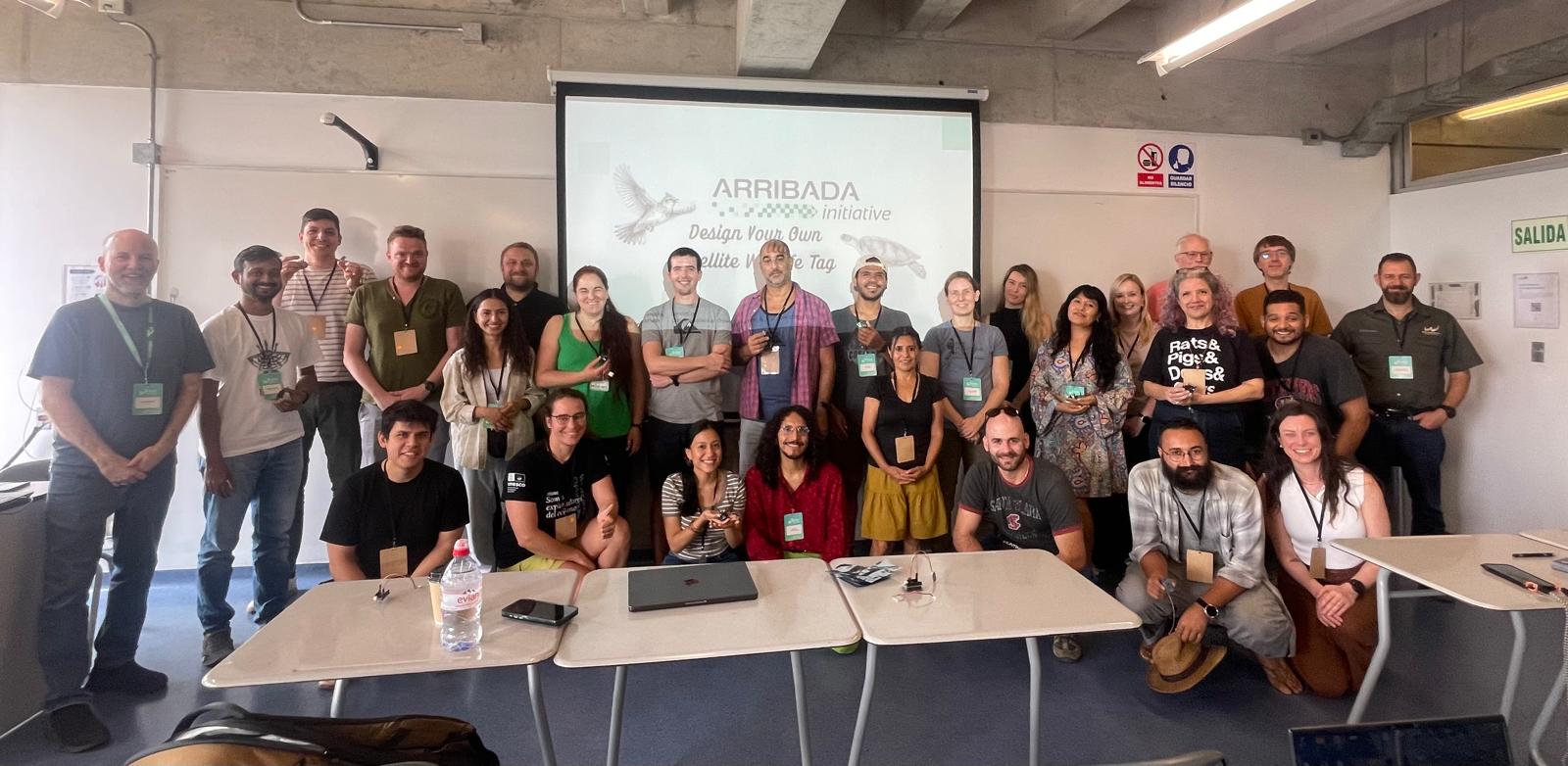
Participants in the workshop “Building your own Satellite Wildlife Tag” led by the Arribada Initiative at ICTC 2026. Photo © Carrie O’Brien | Arribada Initiative
Looking Ahead
From what I’ve seen – and heard throughout the conference – progress won’t just come from developing new tools, but from making sure they are accessible, adaptable, and shared. The growing open-source movement is a promising step in that direction, helping to lower barriers and create space for more collaborative and inclusive research.
At the same time, many fundamental questions in shark conservation remain unresolved, not because of a lack of effort, but because studying wide-ranging animals across vast and dynamic ocean spaces is inherently difficult. In many cases, the challenge isn’t knowing what to do next, but having the tools and capacity to actually do it.
Ultimately, making these technologies more widely accessible isn’t just about improving research, it’s about ensuring that more species, and more parts of the ocean, are no longer left out of the picture.
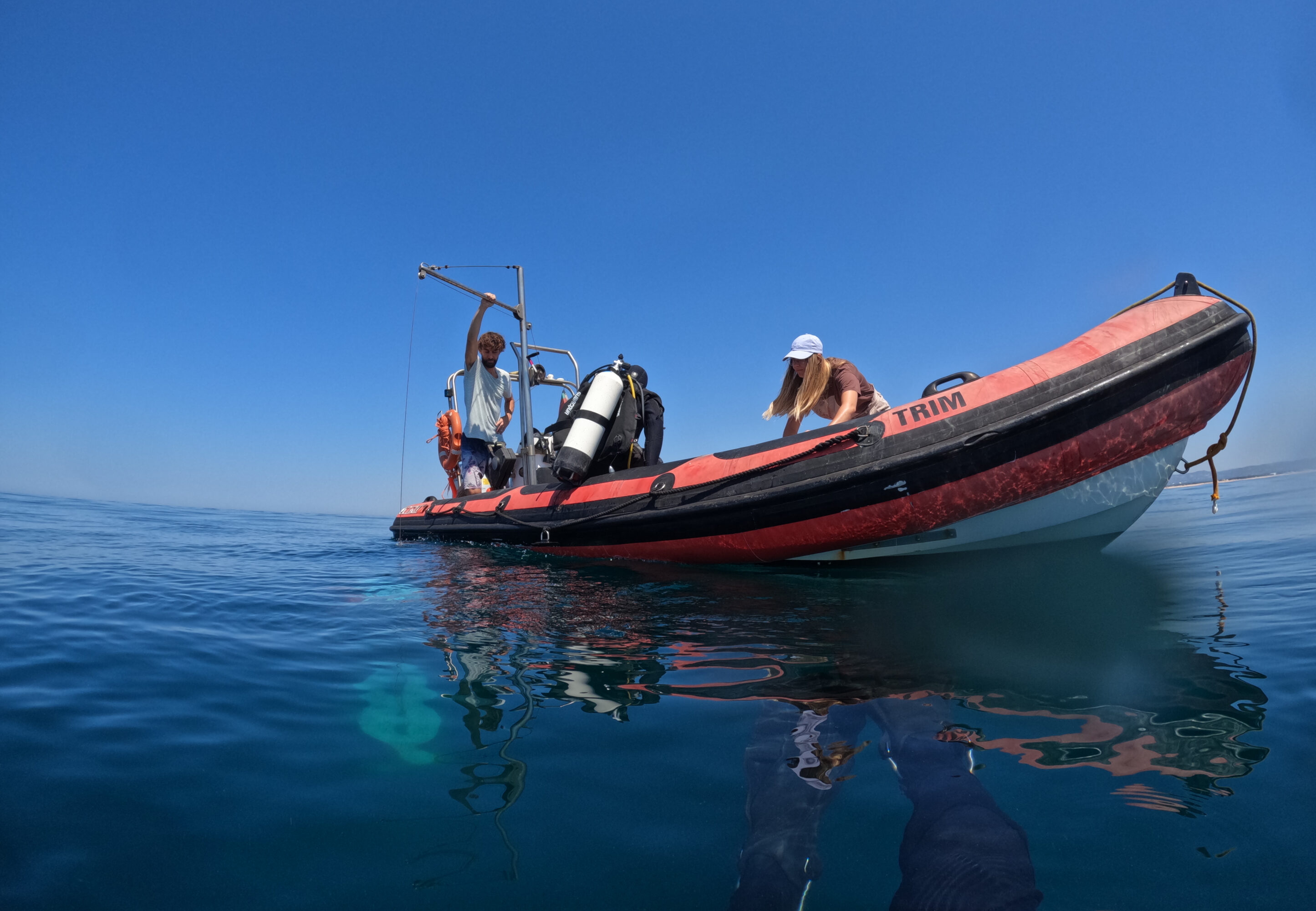
Testing a custom-built, low-cost approach to deploy and recover deep-water acoustic receivers off the Algarve coast. Using an acoustic release, it allows safe retrieval beyond diving depths without the need for costly equipment. This will enable us to expand our acoustic network further offshore and improve our understanding of habitat use by hammerheads and other coastal sharks. Photo © Miguel Gandra