
Before the blue sharks arrive
When people think about shark research, they probably imagine boats, the open ocean and, hopefully, sharks. And yes, those are definitely some of the best parts of the job. But a scientific project does not simply begin when the boat leaves the harbour. Before we can start looking for newborn blue sharks along the Galician coast, there is a lot happening behind the scenes. Over the past months, much of our time has been spent preparing for the next stage of NEOBLUE. Equipment needs to be checked, tested and sometimes tested again. Working at sea means that every small detail matters. Something that works perfectly on land can suddenly become much less practical when you are trying to deploy it from a moving boat, with limited space and a growing pile of ropes, weights and equipment around your feet… So, we have been making adjustments, testing new ideas and slowly improving our field equipment. Sometimes progress comes from big decisions, but often it is much simpler than that: moving a piece of equipment, finding a better way to attach something or working out how to make everything fit on the boat. It may not be the most glamorous part of marine research, but these small details can make a big difference once we are at sea.
But preparing NEOBLUE has not only meant preparing equipment. We have also been preparing to share the project with the people around us. Recently, we visited a local middle school to talk with students about sharks and why they are important for marine ecosystems. We introduced them to NEOBLUE and explained why we are interested in understanding how newborn blue sharks use coastal waters. For many people, sharks are animals associated with distant oceans. But they are also part of the marine world just beyond our coastline. Seeing the students’ curiosity and answering their questions was a reminder that sharing science can be just as rewarding as doing it.
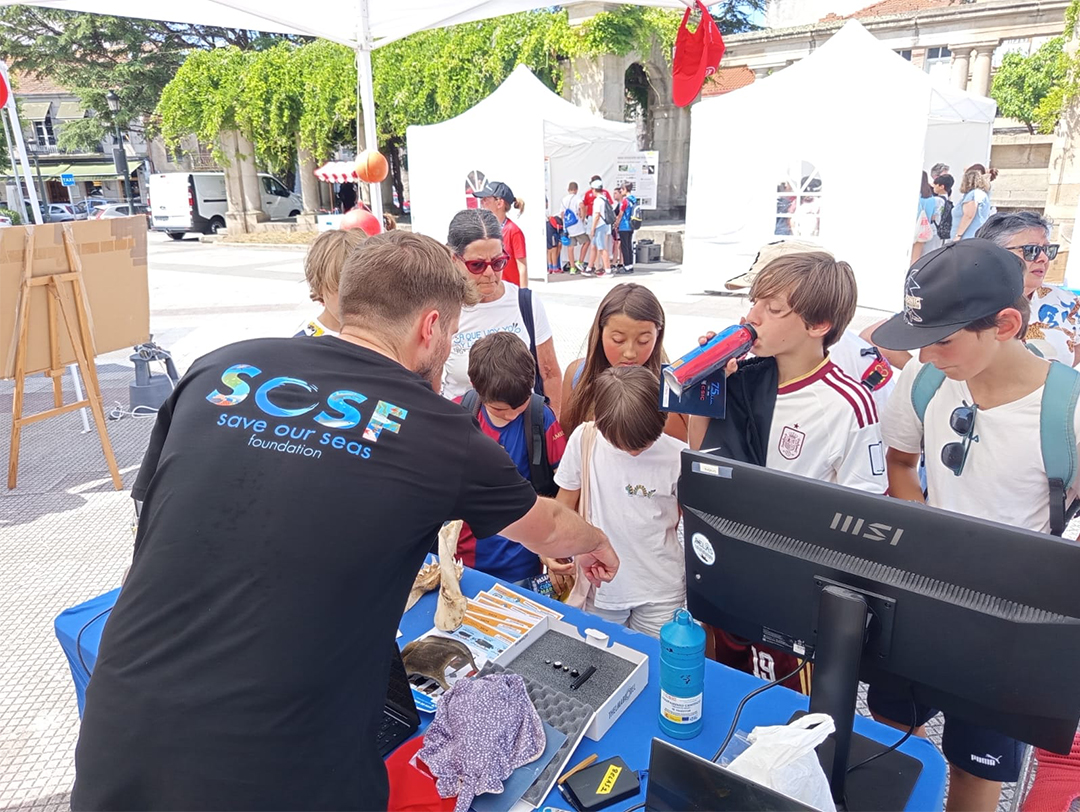
Introducing students to sharks and the NEOBLUE project. Photo by © Iñigo Exposito Ochoa
We have also been meeting with people who know these waters from a very different perspective. We presented the goals of NEOBLUE and shared some of our preliminary observations with local cofradías (fisheries guild). The people who work on the sea every day have their own experience and knowledge of the coast, and it was great to hear their questions, perspectives and observations. These conversations are important. We are studying the same sea, but from different perspectives.
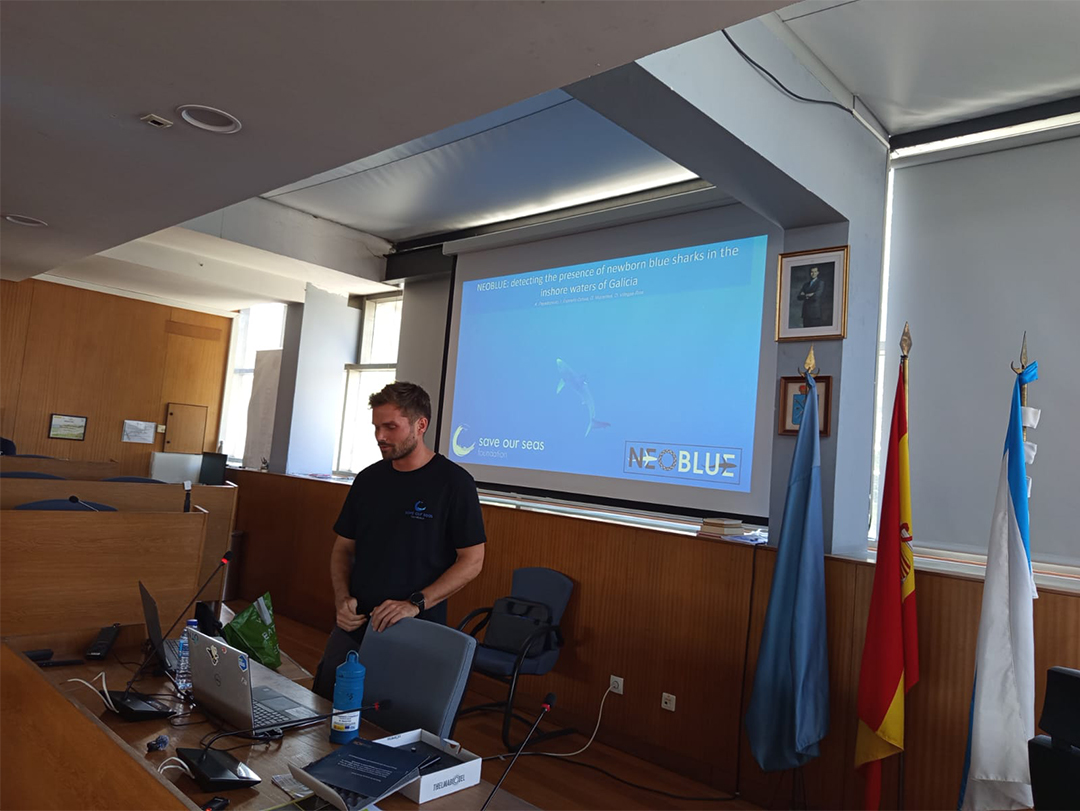
Sharing the goals and preliminary observations of NEOBLUE with local stakeholders. Photo by © David Villegas-Rios
And, of course, there is the scientific community. At IMARCO 2026, we had the opportunity to present NEOBLUE and share our work with other researchers. Conferences are a very different environment from a classroom or a meeting with fishermen, but the purpose is surprisingly similar: explain what we are doing, listen to others and learn from the questions and ideas that follow.
A school, a meeting with local stakeholders and a scientific conference may seem like very different places. But they are all part of the same project. Research does not exist in isolation. It is built through equipment and data, but also through conversations, questions and collaboration. Soon, the classrooms, meetings and conference rooms will give way to early mornings, long days on the boat and, hopefully, encounters with newborn blue sharks. Before the blue sharks arrive, there is still plenty to do. And that, perhaps, is what a scientific project really looks like.