
Barcode for survival and protecting Africa’s wedgefish through genetics
Along the Gulf of Guinea, an ancient marine species is disappearing. The African wedgefish (Rhynchobatus luebberti), often mistaken for guitarfishes, is one of the world’s most threatened marine fishes. Yet for many fishing communities, little is known about its biology, population size, or conservation status. With a new initiative, biomonitoring for conservation through DNA Barcoding of the African Wedgefish is changing that story by combining science, education, and community action to protect this remarkable species.
As a conservation researcher and educator from Nigeria, in collaboration with the conservation genetics lab, I introduce an innovative approach using DNA barcoding to identify and monitor African wedgefish and endemic stingrays from the region. DNA barcoding works like a biological fingerprint system. By collecting small tissue samples and analysing genetic markers, scientists can accurately identify species, even when they look almost identical, helping policymakers trace wildlife trafficking of the species. This is especially important for wedgefish, which are frequently confused with other guitarfish in fish markets and landing sites.
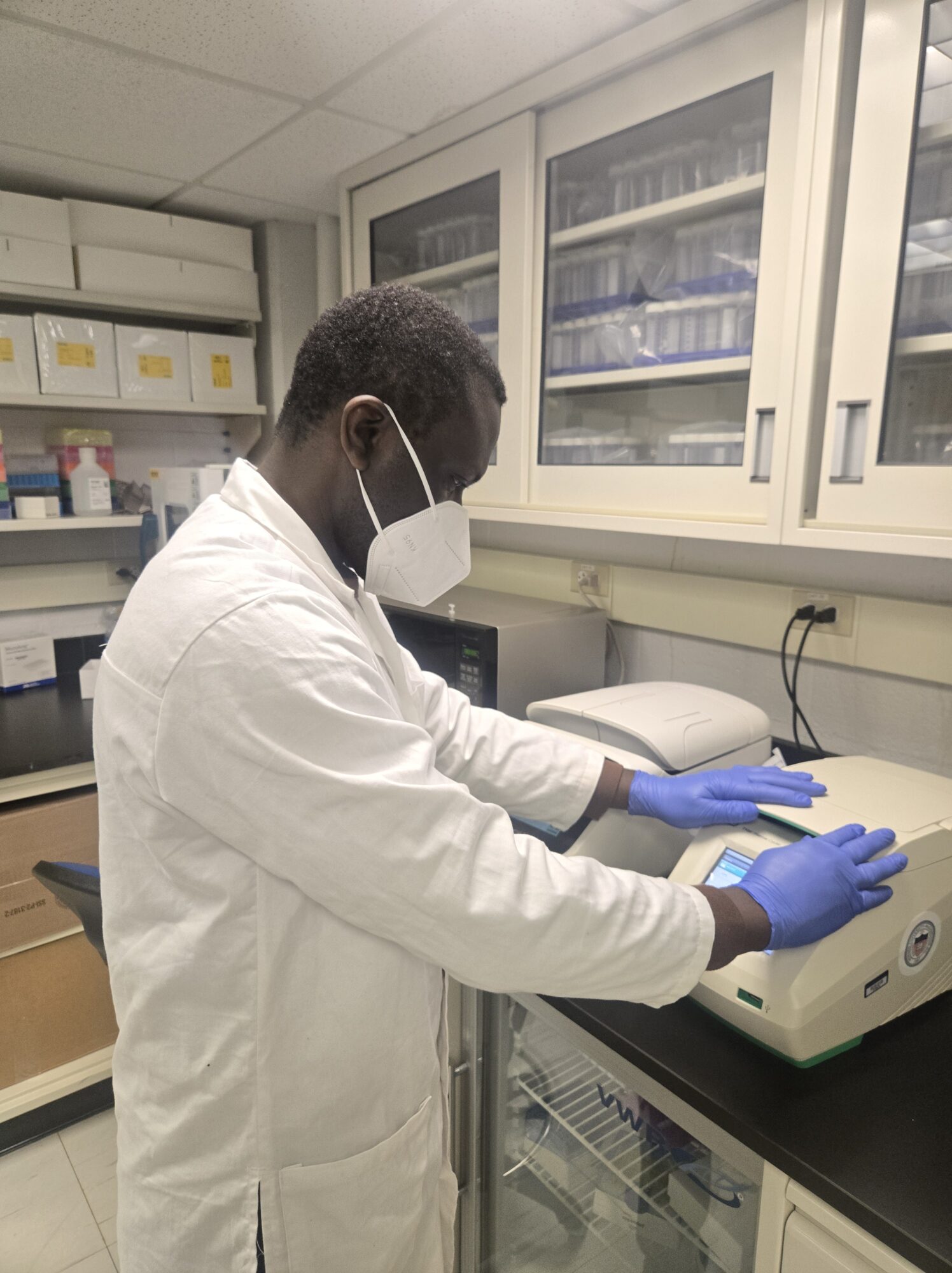
Segun Oladipo processing samples in the laboratory for genetic barcoding analysis, a key step in identifying species and supporting conservation. Photo © Olabisi Atofarati
This project goes far beyond laboratory science. Through interactive workshops and educational workbooks, students, fishers, and conservation educators are learning how to identify species, record key physical features, and safely collect samples for research. Participants are introduced to simple documentation of observation locations and understanding how genetic tools help detect illegal wildlife trade and guide conservation policy. The initiative also highlights the ecological importance of wedgefish. These animals play a critical role in maintaining healthy coastal ecosystems, yet they face increasing threats from overfishing, habitat degradation, and unregulated trade. In many coastal regions, wedgefish are accidentally caught in fishing nets or sold without proper species identification. Without accurate monitoring, conservation efforts become extremely difficult.
That is why community involvement is central to the project’s mission. Fishers are encouraged to report unusual catches, avoid harvesting endangered species when possible, and participate in citizen-science programmes. Young students are also inspired to become future ocean stewards by learning how marine biodiversity connects directly to food security, livelihoods, and ecosystem health. The phrase “Barcode for Survival” captures the heart of the initiative. Conservation today is no longer limited to protected areas and awareness campaigns; it now includes molecular science, education, and local partnerships working together toward a common goal. By building a DNA-based monitoring system for African wedgefish, this project is helping researchers uncover hidden biodiversity while empowering communities to protect the species living in their own waters. In doing so, it offers hope that one of Africa’s most endangered marine fishes may still have a future beneath the waves.