
Back to Basics Part 1
Wedgefishes (family Rhinidae) are among the most threatened fishes on the planet, with all but one species listed as Critically Endangered on the IUCN Red List. Heavy fishing pressure and international trade are their biggest threats, as these rays are often caught as bycatch and retained for their highly valuable fins and meat. In fact, fins from wedgefishes and their close relatives, giant guitarfishes, are considered some of the highest-grade fins in the global shark fin trade.
Despite this, we know surprisingly little about wedgefish biology: things like how fast they grow, how long they live, or when they reproduce. This information is essential for fisheries management and species conservation, as it helps us understand how vulnerable these species are to fishing pressure.
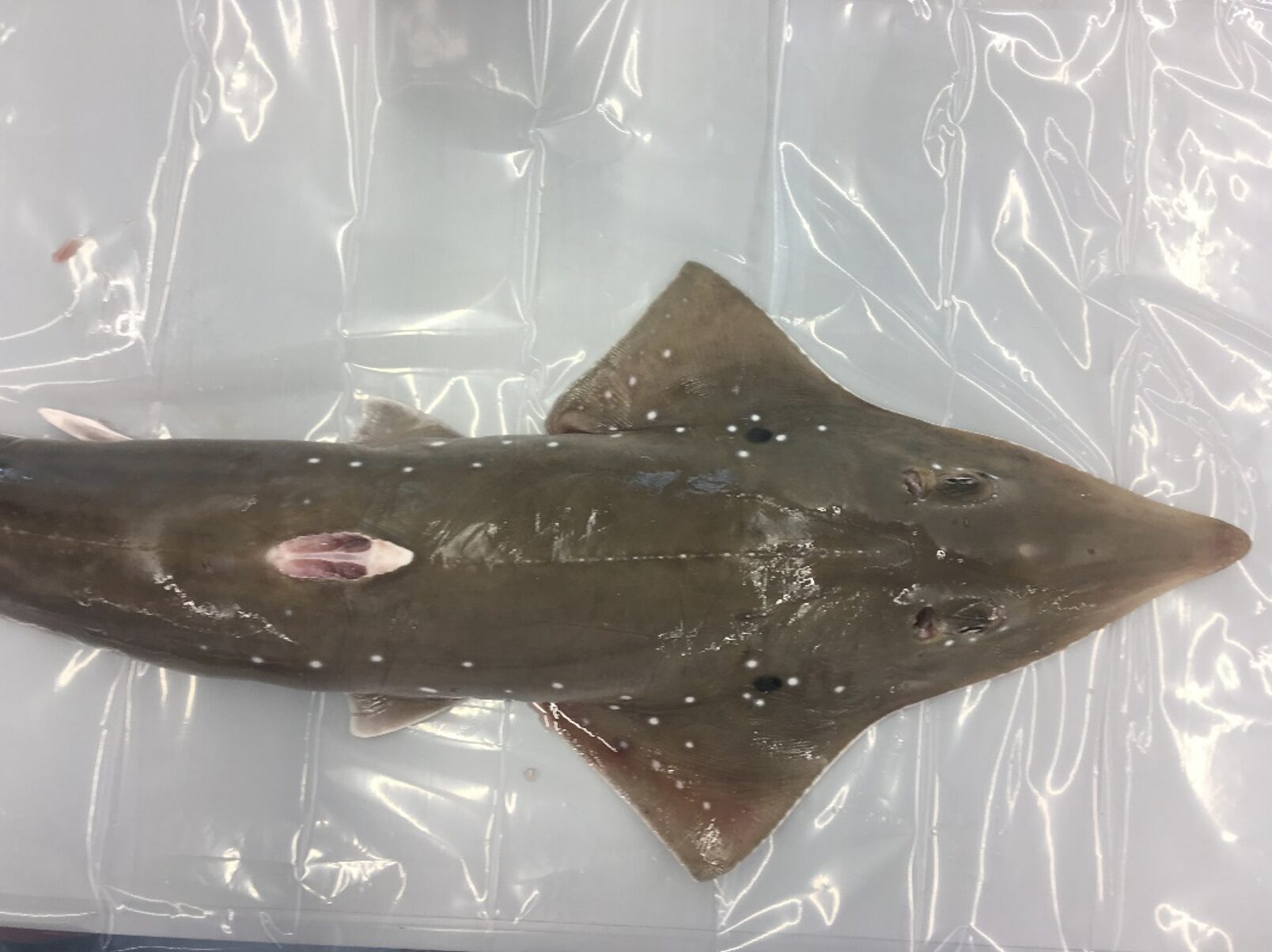
A wedgefish sample processed at a Singapore fish port. Photo © Brooke D'Alberto
Studying wedgefish life history requires dissecting individuals to examine their vertebrae and reproductive organs. Because these species are so threatened, targeted scientific sampling is difficult to justify. Fish markets, however, offer a valuable alternative. Specimens landed by local fishers provide rare access to species that are otherwise hard to study. Through a collaboration with The Dorsal Effect, a Singapore-based NGO, I was able to collect wedgefish samples while they conducted routine fish market surveys, highlighting how important collaboration is in conservation science.
Sampling took place at Singapore fish ports that receive fresh seafood from local and regional fisheries in Indonesia and Malaysia. Markets were surveyed twice a month between 2018 and 2019, often during the very early hours of the morning. This work occurred prior to the listing of wedgefishes under CITES Appendix II, which means that any international trade now requires a science-based assessment to ensure it does not harm wild populations.
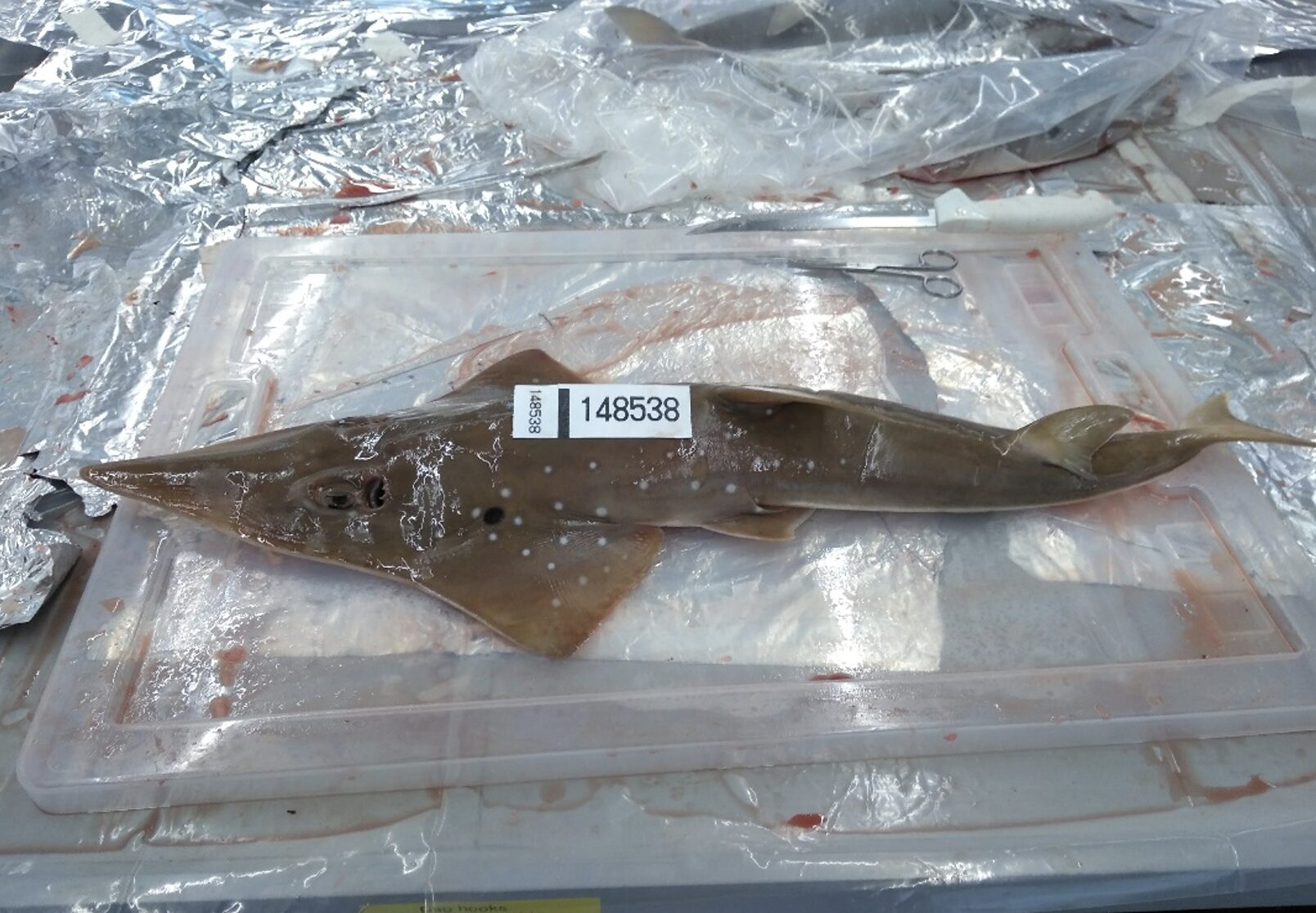
A wedgefish sampled in October 2018 at a Singapore fish port. Photo © Brooke D'Alberto
Beyond the data, spending time in fish markets offered valuable insight into the fishing industry itself. Conversations with vendors highlighted both the challenges and opportunities for sustainable fishing. These interactions reinforced an important lesson: protecting marine species isn’t just about science, it also depends on partnerships, local knowledge, and working together to support healthier oceans into the future.