
A second chance for wedgefish
For years, when the nets came in, the focus was simple: bring the catch aboard and take it to shore. Whatever was caught in the net was part of the day’s catch, and there was often little reason to stop and consider what species had come up with it.
That began to change through conversations and repeated encounters with wedgefish in the fishery. Today, when a live wedgefish appears among the catch, some fishers recognise it immediately.
Then comes a simple instruction:
The wedgefish was still alive. A few years ago, this moment might have ended very differently. Today, scenes like this are becoming more and more common among fishers working off the coast of Tuban, on the north coast of East Java.
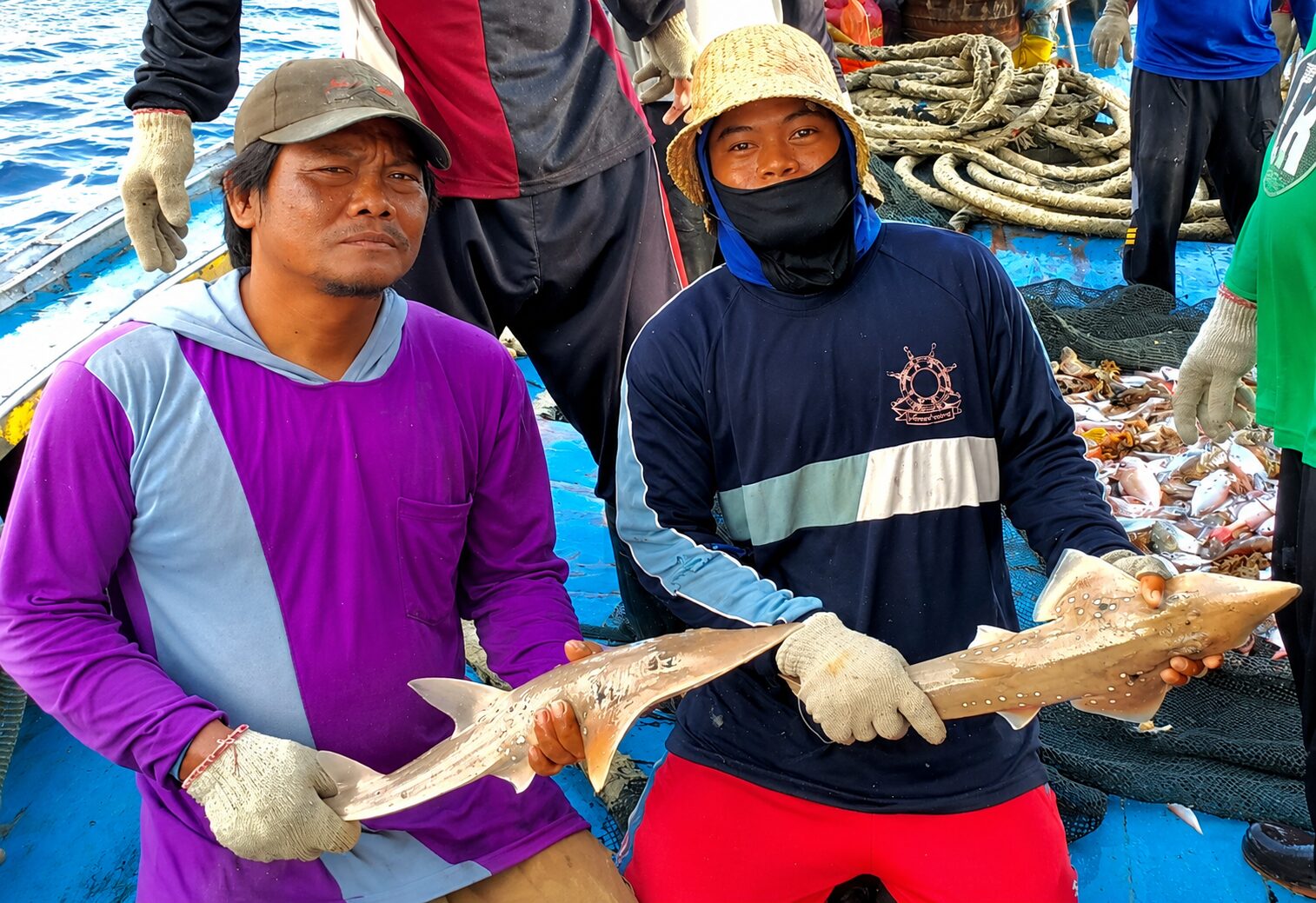
Two juvenile Wedgefish moments before their release. Photo © Solikin
Wedgefishes are the Critically Endangered rays, yet they are still regularly caught in Indonesian fisheries. Since our project began, we have been working closely with local fishing communities, not by telling fishers what to do, but by listening to them, sharing knowledge, and talking openly about why releasing live juvenile wedgefish can make a real difference for the future of the fishery.
The change did not happen overnight. It came through regular conversations at landing sites, time spent on fishing boats, and a growing, shared understanding: that protecting young wedgefish today means there will be more fish in the sea tomorrow.
When juvenile wedgefish are caught alive, many fishers now choose to release them straight back into the sea. So far, 128 wedgefish have been safely returned to the ocean.
What is even more encouraging is that this behaviour is starting to spread beyond wedgefish. Fishers who regularly release juvenile wedgefish have also begun returning other protected marine animals, including sea turtles and dolphins, whenever they are accidentally caught alive. Once fishers learn to release one species, the same care tends to follow for others.
Rather than seeing themselves as fishers alone, some have proudly taken on a new identity: Nelayan Pelindung Laut — Guardians of the Sea. This name reflects something that has grown quietly over years of trust, teamwork, and learning together: a real sense of responsibility for the ocean they call home.
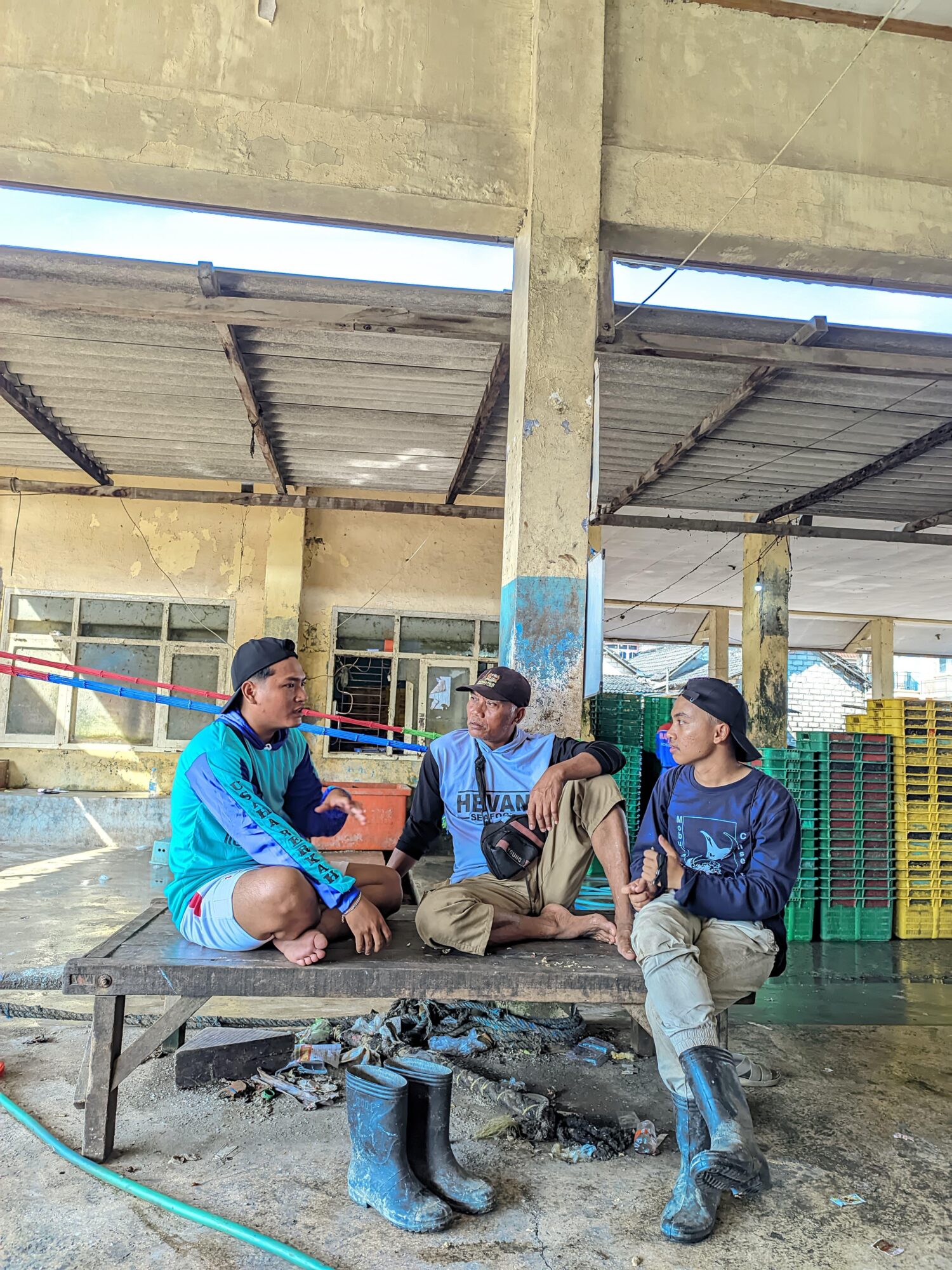
Regular discussions with fishers help build trust and strengthen collaboration. Photo © Dimas Ardiansah
Every release still comes with challenges. Fishing boat decks are busy and crowded right after a catch is brought on board, and the boats sit high above the water, making it tricky to safely lower or return large animals to the sea. Fishers have to think quickly and decide the best way to get the animal back into the water with as little harm as possible. Even so, they keep making that effort, because they know that every live release gives another chance to survive.
One hundred and twenty-eight released wedgefish may not be enough to save a population on their own. But each release means something just as important: a choice.