
A first-hand look at landing site surveys and specimen processing
At 8:30 AM I pack up my car with bags, trays, a cooler, and tissue extraction equipment as I prepare to head out for my weekly survey at one of the prime landing sites in the state of Johor, Malaysia facing the Malacca Strait.
An hour’s drive away from my house, I power through the morning rush hour traffic, rumbling trucks, and motorcycle-mounted workers as they head to the industrial area on the way to my destination.
Driving over the Sungai Pulai Bridge across the vast mangrove-lined estuary, the traffic subsides, and the roads become narrow as I enter kampungs (villages in Malay) surrounded by thick sawit (oil palm) plantations.
Eventually, I enter Pontian; a seaside town known for its fisheries and also pineapple produce. At the heart of the town is a large fish market mostly selling the day’s catch. Strewn across the floor are various types of fishes, however I have my eyes set on only a special group – rhino rays.
Heading to the back of the market I see the spot where they usually lump the less popular fishes among locals; a pile usually consisting of elasmobranchs (i.e. sharks and rays), marine catfishes, barracuda, and cobia. On most days there would be rhino rays piled on top or somewhere inside the pile, so I would need to get my hands dirty and dig through it. On other days there would be totally no rhino rays present, obliging me to purchase something nice to eat for dinner out of shame of coming home empty-handed.
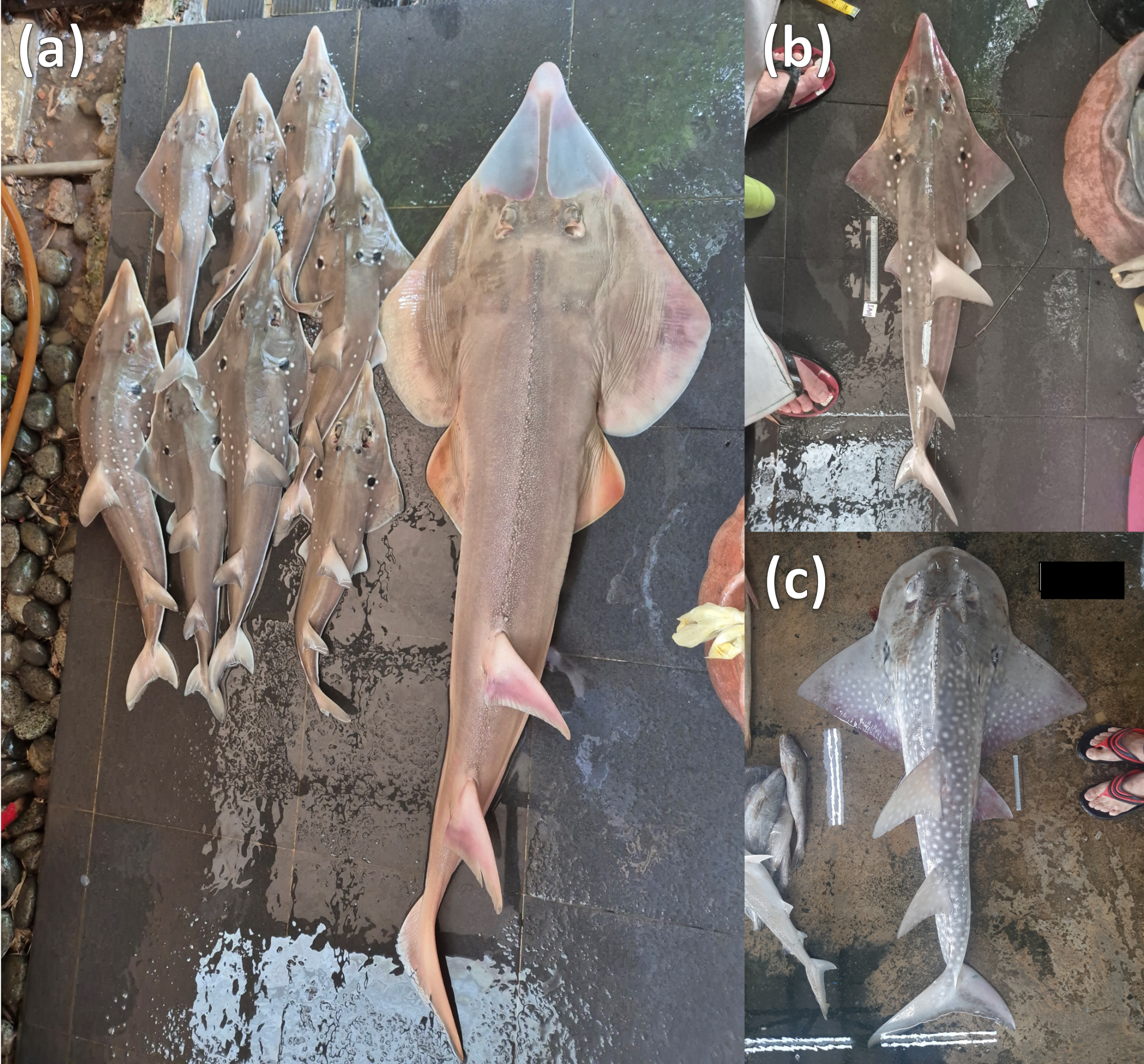
Rhino ray diversity at Pontian landing site; (a) eyebrow wedgefish (Rhynchobatus palpebratus), giant guitarfish (Glaucostegus typus); (b) bottlenose wedgefish (Rhynchobatus australiae); (c) bowmouth guitarfish (Rhina ancylostomus). Photo © Irsyad Pishal
Once I have found all the rhino rays I need, I signal to the workers to weigh them all for purchase; big or small. I make one final round around the market before paying for my rhino ray specimens and load them up into the car.
At home, I unload my specimens and clean them from all the fishy gunk. I then select the ones to process for the day – usually the larger ones – with the rest going into a big freezer to be processed at a later date. The specimens are photographed from various angles for the purpose of identification.
Next comes the painstaking process of recording morphometric measurements. Around 80 different body measurements are taken for the purpose of potentially distinguishing different species via subtle morphological differences, making a profile of size demographic, and linking these to their growth and diet.
Then, I dissect my specimens to extract the guts for diet analysis, tissues for DNA barcoding, and vertebrae for individual aging. All extracted materials are preserved for further processing at the lab.
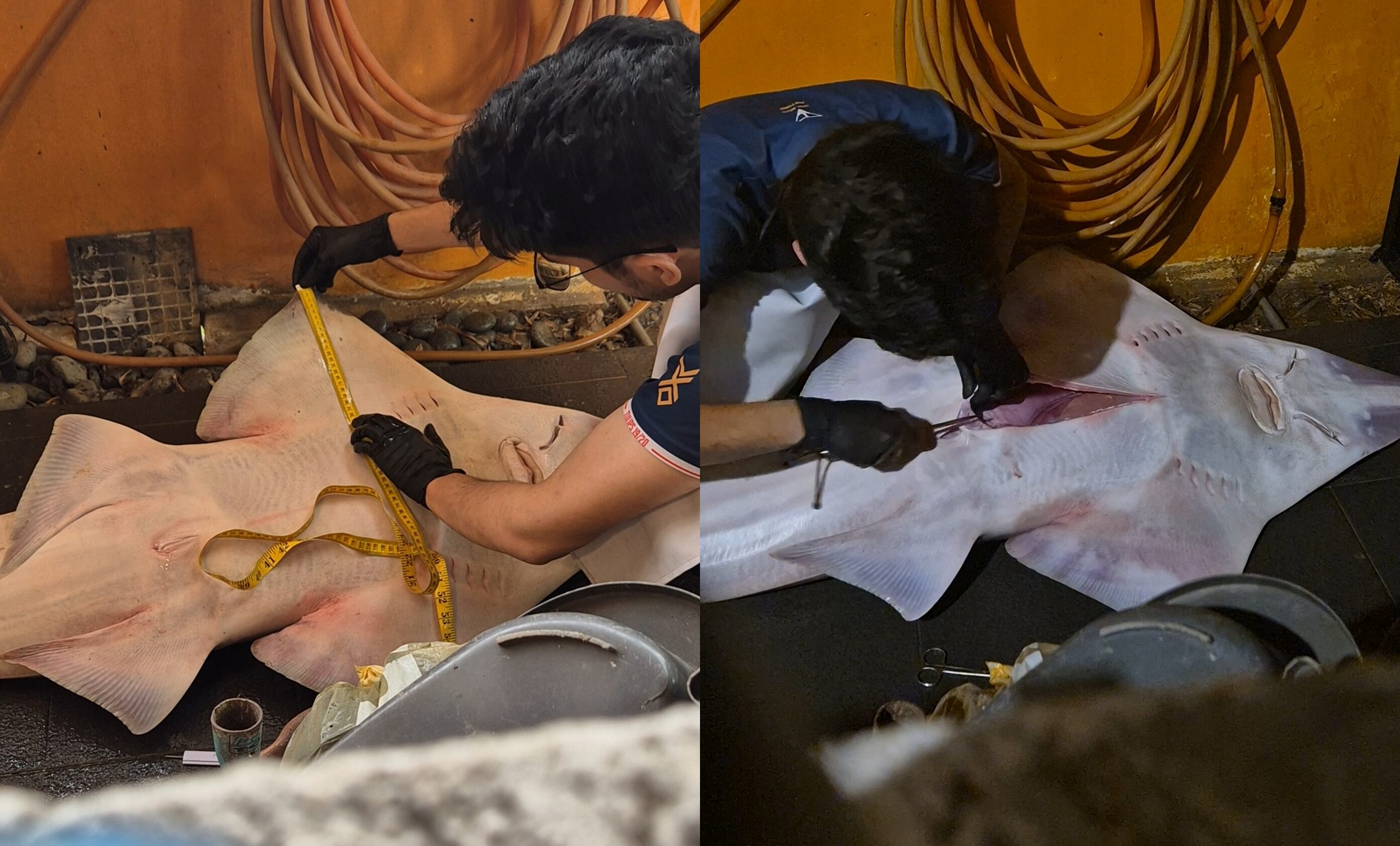
Measuring and dissection of an adult female eyebrow wedgefish specimen. Photo © Irsyad Pishal
Lastly, I bag all the other unused parts for disposal and clean up my work area.
Stay tuned for the next blog to see how the lab work goes!