
A Day in the Field for Ocean Conservation
Fieldwork is often imagined as a series of beautiful places and unforgettable wildlife encounters. While those moments certainly exist, they are only part of the story. Behind them are early mornings, hours spent preparing and carrying equipment, long days on boats with little comfort, sleepless nights, and plenty of waiting, hoping that patience will pay off.
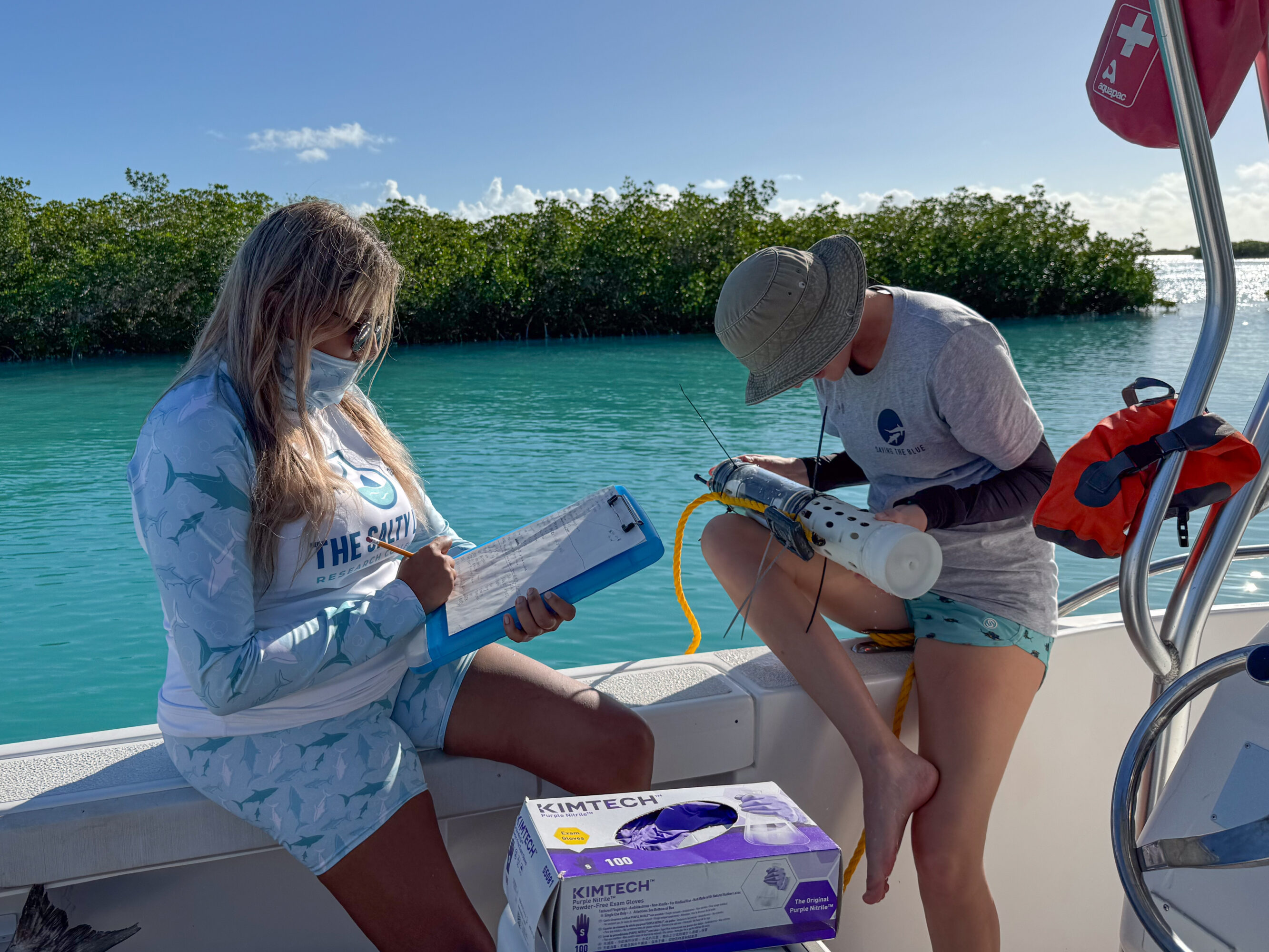
Preparing equipment to collect environmental DNA (eDNA) from fifty locations around Andros Island. Photo © Tristan Guttridge
In December 2025, I returned from my final field trip of the year to the Bahamas, where I joined an expedition with Saving The Blue. Our goal was to collect environmental DNA (eDNA) from fifty locations around Andros Island, helping to fill critical knowledge gaps about the elusive smalltooth sawfish (Pristis pectinata), a Critically Endangered species whose protection depends on knowing where it still persists.
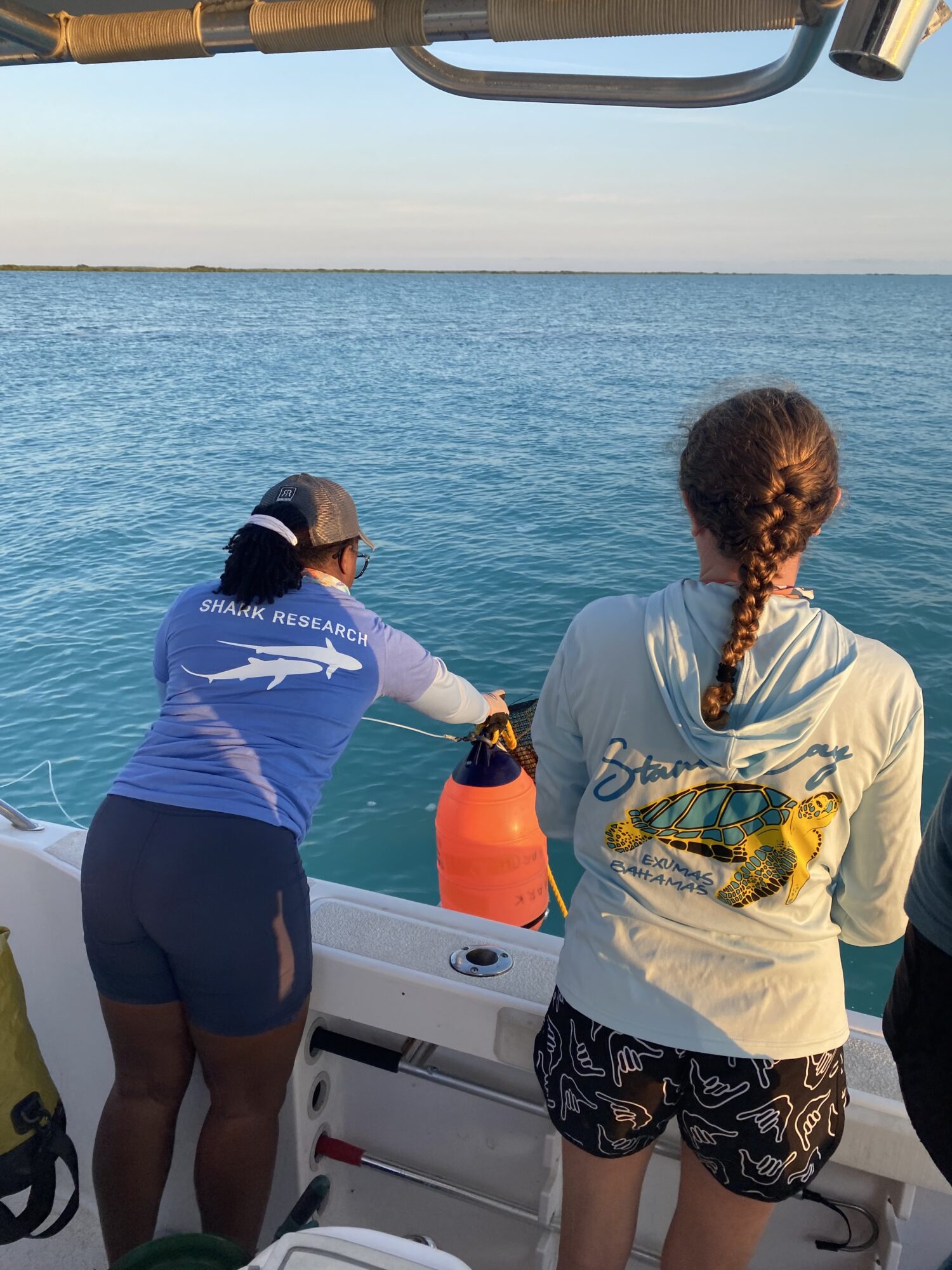
Setting drumlines around Andros Island. Photo © Tristan Guttridge
This expedition was unlike anything I had experienced before. Alongside eDNA sampling, we deployed large and small BRUVs (baited remote underwater video systems), checked acoustic receivers, and set drumlines to tag sharks. Each task contributing to a broader effort to better understand how shark and ray populations use these waters and help in their long-term conservation.
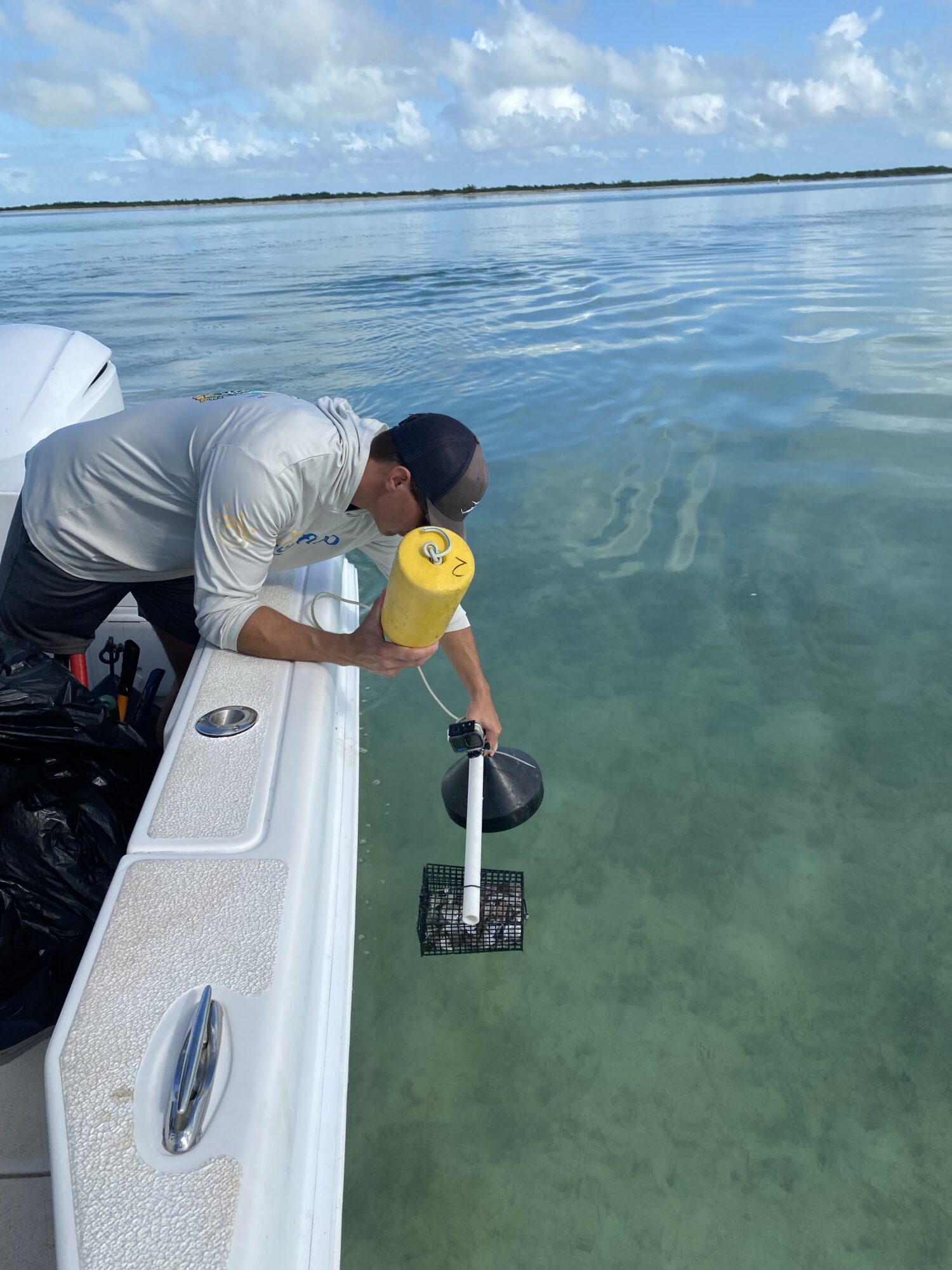
Deploying BRUVs to capture footage of sharks that come to investigate the bait. Photo © Mariana Andrade
One night, in particular, remains unforgettable. We left the dock at 14:00, prepared for a long night ahead. After collecting eDNA samples along the way, we reached a creek before sunset and began deploying drumlines and BRUVs. What followed was an incredibly active night, with one shark after another. Among them was a large female tiger shark that we successfully tagged both acoustically and with a SPOT (Smart Position or Temperature Transmitting) tag. Between moments of action were long stretches of waiting, fighting exhaustion while keeping watch.
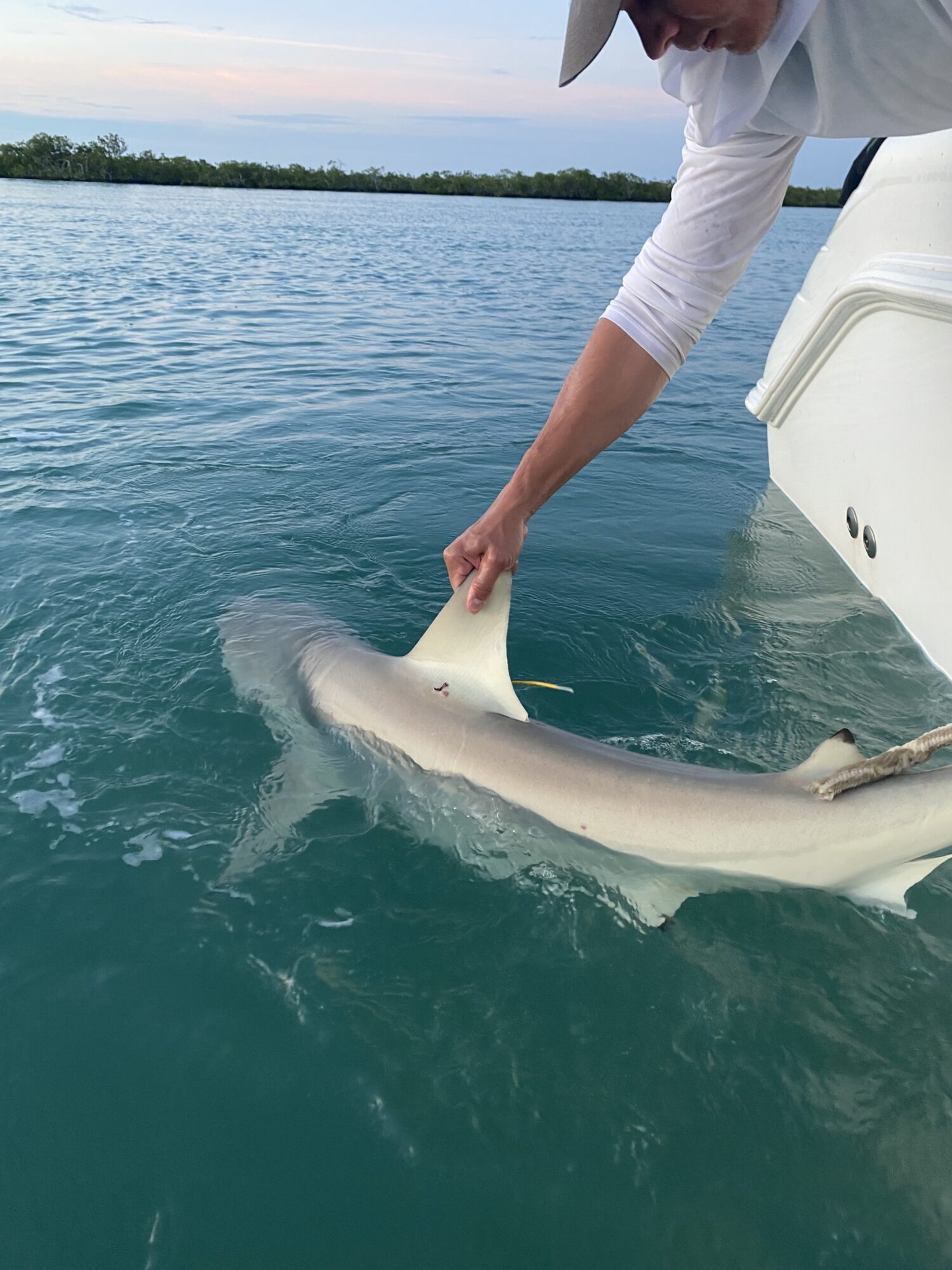
Releasing a blacktip shark after capture and tagging. Photo © Tristan Guttridge
Just before sunrise, rain set in and the cold increased. We headed back around 7:30, collecting more eDNA samples along the way, and finished all our work by early afternoon.
Now, back home and beginning to analyse the samples, I often think about that night. It was long and exhausting but deeply rewarding. That sense of accomplishment, of contributing alongside others to the protection of sharks, rays, and their habitats is what makes every cold, rainy night and all the waiting worth it. And yes, I would do it all over again.
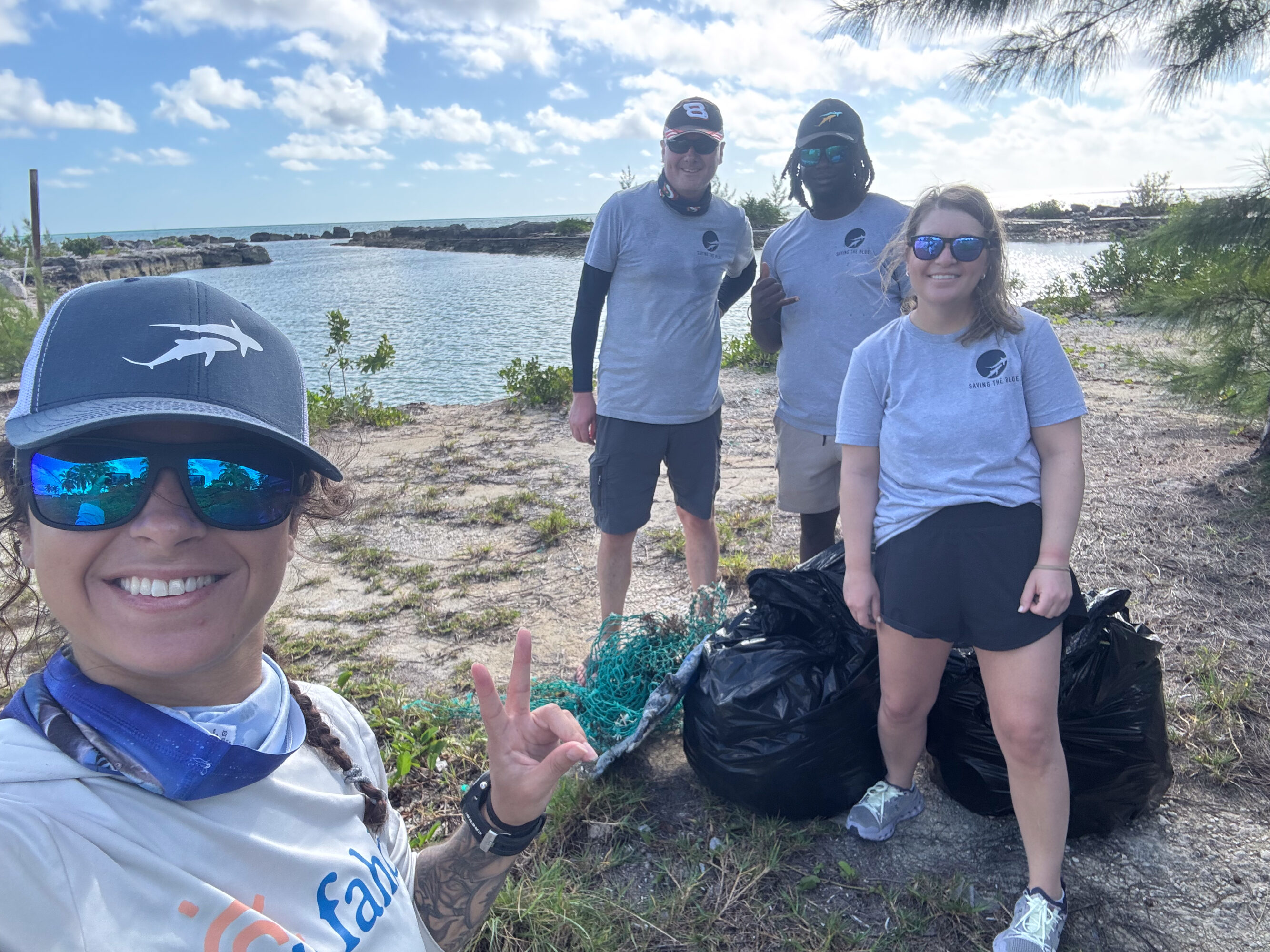
The team after a beach clean up. Photo © Mariana Andrade