
Saving stranded eggs in Coquimbo Bay
This is part of Coquimbo Bay (Chile) and the main study area for my project
Gracilaria chilensis, commonly known as pelillo, is a species of red algae native to Chile, fundamental to the national aquaculture industry as it is the main raw material for agar-agar production. Cultivated primarily in the Los Lagos, Bío-Bío, and Coquimbo regions, this algae grows in marine and intertidal estuarine environments, making it a key resource for artisanal fishers and exports.
The pelillo fish is also cultivated by artisanal fishermen (small-scale aquaculture) in the area, and it is there, in the algae, where the shorttail fanskate (Sympterygia brevicaudata) lays its eggs.
Unfortunately, due to the constant storm surges that have been happening over the last 10 years (I started collecting stranded eggs in 2017 after the great flood), algae remains on the beach, along with the eggs of various species of chondrichthyes – the most common being S. brevicaudata.
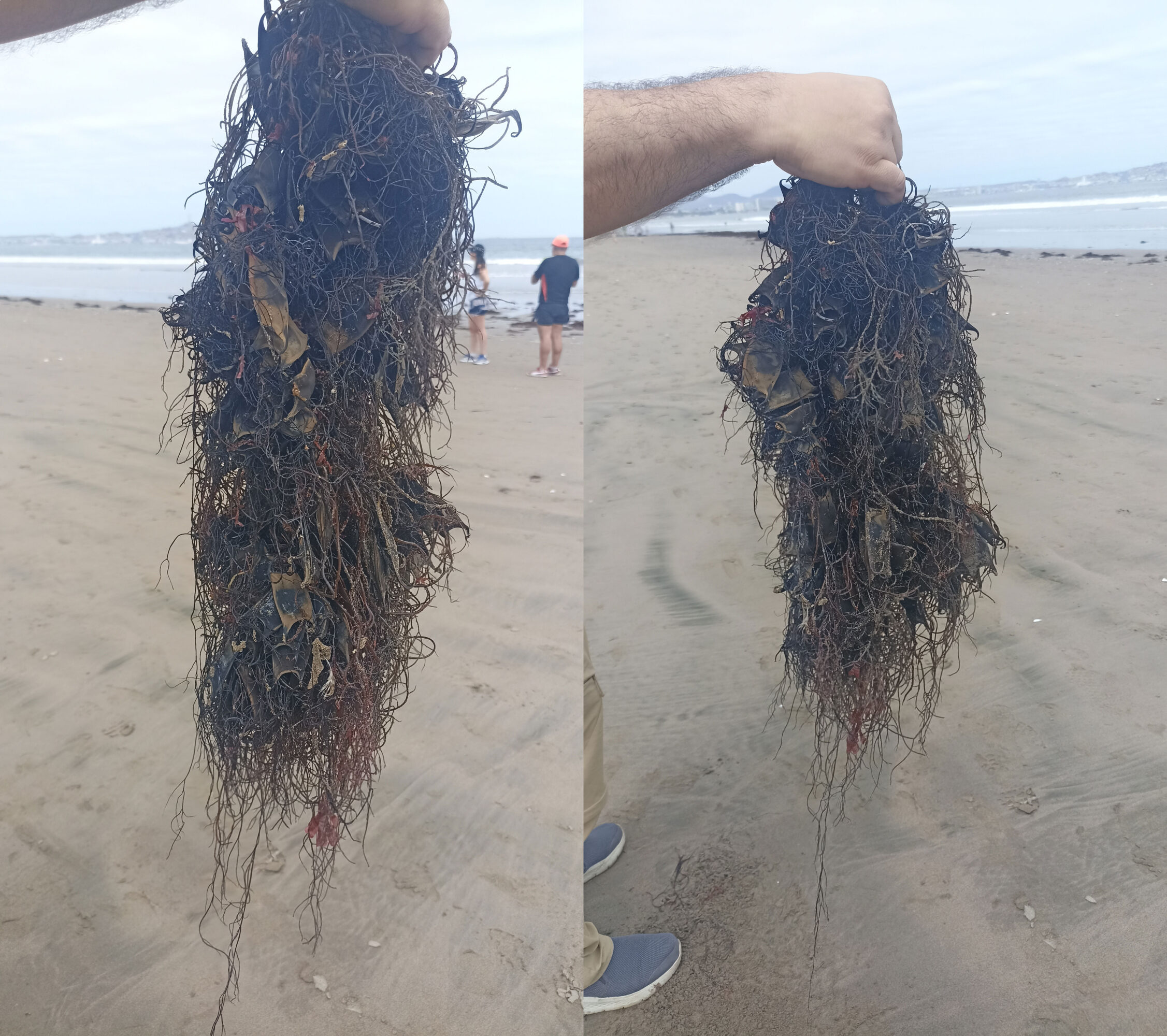
Pelillo, a species of red algae native to Chile, washed up with storm surges which still has elasmobranch eggs attached. Photos © Valentina Hevia-Hormazabal
In one of the videos, the Cross of the Third Millennium can be seen in the background (it is a 93-meter-high religious commemorative monument located on the top of El Vigía hill in Coquimbo) which can be seen from everywhere and serves as a reference point (it is towards the south of the bay)
Before the project, I collected the eggs whenever I could, or when I was out for a walk and found a viable one. During the project, I initially searched the area every day, until I discovered that the eggs appeared most frequently after swells, especially at low tide (May 2025). From then on, I started going there during swells. In addition, local fishermen (seaweed harvesters) also collaborate with me by informing me when they find eggs, so that I can go collect them.
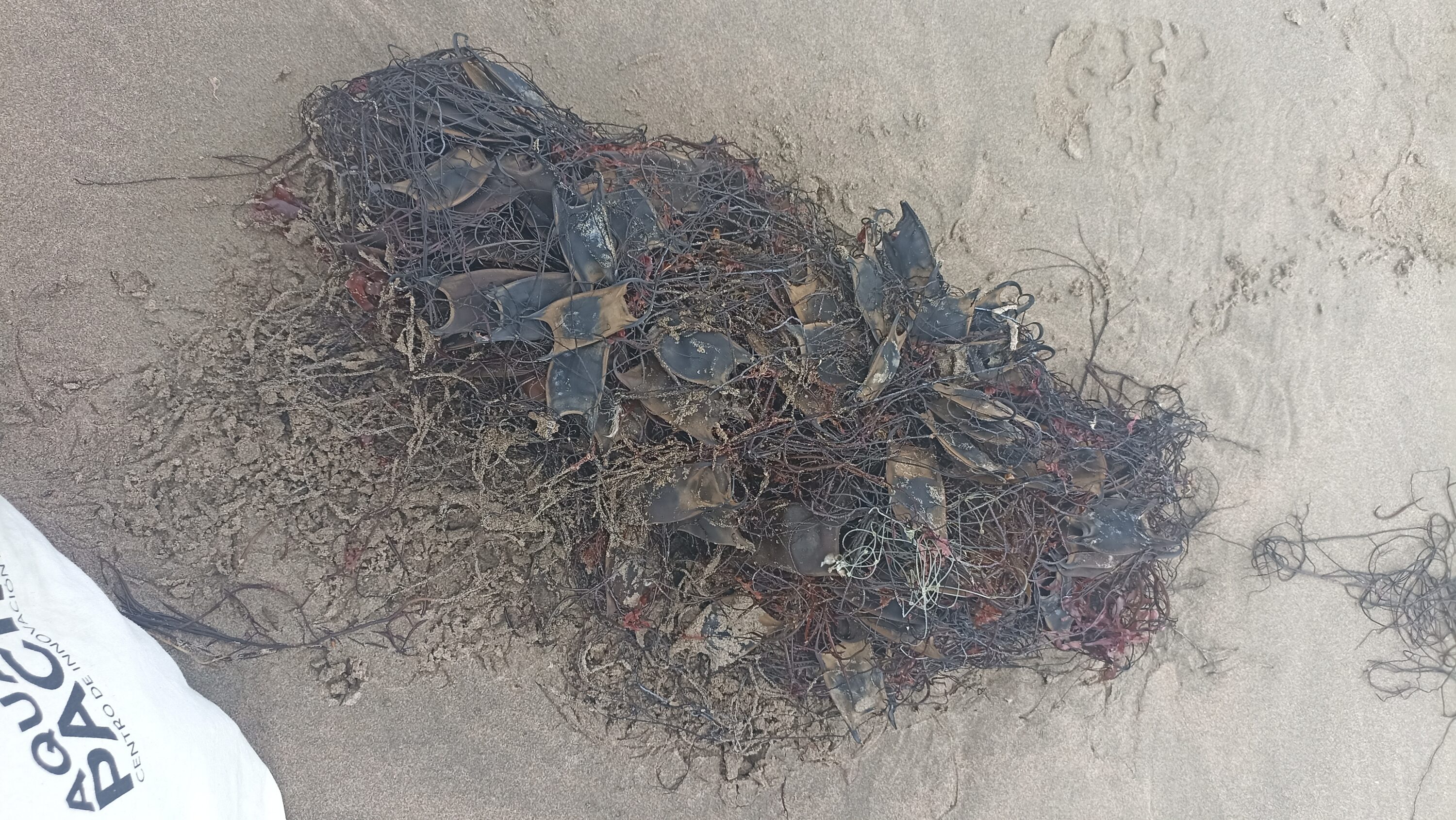
Elasmobranch eggs, the vast majority of which are usually S. brevicaudata, attached to a pelillo washed up on shore. Photo © Valentina Hevia-Hormazabal
We now have better facilities next to the aquarium of the Faculty of Marine Sciences, at the Universidad Católica del Norte ( Coquimbo), where the eggs are kept until they hatch and the juveniles are released in the same area where the eggs were found.
Furthermore, I submitted a report to Chile’s Ministry of the Environment in 2025 detailing the case of S. brevicaudata. As a result, the species is now officially listed by the Chilean state and included in the IUCN with updated information.
The list of new species was approved in 2025, with number 21 being S. brevicaudata,