
Mahé Ocean Murals brings the ocean to the streets of Victoria, Seychelles
Victoria is a city with the ocean in its veins. The breeze carries with it a metallic tang of ozone and salt. Seabirds line the roof of the mayor’s office and wheel above the esplanade, where azure water can be glimpsed in the narrow gaps between craft kiosks, each laden with shell necklaces, baskets woven from palm leaves, a rainbow of sarongs.
And, as of this year, seascapes adorn the city’s very walls. Mahé Ocean Murals – a public art initiative led by international non-profit Pangeaseed and presented and supported by the Save Our Seas Foundation with the Seychelles Ministry for Tourism and Culture – ran from 20 to 30 March 2026. It brought together 12 artists from Seychelles and overseas in Victoria, the island nation’s capital city, to collaborate with Seychellois researchers and translate local ocean science into large-scale murals across the cityscape. Over 10 days, blank walls were transformed into 12 vibrant artworks, each depicting its own story of life beneath the waves.
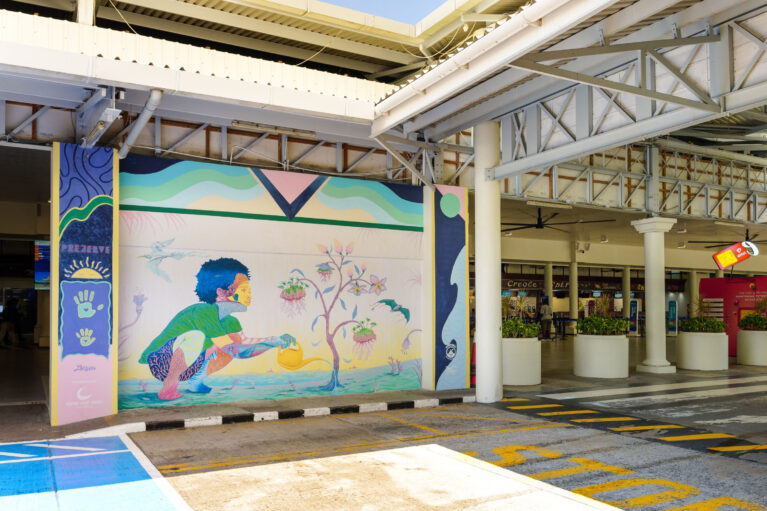
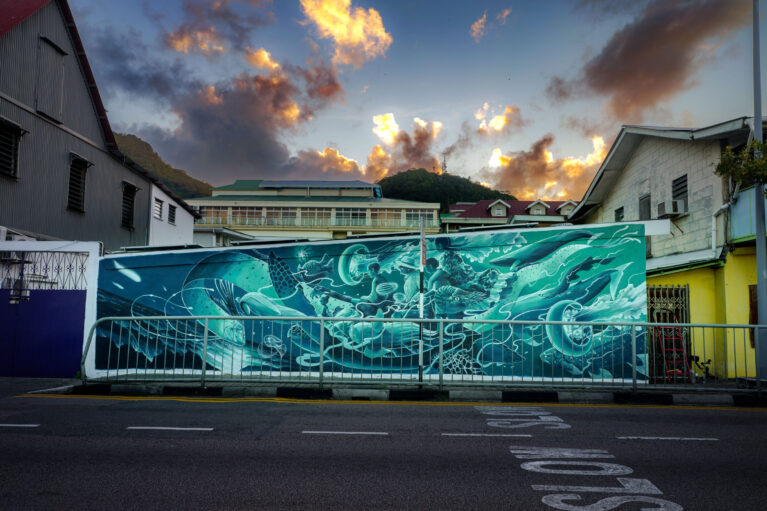
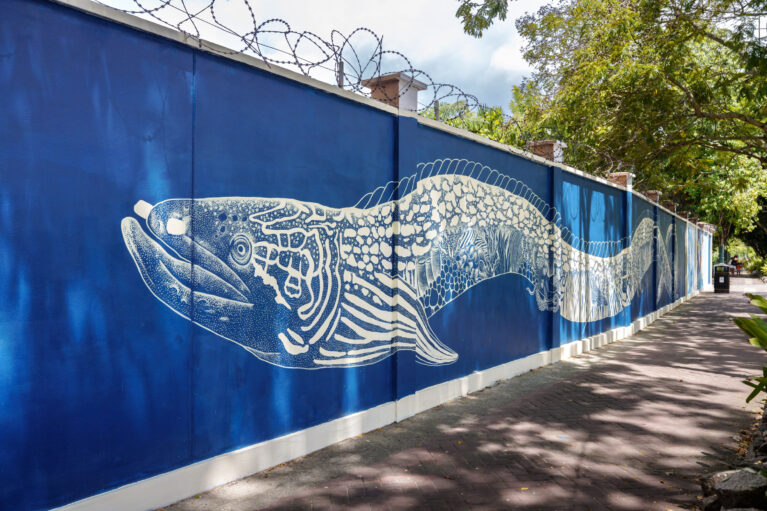
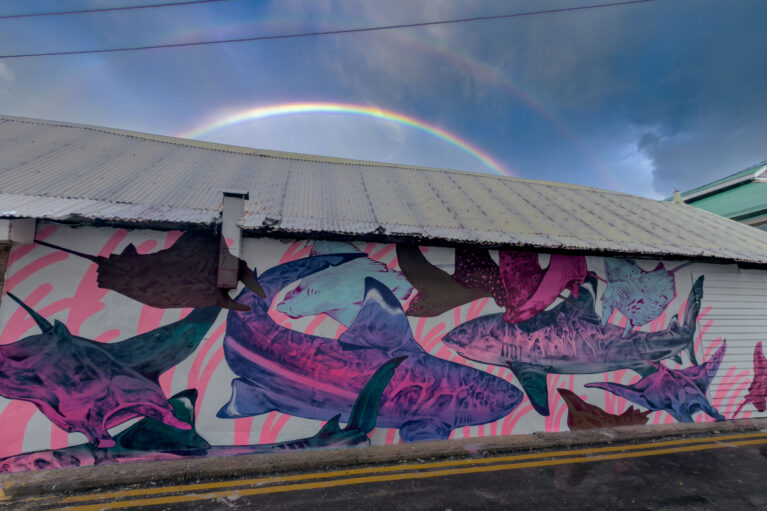
The result is a lasting public art trail that residents, students and travellers encounter during their everyday lives. Playful sharks and rays, painted in vivid hues, greet shoppers on their way to the markets. People withdrawing cash from the ATM on Albert Street now do so surrounded by colourful mangroves, sea-grass beds and coral reefs. Across the road, passers-by are immersed in the almost galactic, alien-like world of the deep sea. Students walk to school beneath a gargantuan mottled eel, telling its story of epic migration from freshwater to the open ocean, or play beneath floating jellyfish and swirling manta rays. Even at the country’s front door – Seychelles International Airport – visitors are met by a gigantic lionfish.
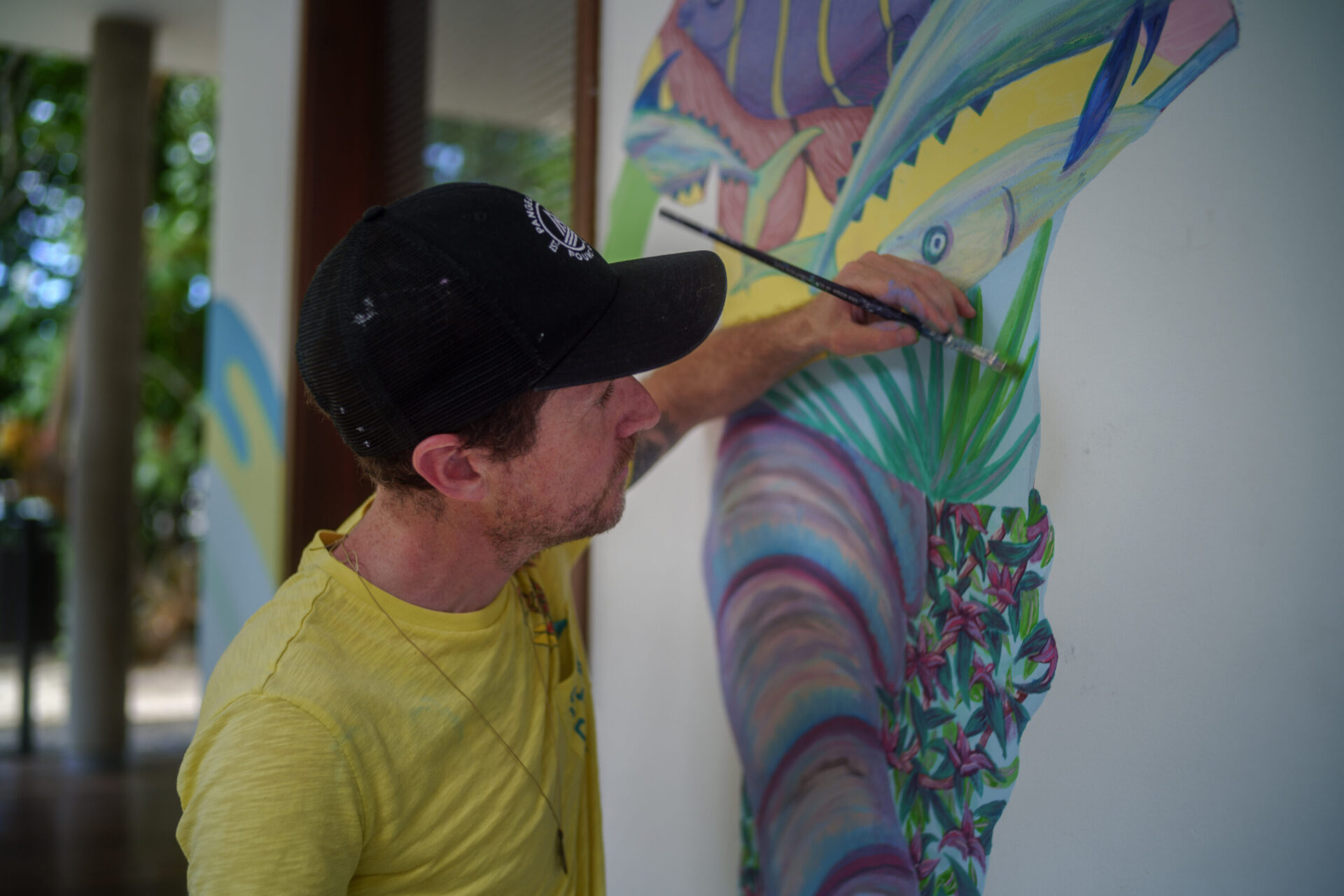
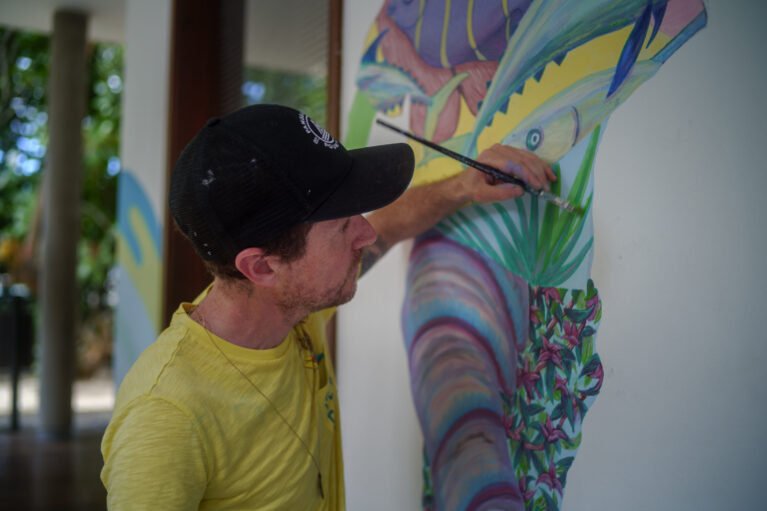
Artist, Ladislas Chashignot, adds colourfu strokes to the walls of Seychelles International Airport. Photo © Yoshi Yanagita
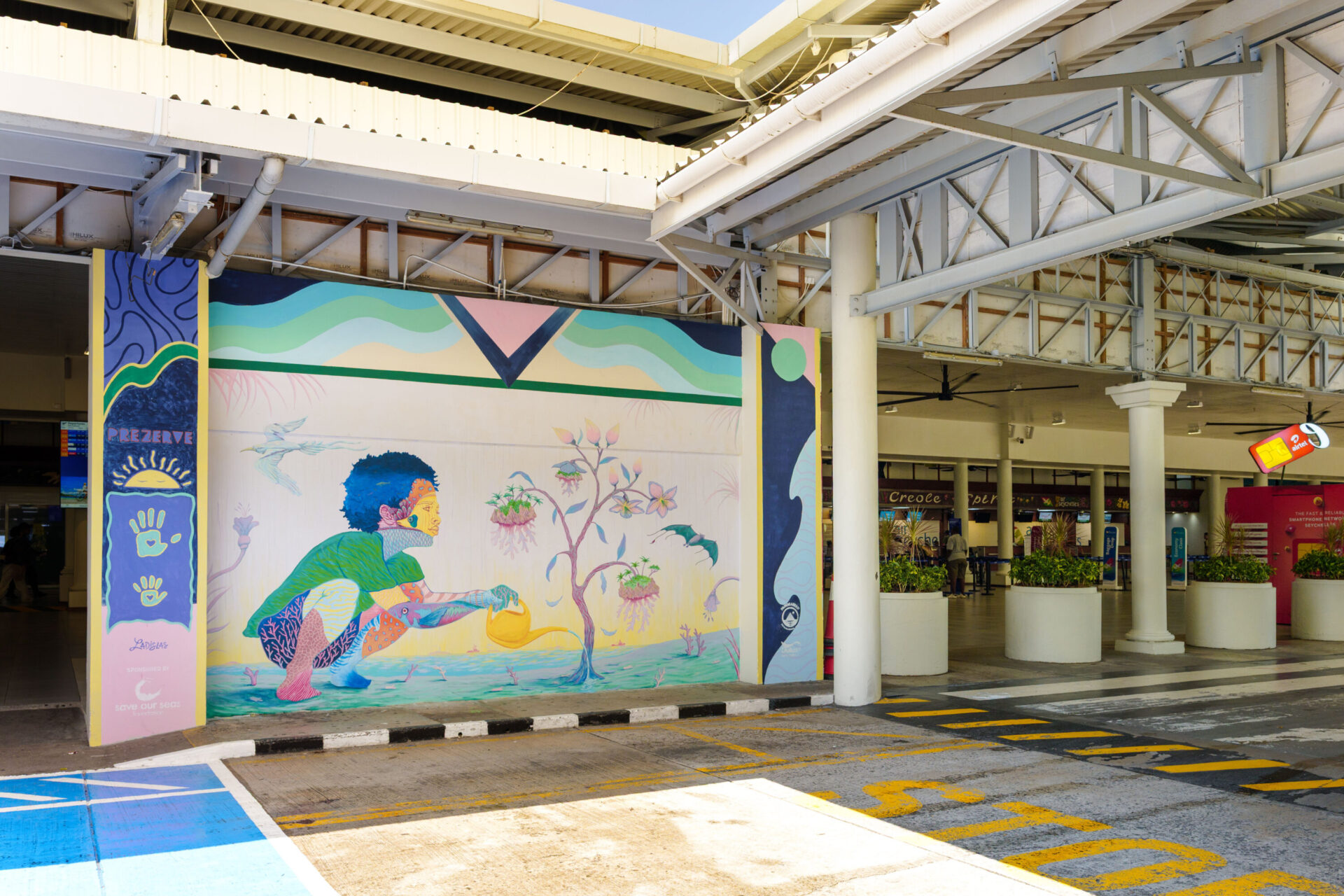
Jardin’Océan imagines the ocean as a garden worth tending, a living economy that gives back when it is cared for with intention. The work reflects a place where the ocean as resource, responsibility and future is not theory, but national policy. Photo © Yoshi Yanagita
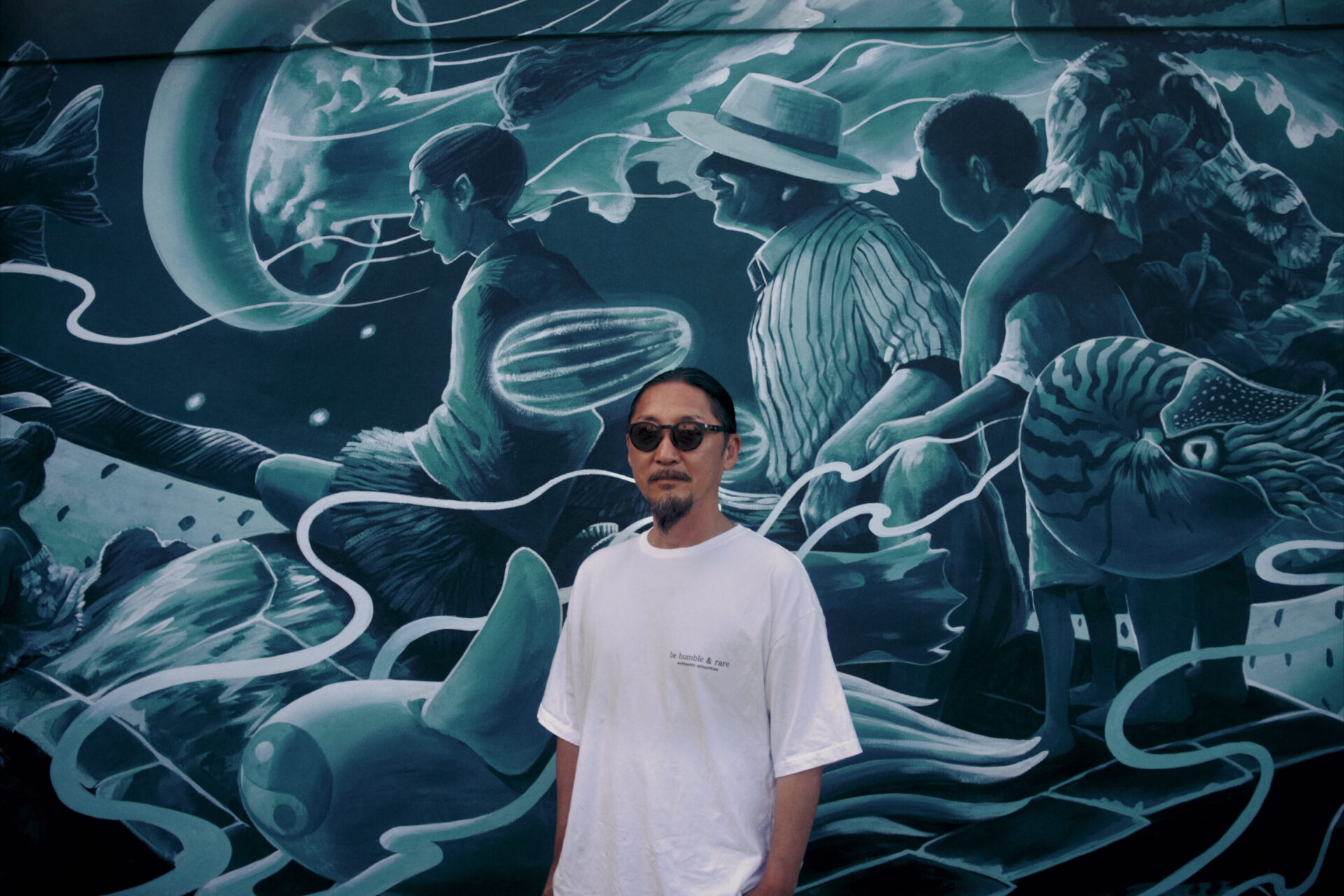
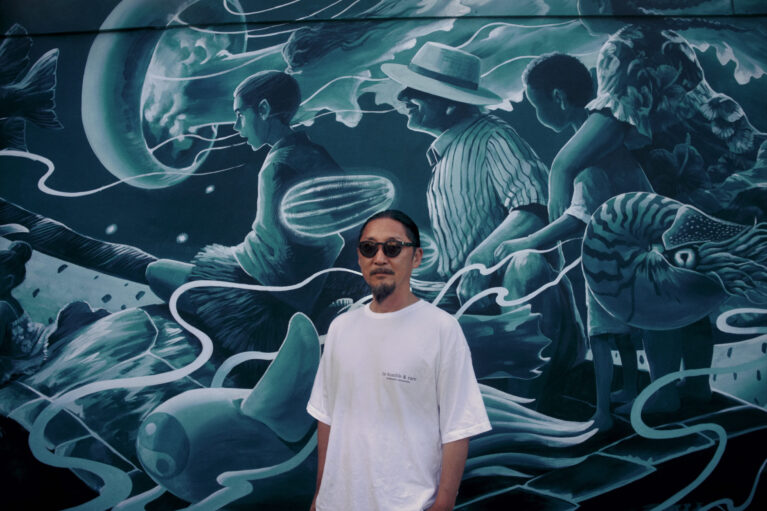
Artist Kensuke Takahashi presents Tides Beyond Time. Photo © Yoshi Yanagita
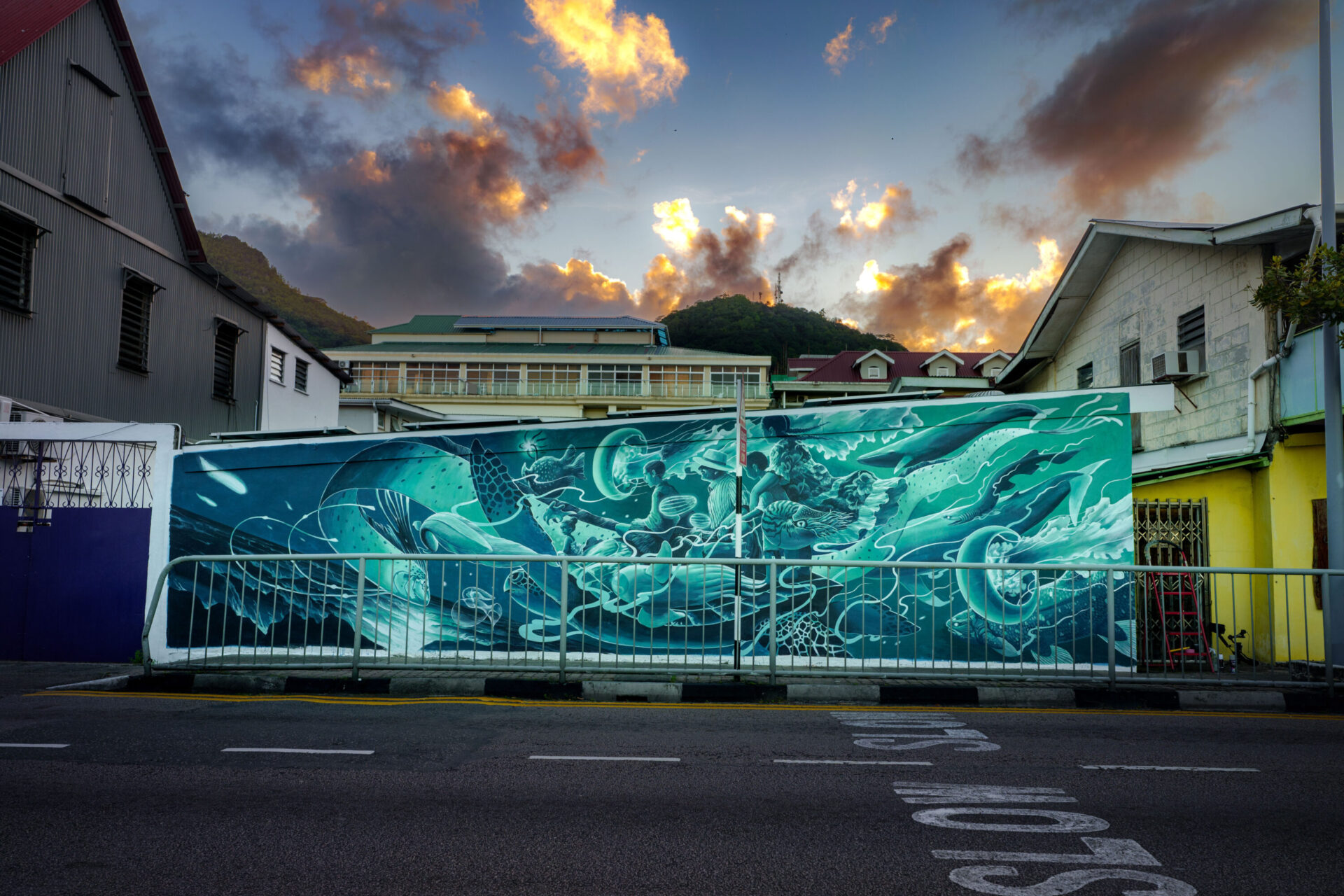
Tides Beyond Time brings Seychelles’ deep sea into view, a vast, dark, and largely unexplored world that makes up most of the nation’s ocean territory.Photo © Yoshi Yanagita
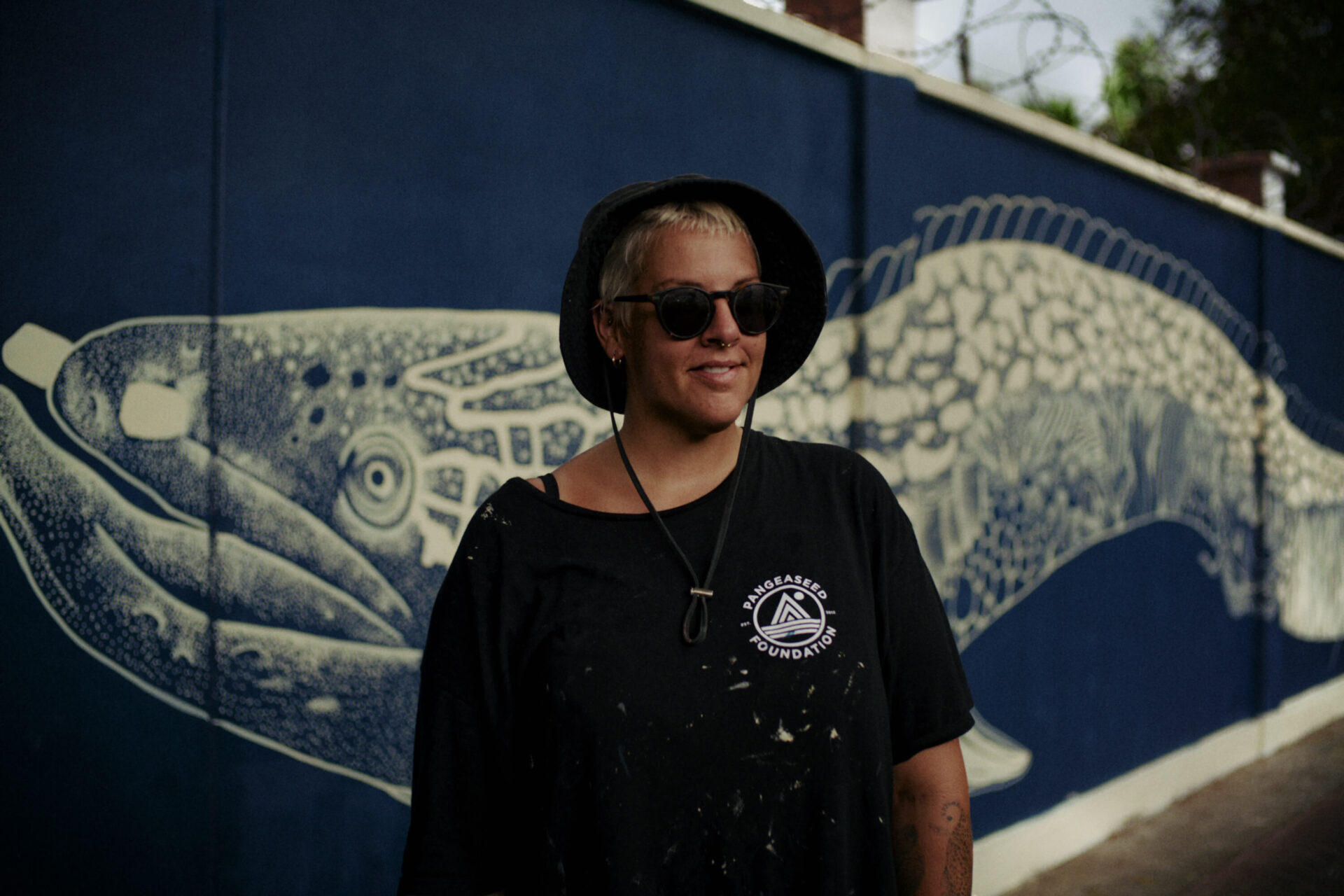
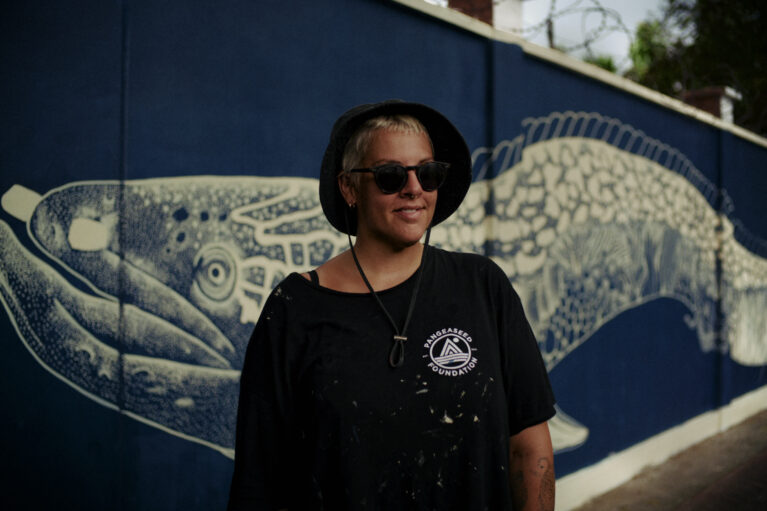
Artist Victoria Firth transformed the walls of English River Secondary School into a daily reminder that what happens inland ultimately reaches the sea. Photo © Yoshi Yanagita
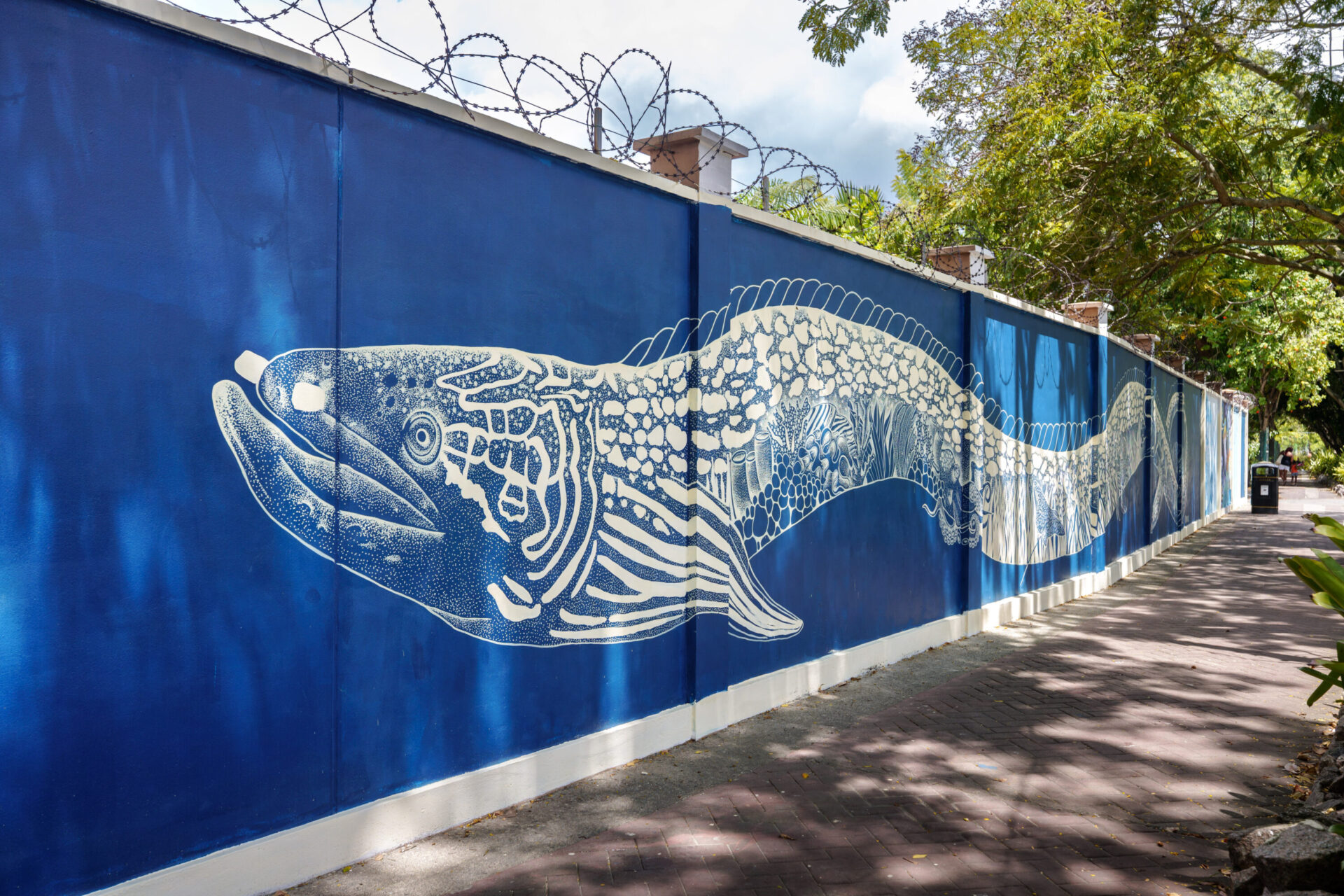
An Incredible Journey follows the migration of the mottled eel as a living thread from freshwater streams to the open ocean, revealing how island ridges, rivers and reefs are deeply connected. Photo © Yoshi Yanagita
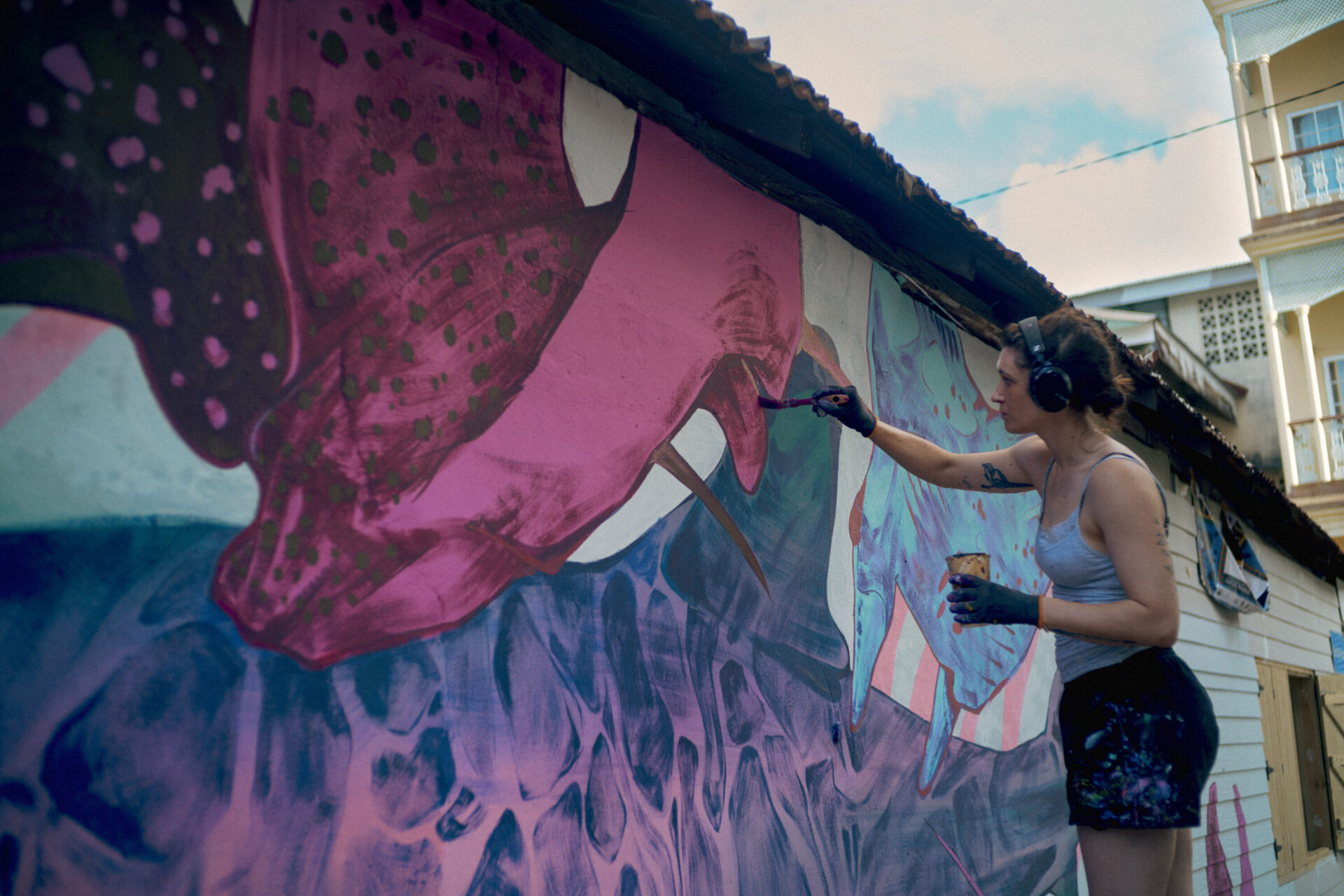
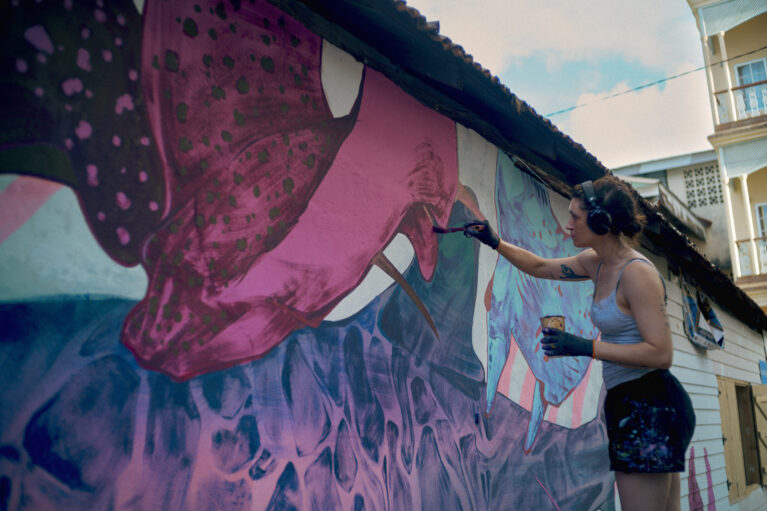
Artist George Rose reframes sharks and rays on oen of Victoria's busiest market corridors. Photo © Yoshi Yanagita
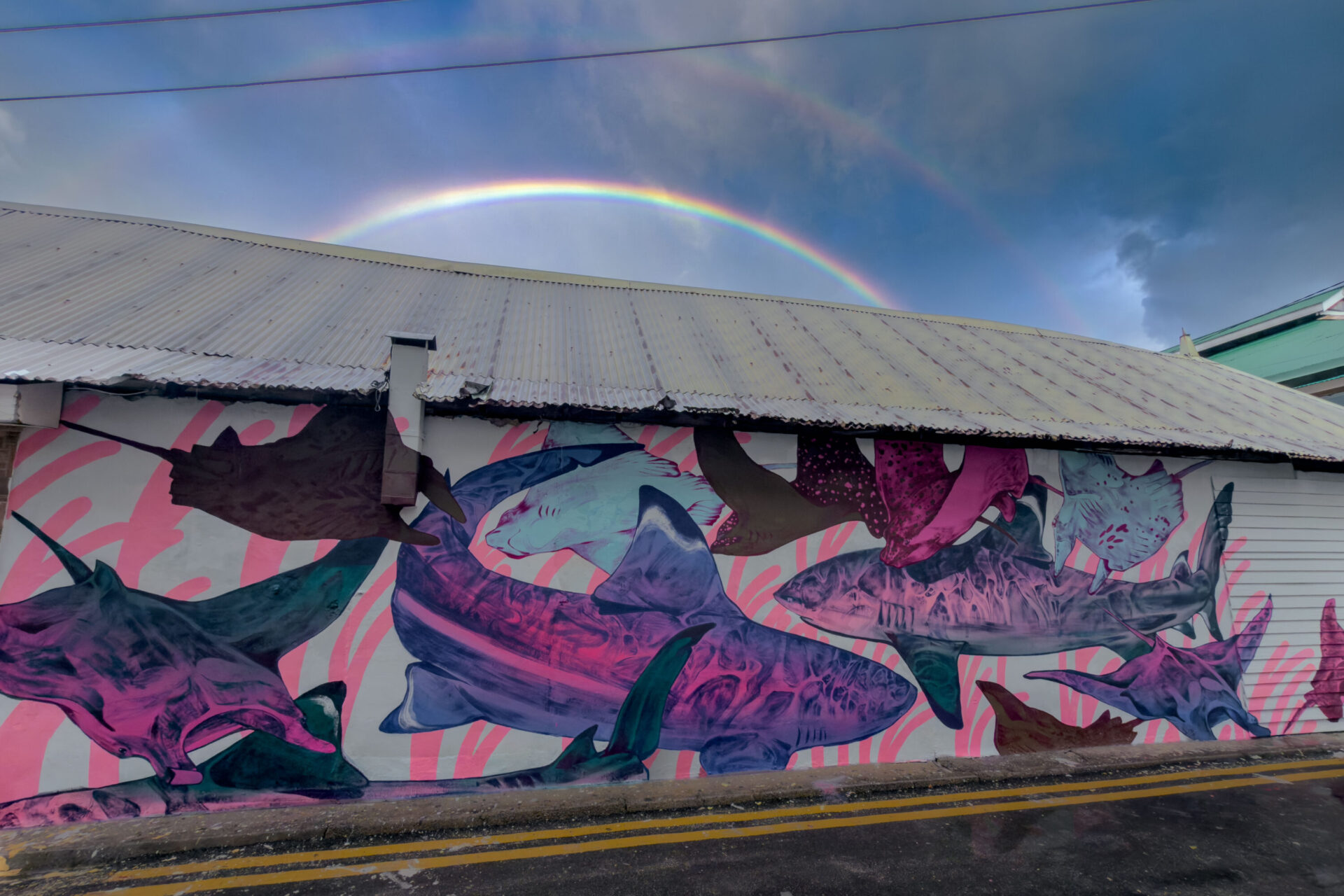
Play Mates reframes sharks and rays, so often misunderstood and feared, as playful, essential members of a healthy ocean. George brings scientific grounding to a joyful, public-facing celebration of species that deserve curiosity, respect and care.Photo © Yoshi Yanagita
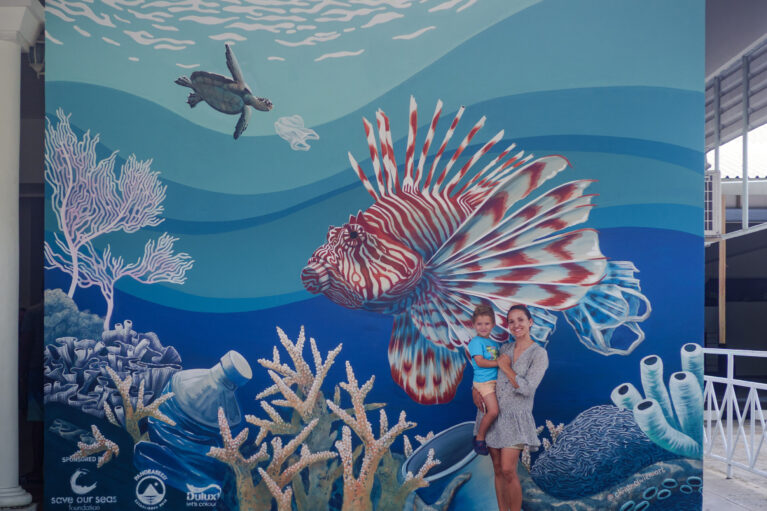
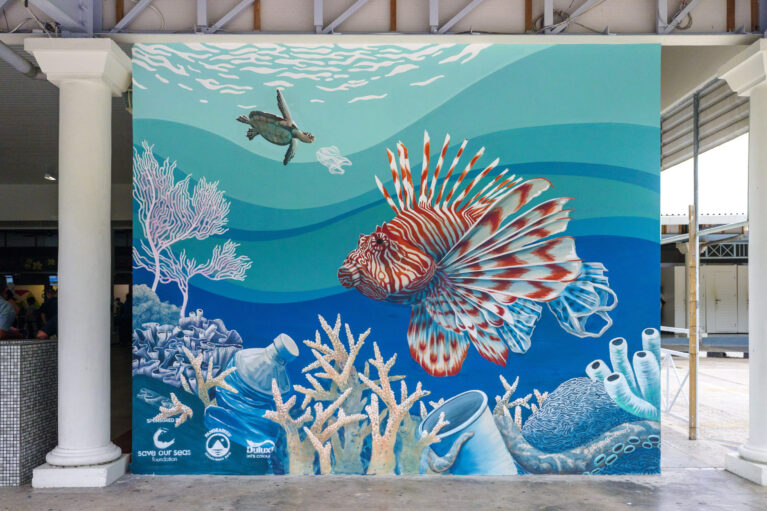
These murals don’t just portray Seychelles’ marine environment; they weave threads of ocean science and conservation into people’s day-to-day existence. Artists worked directly with local researchers to bring their study subjects to life so that each piece portrays a real conservation theme. For example, Roots to Reef – the mural that now embellishes the wall of the ABSA bank – was created by Seychellois artists Rennick and Jeanne Charlette from an expert brief written by local ecologists, including legendary sea turtle and sea-grass scientist Dr Jeanne Mortimer. Its message is one of connectivity; all ecosystems, from mangrove forests to sea-grass meadows and coral reefs, are interlinked, working together to protect Seychelles’ shores. The lionfish in the airport, painted by Christi Oliver Savy, confronts travellers with the reality of plastic pollution; it has plastic wrapped around its tail and swims above a reef where plastic bottles are embedded in the coral.
Public art has a unique, disarming way of communicating these complex and often difficult issues. Speaking in a video of the event produced by the Save Our Seas Foundation, marine biologist Sheena Talma, who provided the brief for Japanese muralist Kensuke Takahashi’s portrayal of the deep sea, Tides Beyond Time, describes how art can build a bridge between science and the public. ‘Art transcends all culture, all languages,’ she says. ‘The great thing about art is that we can all look at an image and think about its significance in such diverse ways.’
The power of art and storytelling to transform how people think, feel and act for the ocean is at the heart of Pangeaseed’s work. Since 2010, the organisation has facilitated collaborations between scientists, artists and local communities in locations around the world, resulting in 550 ocean murals in more than 20 countries.
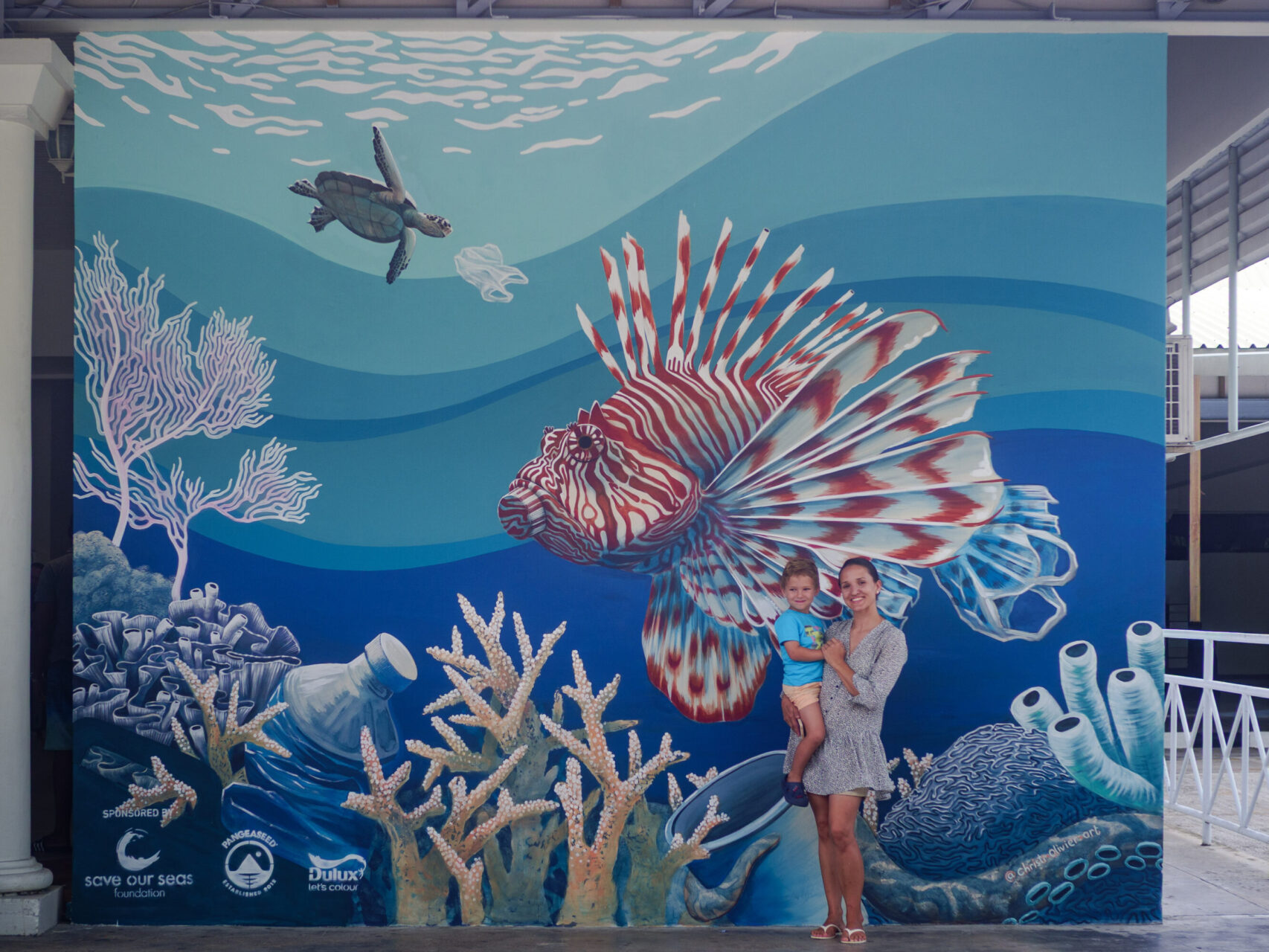
Artist Christi Olivier Savy presents Altered. Photo © Yoshi Yanagita
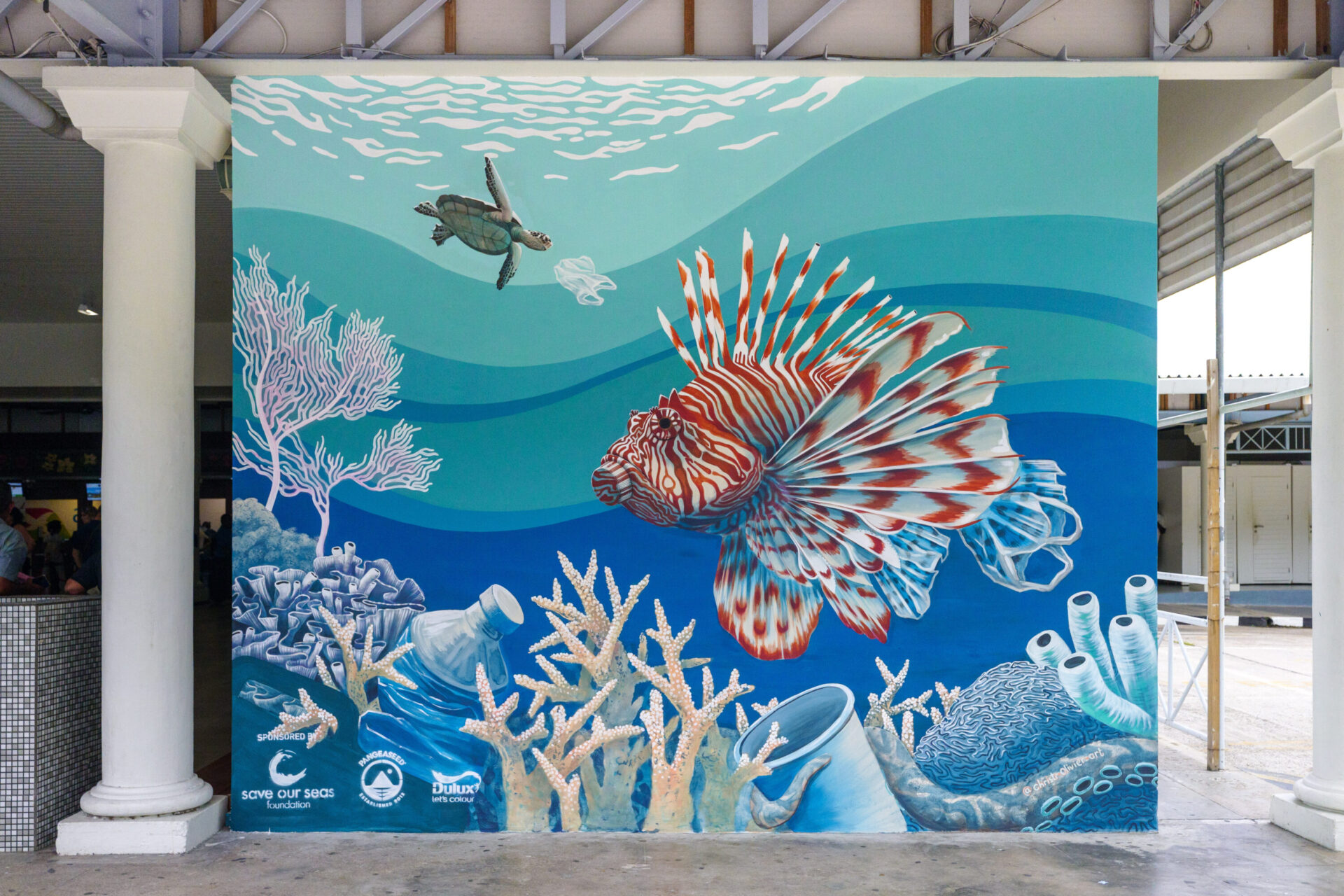
At the country’s front door, Seychelles International Airport, Altered confronts arriving and departing travellers with the cost of plastic pollution, reminding us that what we discard does not disappear; it reshapes the ocean. Photo © Yoshi Yanagita
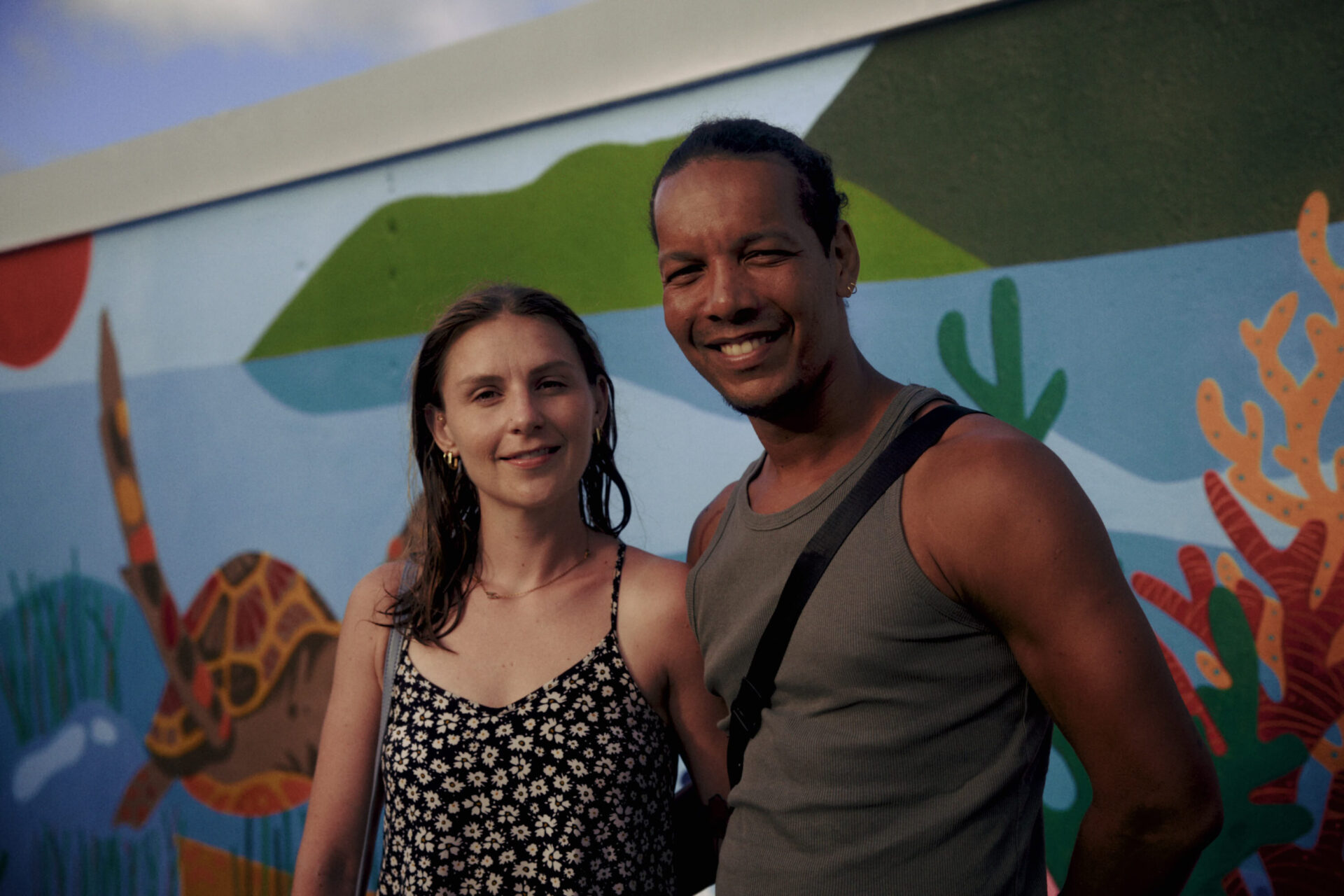
Artists Rennick and Jeanne Charlette presents Roots to Reef. Photo © Yoshi Yanagita
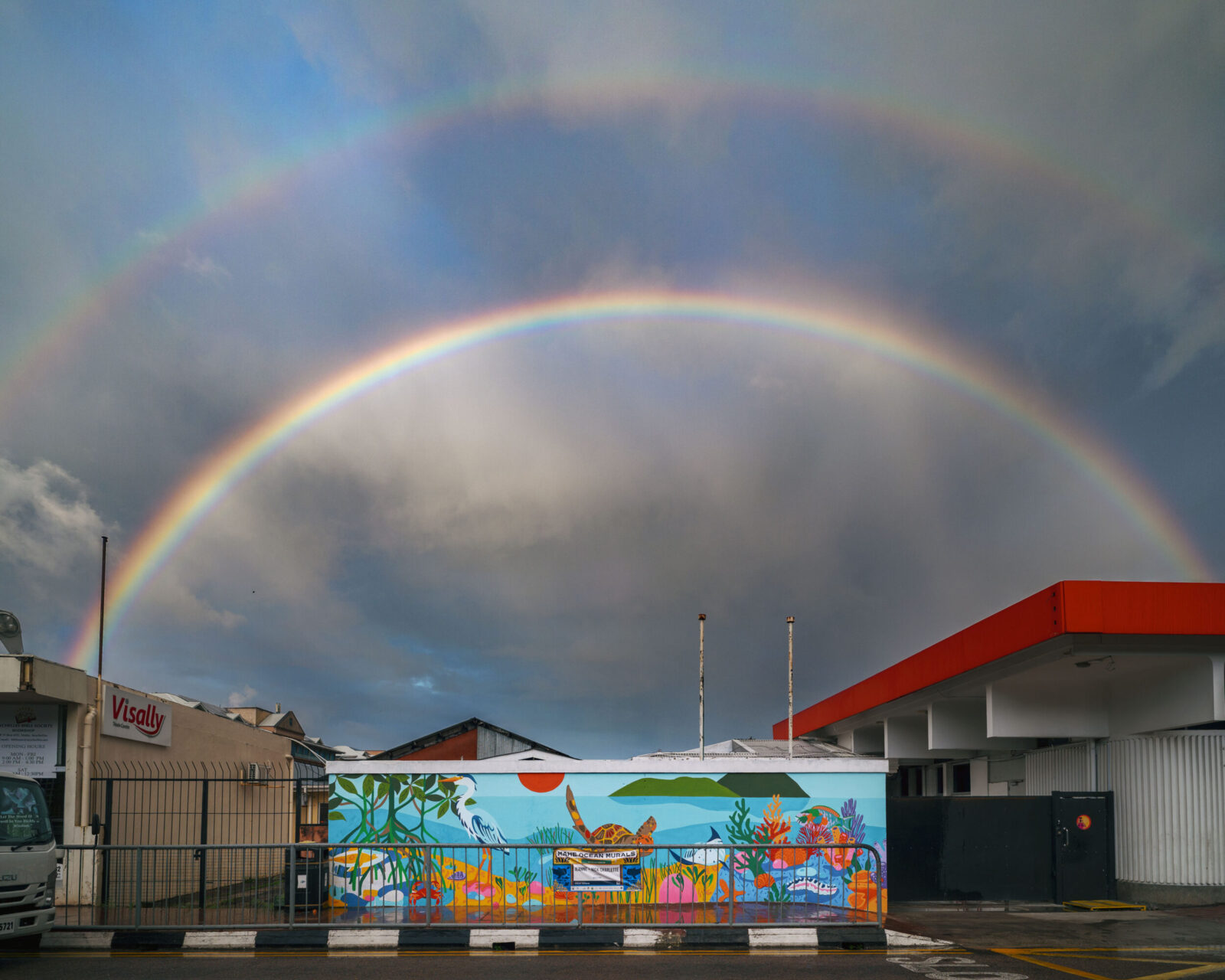
Roots to Reef traces the connected coastal ecosystems that help protect Seychelles’ shores, from mangrove roots to seagrass meadows to coral reefs. Photo © Yoshi Yanagita
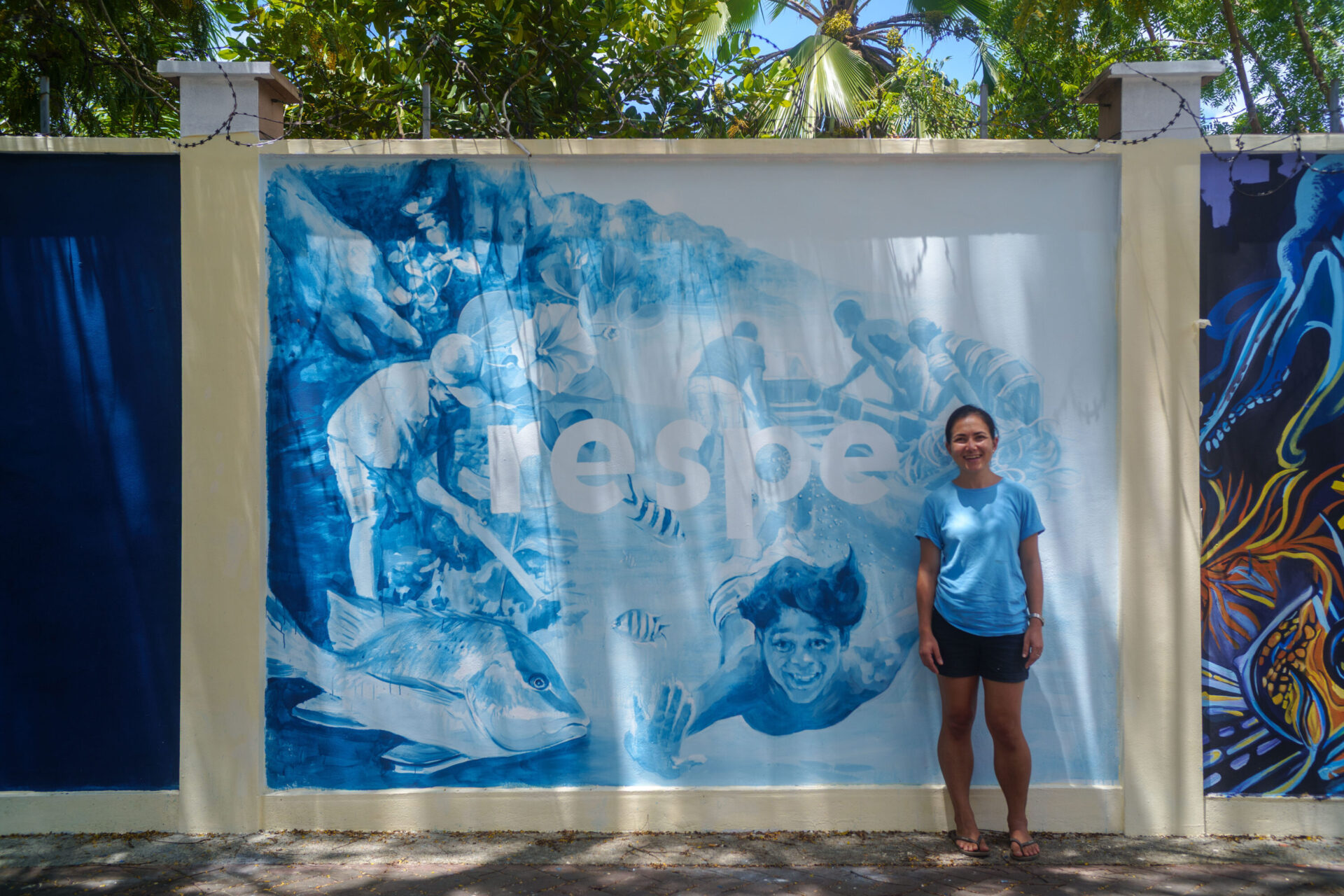
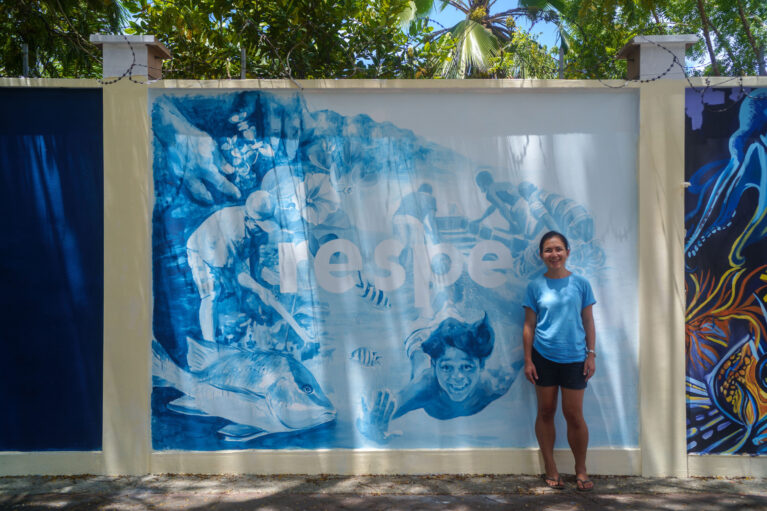
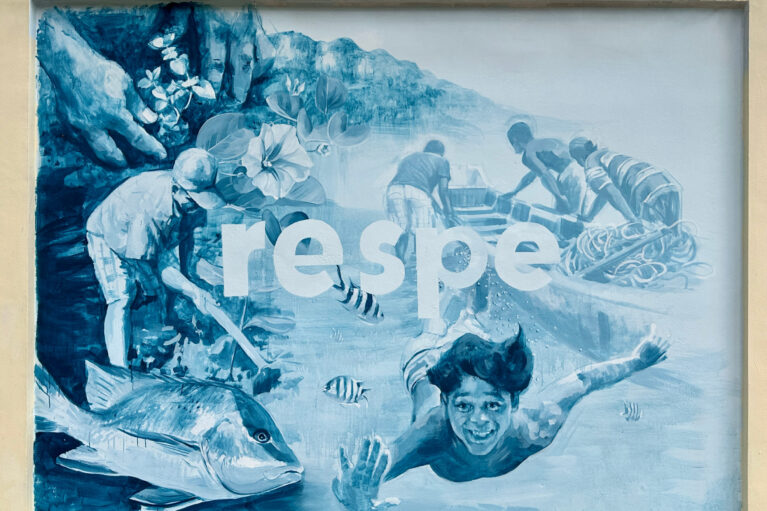
Artist Zoe Chong-Seng presents Respe (Respect). Photo © Yoshi Yanagita
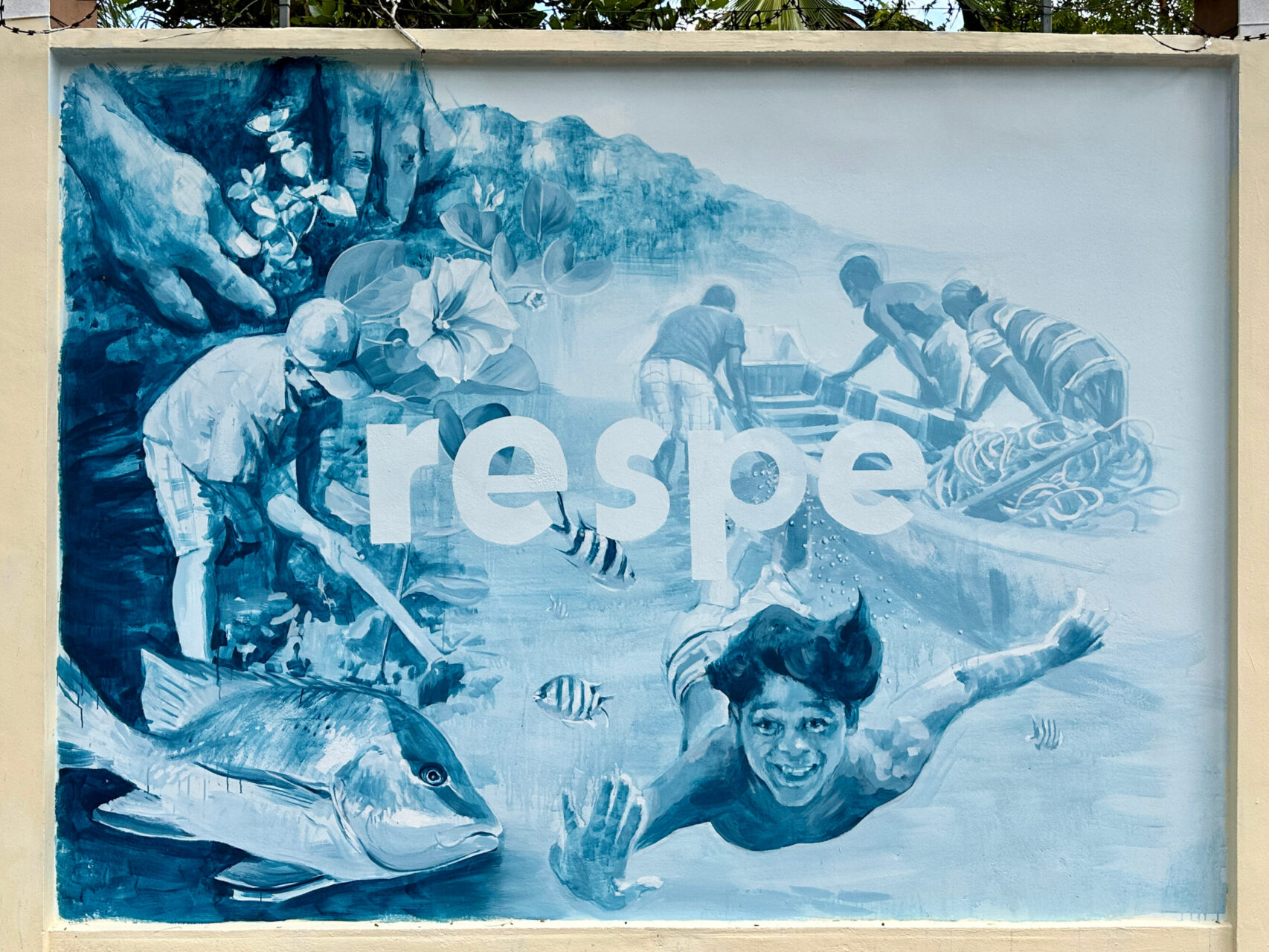
Respe, Creole for respect, distills the project into a simple, powerful idea: the ocean houses us, nourishes us and asks for our care in return. Photo © Tre Packard | PangeaSeed
In bringing ocean murals to Mahé, Pangeaseed aimed to celebrate Seychelles’ role as a global leader in marine conservation. The nation has already surpassed international conservation goals, with more than 30% of its ocean territory legally protected. It also pioneered the world’s first Sovereign Blue Bond in 2018 and features internationally significant marine ecosystems. ‘We wanted to take this opportunity through Mahé Ocean Murals to help harness the power of art to help celebrate that leadership,’ Akira Biondo, Director of Operations for Pangeaseed, explains in the video. ‘And we wanted to connect with the community to help them feel a sense of pride and ownership of the ocean that surrounds them.’
SUPPORTING THE NEXT GENERATION OF SEYCHELLOIS MURALISTS
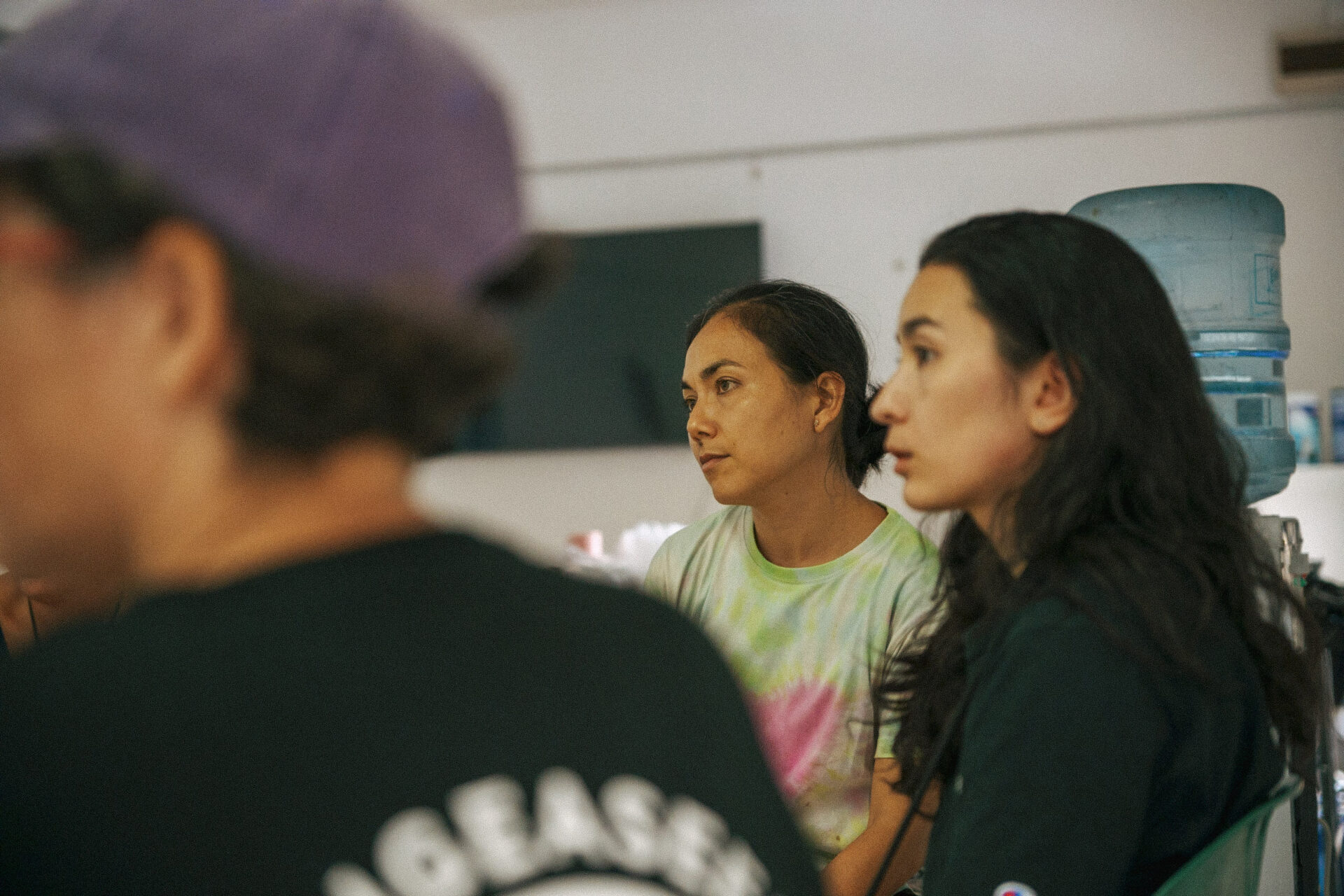
The project was never only about the walls, but about who would paint them next. Photo © Yoshi Yanagita
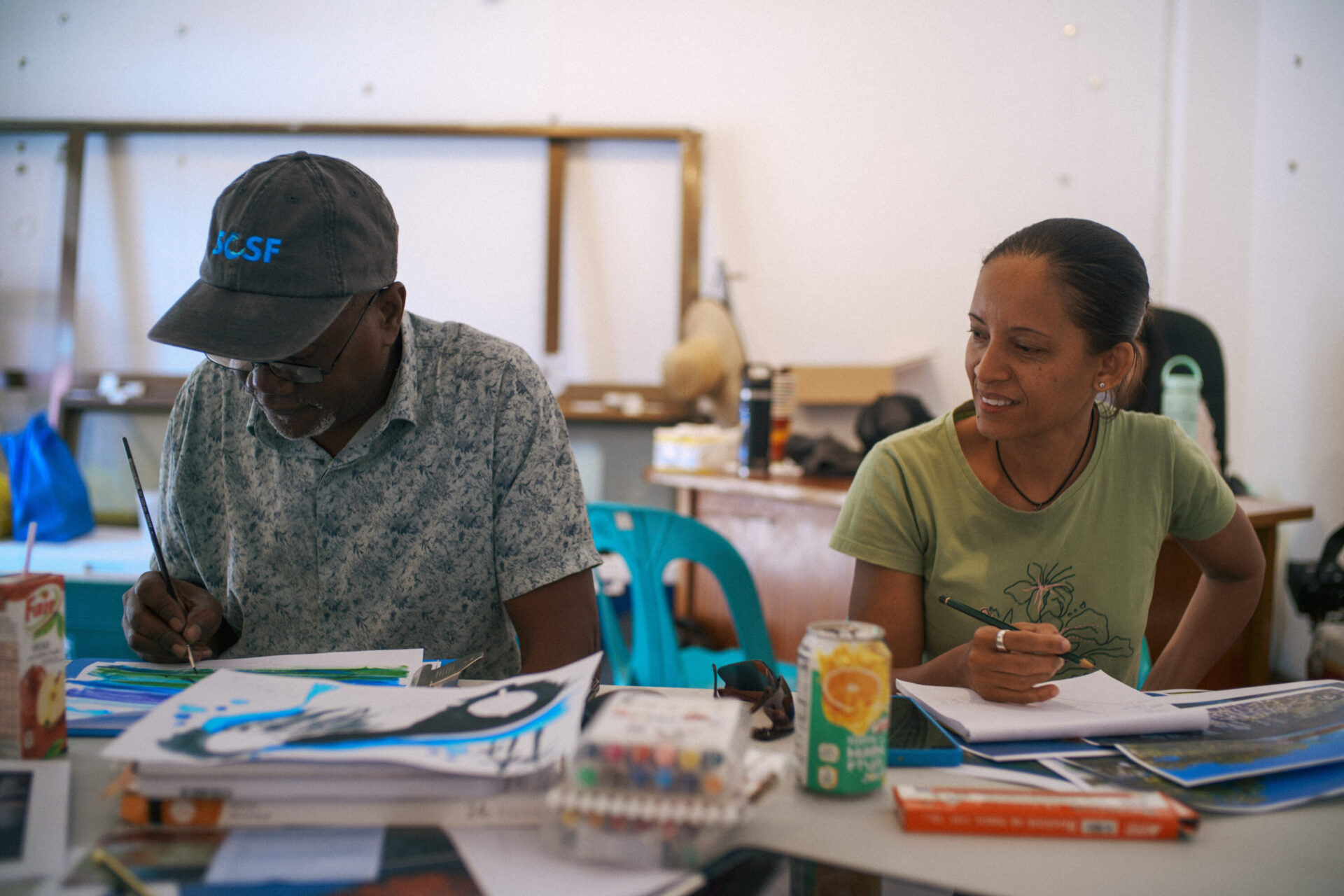
Through an open call, four local artists were selected to take part in a hands-on workshop at English River Secondary School. Photo © Yoshi Yanagita
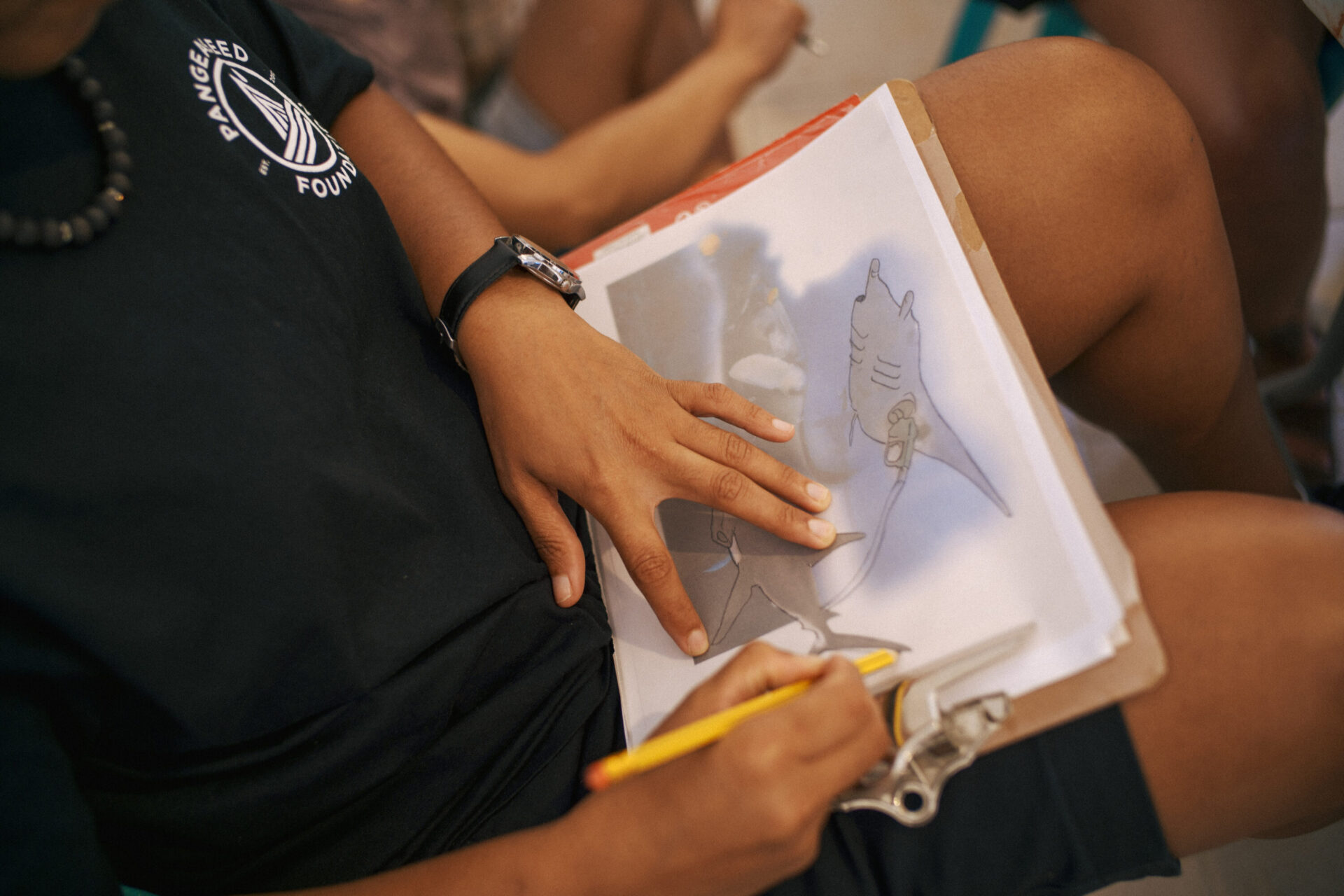
Local artists worked alongside experienced muralists to learn the process of large-scale public art from concept to completion. Photo © Yoshi Yanagita
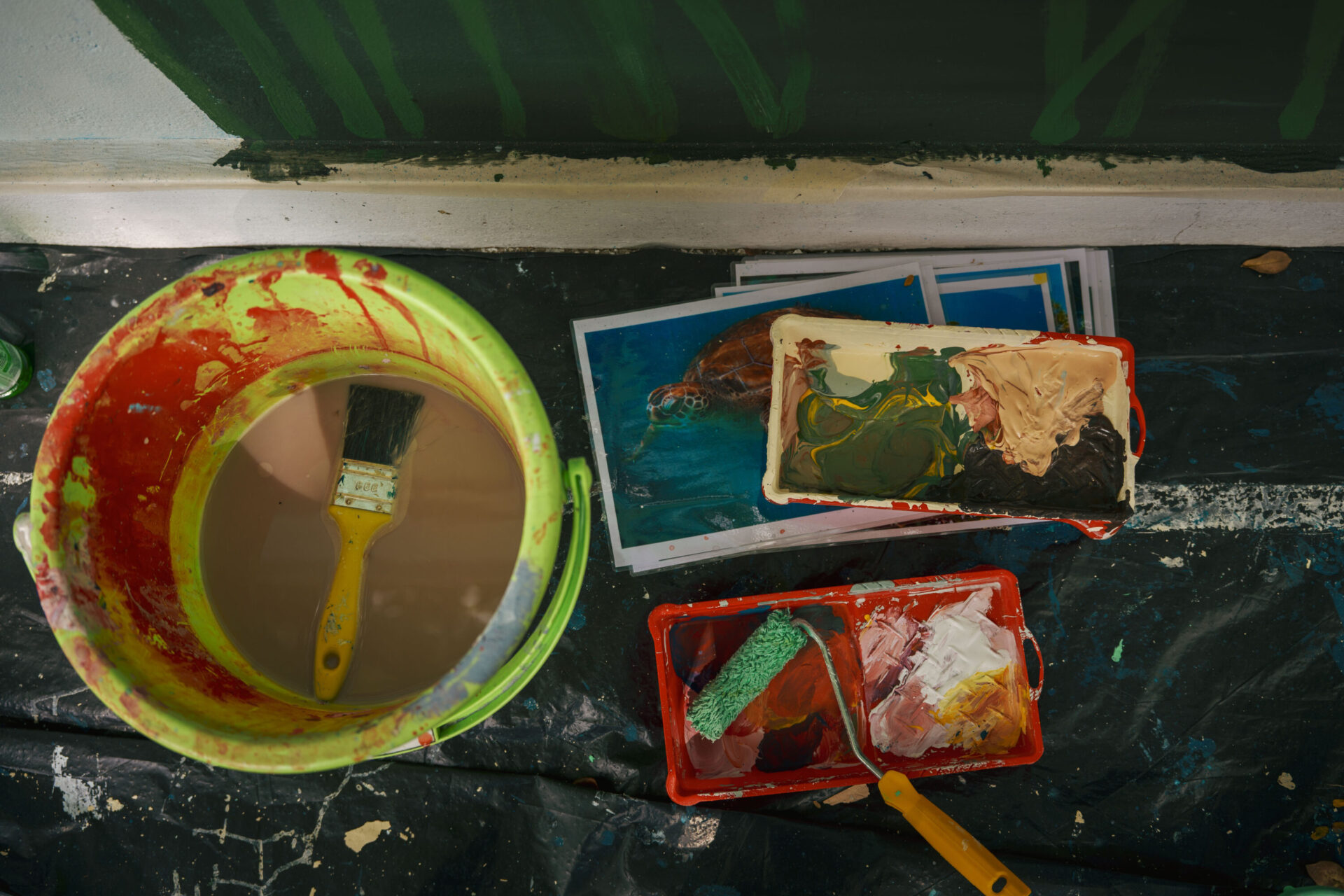
Facilitated by Victoria Firth and Zoe Chong-Seng, the workshop produced four original murals. Photo © Yoshi Yanagita
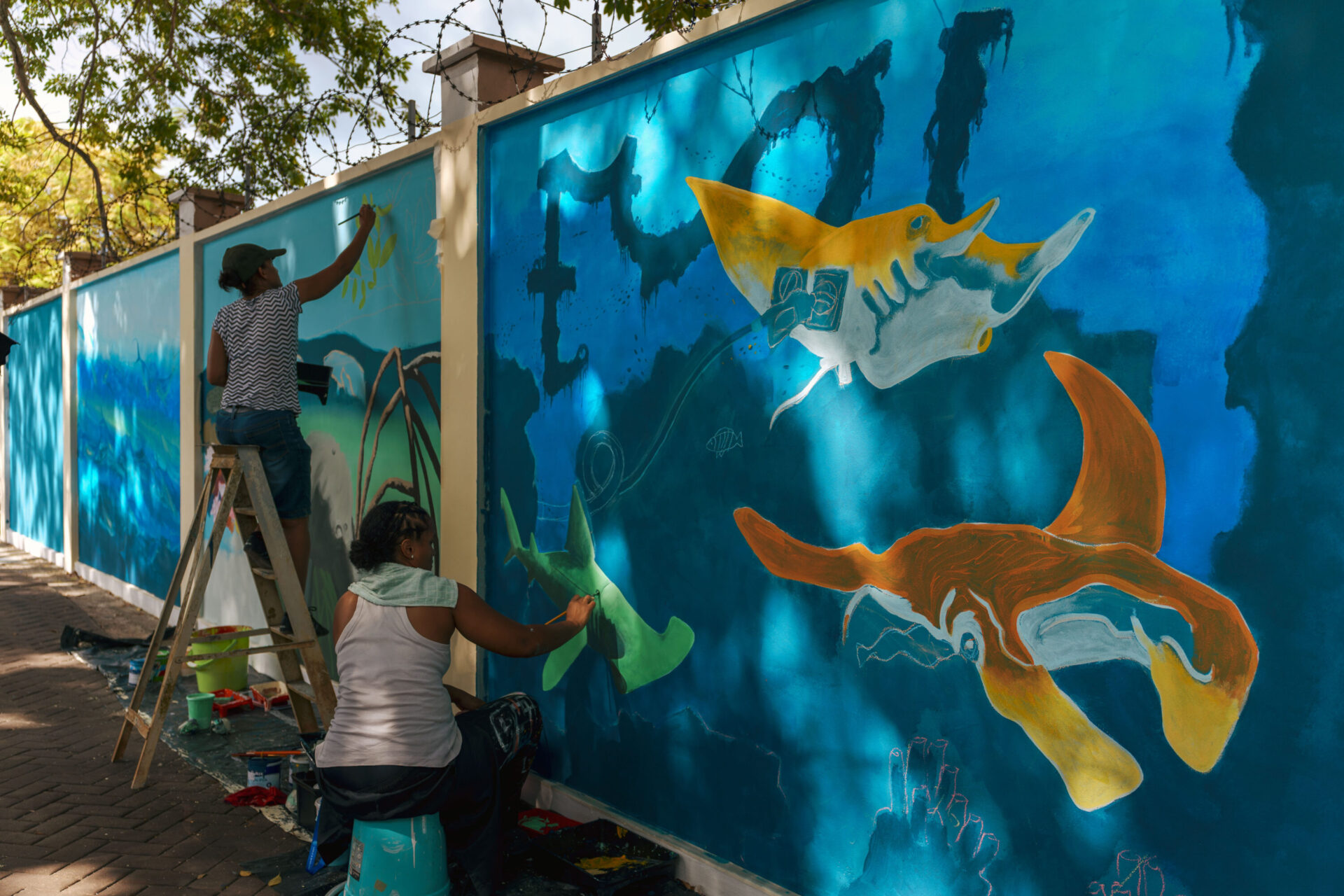
The workshop helped anchor a six-mural cluster at the school. Photo © Yoshi Yanagita
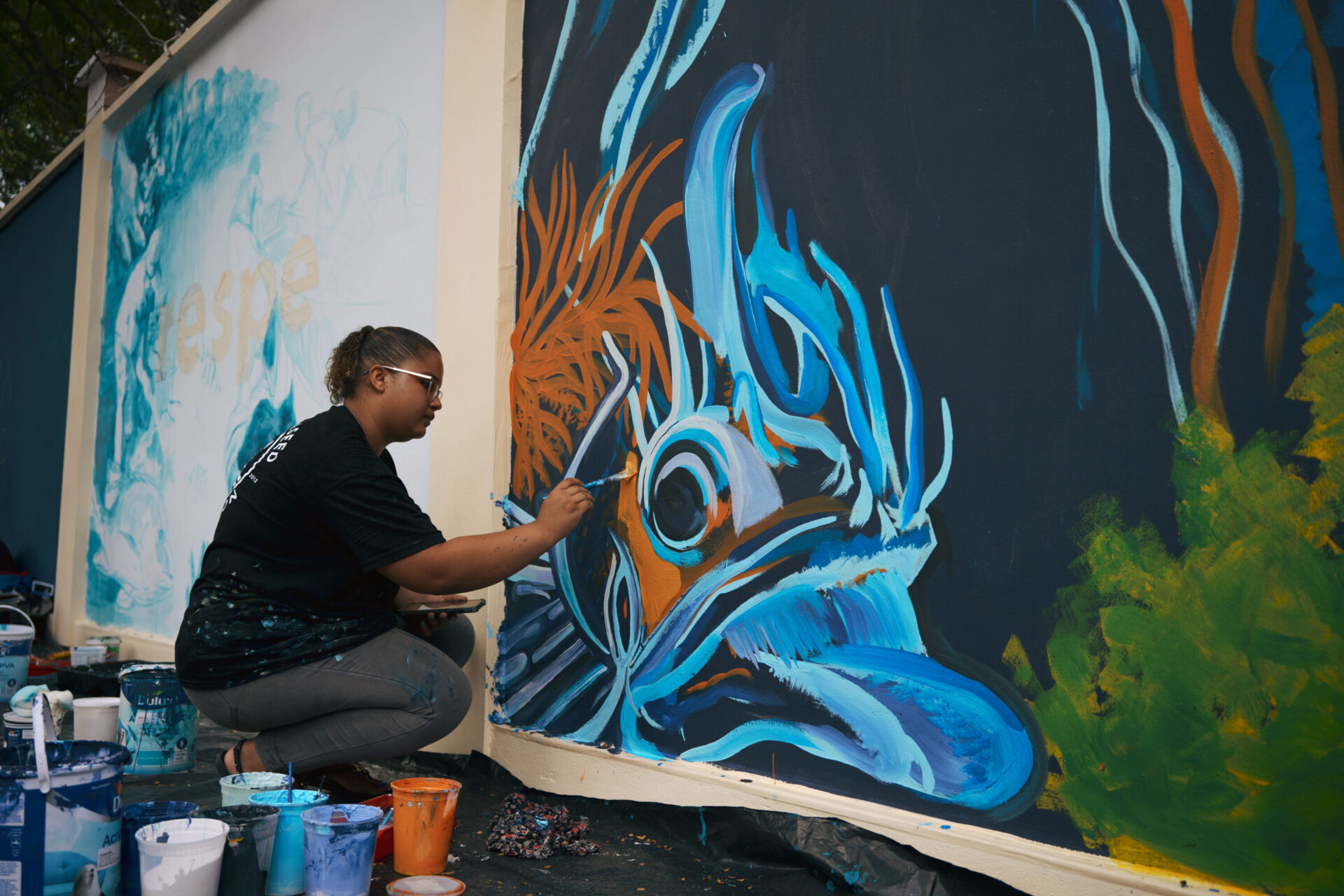
For the participants, it marked an entry point into a growing creative discipline with real momentum in Seychelles. Photo © Yoshi Yanagita
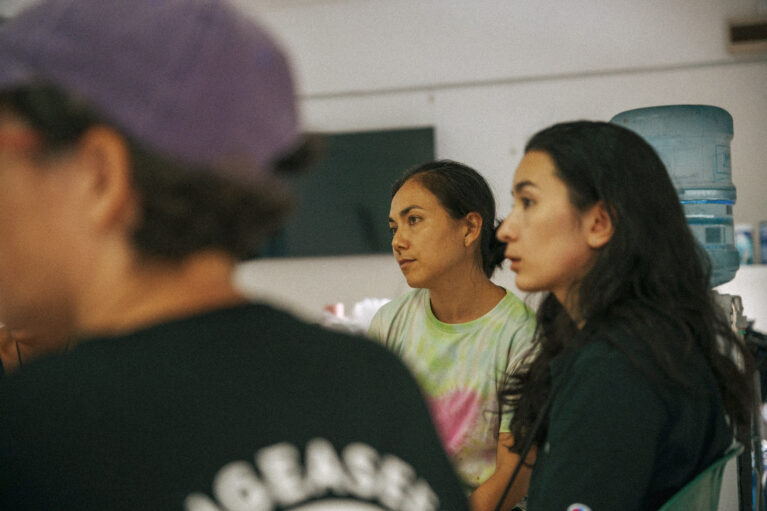
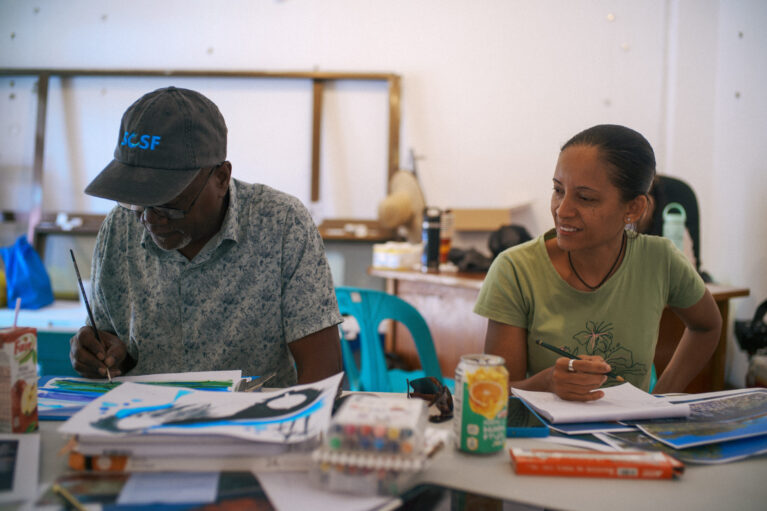
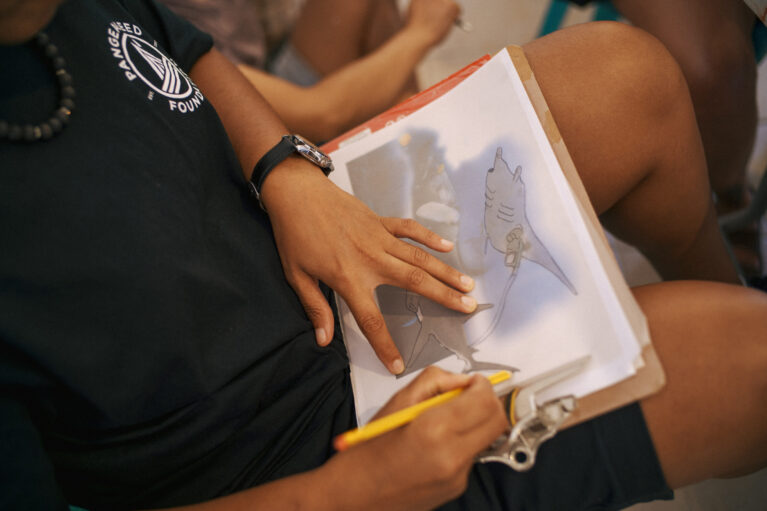
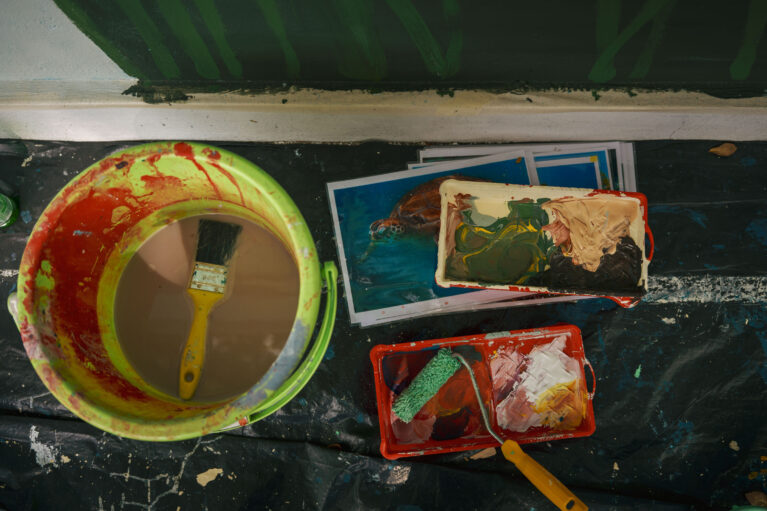
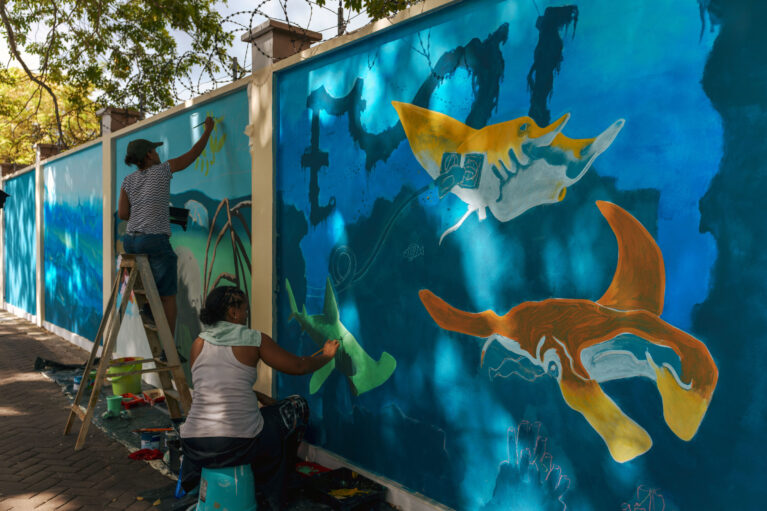
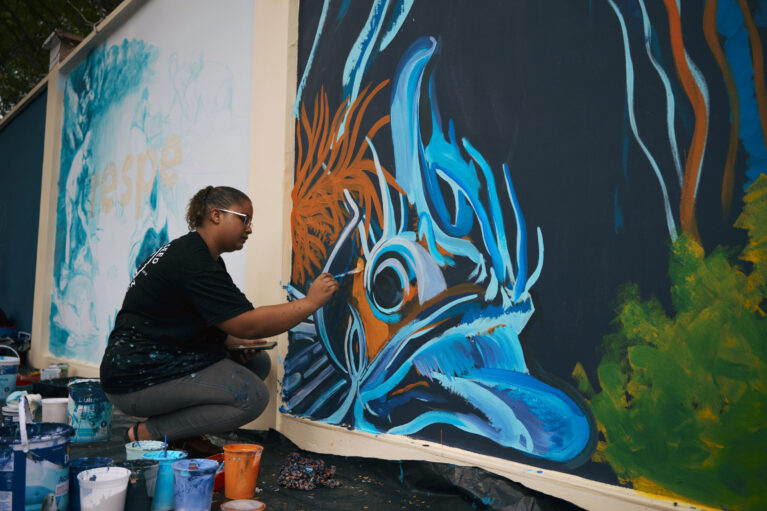
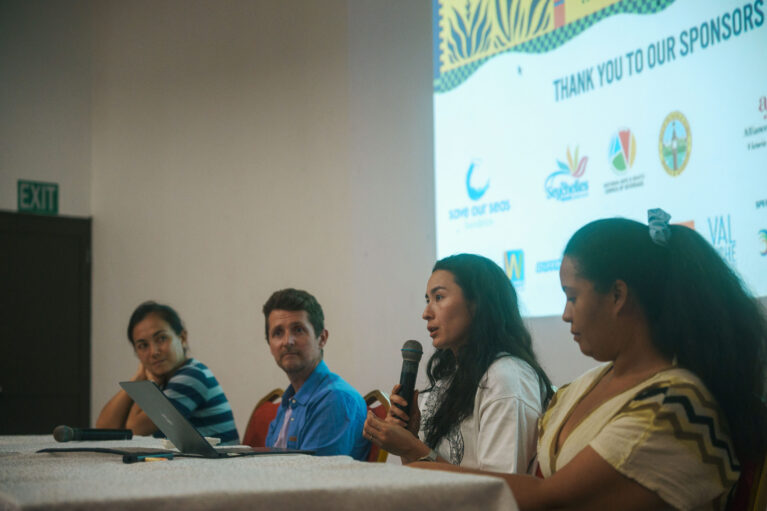
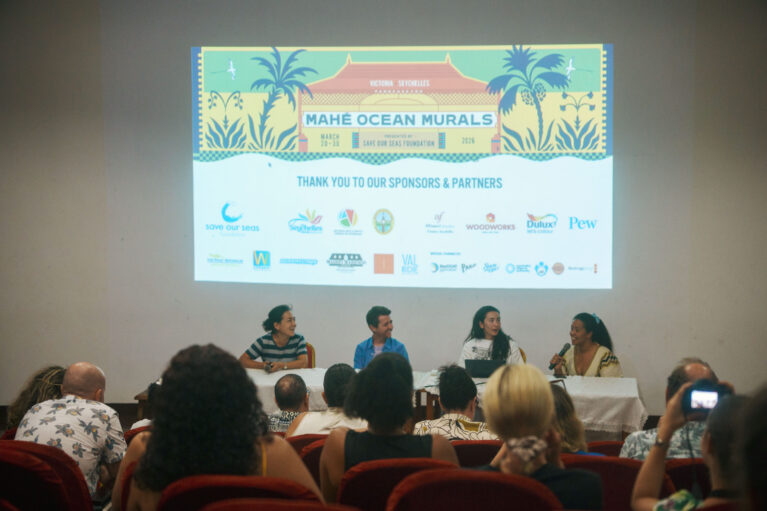
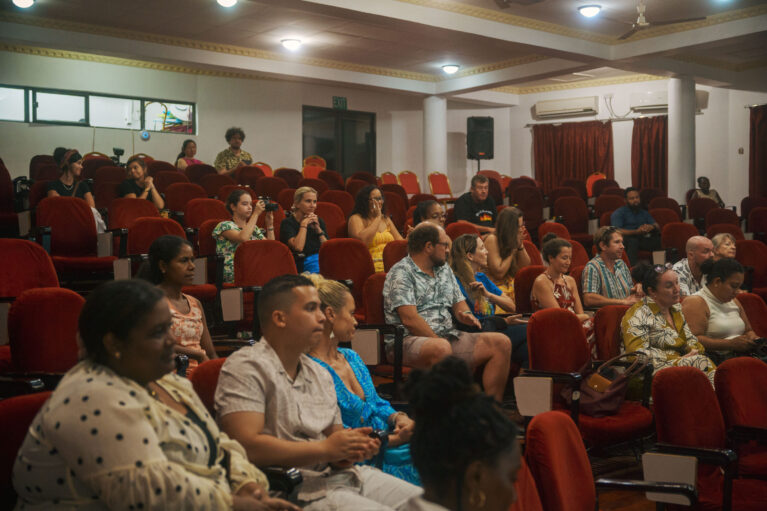
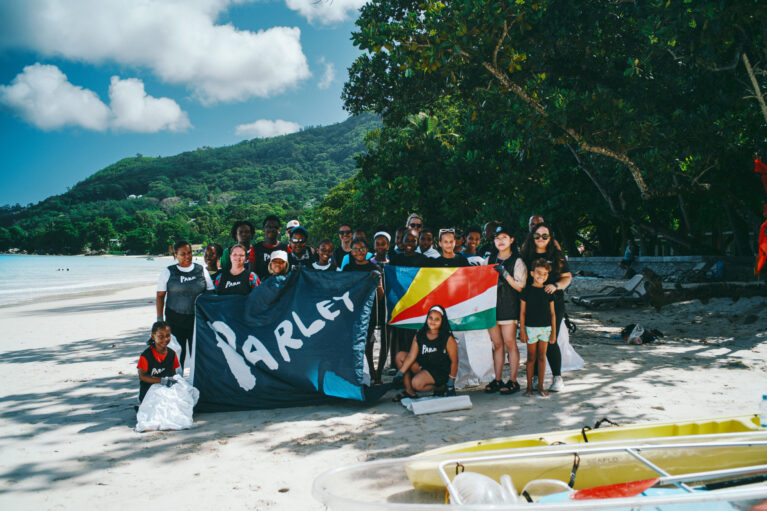
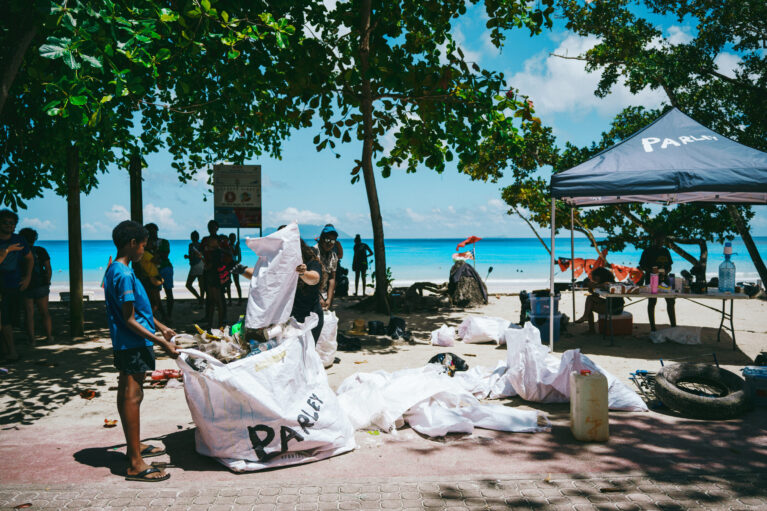
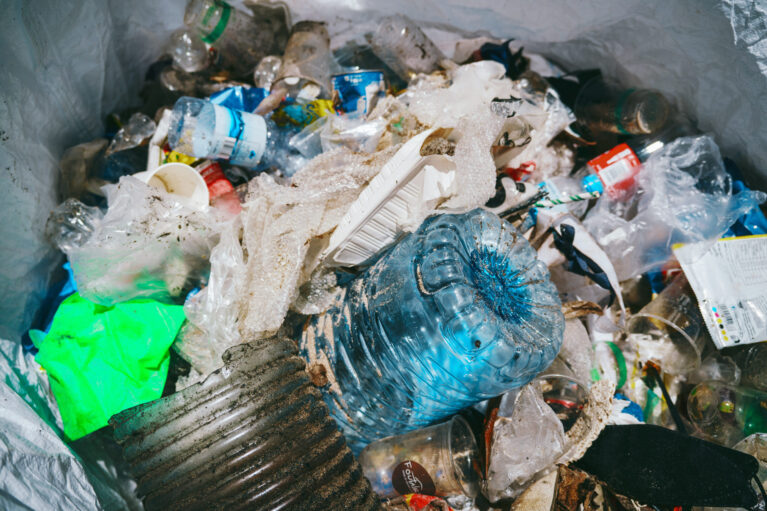
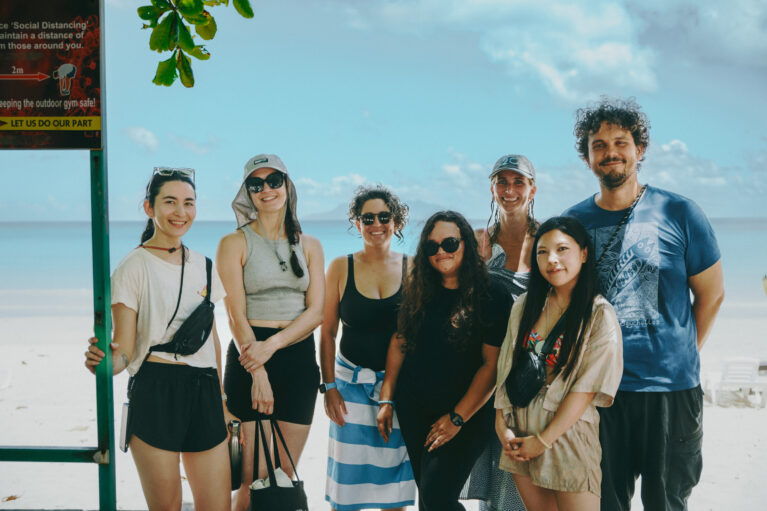
This initial seed took root and blossomed into a multi-day celebration supported by more than 20 partners. In-kind donations – from paint to accommodation to meals – facilitated the hosting of the artists and their creations. And a number of public events allowed the local community to get directly involved. Not only could they see the artists working in real time, but they could also attend a panel discussion to hear the stories behind the pieces, participate in a beach clean-up led by Parley Seychelles, and join excursions into nature. Local artists could also take part in a workshop with the muralists to grow skills in creating large-scale artworks. These experiences invited the community in; to learn, exchange stories and share connections with the marine environment around them.
The impact of Mahé Ocean Murals therefore extends long after the paint has dried. For every year those walls remain, they stand as a reminder of our tie to the ocean; a world that may be hidden from us, but one with which we are inextricably linked – even as we rush to work, to catch the school bus or to pick up dinner.
BEYOND THE WALLS
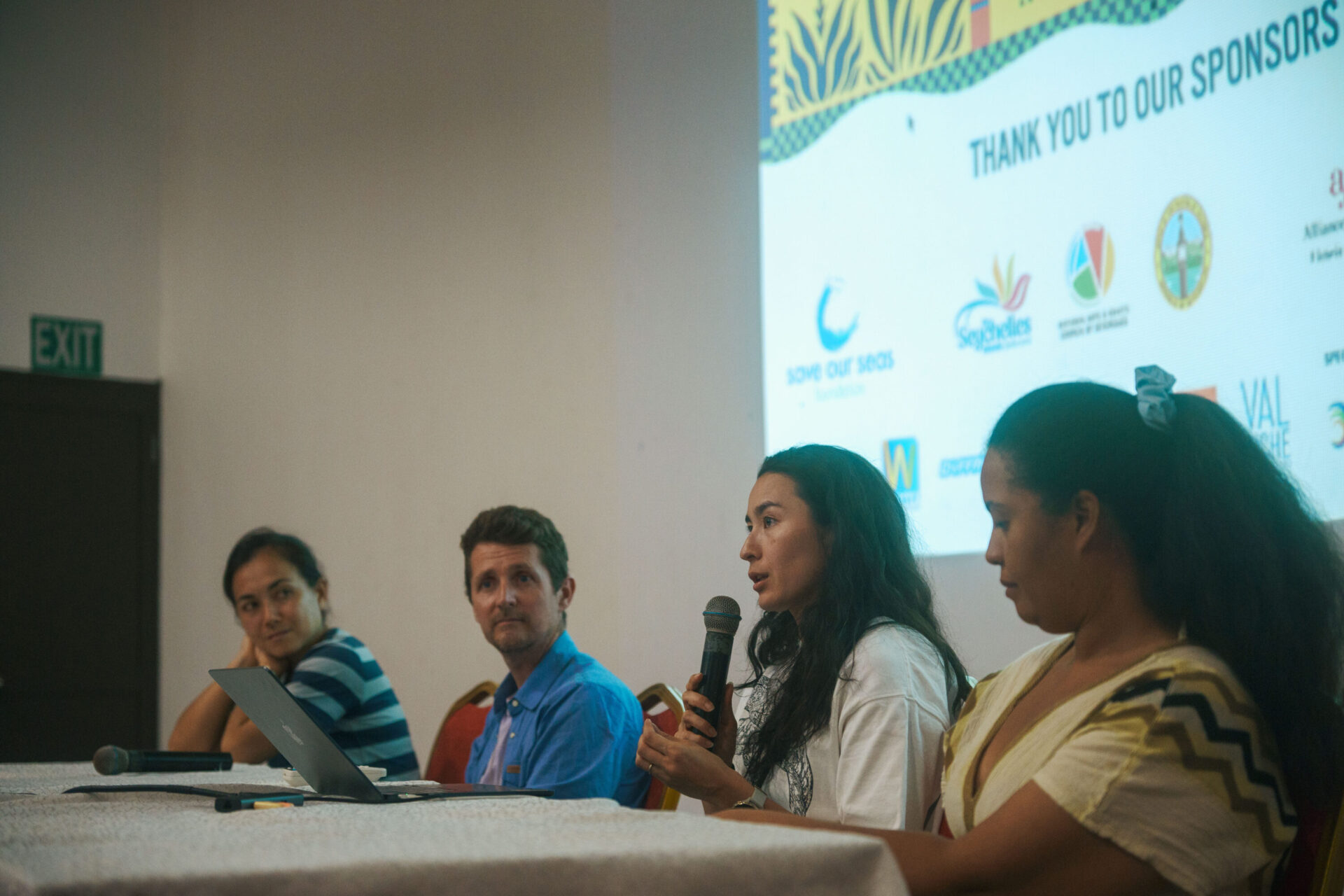
Photo © Yoshi Yanagita
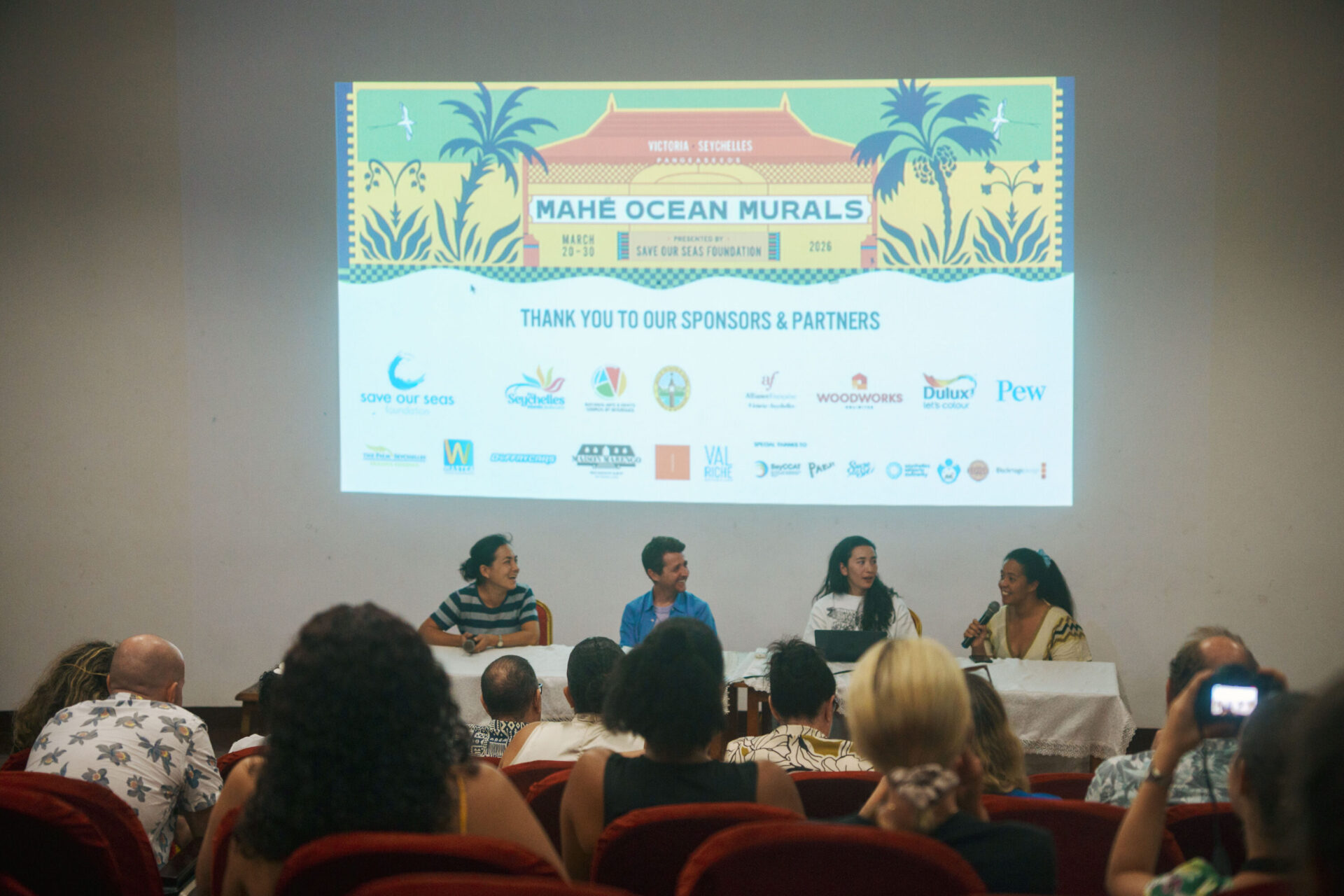
Photo © Yoshi Yanagita
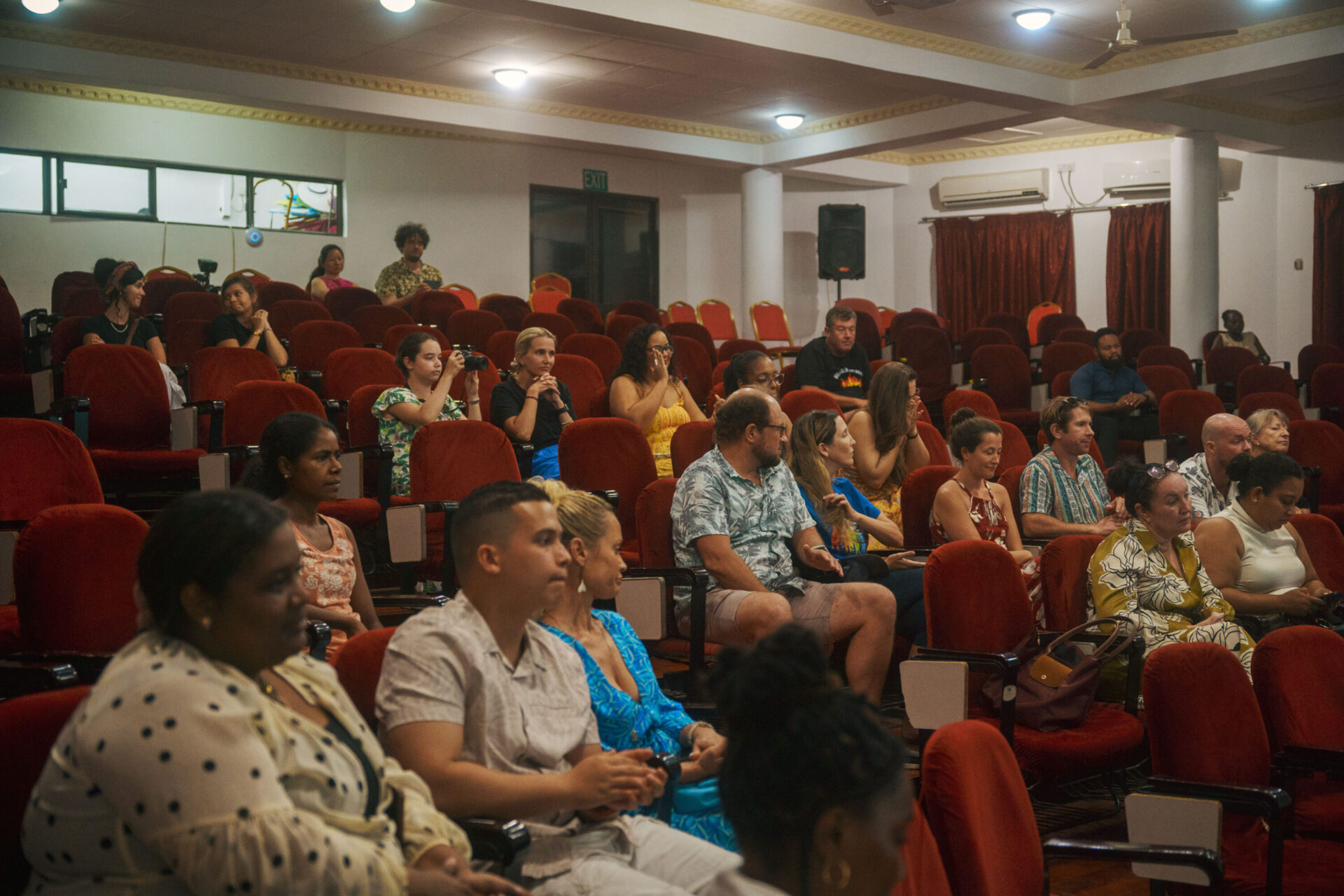
Photo © Yoshi Yanagita
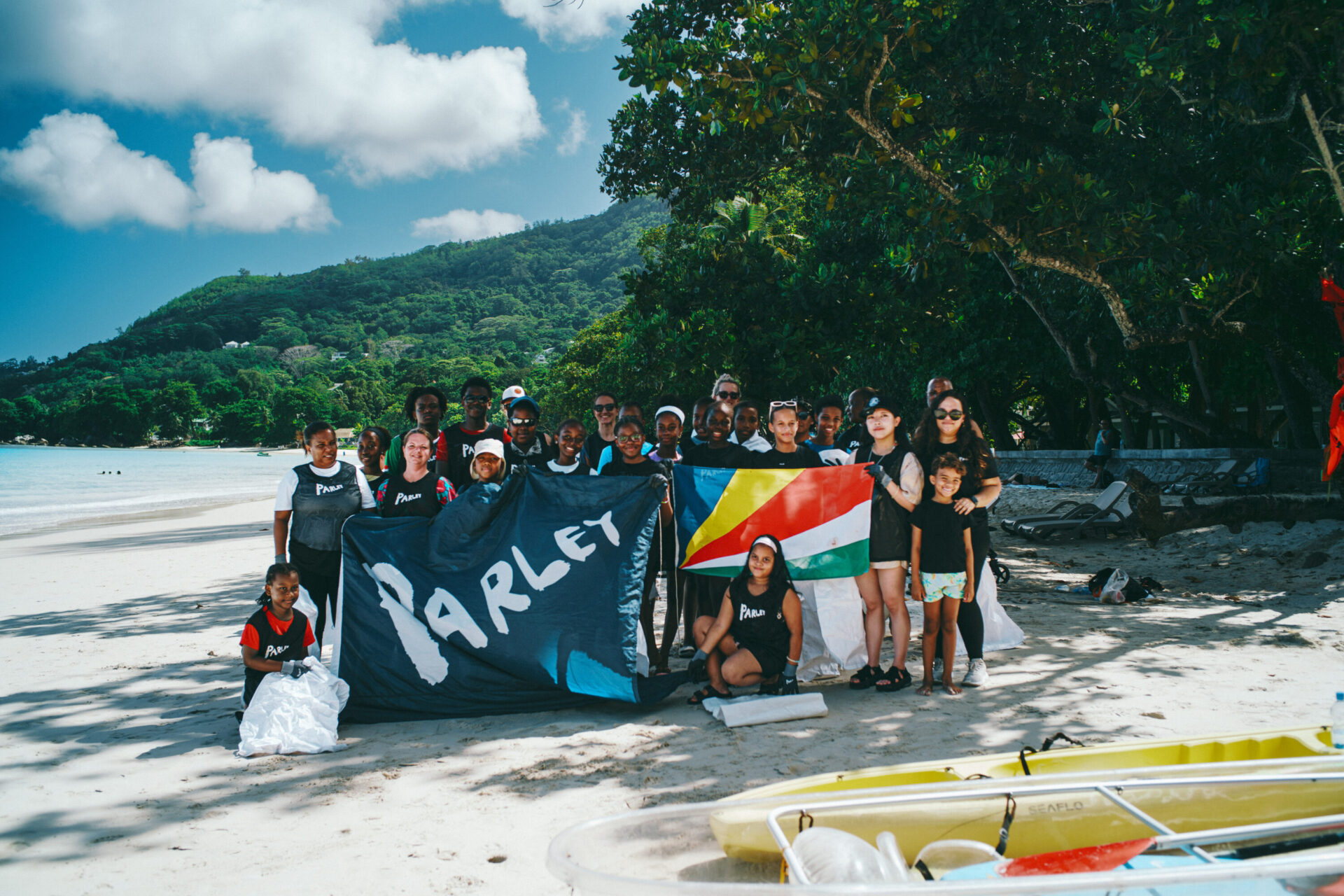
Photo © Yoshi Yanagita
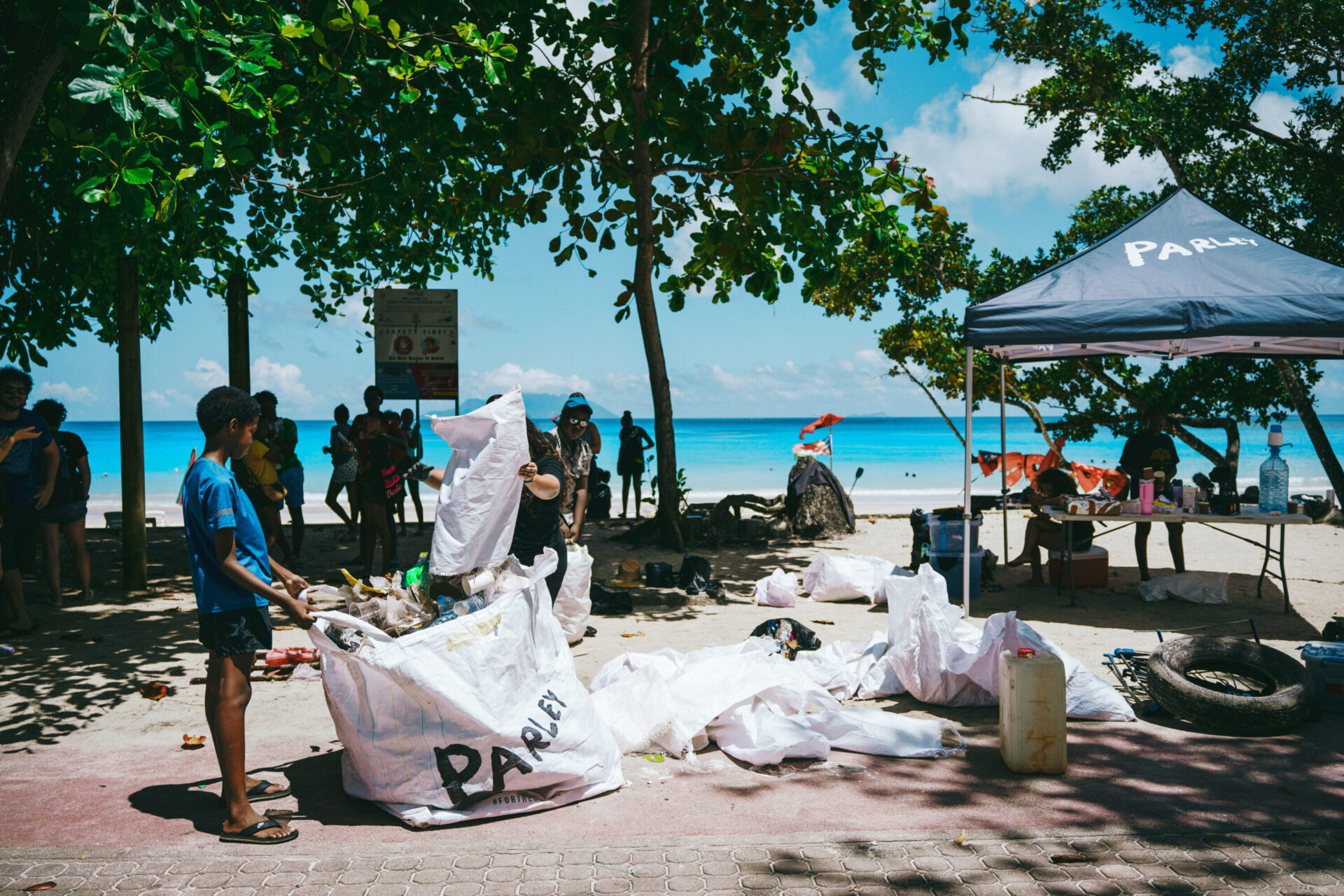
Photo © Yoshi Yanagita
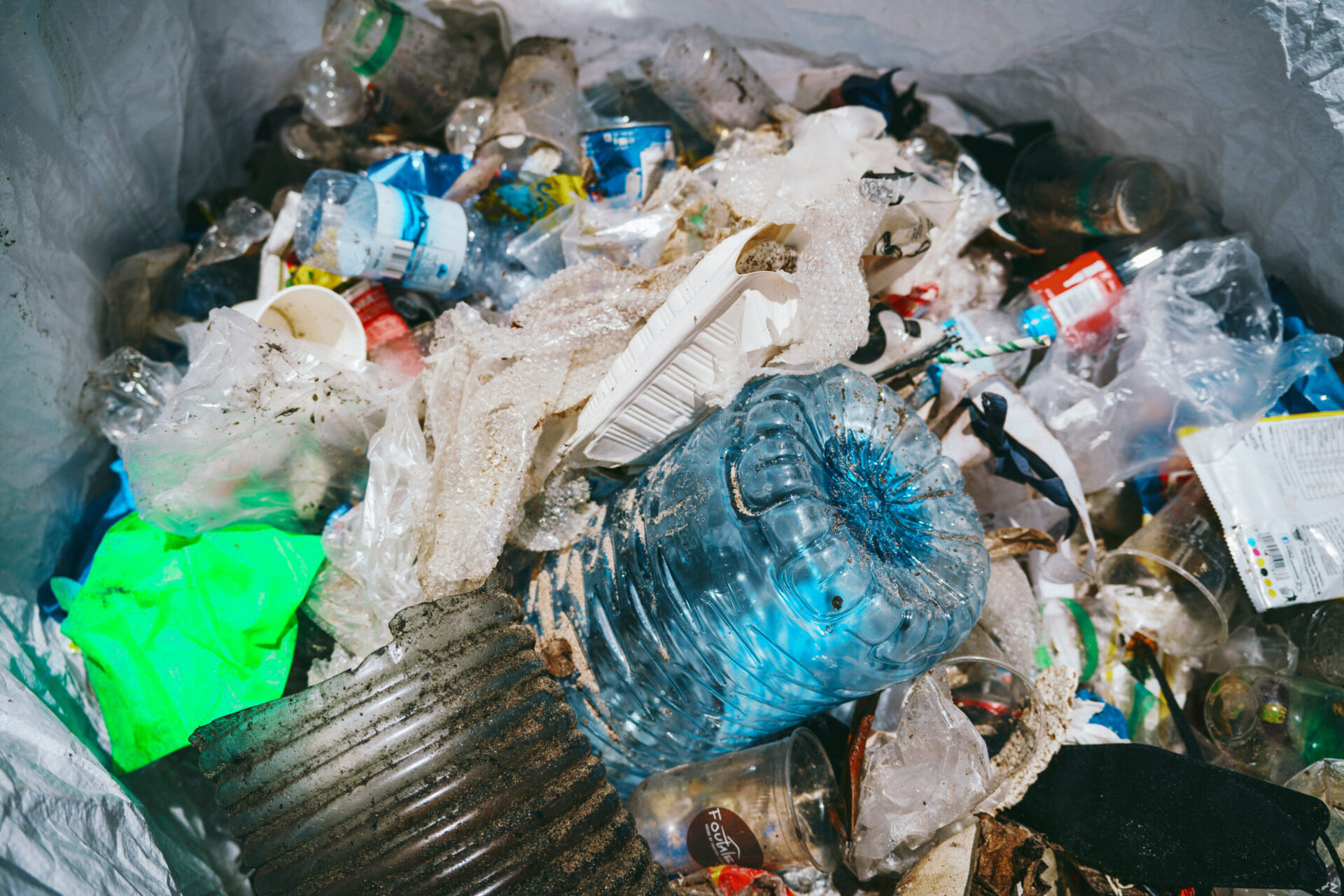
Photo © Yoshi Yanagita
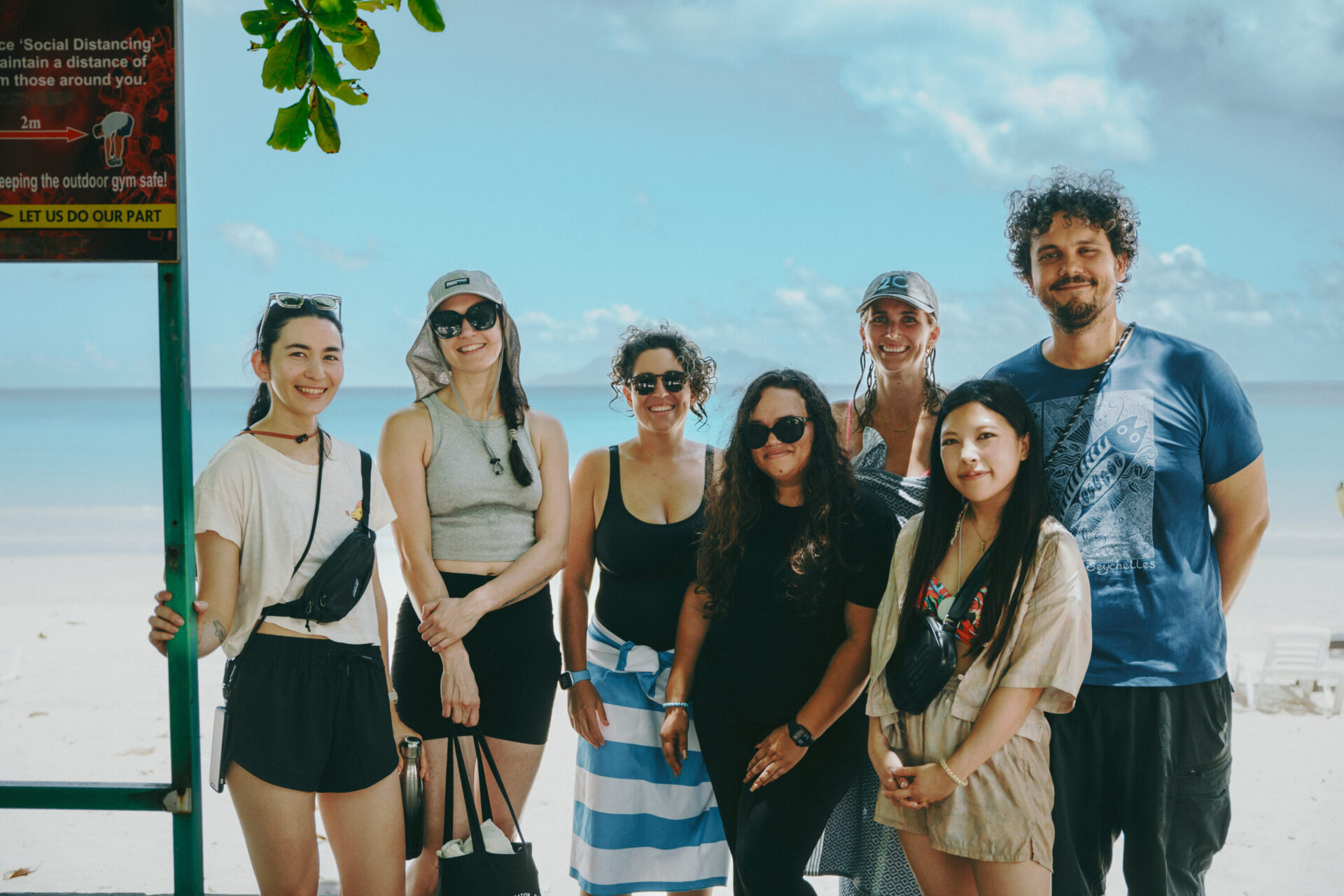
Photo © Yoshi Yanagita
– PangeaSeed