Reflections from the 2025 Environmental Education Association of Southern Africa (EEASA) Conference
You could feel the excitement from the moment you walked in, a space filled with people dedicated to creating a better future for our planet. Educators, researchers, policymakers, and conservationists, all excited to learn, share, and inspire. Among them was our team from the Save Our Seas Foundation Shark Education Centre (SOSFSEC), eager to immerse ourselves in the conversations shaping the future of environmental education.
This September, we had the opportunity to send several of our team members to the 43rd Environmental Education Association of Southern Africa (EEASA) Conference in Cape Town, hosted by the Western Cape Environmental Education Forum (WCEEF).
It was a space alive with ideas and collaboration, where voices from across the region gathered to strengthen how we teach, communicate, and champion our natural world. Our Ocean Ambassador, Dr Koebraa Peters, also presented a session on the lessons learned from hosting community events focused on taking actions for our oceans.

SOSFSEC Ocean Ambassador, Dr Koebraa Peters, presenting on the lessons learned from hosting community events focused on taking actions for our oceans.
Below, our team reflects on their personal experiences, key takeaways, and how they plan to bring what they’ve learned back into their work at the SOSF Shark Education Centre, continuing to nurture curiosity, awareness, and stewardship for the marine world.
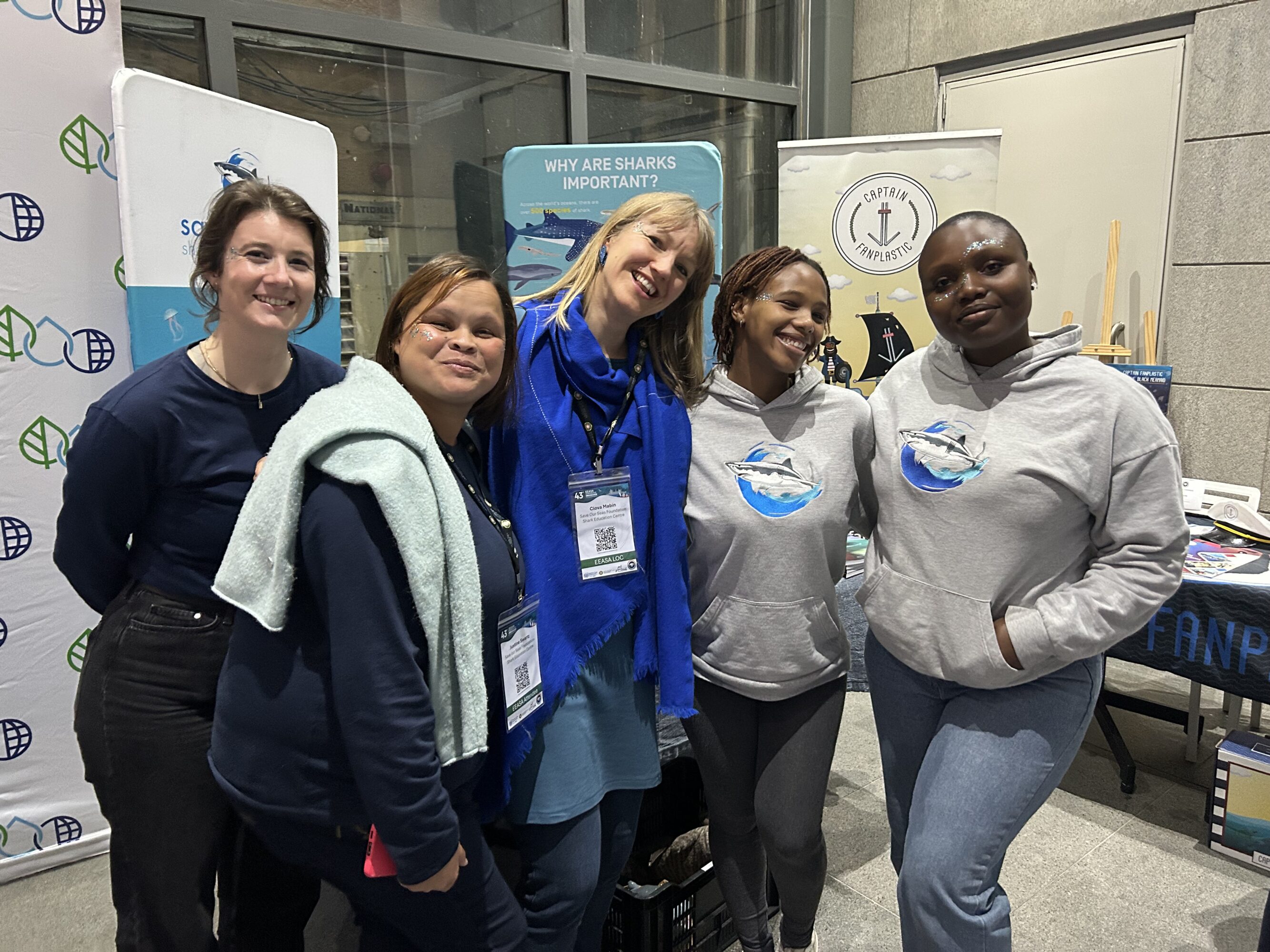
The SOSFSEC ladies at EEASA. From left to right: Karen Merrett, Justine Swartz, Clova Mabin, Lilita Limba, and Christinah Manzini.
The SOSFSEC ladies at EEASA. From left to right: Karen Merrett, Justine Swartz, Clova Mabin, Lilita Limba, and Christinah Manzini.
Karen Merrett:
As the Education Coordinator for the SOSFSEC, I had the privilege of attending EEASA. What stood out to me most was how strongly collaboration came through as a theme throughout the conference. The event came to life through the collective efforts of passionate individuals and organisations of various sizes, brought together under the umbrella of the WCEEF. Collaboration was woven into the fabric of the event, and you could see it in every small detail, right down to the handmade and upcycled decorations at the celebration events.
This conference offered a moment of reflection, allowing us to take stock of where we are and imagine what we might build together in the future as part of the EEASA community. But collaboration doesn’t simply happen by bringing people into the same space. It takes time, intention, and investment from everyone involved.
New frameworks, case studies, and research were shared as practitioners, public servants, and academics presented their work. These exchanges sparked discussion and allowed connections to form between people, ideas, experience and resources.
Technology also featured in various ways, from Virtual Reality (VR) and gamification to generative AI and low-data platforms. The focus was on using these tools to connect and bridge the digital divide, not just in theory but in practice, and in ways that are accessible and sustainable.
Connection was also celebrated through art, theatre, and other creative practices that allow learners to process and express themselves in different ways. This was a powerful reminder that technology and creative practices both have a place in Education for Sustainable Development (ESD) and that they don’t need to stand in opposition to one another. They can complement each other in ways that provide access and strengthen connections.
Another strong thread running through the conference was the importance of local and indigenous knowledge and the value of community-driven approaches to ESD. It reminded us of the need to build trust, hold space for reflection, and stay open to the difficult conversations that help us keep questioning, learning, and co-creating.
Overall, the gathering felt like both a celebration and a call to action – an opportunity to recognise the progress made in the ESD space while also acknowledging the work that still lies ahead. It was reaffirming to see how closely the SOSFSEC’s work aligns with the priorities identified for the way forward. As we continue growing, we’re focusing on how to better utilise AI, VR, and other emerging tools in our content creation to help bridge the digital divide for coastal communities, a key focus highlighted at EEASA.

A photo from the plenary session at EEASA. Photo by Karen Merrett.
Christinah Manzini and Lilita Limba:
As a Junior Educator (Christinah) and an Education Intern (Lilita), we were excited to attend our first EEASA conference. We found it deeply rewarding to engage with passionate professionals, particularly environmental educators from across South Africa and neighbouring countries who share the same drive for meaningful change.
We were honoured to represent the SOSFSEC through an exhibition showcasing our work. This platform allowed us to inform attendees and the public about our efforts to connect people with the ocean. Our exhibition highlighted the diverse methods we employ to engage with communities through hands-on marine education, including interactive learning resources.
Attendees at our exhibition stand were eager to explore our interactive offerings, which included VR headsets, activity books, and Save Our Seas Foundation magazines. For many, it was their first-ever experience with virtual reality, and watching their initial curiosity turn into awe as they became immersed in an underwater world was truly rewarding. The VR headsets offered a unique glimpse beneath the ocean, allowing people who have never had the chance to swim or dive to experience the beauty of marine life up close. This perfectly captured our goal of bringing the ocean to everyone and inspiring a deeper connection to marine conservation, even for those who cannot physically get into the water.
Many people are afraid of sharks and are ill-informed about them, so the exhibition served an educational purpose. We aimed to dispel common myths and motivate communities to understand the importance of sharks and the need to protect our oceans, as we depend on them greatly. It was gratifying to witness a shift in people’s environmental beliefs. We can confidently say we reached out to the community, and their positive engagement made our work easier.
It was incredibly rewarding to witness the widespread dedication to environmental stewardship and the ongoing inspiration to foster hope for our environment. Attending various presentations by Western Cape Environmental Education Friends (WCEEF) members broadened my understanding of environmental education. Beyond our exhibition, the conference introduced us to incredible examples of environmental resourcefulness. I (Christinah) particularly enjoyed the NamibRand Nature Reserve’s presentation, which detailed their efforts in conserving natural resources like water and implementing upcycling initiatives, often involving youth participation. The NamibRand Reserve cooks with solar power, uses approximately 15 litres of water daily, adheres to the 5 R’s of waste reduction (refuse, reduce, reuse, repurpose and recycle), and calculates its resource use with EnviroFootprint.
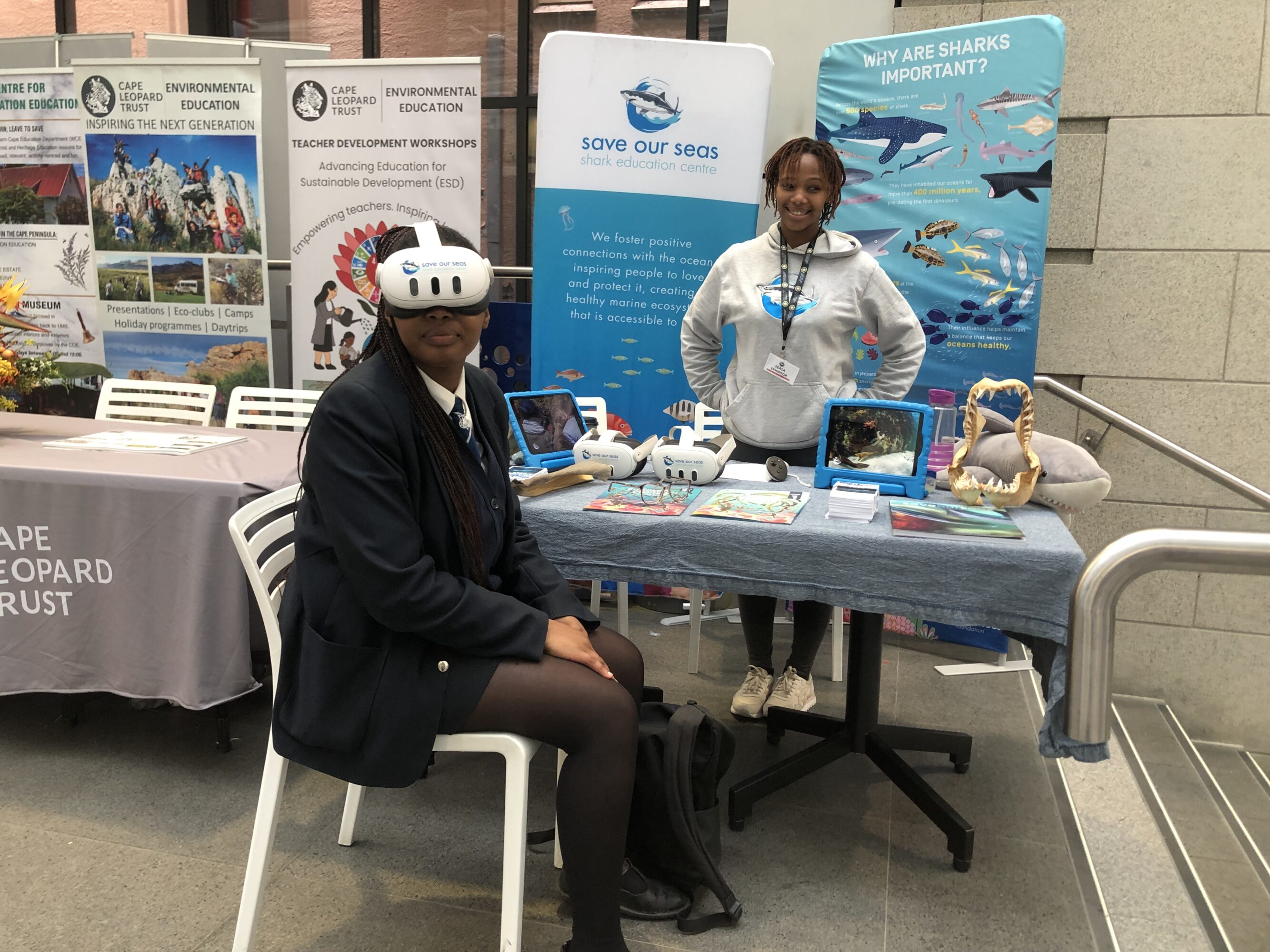
A learner experiencing VR and the underwater world for the first time.
Lihleli Dyani:
One of the most valuable insights I’m bringing back from the EEASA Conference is how impactful youth-focused conservation programmes can be when organisations or individuals use hands-on, participatory learning.
The conference wasn’t just about showcasing the amazing work being done; it was also about learning from one another. Every presentation and discussion offered valuable lessons and ideas we can take back and apply in our own workplaces and projects. One that stood out for me was the “Young Conservationists Mini Ranger Course”. This presentation impressed me because it showed how young learners were introduced to the importance of nature through a simple, structured conservation course.
Beyond the formal sessions, one of the best parts of the conference was the chance to network and connect with people in this field. The atmosphere encouraged open conversations, sharing of experiences, and genuine collaboration. It created a space where we could express our views freely and gain meaningful insights and advice from others in the field. I was particularly inspired by a session on community mapping, and I’m excited to explore how we can integrate that participatory approach into our programmes for local schools.
Overall, the EEASA 2025 Conference was not only informative but also empowering, a reminder of how important it is for us as environmental educators and conservationists to keep learning, sharing, and growing together.

Lihleli (left), Lilita (middle left), Christinah (middle right) and Justine (right) representing the SOSFSEC stall at EEASA.
Justine Swartz:
The conference began with an inspiring youth speaker, Jumah Alih Abubakr, who shared his journey in nature conservation through the Conservation Leadership Programme run by Nature Connect. His talk set the tone for the rest of the conference, where themes of connection and collaboration continued to emerge.
The session that stood out the most for me was the WCEEF case study, which demonstrated how shared resources among NGOs can strengthen environmental learning. Although the breakaway sessions were insightful, their short duration and small, crowded rooms sometimes made it difficult to fully engage with the speakers’ ideas.
Overall, the conference left me inspired by educators’ and conservationists’ dedication and reminded me of the importance of collaboration in environmental education.