
Curious kids at the SOSF Shark Education Centre
Every day at the SOSF Shark Education Centre (SOSF SEC), we’re reminded that kids are some of the most curious (and honest) ocean explorers out there. They don’t tiptoe around big questions or worry about sounding silly. They ask what they’re genuinely wondering… and when it comes to sharks, that leads to some of the best conversations we have.
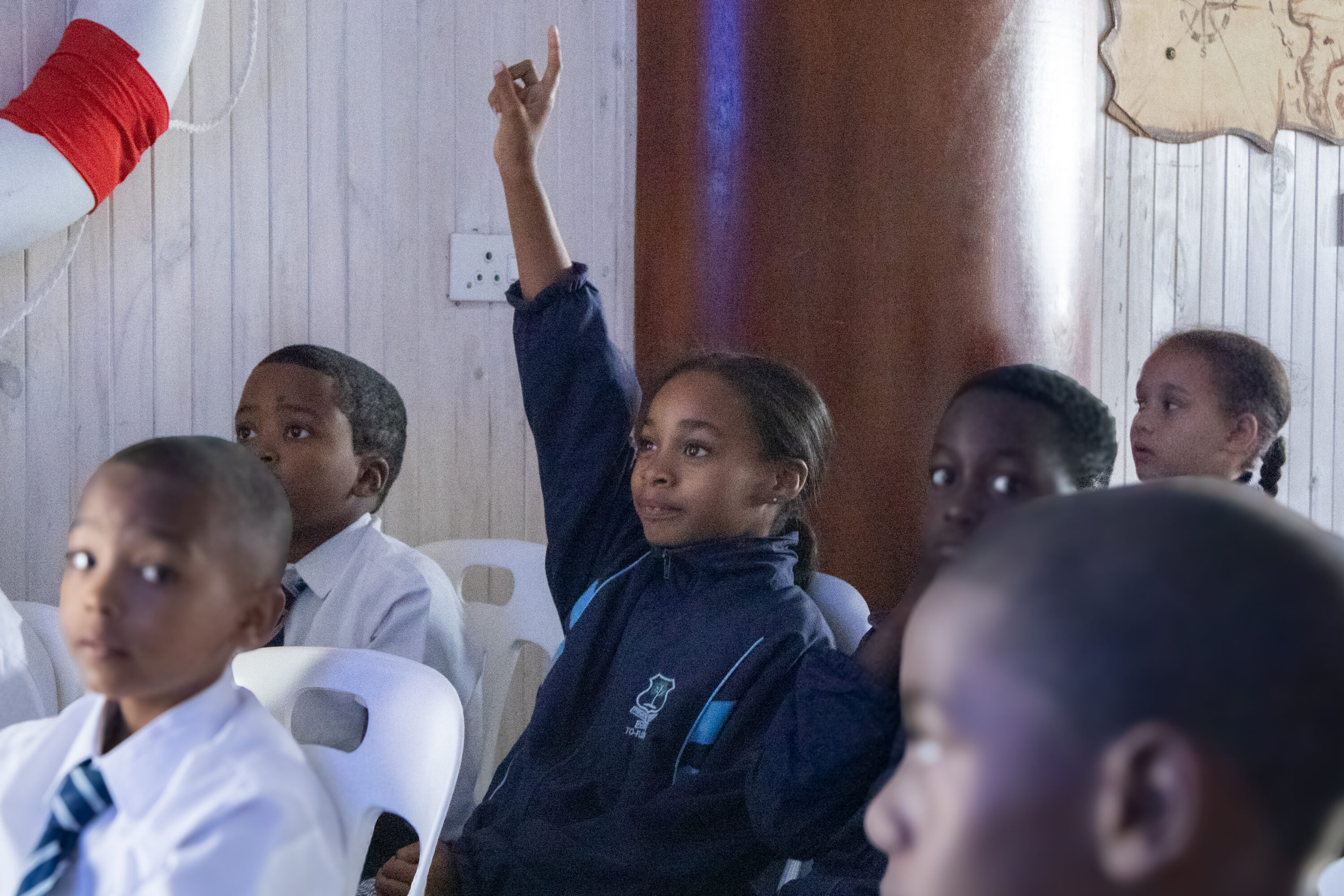
Learners enthusiastically engaging in a class about sharks. Photo by Liat Dayan | © Save Our Seas Foundation Shark Education Centre.
Our daily interactions with learners through educational programmes at the SOSFSEC are deeply rewarding and often transformative for the team. The constant dialogue with and shared learning experiences broaden our perspectives towards the ocean. We often reflect on the unexpected and unfiltered questions children ask; they don’t hold back and will ask almost anything at any moment. This curiosity, which we actively encourage, is what makes teaching so enjoyable and fulfilling, and it has shaped our goal of making learning fun and engaging for everyone. It has also shown us that while we focus on teaching about ocean animals and plants, children’s curiosity often reaches far beyond the topics we introduce.
The children ask about sharks, the rocky-shore species they can touch and hold, and sometimes about us, too, if any of the animals in the touchpool ever bitten or stung us. Watching children build confidence is one of the most fulfilling aspects of our work. When they first arrive, they are often hesitant to interact with our rocky shore animals and shark artefacts such as jaws, skin, and teeth. One of the most common questions we hear before they touch the animals is, “Is it going to bite me, or is it poisonous?” With guidance, education, and reassurance from the team, we explain that these animals are not poisonous or venomous and that our relatively “thick skin” means sea anemones cannot sting us. These conversations quickly turn wide-eyed hesitation into eager curiosity. Before long, the room is filled with the sound of splashing water and excited chatter as the children confidently touch and hold the animals again and again.
Through shared learning, children begin to understand that sharks do not intentionally eat people. Instead, bites are often cases of mistaken identity, as many sharks primarily feed on other marine animals, including fish and marine mammals such as seals, which have thick skin and blubber. These conversations also help highlight that sharks have diverse diets and that different species eat different types of prey.
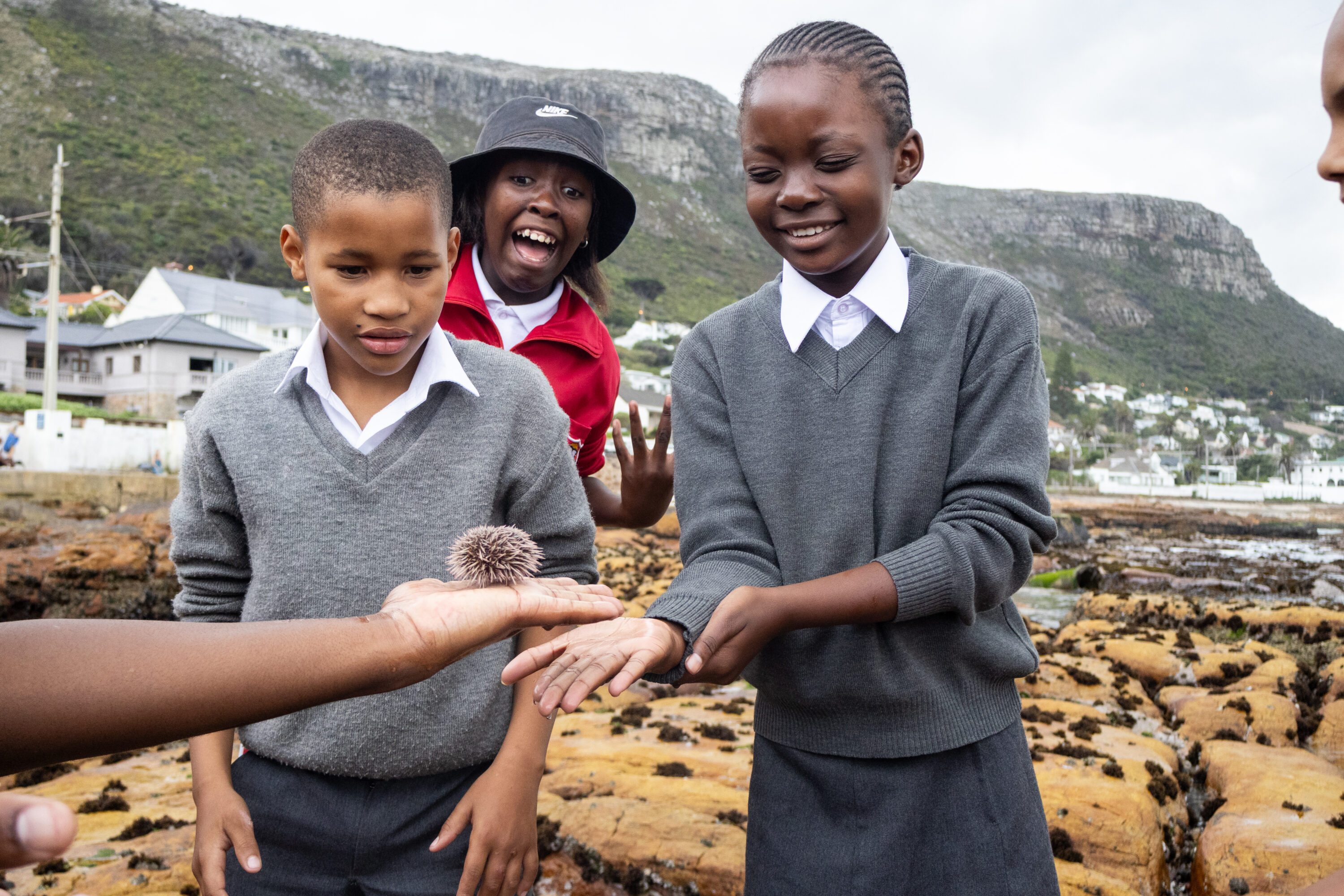
Excited learners ready to hold a sea urchin for the first time. Photo by Liat Dayan | © Save Our Seas Foundation Shark Education Centre.
Children are incredibly sensitive and caring, a quality we specifically observe when discussing shark reproduction and birth. We often hear comments like, “Oh, so they don’t have their mommy with them all the time…,” as they relate it to their own experiences with their parents. In these moments, we take the opportunity to explain the difference between humans and sharks. Human babies are born fragile and rely on parental care to survive, whereas many sharks are born fully developed and equipped with the tools they need (such as strong teeth and tough skin) to survive on their own. Understanding this helps children see that while shark ‘mommies’ aren’t present, the pups aren’t helpless; they are born as perfectly miniature versions of the predators they will become, independent from day one.
From these thoughtful and sometimes hilarious conversations, we have compiled a list of some of the most common and memorable questions and comments children ask us about the ocean and marine life:
- Why don’t sharks take care of their babies?
- We can see the mommy shark in the tank, but where is the daddy shark? (Referring to the fully grown dark shyshark Haploblepharus pictus we have at the SOSF SEC)
- Do sharks have a religion?
- Do sharks get sick?
- Do female sharks get their periods?
- Why do sharks have a nose if they use their gills to breathe?
- How long does it take for a shark’s teeth to be replaced?
- How would sharks know their brothers and sisters?
- Can sharks speak, and are they able to understand English? Do they have their own language?
- Are sharks scared of dolphins?
- Do sharks fart?
- Do hammerhead sharks hammer other sharks and animals using their heads?
- Are these toys or alive? (referring to the seastars in the touchpool)
- Do seastars lay eggs or give birth to little seastars?
- Do mermaids exist?
- Why doesn’t the red seastar have a face like Patrick from SpongeBob?
- How do the animals in the ocean drink water?
- When teaching them about tides and the moon, we often get questions like “How do you know when a tsunami is coming?”
- Do sharks and whales control the ocean and the tides?
- When differentiating dolphins from sharks/fish, kids often say, “Dolphins are different from sharks because they are friendly and always smiling.”
- Are leopard and pyjama catsharks called catsharks because they “meow”?
One topic we are often asked about is mermaids. When questions like this come up, we try not to dismiss them outright. For many cultures and for many children, mermaids are a meaningful part of stories and traditions connected to the ocean. Instead, we usually respond by saying something like: “Some people believe mermaids exist because they are part of their cultures and traditions. Since we have not explored the entire ocean, we cannot say for certain that they do not exist.” This approach helps us keep the conversation open while creating opportunities to talk about real marine life. Characters like Ariel from The Little Mermaid can be an important point of connection for children, and we often use these moments to introduce real ocean animals, pointing out the red sea star as Patrick or the sea sponge as SpongeBob. Our goal is to spark curiosity and learning without disconnecting children from the stories and cultural ideas that first sparked their interest in the ocean.
In many ways, our work at the centre turns us into “myth busters,” where part of our role is to help explain how the ocean really works and share accurate information about marine life. For example, when we use our white shark plush toy as an educational prop, we often ask children what type of shark it is. The most common response is simply “a normal shark.” This reflects how the media often portrays species like the white shark or even the megalodon as the “typical” shark. As a result, many children (and adults) grow up thinking these are the only kinds of sharks that exist in the ocean.
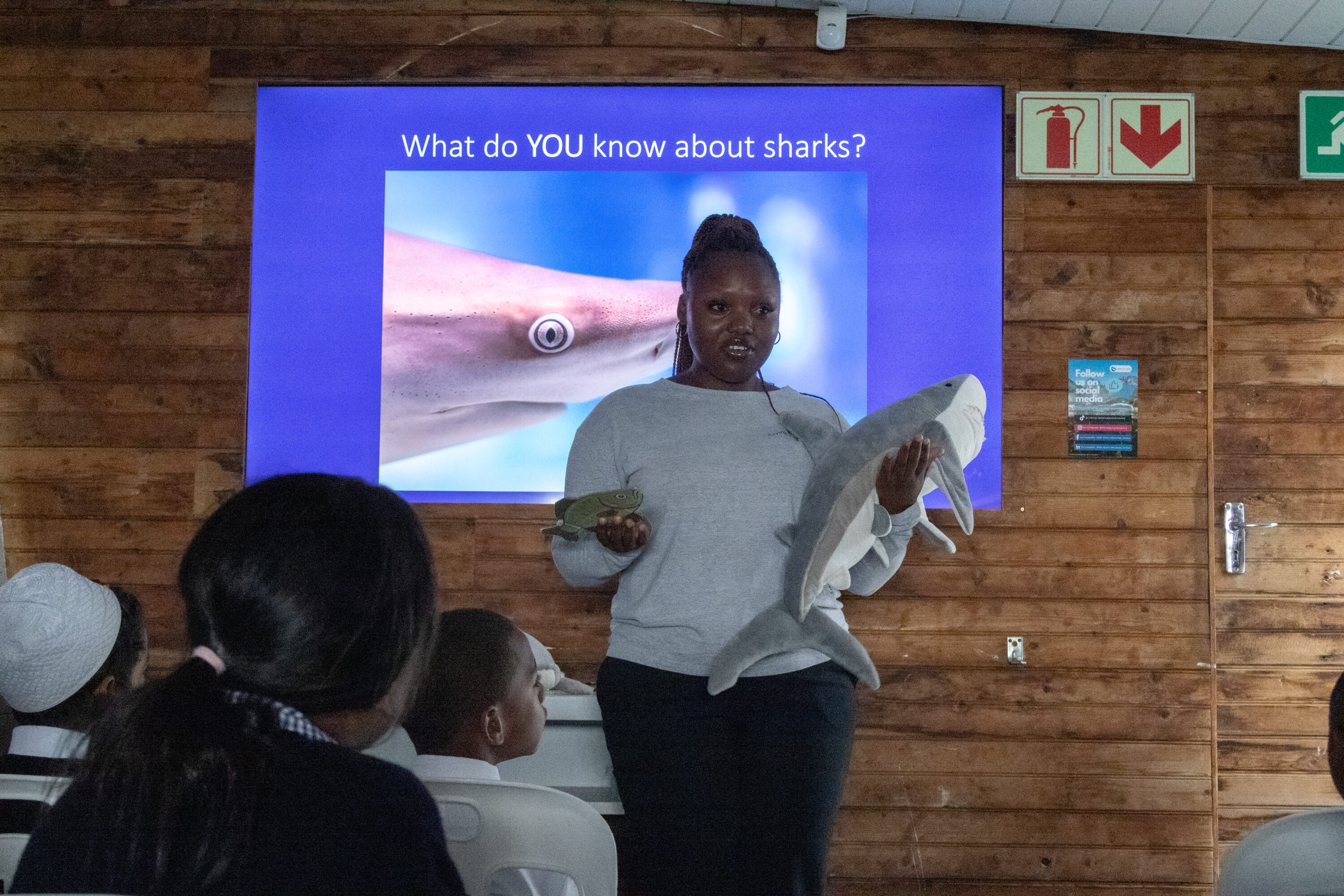
Christinah (author of this blog) teaching students about sharks. Photo by Liat Dayan | © Save Our Seas Foundation Shark Education Centre.
We approach every answer with humility, recognising that children often respond based on what they see or what they have previously been exposed to. At the SOSF SEC, we like to say that there are no right or wrong answers, because we are all here to learn and share knowledge. Every question and response is welcome; our role is simply to guide the conversation with care and add accurate scientific information for them to take away.
Each child, and their questions and perspectives, is unique. There is no one-size-fits-all approach to learning. We are grateful for the communities that visit our Centre and for the opportunity to share knowledge while nurturing young minds to care for the ocean in their own ways. At the SOSF SEC, we aim to inspire young people to understand the ocean, raise awareness about its importance, and become involved in conservation. Education is where it all begins. It is awesome when you see their true excitement, like that kid who said swimming with sharks was “lekker”.