Can the ocean heal us?
To many, the ocean is a holiday spot or a vast body of saltwater. Through oral history, such as ancestral history and storytelling, and science, we can learn more about the ocean’s healing potential and the life it carries. I believe healing can start with education and storytelling, without excluding natural science and Indigenous knowledge.
Can the ocean heal us? The answer depends on how you understand your relationship with the ocean. Different people have different relationships with the ocean; some seek spiritual healing, some recreational healing, and others use science to understand it. All of these are equally important. For many people who have never been to the sea, the idea of healing through the ocean can feel distant and mythical – it is something they have only heard of rather than experienced personally. Marine education can support a transformative journey for those who have seen and interacted with the sea, but also for those who have never seen it but have developed an understanding of it through stories about seashells.
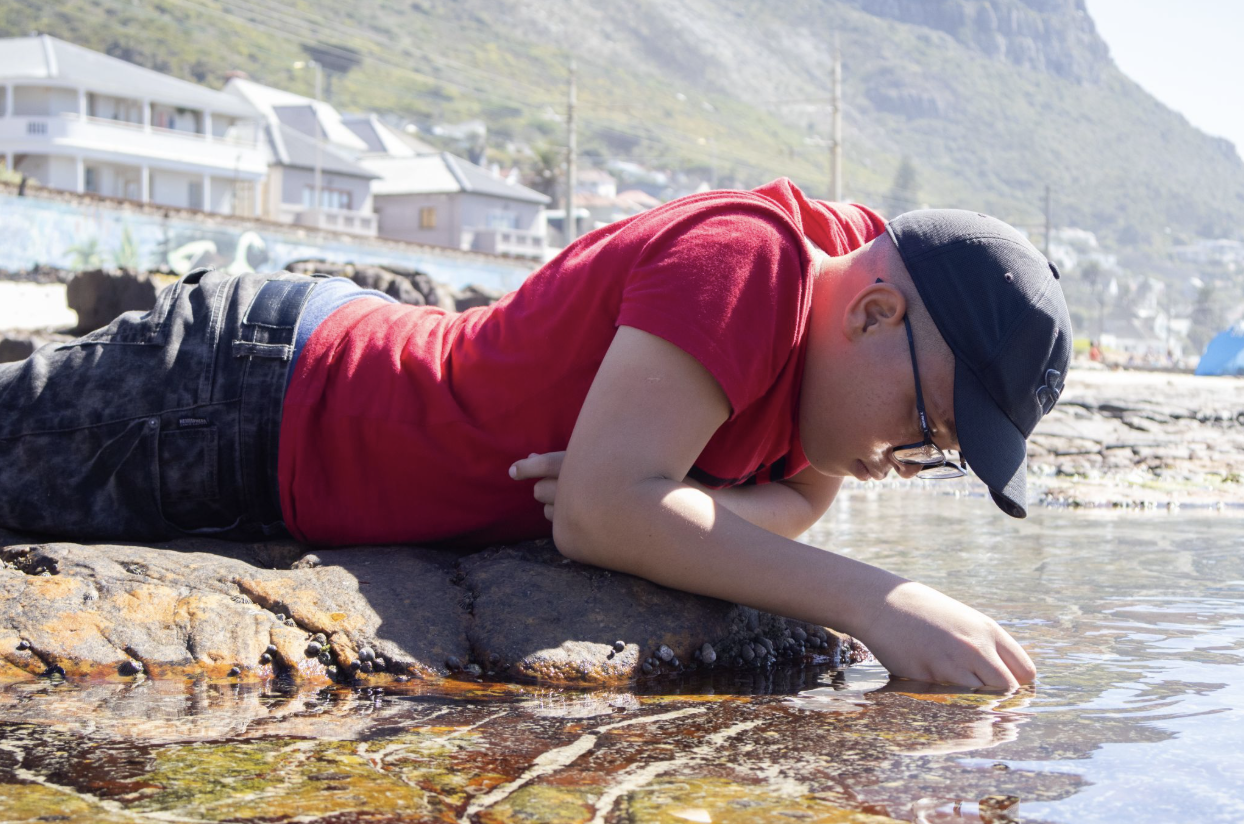
A learner studying marine life at Dalebrook rocky shore. Photo by Liat Dayan | © Save Our Seas Foundation Shark Education Centre.
Beyond the Surface: Defining Water
People define water differently. Scientists define water as two hydrogen atoms and one oxygen atom. However, defining water only in chemical terms can sometimes seem like we are overlooking what it actually means to humanity. Many people consider it to be a non-living “thing,” but is it really just that? Oftentimes, people tell stories of feeling healed after visiting the sea. What interests me is the healing properties. Is it the plankton? The fish? The seaweed? Or the seawater itself? How can something that is not alive have the ability to heal?
Water is life, memory, and connection. A Setswana saying goes, “Mo metsi a kileng a ema, a tlo pheta a eme gape,” which translates to “where water once passed, it will pass again; water is memory to itself.”
Connecting Humanity and the Sea
Being a marine educator has taught me that the true value of nature should not be measured by how useful it is to me; purpose does not mean benefit. Through the dedication and efforts of conservation stewards, we heal our fears by embracing people and their knowledge about the ocean while also debunking myths associated with it; we protect what we understand, care about what we feel connected to, and education creates that connection. When we help people understand the ocean, we can help them care for it.
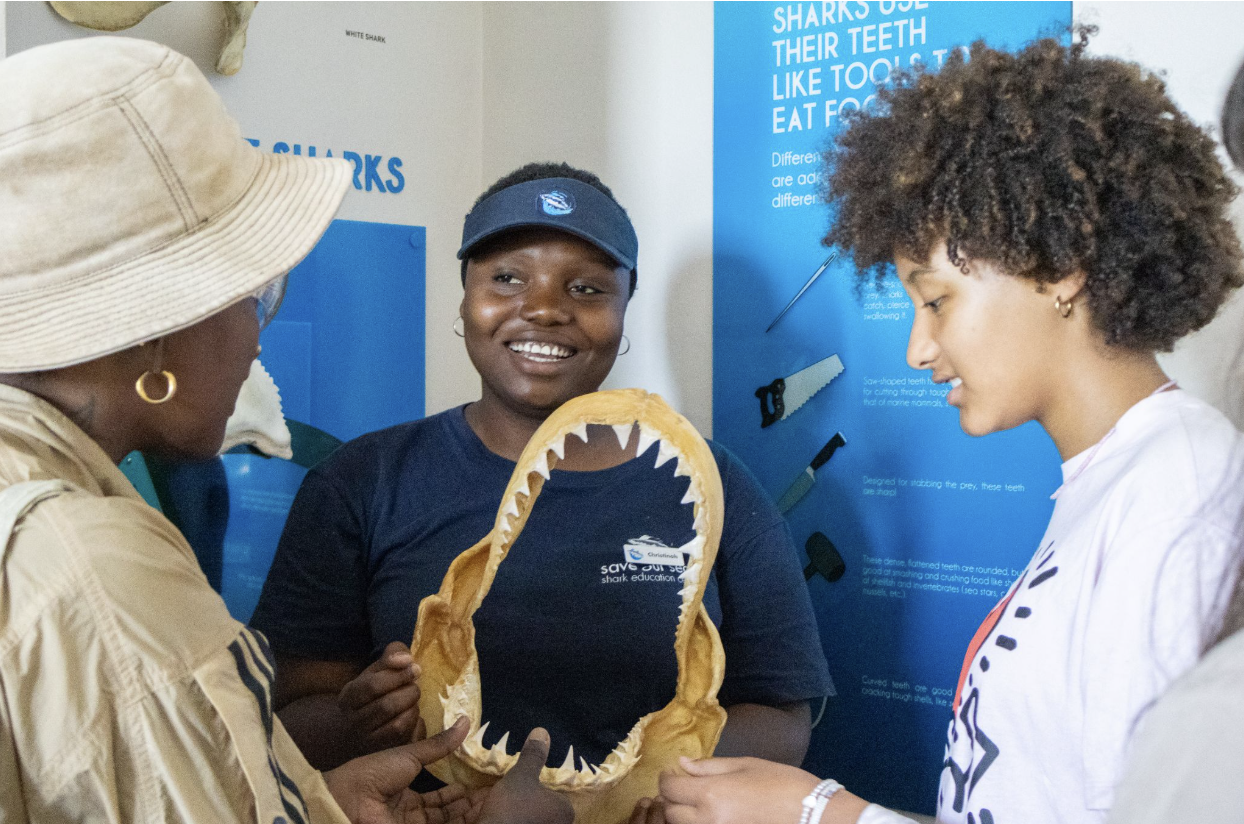
Christinah (author of this blog) displaying a shark jaw during a public open day. Photo by Liat Dayan | © Save Our Seas Foundation Shark Education Centre.
A Bridge to Understanding: SOSF SEC
We use marine education as a bridge where people and life in the ocean can coexist. But what does that look like in practice? As an educator at the SOSF SEC, I’ve seen how knowledge creates opportunities for people to connect with the ocean. Many people are scared of sharks, so inviting the public to the SOSF SEC can help correct the misunderstanding that all sharks are aggressive, with big, sharp teeth. I have seen it, and I know how things can change when you start getting all the facts. Engaging with communities helps question fears, challenge myths, and develop a deeper sense of belonging. I have seen how perceptions change when people engage with the ocean for the first time; those moments make me reflect on my own special first encounters with the ocean. When I first saw the ocean, smelled the air, and felt the sticky feet of sea animals, my perception changed. I remember how unfamiliar it all felt. Someone’s first experience can be the beginning of something much bigger, and a different kind of healing can begin there.
Sometimes, you can be that bridge between your family or friends and the ocean. To me, it’s bittersweet because my family did not initially understand my connection to nature, since they had never actually seen someone willingly engage with wild animals. But when I decided to study conservation, they saw how important it was to me. My dad even started watching National Geographic so he could understand my world better, mostly warning me about the dangerous animals to watch out for in the wild. When I started to work by the coast, their imaginations went wild because their child went from playing with frogs and snakes to snorkelling with sharks. But they always had hope that they too would see the sea one day, and that their “daughter” would bring them closer to nature and help change their perceptions about the ocean.
Recently, my parents had to travel to the coast, and their reactions towards the ocean made me feel so proud. I remember my mom, teary as she can be, saying that finally she can put an image or sensation to the sound she always heard through the seashells her mom gave her and how the ocean actually smells like algae, something she recognised from the rivers and dams close to her childhood home. They couldn’t believe that they were seeking something that had always been there.
Equity in Marine Education
I often think about modern scientific knowledge and indigenous marine knowledge, and as an educator, I ask myself questions like: which knowledge do I share? Whose knowledge gets taught? Who decides what counts as knowledge? Ultimately, I believe neither scientific knowledge nor Indigenous knowledge should replace one another; both can be used as tools.
Sharing knowledge with people can be a powerful way to drive change, care, and conservation within our communities. But we need to remember that education inherently reshapes our minds, both directly and indirectly. Whether it is indigenous marine knowledge or modern natural science knowledge. We need to be careful when sharing information that can dissociate people from their cultural knowledge and heritage. The way we receive information influences our beliefs, and I believe we can ethically honour and respect both ideological concepts alike.
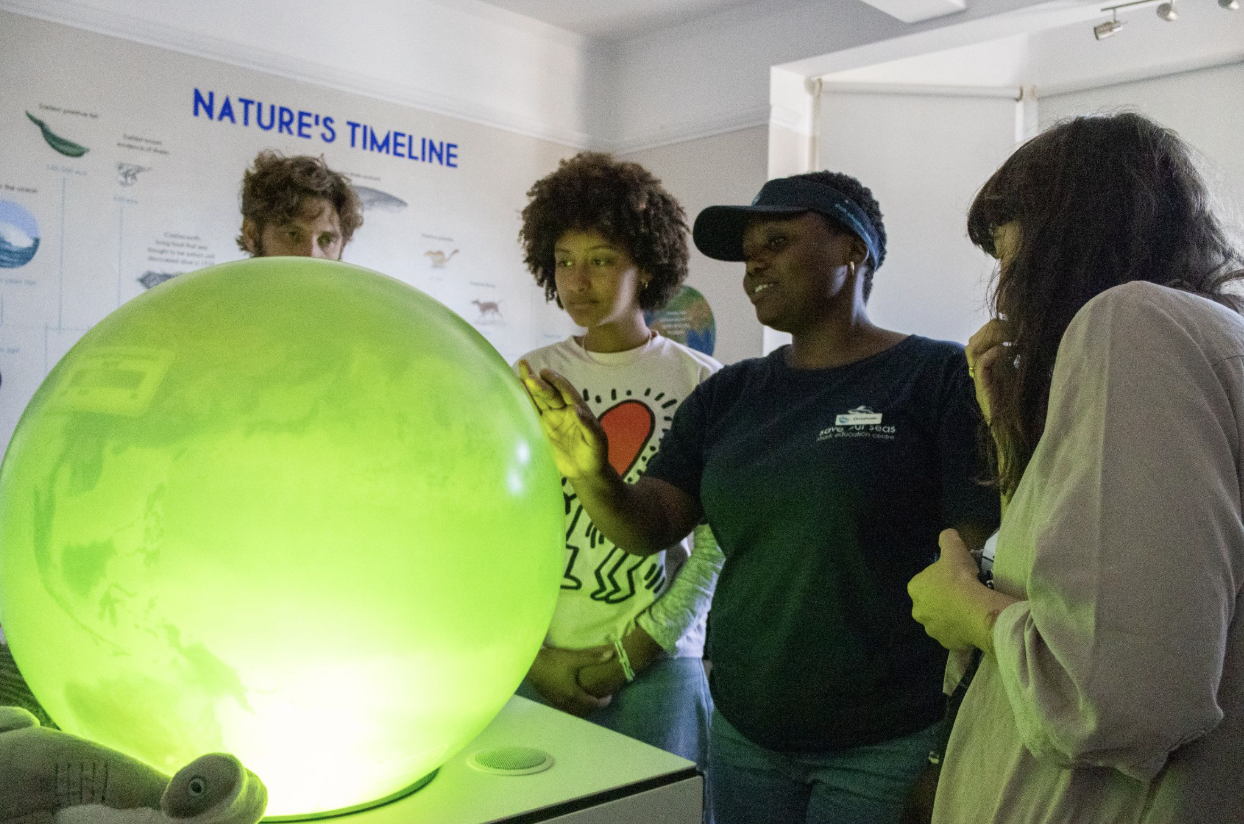
Christinah showcasing our 360° spherical touch display. Photo by Liat Dayan | © Save Our Seas Foundation Shark Education Centre.
What does the ocean mean to you?
When you look into the sea, what do you feel? Do you feel healed? Do you ever think about what heals you or clears your mind during that special moment? Is it plankton? The fish in the ocean? The moon that controls the tides? Believe me, you don’t have to think about where the healing comes from, and we don’t even need to understand the magic using science. Finding your own medium of healing does not require you to search for a chapter in a science book.
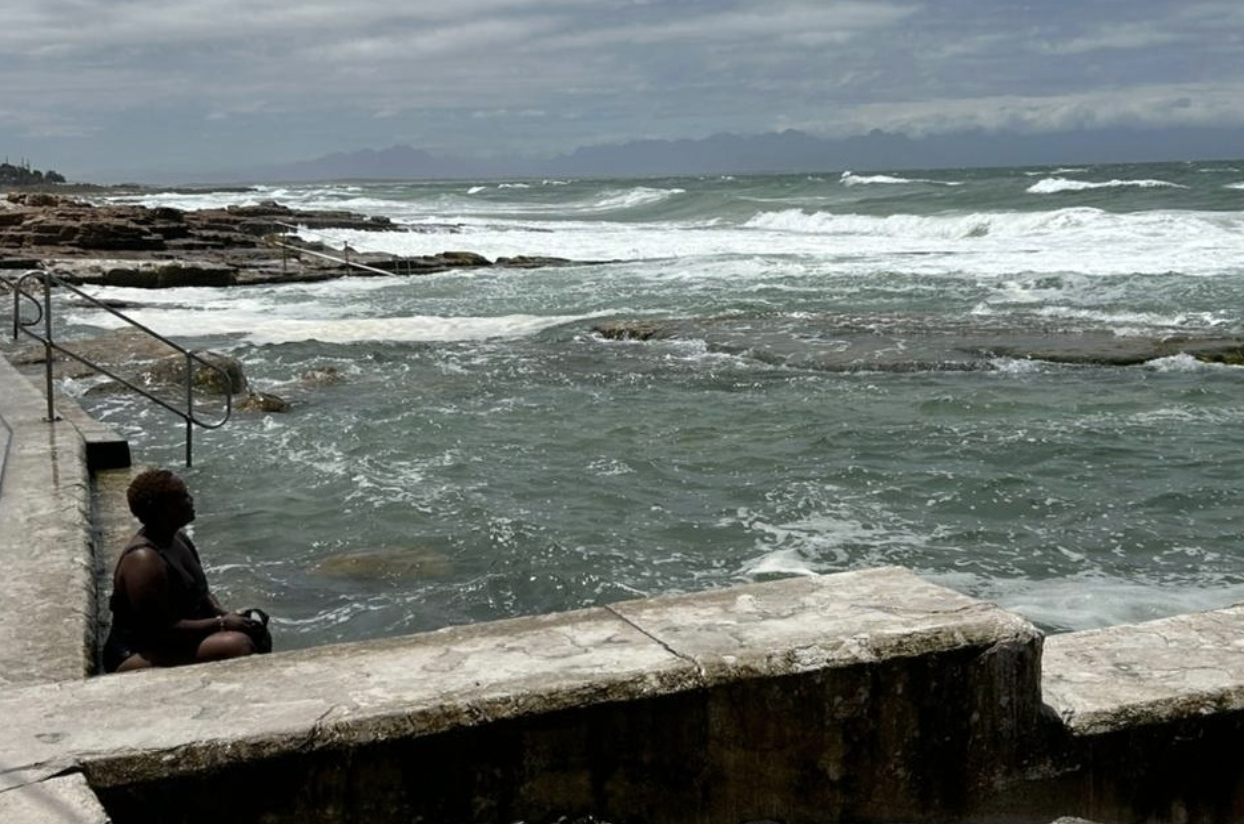
Christinah sitting at Dalebrook tidal pool. Photo by Lilita Limba.
It can begin with a seashell, a story, a first visit to the shore, a moment where you touch the ocean, or even a question. Marine education can bridge that gap, challenging our fears without dismissing the experiences that created them, helping us understand those fears and misconceptions while introducing science without erasing cultural history and heritage. The ocean exists beyond the shoreline.
So when you look into the ocean or place a seashell by your ear, what does it awaken in you?