
Beyond the Screen: What Teaching with Tech Taught Me About the Great African Sea Forest
Recently, I traded the rocky shores of Kalk Bay for the digital halls of UCT’s Teaching with Technology course. It was exciting, a little daunting, and it challenged me to stay adaptable. But through the modules, one truth floated to the surface: great teaching isn’t about flashy gadgets; it’s about creating a ‘skylight’ that lets learners see the world differently.
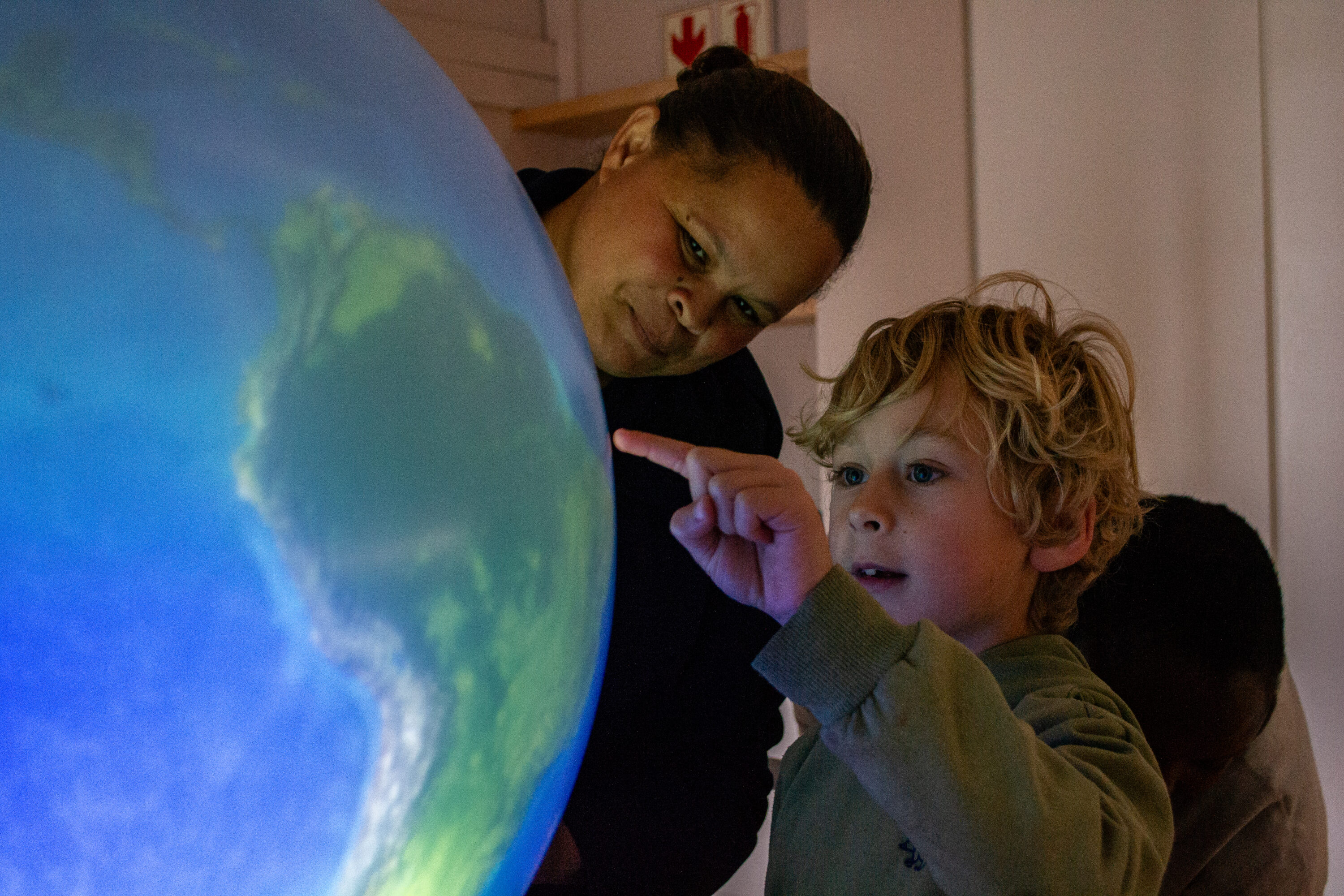
Photo of Justine (author of this blog) interacting with a visitor using the PufferfishTM. Photo by Liat Dayan | © Save Our Seas Foundation Shark Education Centre.
One of the programme’s biggest strengths was its strong emphasis on learner-centred teaching. Instead of learners passively receiving information, the programme participants were taught to place learners at the centre of the learning process. For example, activities such as creating digital content about sharks or explaining concepts like shark anatomy in learners’ own words will prompt learners to think, reflect, and truly understand what they are learning. From my experience, this approach makes lessons more engaging and allows learners to take ownership of their work.
A major positive was the use of technology to enhance learning. Digital tools gave learners the opportunity to be creative, collaborate with peers, and develop important 21st-century skills. Whether it was using tablets to learn more about shark biology or creating short explanatory videos, technology transformed ordinary lessons into interactive experiences. I noticed that learners were more motivated and confident when they could visually represent their ideas rather than relying only on written work. Technology also supported different learning styles, allowing visual, auditory, and kinaesthetic learners to all find their strengths.
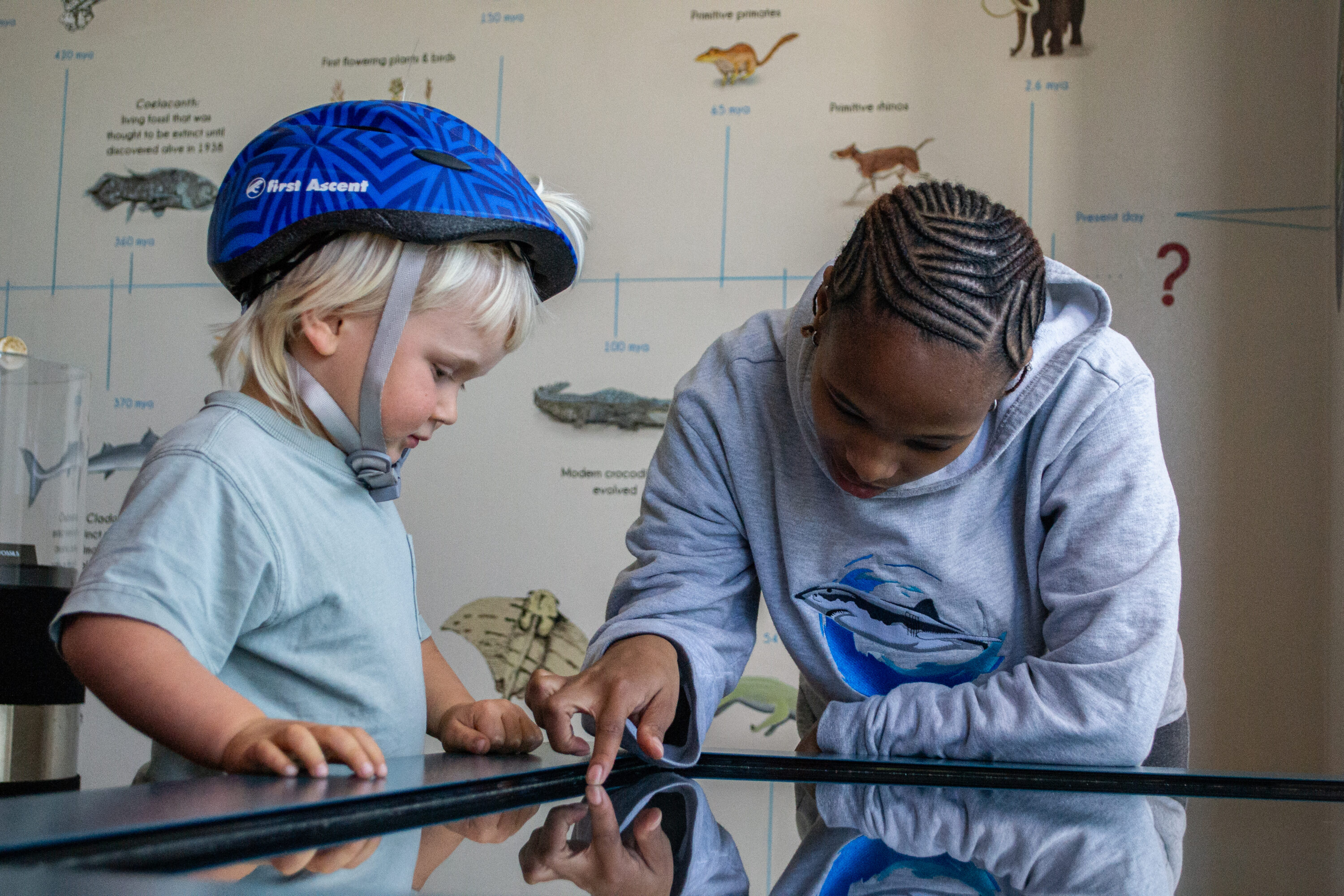
Photo of a child playing with our educational touch table. Photo by Liat Dayan | © Save Our Seas Foundation Shark Education Centre.
However, the programme also highlighted some real challenges for educators. One clear challenge of relying on technology in the classroom is accessibility. Not all learners have equal access to devices, stable internet, or digital literacy skills. Technical issues such as poor connectivity or malfunctioning devices can quickly disrupt a lesson. During the programme, it became clear that even the best-designed digital activity can fall apart if the technology fails. This can be frustrating for both learners and educators and can affect the flow of learning. This is where one of my biggest takeaways emerged: the importance of always having a backup plan. One morning, as the SOSF Shark Education Centre was opening for tours, a child wanted to look at a shark egg on a tablet. The tablet battery died right as the kid saw a shark egg case, which is why a “Plan B” is so vital. I could then just go with the child and show him our shark egg display.
Technology is a powerful tool, but it should never be the only plan. I learned that effective educators prepare alternative activities that still meet learning outcomes if things go wrong. Simple paper-based tasks, group discussions, or creative brainstorming activities can easily replace digital tools when needed. Having a Plan B not only reduces stress but also ensures that learning continues smoothly, regardless of circumstances.
Another key lesson I took from the programme was the value of constructivist teaching. Allowing learners to build knowledge through their own experiences made lessons more meaningful and memorable. When learners connect tasks like kelp mapping with indigenous shark species found along the False Bay coast, such as describing their characteristics, learning becomes fun rather than forced. Collaboration also played a huge role. Peer discussions and shared reflections helped learners see different perspectives and deepened their understanding.
For the SOSF Shark Education Centre, this is a game-changer. By blending high-tech tools with the raw experience of the ocean, we can support educators to feel as confident with a tablet as they do with a shark egg case. It’s about being active, inclusive, and, above all, adaptable. There is a real opportunity to strengthen our programmes further. Incorporating more structured support for educators using technology would be beneficial, especially for those who may feel less confident. Clear guidelines, sample lesson plans, and training on managing both digital and non-digital activities could make implementation smoother. Emphasising flexibility and adaptability as core teaching skills would also prepare educators to handle real classroom challenges more effectively.
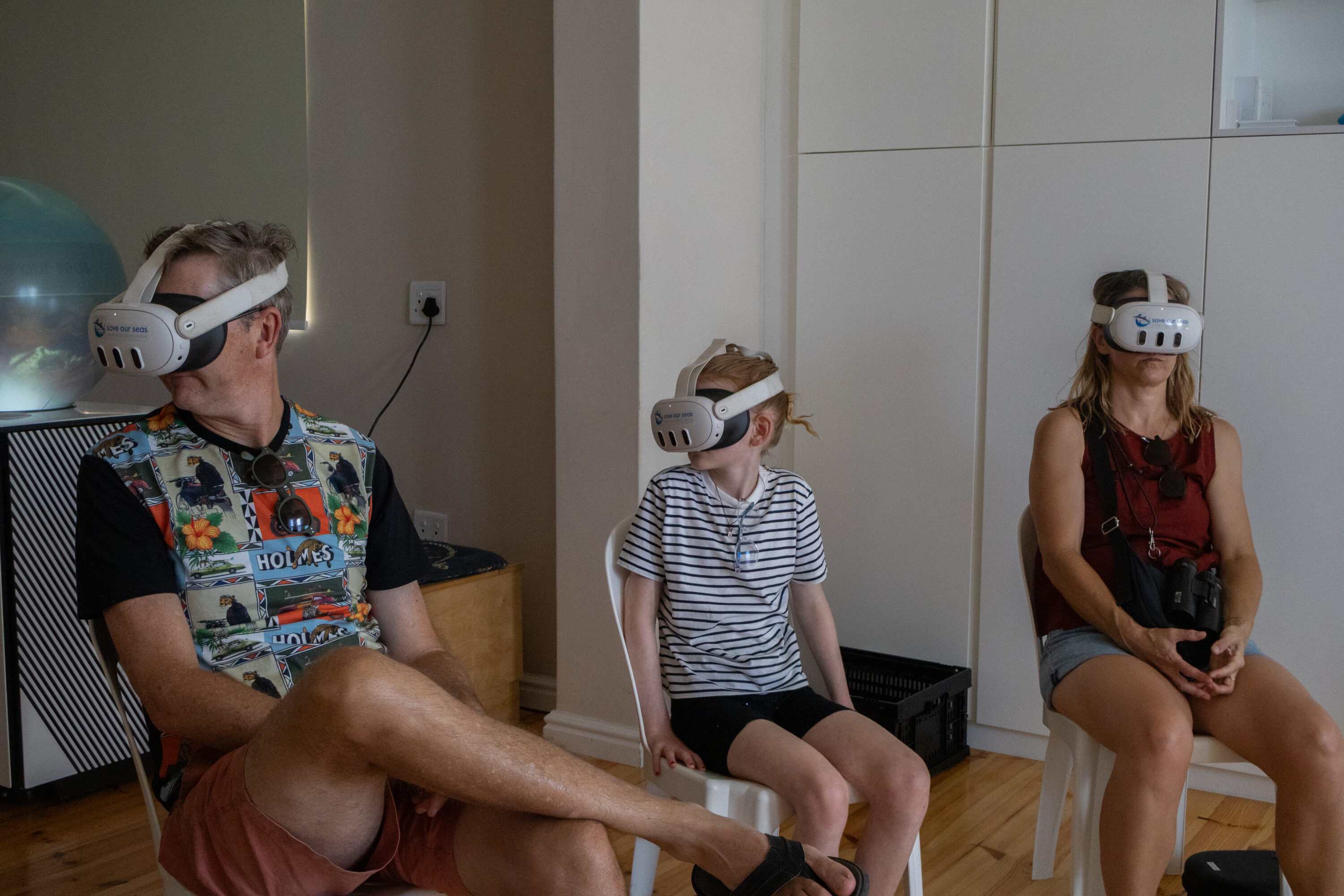
Photo of visitors trying out the SOSFSEC VR headsets. Photo by Liat Dayan | © Save Our Seas Foundation Shark Education Centre.
Overall, this programme taught me that technology is not a replacement for good teaching. It is a tool that works best when paired with strong pedagogy, creativity, and preparation. The experience reinforced my belief that learning should be active, inclusive, and adaptable. Most importantly, it reminded me that sometimes the most valuable lesson isn’t found on a screen, but in the ability to adjust, reflect, and keep learning, moving forward, no matter what.