
Intertidal Treasures: Your Guide to Exploring Cape Town’s Rockpools Like a Pro
Intertidal Treasures: Your Guide to Exploring Cape Town’s Rockpools Like a Pro
Ever feel like you’re being watched while walking the shoreline? You probably are! Between the crashing waves and the dry sand lies a world of tiny eyes, waving tentacles, and master mimics. Rockpooling is the most accessible way to meet the ocean face-to-face without even getting your hair wet. But, like any good explorer, you need a map and a code of conduct.
In this blog, we’ll show you how to rockpool safely and respectfully, how to choose the right location, and how to use the tides to your advantage. You’ll also learn how to identify which creatures you can (and can’t) interact with, so you can enjoy these incredible spaces while helping protect these fragile ecosystems for future explorers.
Discovering Life Between the Tides
Rocky shorelines offer a unique opportunity for people to learn about the ocean and its inhabitants without even getting in the water. Rockpooling is one of the most accessible and relatively safe ways to interact with marine life, making it perfect for families, students, and curious ocean lovers of all ages.
At first glance, a rocky shore might appear barren and lifeless. But take a closer look, and you’ll discover that it is bustling with activity. Rockpools are home to animals specially adapted to survive dramatic changes in temperature, salinity, and wave exposure. Each pool is its own miniature ecosystem, full of surprises for those who take the time to look carefully.
With all the benefits that rockpooling offers, it’s important to remember that safety, both for ourselves and for marine life, should always come first.
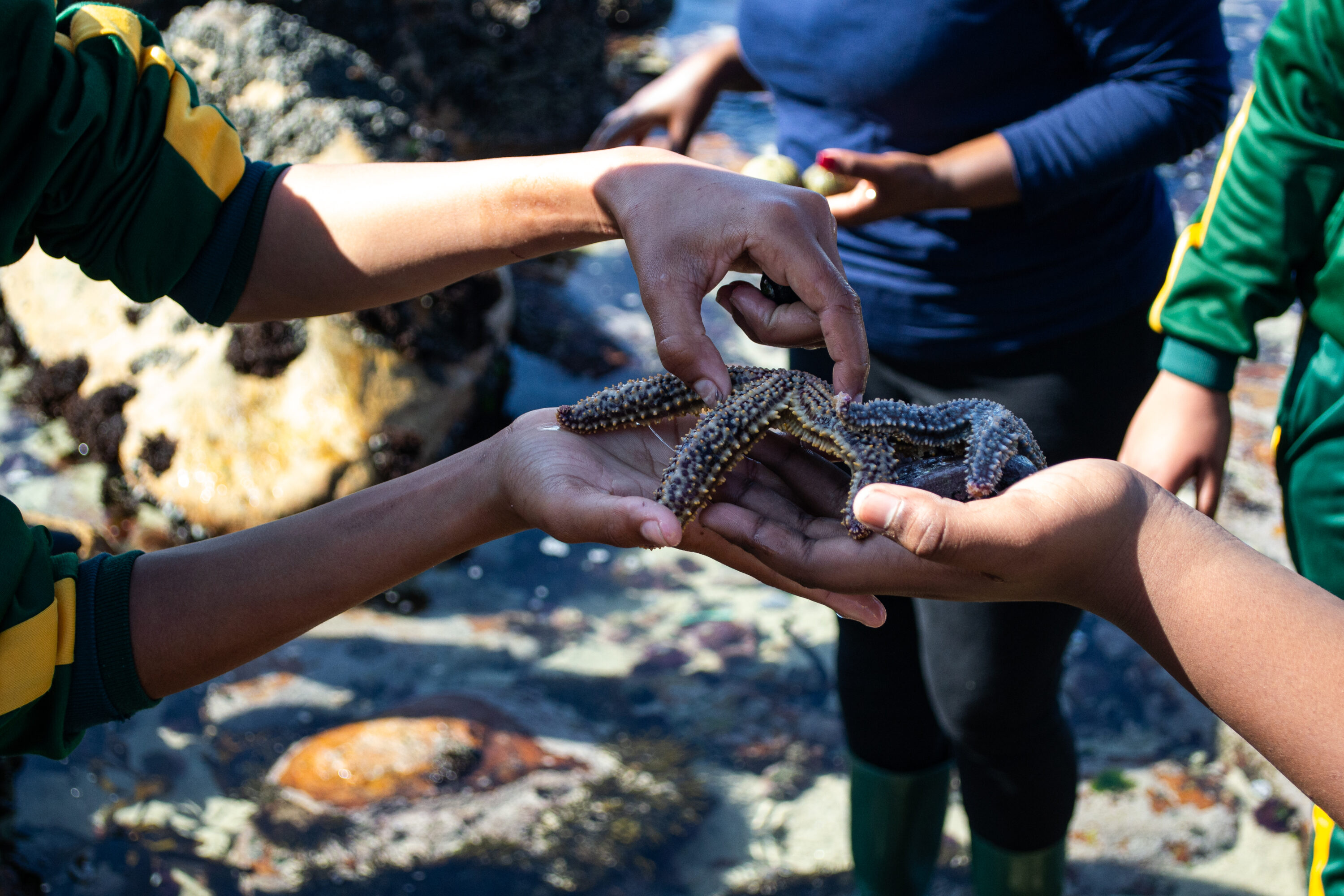
Photo of a sea star by Liat Dayan | © Save Our Seas Foundation Shark Education Centre.
Choosing the Right Location
When deciding where to go rockpooling, there are a few key factors to consider.
Tides
One of the most important considerations is the tide. The best time to explore rockpools is at low tide, when the ocean recedes to its lowest level, exposing parts of the shoreline that are usually underwater. This gives you better access and reduces the risk of waves washing over the rocks. Even better are spring tides, which happen during the new and full moons. During these tides, the gravitational pull of the moon and sun combine, causing the sea to pull back farther than usual. Think of it as a VIP access pass to the best rock pools that are usually hidden beneath the waves.
You can check tide times using tide charts (for those who want more detail) or simply searching online for low-tide times in your area and planning your visit around them.
Regulations and Protected Areas
Before choosing a location, it’s also important to check whether the area is protected. Some rocky shores fall within Marine Protected Areas (MPAs), where interacting with or removing marine life is prohibited.
As tempting as it might be to take home a beautiful shell, remember: leave everything exactly where you found it. This is especially important in protected areas, where removing even small items can disrupt the ecosystem.
Rockpool Safety Basics
To make sure you have a safe and enjoyable experience, it’s best to come prepared. Consider bringing:
- A hat and sunscreen for sun protection
- Shoes that can get wet, grip well on slippery rocks, and protect your feet from sharp shells or sea urchins
- Plenty of water
- A small first-aid kit (bandages, plasters, tweezers)
- A camera or magnifying glass for closer observation
- A snack or light refreshments
While exploring, always stay aware of your surroundings. Keep an eye on:
- The swell
- The incoming tide
- Waves crashing against the rocks
- The sun
- Slippery or unstable surfaces
- Sea urchins
- Spiny chitons
It’s best to go rockpooling with at least one other person as a safety precaution. In Cape Town, the “lower balanoid” zone is notoriously slippery. Avoid running or jumping on rocks, especially the dark, wet rocks.
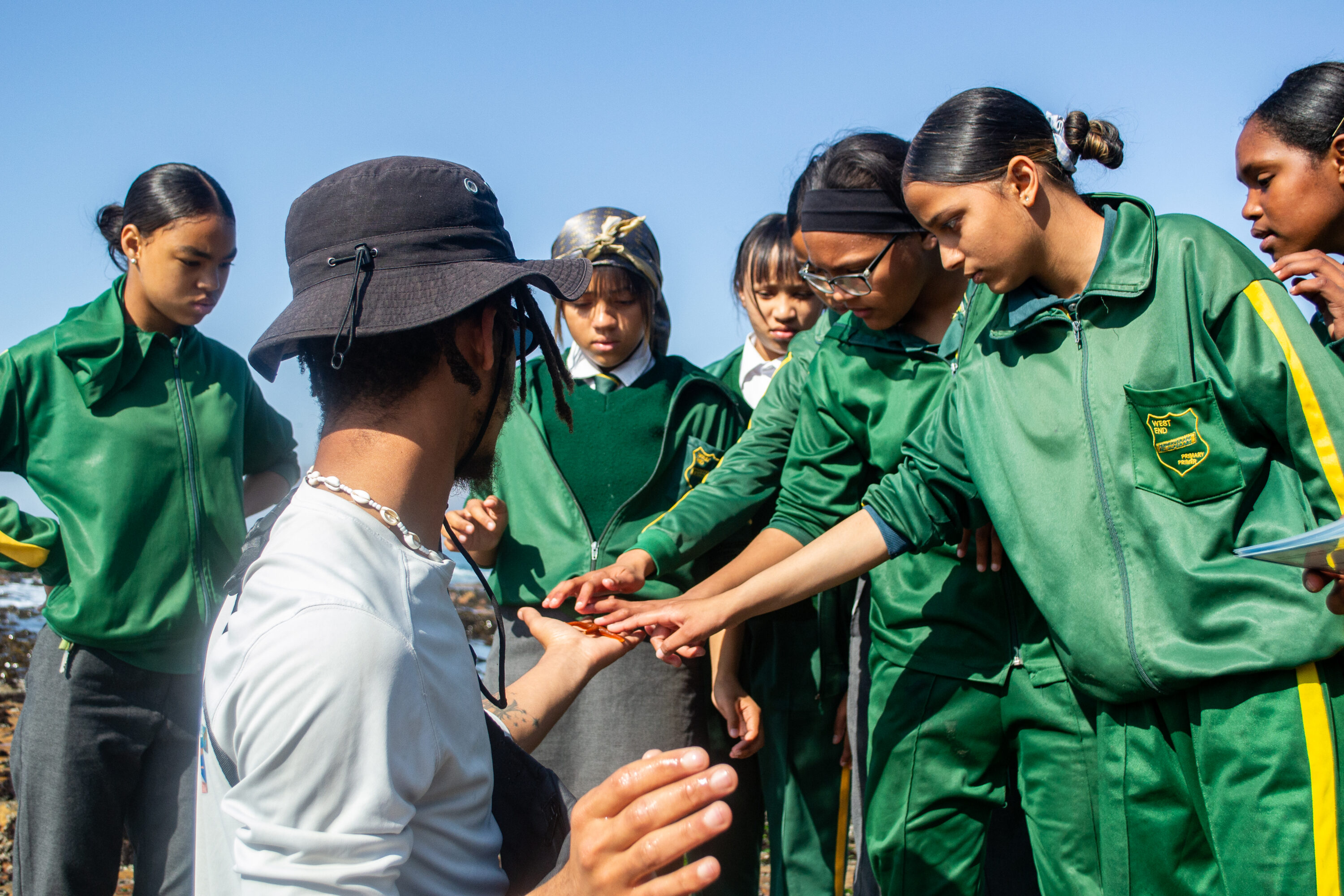
Photo of learners touching a red sea star. Photo by Liat Dayan | © Save Our Seas Foundation Shark Education Centre.
Rockpool Etiquette: Being a Responsible Explorer
The golden rule of rockpooling is simple: look, don’t touch. This is especially important if you’re unsure what an animal is or how it might react. At the SOSFSEC, however, because we know the species we’re handling and how to do so safely, we briefly pick up certain animals to show our learners, giving them a chance to observe them up close and interact responsibly.
If you do handle an organism, make sure to do so gently and always return it to the exact spot where you found it. Many rockpool creatures rely on very specific conditions to survive, so returning them “close enough” isn’t always good enough; their home spot matters. Remember, trying to pry a limpet or chiton off a rock can harm or even kill it by damaging its foot. Instead, take the opportunity to observe these amazing creatures without disturbing them.
Interesting animals are often found hiding in cracks, under ledges, or beneath rocks. If you turn over a rock to look underneath, be sure to place it back exactly as you found it. Think of a rockpool like someone’s living room. You wouldn’t walk into a house and flip the sofa over without putting it back, right? If you turn a rock, you’re literally ‘unroofing’ a home. Always flip it back gently so the sponges and anemones underneath don’t dry out in the sun.
Some common rockpool residents you might encounter include limpets, periwinkles, sea snails, mussels, sea urchins, sea stars, anemones, klipfish, barnacles, crabs, and, if you’re very lucky, an octopus.
However, there are also animals you should never touch, such as the blue sea dragon and blue bottles, which are often found washed up on the shore together. The blue sea dragon stores stinging cells from its prey (blue bottles) that can deliver a painful sting if handled.
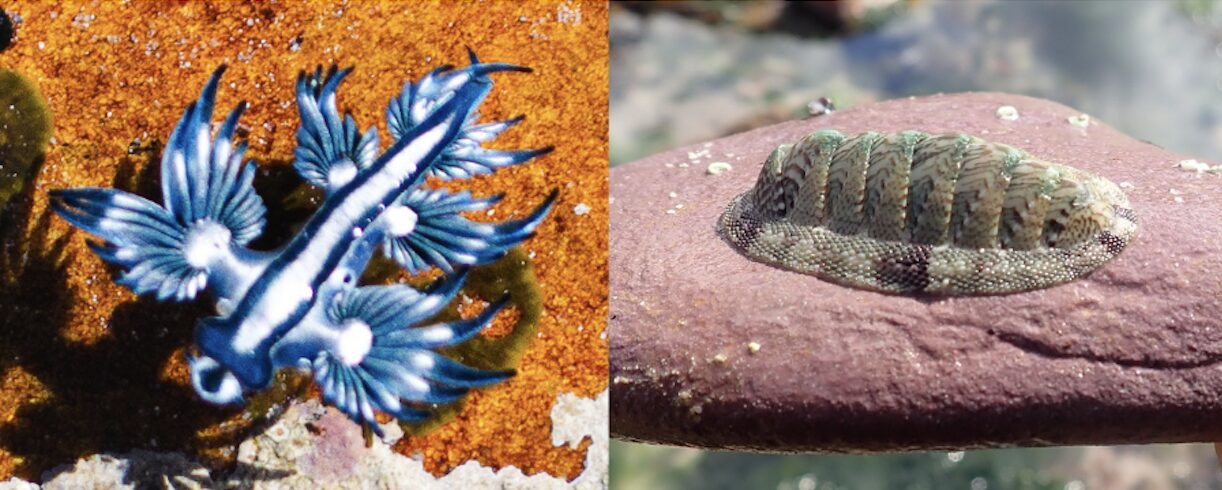
Photo of a blue sea dragon (left) and a blue bottle (right) by Liat Dayan | © Save Our Seas Foundation Shark Education Centre.
Tools to Enhance Your Experience: Identification Guides
One of the most useful tools for rockpooling is a good identification guide. You can find the Save Our Seas Foundation Shark Education Centres’ Rockpool Pocket Guide available for free download on our website under the ‘Resources’ tab!
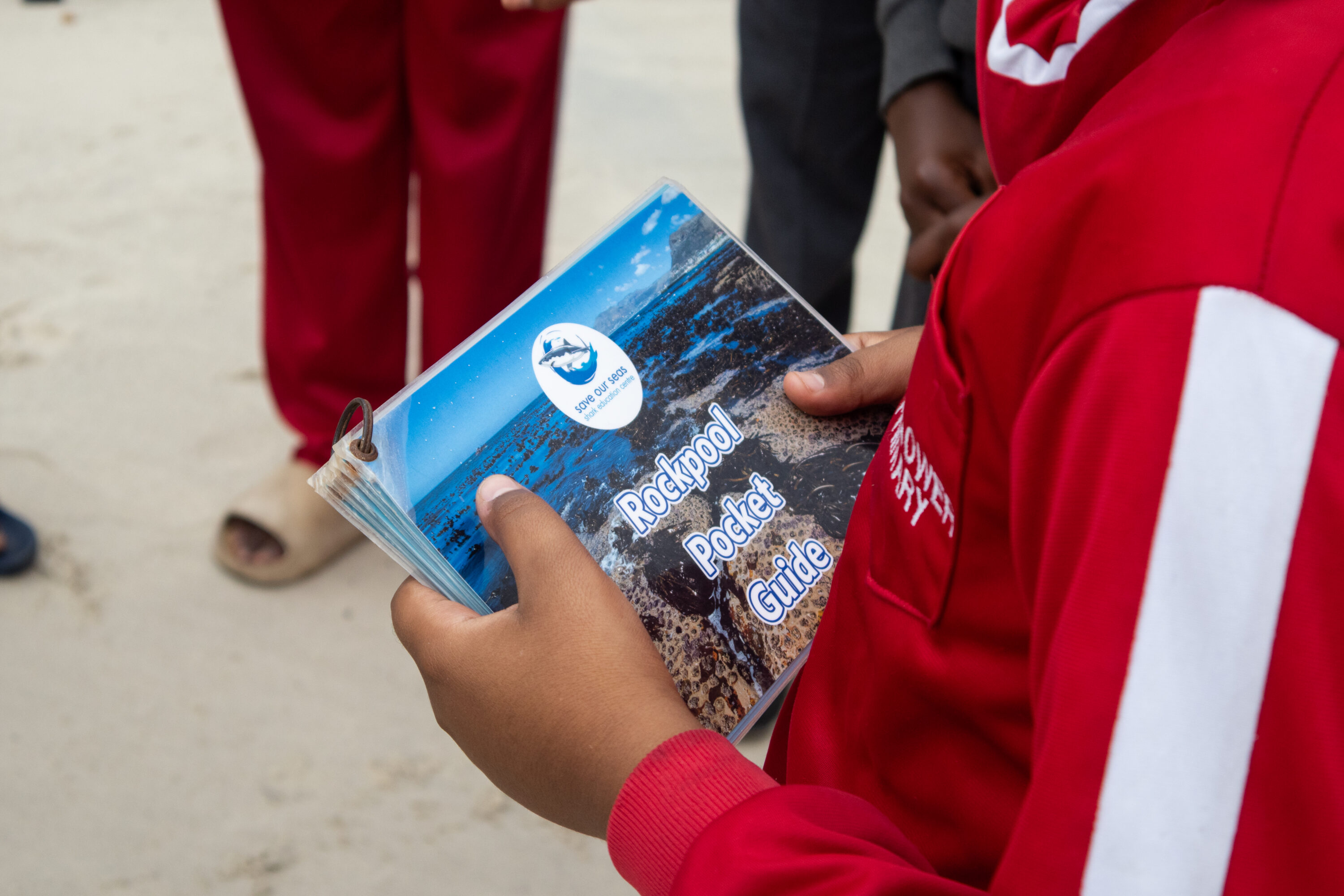
Photo of the Rockpool Pocket Guide by Liat Dayan | © Save Our Seas Foundation Shark Education Centre.
We also recommend the book Explore the Shore by local authors Charles Griffiths and his son Matt. This guide introduces the incredible diversity of life along our coastline in a clear, engaging, and easy-to-understand way. It’s perfect for children, students, and adults alike. The book is available online and in major bookshops, and it includes QR codes linking to helpful videos on their YouTube channel, making learning even more interactive.
Cape Town Rockpooling Spots
If you’re looking for places to start, here are some rockpools known for their rich marine life:
- Dalebrook Beach (Marine Protected Area – “no-take” zone)
- Mouille Point
- Below the Catwalk between Muizenberg and St James
- Saunders Rock Beach
- Kommetjie
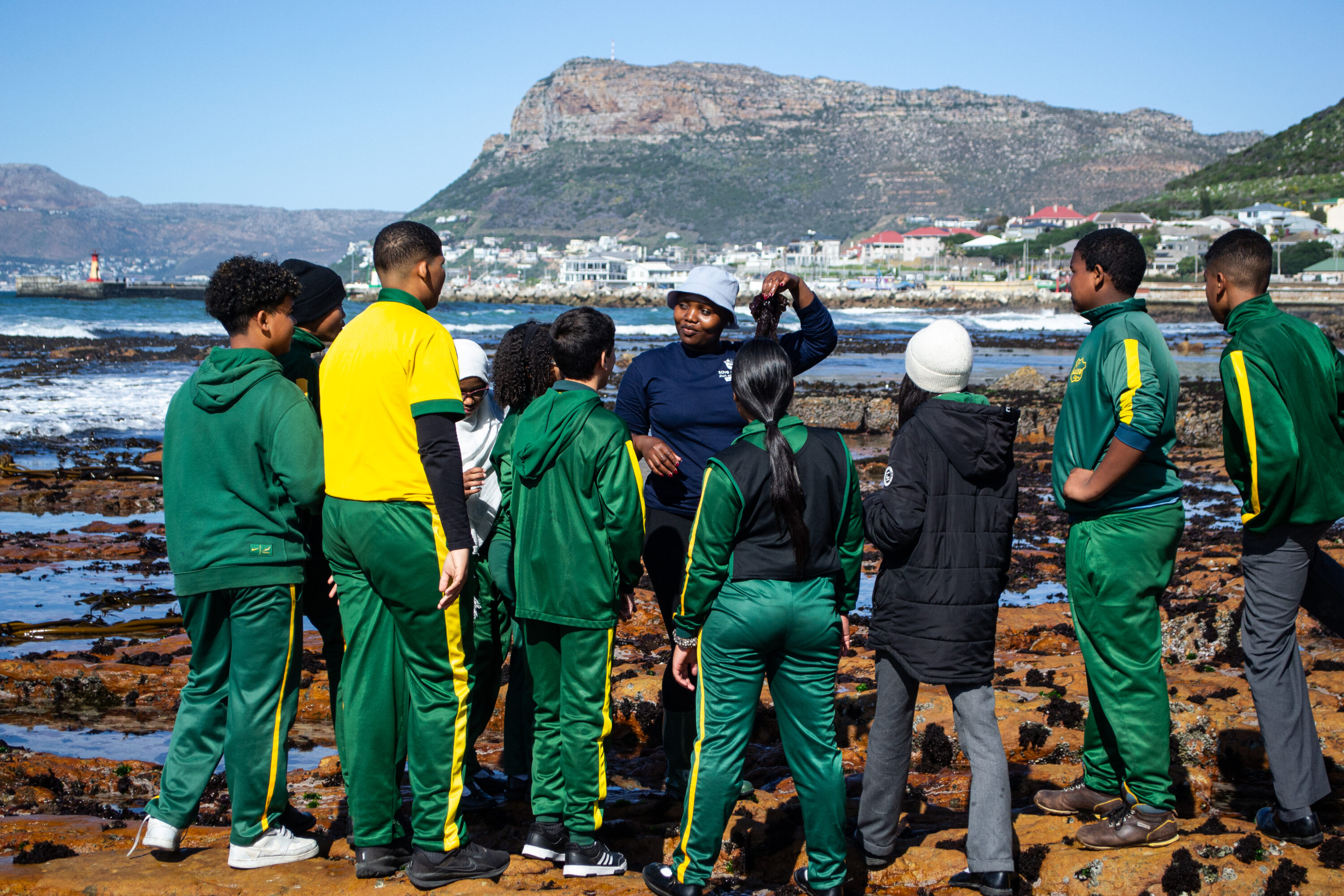
Photo of our Educator, Christinah, explaining to learners about seaweed. Photo by Liat Dayan | © Save Our Seas Foundation Shark Education Centre.
We hope this guide helps you feel more confident and excited about exploring rockpools safely and responsibly. With care, curiosity, and respect, rockpooling can be a rewarding way to connect with the ocean while ensuring these remarkable habitats remain healthy for generations to come.