Studying the food of reef manta rays – 200 m from my bed
On D’Arros, I live 100 m from the lab and 200 m from the manta rays. Despite being charismatic and loved by many, the manta ray is a threatened keystone species that urgently needs to be studied for its conservation. At D’Arros, as the largest known aggregating site in the country, the Save Our Seas Foundation D’Arros Research Centre (SOSF-DRC) is ideally positioned to study them. Often, researchers are restricted by their physical distance from manta study sites, limiting what they can do. Here, mantas congregate just beyond our doorstep, so very little can get in the way of my determination to study them.
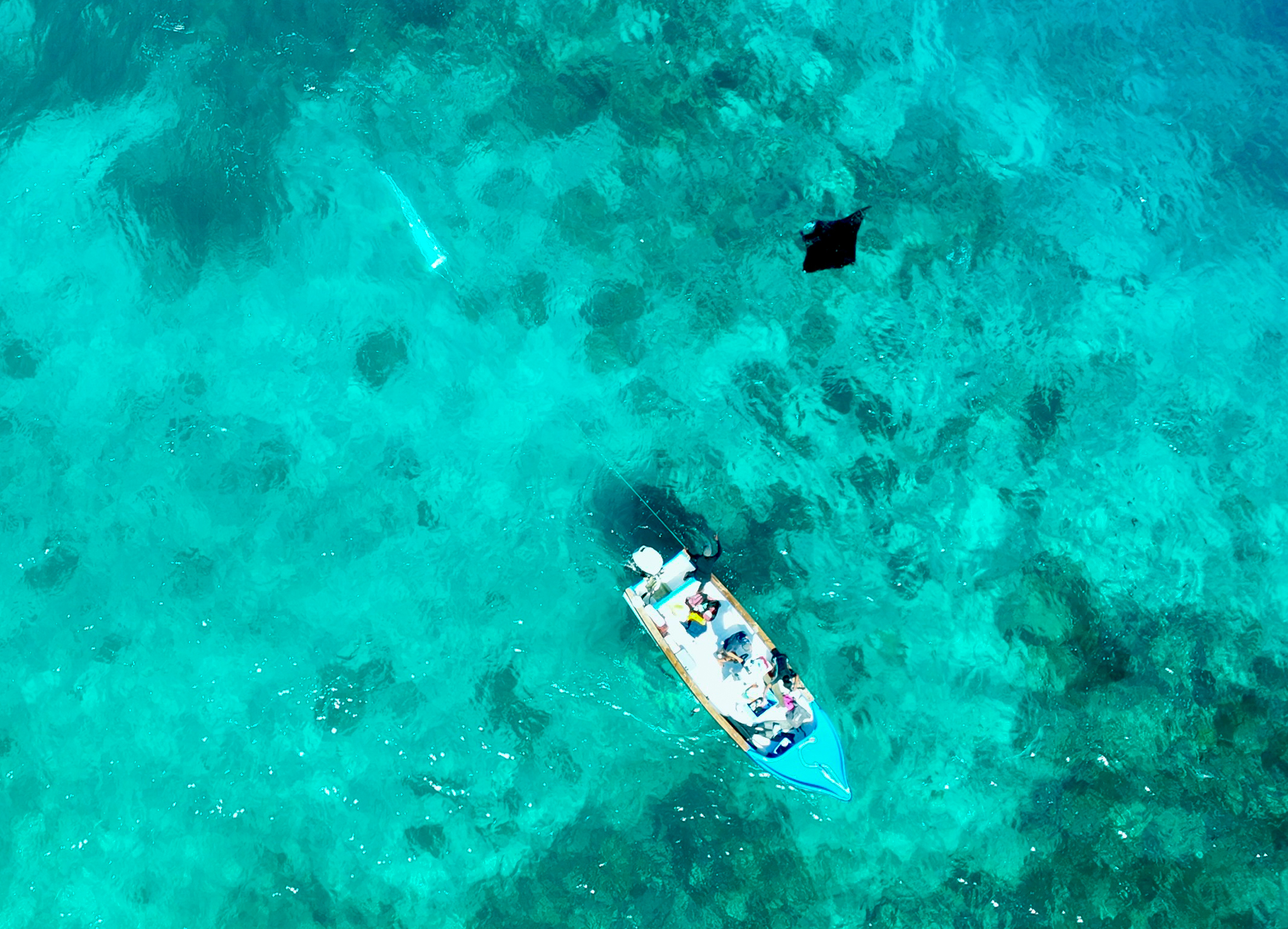
Dillys and the team collect a plankton sample near a feeding manta ray. Photo by Henriette Grimmel | © Save Our Seas Foundation
I’ve always been a generalist and hesitated to specialise because I enjoy working with multiple species in the vast Seychelles’ island biodiversity, but I knew I eventually had to focus on one research area. During staff project allocation we were presented study options based on the SOSF-DRC’s priority research topics. I had previously worked with turtles, sharks, corals and fish, and I knew I needed to challenge myself with something new. Manta rays were another option on the list, specifically focusing on their food—plankton. A bit odd, I thought, yet I felt drawn to it. The more I read about plankton, the more it felt like diving into a new world. The links between my study species and other living things were fascinating and showed how interconnected our ecosystem is. How could something so important be so understudied? Digging into the available literature on manta rays, it is clear that there is still much we do not know about their feeding ecology. No wonder it made the DRC’s priority list. I knew this was the research topic for me. I was about to embark on a completely new research journey, and it felt exciting; studying an ecological group that is connected to all living systems on earth. My goal was to understand when, where, and why plankton accumulates at the surface around D’Arros and how these conditions trigger manta ray feeding aggregations. Most importantly, I wanted to know how productive the waters surrounding D’Arros are.
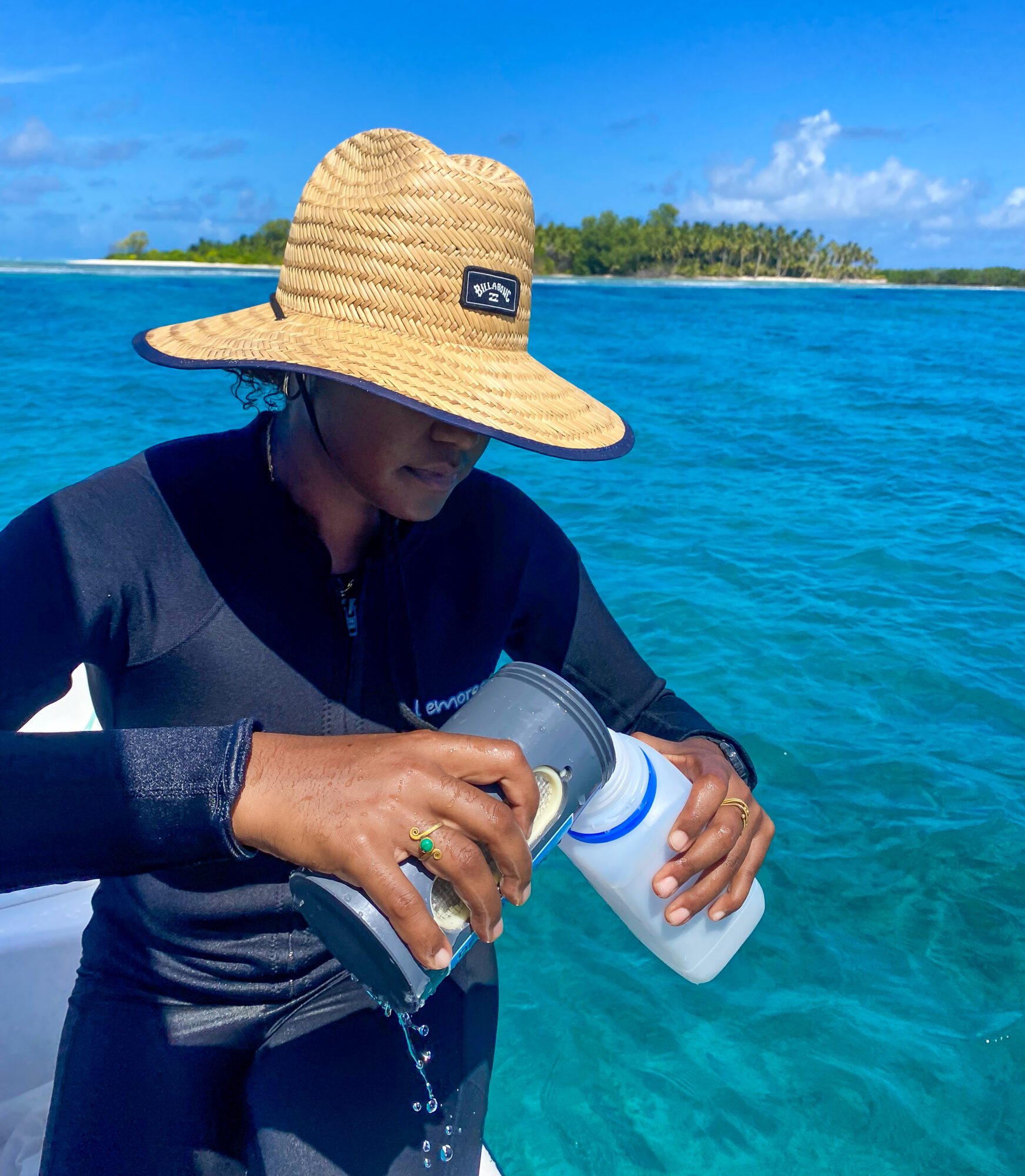
Dillys in the field pouring a plankton sample into a bottle to bring to the lab for processing. Photo by Amy Andre | © Save Our Seas Foundation
The different components of this study intrigued me. I knew I would be exploring research areas I hadn’t before, and skills and techniques both in and out of the water. The work was interdisciplinary and complex, so I knew I wouldn’t get bored. But soon I realised I would need a lot of patience to work with many tiny animals like plankton, something I did not lack. Perhaps the time consuming and complex nature of plankton research has kept people away from studying it but I made it my duty to bring this invisible ecological group some visibility; to help others understand just how mighty tiny plankton are.
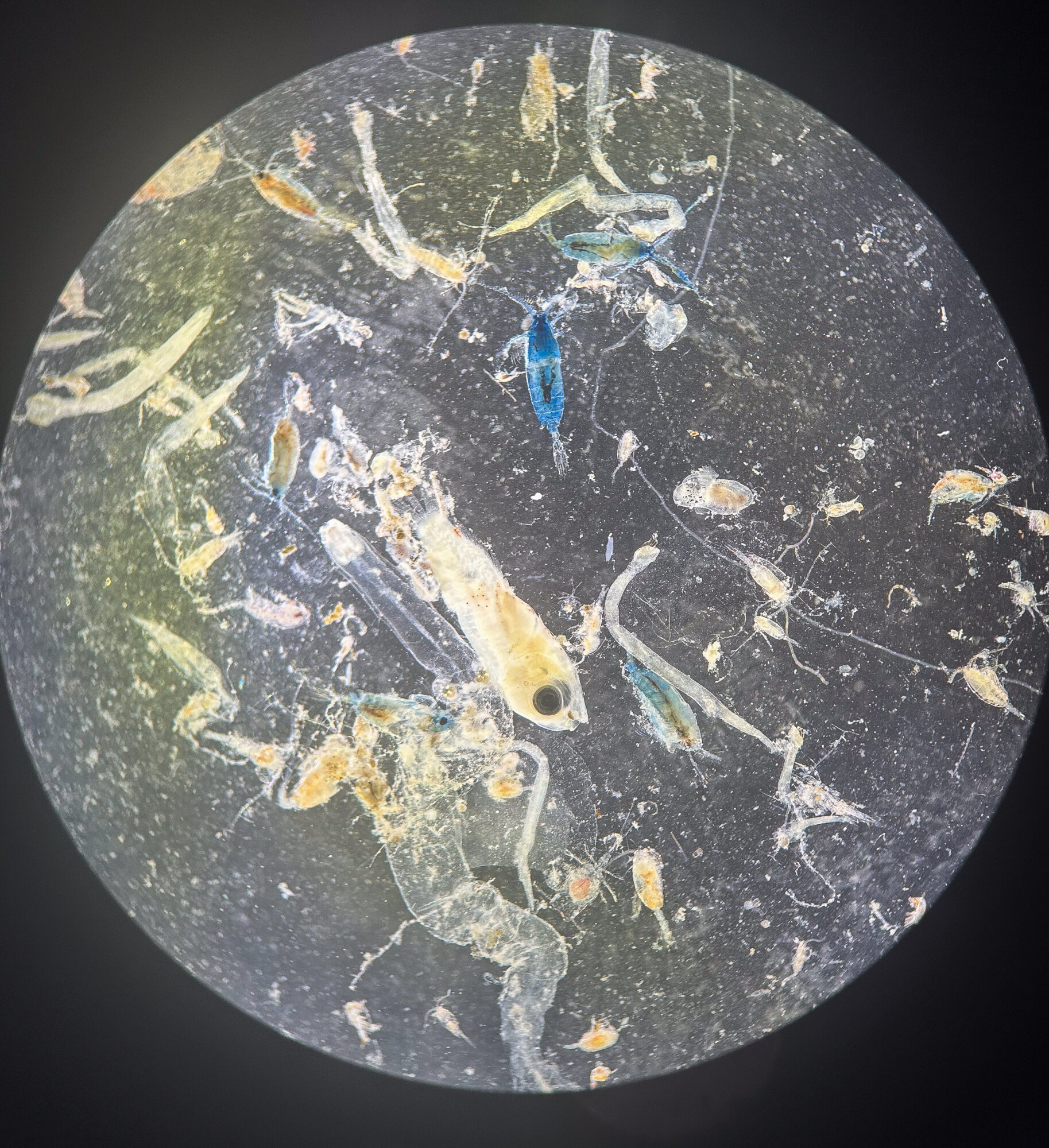
Plankton under the microscope. Photo by Dillys Pouponeau | © Save Our Seas Foundation
From the very start, I had the right support from experts in the field. My first reaction at a plankton sample in the bottle then under a microscope was ‘WOW’. Sparkles and magic. To think, what had I been missing all this time? I also grew closer to the manta rays. Majestic as they are, they move with a quiet grace that feels almost otherworldly. Their pectoral fins like wings, unfold in a slow hypnotic rhythm as they glide through the water in serenity. They seem untouched by urgency. I was fascinated by them, but also how tiny plankton nourishes and drives their movement. For such large animals, these minute organisms must be packed with fuel to power them like that. It reminds me that no matter how strong or important we think we are, it’s often the smallest presence that brings us back to humility; a quiet lesson for all of us as humans.
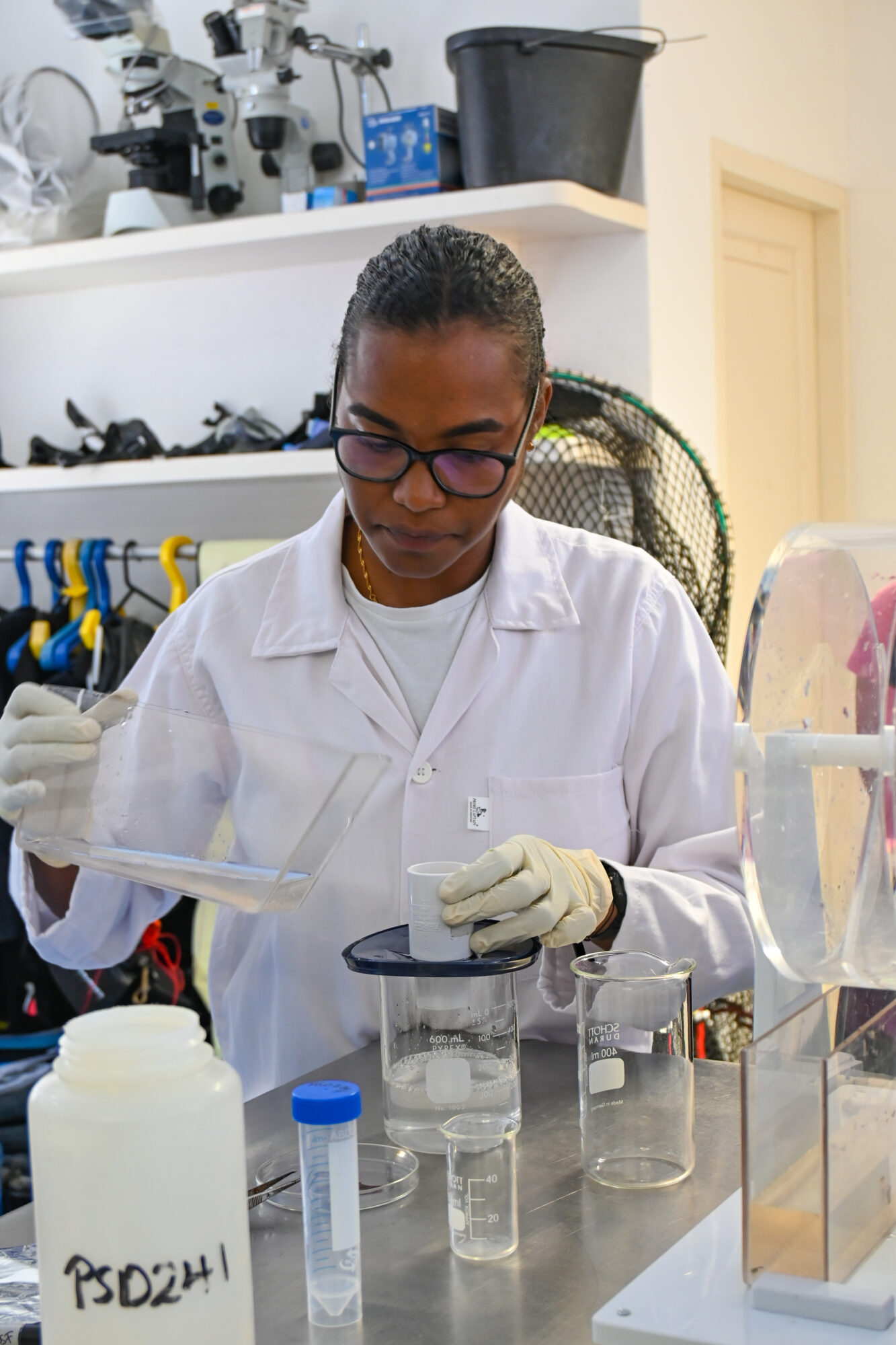
Dillys processing plankton samples in the DRC lab. Photo by Terence Vel | © Save Our Seas Foundation
To be out at sea collecting data, followed by hours in the lab – I loved it. Even just wearing a lab coat and gloves made me feel “sciency”, as I processed samples to make what I call “plankton crackers”, which are basically dried plankton that I weighed to document biomass. Then came the statistical analysis. I enjoyed my independence through this process, supported with guidance when needed. We found that high plankton densities in the water, above a certain threshold, triggered manta feeding. The tidal cycle was the strongest driver of plankton accumulation, more influential than the moon, season or wind. We identified the mantas’ preferred feeding sites and, remarkably, the mantas fed consistently year-round, which is not the case in most locations. My question about the productivity of D’Arros waters was answered: it is an exceptionally productive place, which is why it supports such an abundance of some of the rarest species.
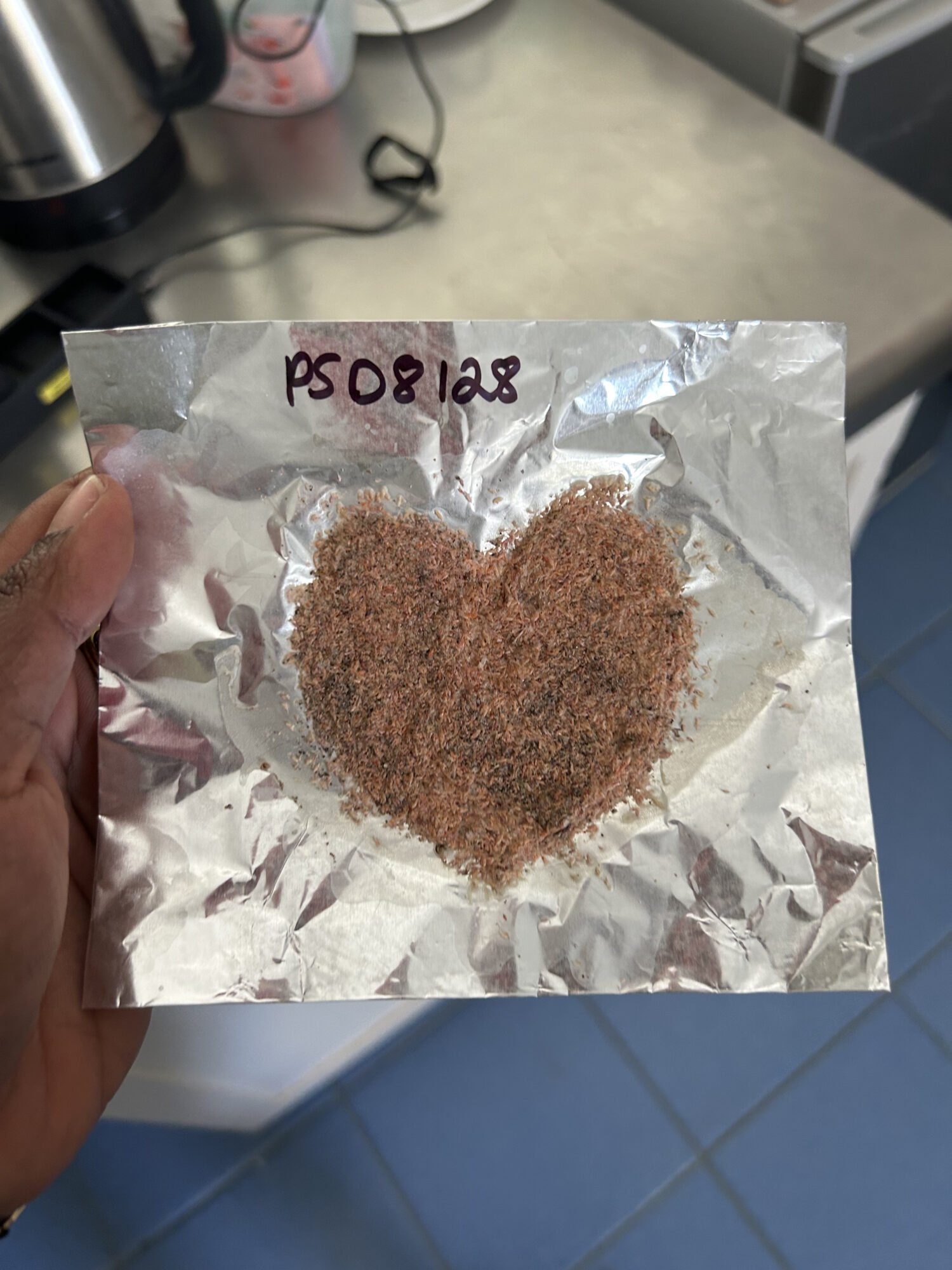
A heart shaped "plankton cracker" made by processing dehydrated plankton samples to collect biomass measurements. Photo by Dillys Pouponeau | © Save Our Seas Foundation
Two years later, this research resulted in my first primary-author publication. This achievement has made me reflect on the amazing journey and encouraged me to aim even higher. I have accomplished a personal goal, to lead a project from scratch to publication, and see the outputs applied directly to active conservation. Our results are now being used alongside other research findings to inform the marine protected area management plan of D’Arros which will help protect manta rays among other species. While this is a major milestone, the fullfilment didn’t come solely from the completion; it came from carrying out the research, and I am ready for more. Answering these research questions has only led me to ask more questions that I now want to explore and answer on a broader scale, beyond the 200 m from my bed. This curiosity has led me to now pursuing a PhD, during which I will expand on our research and explore other components of manta ray ecology and conservation in Seychelles. I am incredibly excited for what is coming next.